
Underbrush Removal Cost in Indiana (2026 Guide)
Cut Brush Team · October 9, 2026 · 8 min read

The oaks and hickories look fine from the road. Walk in and it is a green wall: bush honeysuckle leafing out before anything else, and brush filling every gap the dead ash left. Clearing the underbrush from Indiana woods runs $1,500 to $2,500 an acre with Cut Brush, and the trees you want to keep stay standing. We do this work in central Indiana from our Indianapolis market and in Clark and Floyd counties from Louisville.
At a glance:
- Our understory price is $1,500 to $2,500 an acre. On a small woodlot, a practical floor near $1,500 usually sets the number.
- If the trees come out too, the job becomes forestry mulching at $1,500 to $4,000 an acre.
- Why so many Indiana woods closed in: Purdue researchers found bush honeysuckle and multiflora rose increasing where emerald ash borer killed the ash.
- Classified Forest land cannot be grazed, built on or intentionally burned outside its written plan, so check the plan before we start.
- Woods in a floodway: the DNR’s hand-removal exemption bars cutting bat roost trees 3 inches and up from April 1 to October 1.
Around Indianapolis we cover Marion, Hamilton, Boone, Hendricks, Johnson and Hancock counties; our Louisville crews take Clark and Floyd. For woods elsewhere in Indiana, send the location and we will say whether a crew can get to it.
How Much Does Underbrush Removal Cost in Indiana?
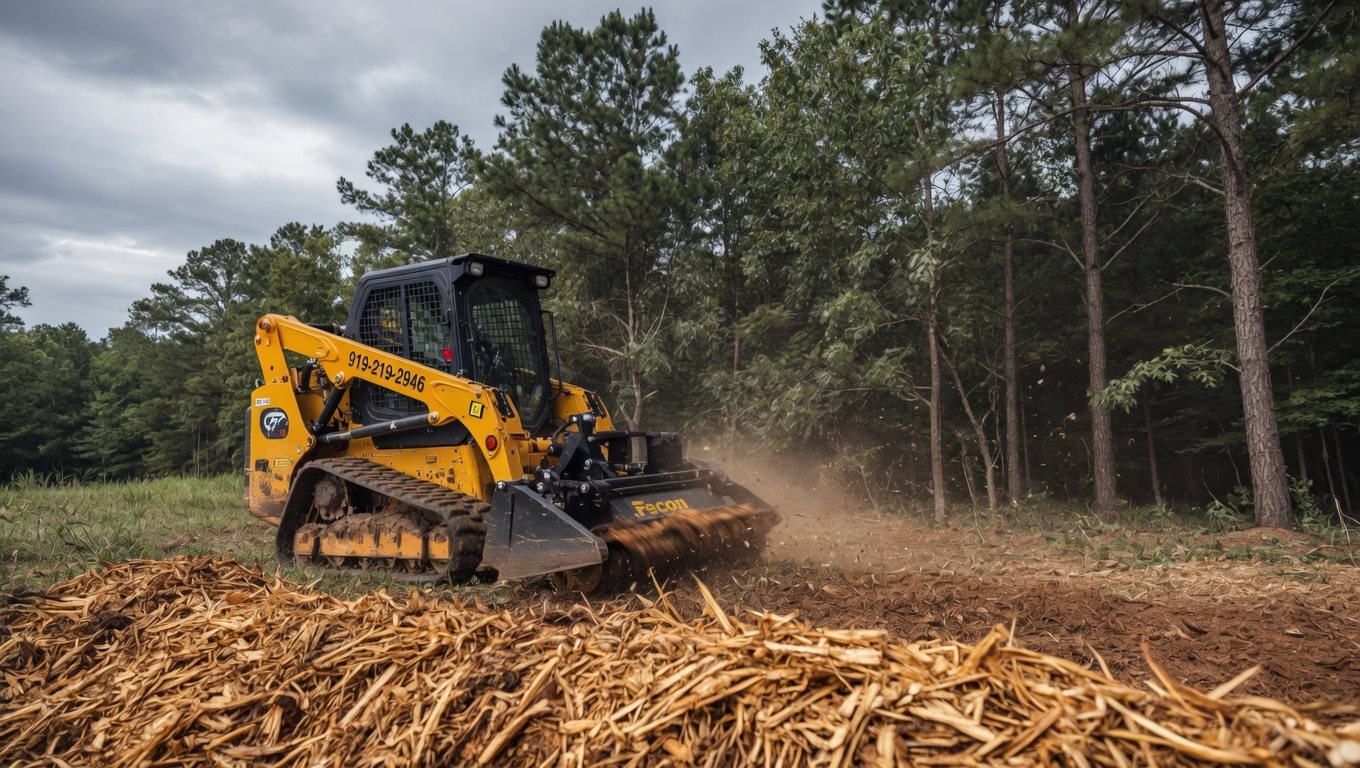
Underbrushing means grinding the shrub layer between the trunks with a tracked mulcher and leaving it as a thin mat on the forest floor. The canopy stays. What we charge depends on how thick that shrub layer is and how many trees we have to steer around.
| What is under your Indiana trees | Our price per acre | What it looks like |
|---|---|---|
| Scattered shrubs under open oak and hickory | $1,500 – $2,500, low in the band | Patchy honeysuckle and rose; you can still see through the woods in winter |
| A solid honeysuckle wall among close keeper trees | $1,500 – $2,500, toward the top | Shoulder-high green in November and twenty or more trees per acre to work around |
| Ash gaps filled with spicebush or pawpaw | $1,500 – $2,500 | A native thicket along a creek; we thin near trails and the house and leave the rest |
| Saplings and small trees coming out as well | $1,500 – $4,000 | Autumn olive and young trees over your head; priced as forestry mulching |
Where these numbers come from. The understory band is the “Regrowth & Understory Work” row on our Indianapolis pricing page, written there for field edges, fence lines, tile lines and the floor of a farm woodlot. The last row is the forestry mulching row on the same page. Our Louisville pricing page, which covers Clark and Floyd counties, carries both at the same figures. Whole-tract clearing by cover type is in our Indiana land clearing cost per acre guide.
What Changes the Price of Indiana Underbrush Work
What the dead ash left. Purdue’s forestry team went back to Indiana forest plots first laid out in the 1990s and reported in April 2026 that ash seedlings have fallen by more than 70 percent in some areas. Ash loss opened small canopy gaps that favor shade-tolerant growth: spicebush and pawpaw are forming dense layers, and bush honeysuckle and multiflora rose are increasing where the ash died (Purdue Extension). Spicebush and pawpaw are native, so the first thing we ask on a walk-through is what you want kept.
Whether the shrub comes back. Indiana’s Terrestrial Plant Rule names Amur, Morrow’s, Tatarian and Bell’s honeysuckle, common and glossy buckthorn, blunt-leaved privet and autumn olive among 44 regulated plants, and makes it illegal to transport them (Indiana DNR). Grinding them in place means nothing has to leave on a truck. Purdue’s advice for bigger invasive shrubs is to cut them and treat the stump to stop the sprouts. We do not spray, so a honeysuckle understory is a first pass and a follow-up, priced as two lines, or a licensed applicator treats the stumps behind us.
How many keeper trees. Twenty oaks you want left on an acre slow the machine far more than a handful of scattered maples. Every trunk is a turn, and close spacing means shorter passes.
How wet the floor is. The Miami soil under much of central Indiana holds water perched 2 to 3 feet down from December to April (USDA NRCS). Tracks working near roots are lighter on firm ground, so we schedule woodlots on that soil for late summer and fall when we can.
Pro tip: Walk your woods the first week of November with a roll of flagging tape. Purdue notes that bush honeysuckle is one of the only understory shrubs still green then. Tie tape on the natives you want spared, such as spicebush along the creek, and we can price the acre straight from your flags.
Underbrush Removal Costs Across Indiana
Central Indiana around Indianapolis. Farm woodlots between fields, fence lines and tile lines are the usual job, with honeysuckle and rose under hardwood and callery pear seedlings crowding the edges. Our Bradford pear removal guide for Indiana explains why the pears come back, and the Indianapolis bush honeysuckle guide covers the commonest shrub we grind.
Clark and Floyd counties. Our Louisville crews work these woods. The Indiana Geological and Water Survey counts the Charlestown Hills among the state’s karst regions, so understory on these slopes often sits around sinkholes. The machine keeps off each throat, which adds time to an acre.
The southern hills. Around Bloomington, Bedford and the Mitchell Plateau, expect the pattern Purdue describes: dead ash, then spicebush, pawpaw or honeysuckle in the gaps. Ridgetops there often carry Bedford soil, with a fragipan 20 to 38 inches down and water perched 1.5 to 2.5 feet below the surface (USDA NRCS, Bedford), so spring footing is soft.
The north. Around DeMotte and Kouts the soils run to sand, and the Morocco series lists northern red oak and pin oak as its native forest. Dry sand carries a machine well. The wet depressions between the sand ridges wait for late summer.
Classified Forest, Floodways and Burning in Indiana
Classified Forest and Wildlands. The DNR program covers tracts of at least 10 contiguous acres managed under a written plan, in return for a lower property tax assessment. Grazing, building houses or sheds and intentional burning outside the plan are not allowed. Leaving the program means back taxes for up to 10 years plus 10 percent a year interest, and land entered after June 30, 2006 also owes $100 per withdrawal and $50 per acre (Indiana DNR brochure). If your woods are classified, ask your district forester whether the understory work fits the plan before we book it.
Woods in a floodway. Indiana’s Flood Control Act requires DNR approval for structures, deposits or excavation in the floodway of any stream draining a square mile or more, and the rules exempt forests unless the work adds one of those. The DNR’s exemption for removing trees with hand equipment forbids digging out root balls and cutting trees suitable for Indiana bat or northern long-eared bat roosting, 3 inches and up, from April 1 to October 1 (Indiana DNR, permit exemptions). Along the Wabash, the White or any sizeable creek, a fall or winter booking stays clear of that window.
Burning. Brush cleared from land that is changing use needs IDEM approval before it is burned. A mulched understory leaves nothing to burn.
Frequently Asked Questions
What does it cost to clear underbrush from an acre of Indiana woods?
$1,500 to $2,500 an acre with Cut Brush, and on one acre the floor near $1,500 often sets the price. Dense honeysuckle among closely spaced keeper oaks, or soft spring ground, moves it toward the top.
Will honeysuckle grow back after the understory is cleared?
Yes, from the cut stems, unless they are treated. Budget a lighter follow-up visit in the next growing season, aimed at late fall, when the honeysuckle is still green and the natives have dropped their leaves.
Can I haul the honeysuckle away instead of grinding it?
Not under state rules. Indiana’s Terrestrial Plant Rule makes it illegal to transport the listed bush honeysuckles, along with autumn olive, the buckthorns and blunt-leaved privet. Grinding the shrubs where they stand avoids the question.
Can I clear underbrush on Classified Forest land?
Talk to your district forester first. The program bars building, grazing and burning outside the plan and expects the land managed under that written plan, so the work should match what the plan prescribes.
Should I keep the pawpaw and spicebush?
They are native, and Purdue lists them among the plants filling ash gaps. Many owners keep them along creeks and clear them near trails or a homesite. Tell us which, and the quote reflects it.
Get an Underbrush Removal Quote in Indiana
Pick the nearest area below and request a free quote. Our crew will contact you to go over the woods, the lane or gate a trailer would use, any trees or native shrubs you want left, what you want the floor to look like afterward, and whether the woods are in Classified Forest or run down to a creek.
Open fields a mower can still handle are priced in our Indiana brush hogging cost guide, and taking the trees out too is in the Indiana forestry mulching cost guide. Woods across the state line are covered in our Ohio and Kentucky underbrush guides.
Sources
More from the Cut Brush Blog
Keep reading for more tips and guides on land clearing.
 Cost Guide
Land Clearing Cost Per Acre in Indiana (2026 Guide)
Land clearing cost per acre in Indiana runs $1,500 to $4,500. What oak and hickory stands, wet till plain soils and three statewide rules do to a quote.
 Cost Guide
Forestry Mulching Cost in Indiana (2026 Guide)
Forestry mulching runs $1,500 to $4,000 an acre with Cut Brush in Indiana. What burn approval, sinkholes, honeysuckle and wet till do to your price.
 Guide
Buckthorn Removal in Indiana: Cost and Plan
Buckthorn removal in Indiana: why one cutting fails, the state transport ban, a follow-up plan for fence rows and wet ground near Lowell, and what it costs.
Comparing states? See land clearing costs by state.
Let's Get Started on Your Land
Request a free quote. We'll contact you to discuss your property, access, and the clearing you need.
Get a Free QuoteOr call us directly: (919) 525-3950