
Eastern Red Cedar Clearing in North Central Texas: Cut, Mulch and Check
Cut Brush Team · October 31, 2026 · 7 min read

Eastern red cedar is cleared from a Blackland Prairie pasture by cutting or mulching each tree off whole, then walking the fence rows each season to take out the seedlings that follow. A tree removed completely does not grow back from the stump, so the machine work is most of the job. Clearing cedar from a fence row, hay meadow or pasture edge, with the trees you want left standing, falls in Cut Brush’s $1,500 to $2,500 per acre band, and a closed stand prices higher.
How Cedar Fills North Texas Pasture From the Fence Rows In
Eastern red cedar is an evergreen with scale-like, fragrant foliage that grows in seven Texas ecoregions, including the Post Oak Savannah and Blackland Prairies. It is a native tree, but it spreads like an invader, mainly by seed. Birds and small mammals eat the pale blue fruit and carry the seed away.
That explains where cedar shows up first. Birds drop seed where they perch, so seedlings are densest near existing trees and along fence lines. The same pattern holds in the Blackland Prairie, where cedar grows along fence lines and field borders and on slopes nobody farms. Walk a pasture that has not been cleared in some years and you will see a straight row of trees along the wire, then scattered young ones fanning out into the grass.
Fire used to hold it back. Cedar was once confined to rocky hillsides and bottomland, because prairie fires killed the seedlings that sprouted in the grass. Once the fires stopped, the seedlings survived. Pasture that is mowed or grazed hard stays open for a while, but ground that is rested or simply not reached gets its cedar.
How to Recognize It
A young cedar is a small, dense cone of green. An older one is shaped like a Christmas tree, with scale-like leaves, light reddish-brown bark and pale blue fruit. If you are unsure what is on your land, your county’s AgriLife Extension office can identify it.
West of Interstate 35, the cedars landowners fight are redberry and blueberry cedar, and redberry cedar is cut below the soil surface to control it. Our Texas Hill Country cedar guide covers that country. This guide is about eastern red cedar in the prairie and savannah country to the east.
Why a Whole-Tree Cut Holds
Most brush that is cut once comes back thicker. Cedar is one of the exceptions. It does not sprout after complete cutting, and mechanical treatments that sever or grind the tree control it for the same reason. There is no crown or root sucker to restart from, so a stump that is finished stays finished, and no herbicide step is needed on the stump.
Two things can still undo a job:
- Seedlings. Seed already in the ground and the birds on the fence both keep supplying new ones. Young cedar is easy to take out, and only gets hard when it is left for years.
- Trees left half done. A cedar must come off entirely. A tree trimmed around its trunk, or a pile left standing, is not a cleared tree.
Cedar also seldom grows alone. Mesquite and hackberry share the same fence rows, and mesquite does return from the root. If the pasture has both, the plan has to cover both, and our Blackland clay guide for Dallas and North Texas mesquite guide explain the mesquite half.
Clearing Cedar So the Pasture Stays Open
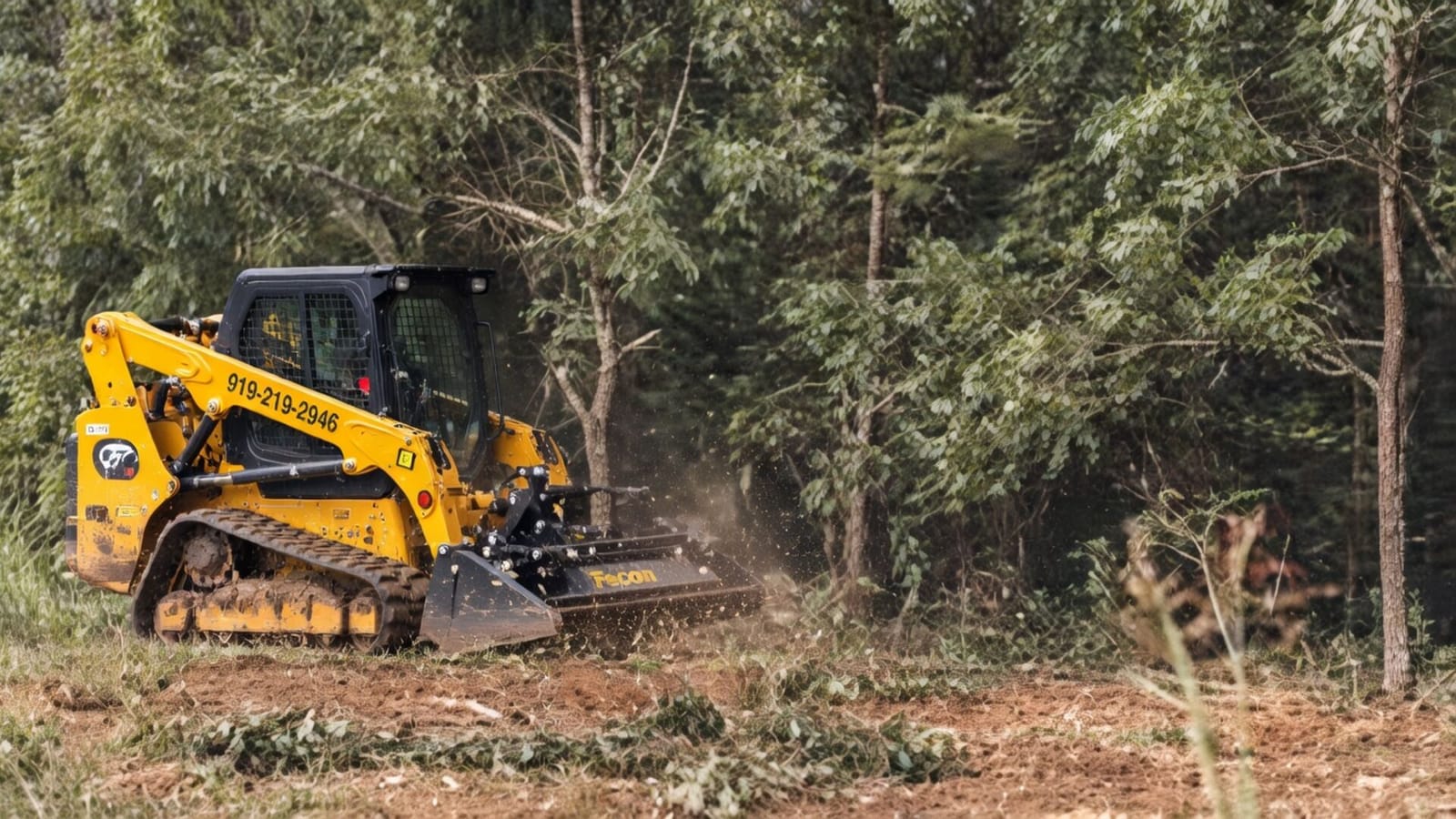
Step one: take the cedar off whole. A tracked forestry mulcher grinds standing cedar into chips where it grew, and the operator steers around any oak, elm or pecan you flag to keep. A trunk too thick for the drum is felled first and ground lying down. Nothing is stacked for burning, which matters because Texas rules limit when and how brush can be burned.
Step two: pick the dry window. Blackland ground is heavy clay that turns sticky when wet, and a tracked machine on saturated soil cuts ruts. The work waits for a firm stretch, and a wet week can move the start date.
Step three: check back. Seedlings come up along the wire in the seasons after. A walk each year, pulling or cutting what is small, is what turns a cleared pasture into one that stays clear. Where a fence row is long, a light second pass with the machine can cost less than hand work on hundreds of young trees.
Write the scope down. The quote should state the finish you are getting, what stays standing, what the seedling visit costs and whether it is included. With those four lines written down, you know exactly what you are paying for.
Work the whole fence. A neighbour’s cedar row keeps seeding yours, so ask whether the far side of the wire can come out the same season. One trip for both sides costs less than two.
Eastern Red Cedar Around Corsicana and Navarro County
Around Corsicana the land is mostly pasture, hay and grass, so cedar here is nearly always a fence row, a field border or a creek-side strip coming into open ground, not a woodlot. The soil is Blackland clay, which is the reason timing matters on a job: a tracked machine and a wet field do not mix.
Around Navarro County that means a pasture clearing with a seedling walk afterward, or a house site or lake lot opened for a builder. Prices follow the bands below. Our Corsicana land clearing page lists the towns we cover, from Kerens and Mexia to Cedar Creek Lake, and our Corsicana pricing page has every rate. For day rates and acreage examples, see the Corsicana forestry mulching cost guide.
Eastern Red Cedar in Collin County and the Rest of North Texas
The same plant fills fence rows farther north. Cedar is common across north Texas, and in Collin County, much of which is Blackland Prairie too, it shows up where small acreage and old farm fences meet new subdivisions. The method does not change: take each tree off whole, work when the clay is firm and plan the seedling walk. What changes is the setting. A fence row beside a new development may need the tree line cleared to a boundary, or a rural lot opened to the ground for a builder.
Collin County ground around Anna is covered by our Anna land clearing page, and the rest of the county by our Dallas land clearing page, which has the local rates. The Blackland clay guide linked above covers the ground and the brush that grows with the cedar.
What Cedar Clearing Costs
A fence row, hay meadow edge or pasture with cedar scattered through it, cleared around the trees you keep, runs $1,500 to $2,500 per acre. Fence rows are measured as strips: one 20 feet wide and about 2,200 feet long is roughly an acre. Tall cedar grown into a closed stand is forestry mulching work, up to $4,000 per acre. A small job is charged our $1,500 minimum in place of an acre rate, never on top of one, and the tree count and access decide where an acre lands.
Our mulching price grinds the trees and stumps into mulch on site, leaves stumps flush with the ground and hauls nothing away. Full stump removal below grade and cut-and-haul for very large trees are discussed and priced in the quote. The Texas statewide figures are in our Texas land clearing cost guide.
Frequently Asked Questions
Will eastern red cedar grow back after it is cut?
Not from the stump, if the tree was taken off whole. New cedars come from seed, so walk the fence rows each season and remove seedlings while they are small.
Is eastern red cedar the same as Ashe juniper?
No. They are different junipers. Eastern red cedar is the tree of the prairie and savannah country in the east; Ashe juniper dominates the Hill Country. Our Hill Country cedar guide covers the second.
When is the best time of year to clear cedar?
Cedar is evergreen and can be cut in any season. In Blackland country, what matters more is whether the clay is firm enough to carry a tracked machine.
Can I burn the cedar I cut?
Burning rules depend on where your land is and on the county’s current burn ban, so ask your county first. Mulching leaves nothing to burn.
Get Your Pasture Back
If cedar is working into a pasture, a hay meadow or a fence row on your land, request a free quote. We’ll contact you to discuss your property, access and the clearing you need, and our crew puts the scope on paper, including the seedling visit.
Read more: our Corsicana land clearing page shows the Blackland ground this plan was written for.
More from the Cut Brush Blog
Keep reading for more tips and guides on land clearing.
 Cost Guide
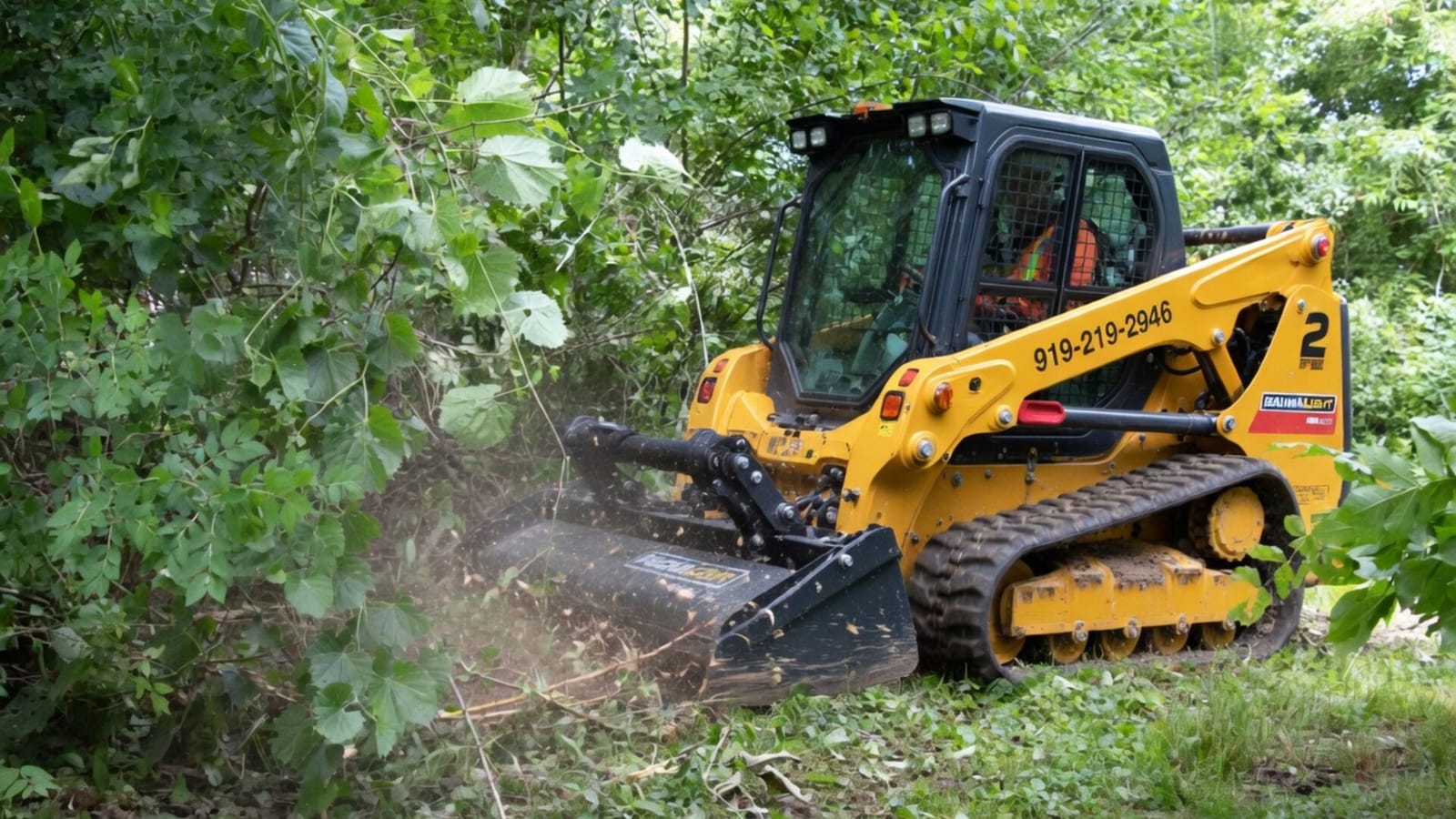
Forestry Mulching Cost in Corsicana, TX (2026)
Forestry mulching around Corsicana, TX runs $1,500 to $4,000 an acre. Day rates turned into acres, what 1 and 2 acres cost, and how black clay changes a quote.
 Guide
Saltcedar Removal in Texas: Cut, Treat and Check
Why saltcedar returns after one cutting, what the leaf beetles leave behind, and the cut, stump treatment and follow-up plan that keeps a Texas draw open.
Let's Get Started on Your Land
Request a free quote. We'll contact you to discuss your property, access, and the clearing you need.
Get a Free QuoteOr call us directly: (512) 601-6759