
Mesquite Removal in North Texas: Why It Keeps Coming Back
Cut Brush Team · September 3, 2026 · 5 min read

Every North Texas landowner who has cleared mesquite once has the same story. The pasture looked great. Two years later there were shoots everywhere, and the ground looked worse than before because now it was thick with young growth instead of scattered trees.
That is not bad workmanship. It is biology, and understanding it is the difference between buying a result and buying a delay.
The Bud Zone Is the Whole Story
Mesquite carries a bud zone on its root crown, below the soil surface. Texas A&M AgriLife guidance on grubbing is direct about what follows from that: when the root crown is removed below the bud zone, the tree is much less likely to resprout. Leave any portion of the bud zone behind and the tree can come back.
This is why cutting mesquite at ground level does so little. You have removed the part you can see and left the part that regenerates. The plant treats it roughly the way a shrub treats pruning.
It is also why mulching and grubbing are different purchases, which is the single most important thing to understand before comparing two quotes.
The Methods, and What Each One Actually Does
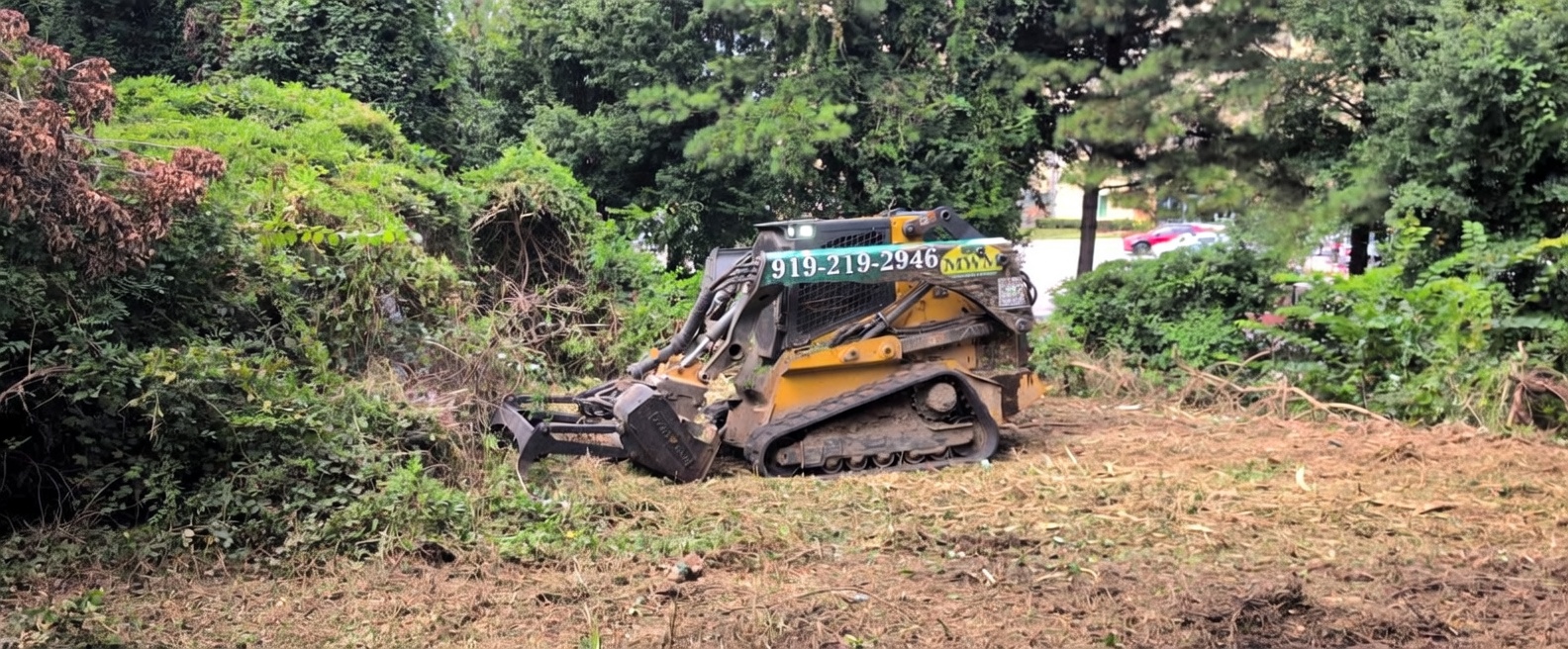
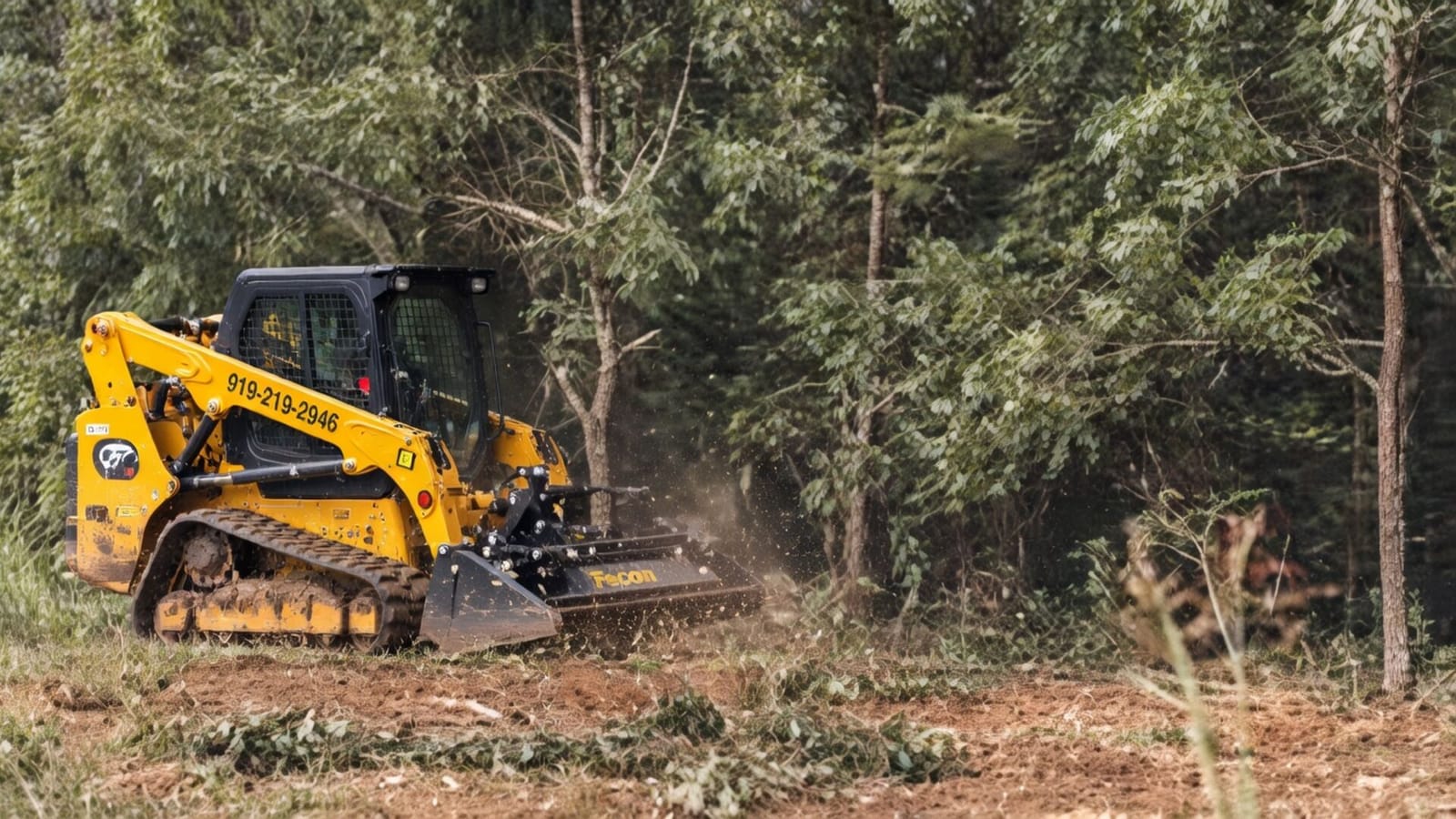
Forestry mulching. A drum grinds standing material at and slightly below grade and leaves it as a mat. Excellent on understory, regrowth, greenbriar, and getting a tract usable quickly. It does not remove the root crown, so on established mesquite it is a maintenance pass rather than removal.
Grubbing. Removes the entire root crown, unlike cutting at ground level. AgriLife’s West Texas Rangelands guidance describes it as most effective on small to medium mesquite, and it can be done with hand tools like grub hoes on a small scale or mechanically at scale.
Root plowing. A heavy V-shaped blade pulled behind a tractor that severs roots below the bud zone. Rangelands Gateway reports root plowing can control up to 90% of target plants when implemented properly, meaning the blade is at the correct depth and the work is done at the right time of year.
Chemical control. Herbicide programs are a large part of how mesquite and huisache are managed on Texas rangeland, and research tracks treatment life and economics of different programs. Mesquite and prickly pear in particular often need chemical follow-up where mechanical removal alone will not prevent regrowth.
Combination. In practice the most durable results come from an integrated program rather than any single method. AgriLife makes that point explicitly about grubbing: it works best as part of an integrated brush management program.
Timing Matters More Than People Expect
Mechanical control depends on proper soil moisture conditions. Grubbing, bulldozing, root plowing, and chaining of mature trees have all proven successful under the right moisture, and the same work in ground that is too dry or too wet gives a worse result for the same money.
That is a real scheduling constraint, not a nicety. If your timeline has some flexibility, say so, because it buys a better outcome on the same budget.
What It Costs
Around Fort Worth, our ranges are:
| Work | Per-acre range |
|---|---|
| Mesquite and brush clearing (mulching) | $1,500 – $2,500 |
| Forestry mulching, heavier stands | $1,500 – $4,000 |
| Whole-tract land clearing | $1,500 – $4,500 |
Those are on our Fort Worth pricing guide, and the statewide picture is in our Texas cost per acre guide.
When you compare a mulching quote against a grubbing quote, you are not comparing two prices for the same job. You are comparing “open ground now, revisit in a few years” against “remove the root crown so it does not come back.” Both are legitimate. Deciding which one you want before you collect quotes saves a lot of confusion.
If You Own Working Acreage, Look at EQIP
NRCS funds brush management as conservation practice code 314 through the Environmental Quality Incentives Program, with payment rates that vary by brush density and removal method. Denser brush costs more to remove and generally pays more. Some states also have separate scenarios for mechanical, chemical, and prescribed-fire approaches.
If you run cattle or manage rangeland, that conversation with your local NRCS office is worth having before you write a check yourself.
A Realistic Plan for a Mesquite Pasture
- Decide the goal. Usable ground this season, or mesquite gone for a decade. They are different budgets.
- Match the method to the goal. Mulching for the first, grubbing or root plowing plus follow-up for the second.
- Plan the follow-up. Even good removal work benefits from a maintenance interval. Woody cover generally returns within five to ten years without follow-up, and maintenance every three to five years costs far less than starting over.
- Time it to soil moisture where the method depends on it.
- Check the funding. EQIP exists for exactly this kind of work.
What We Will Tell You
If you call us about a mesquite pasture, we will walk it and tell you plainly which of these you are looking at. If the honest answer is that mulching gives you two or three good years rather than a permanent fix, we say that at the quote rather than letting you discover it later.
Where mulching is clearly the right tool, understory, regrowth, greenbriar, and getting a tract usable, it is a very good tool, and it leaves the material on the ground as cover instead of in a pile you cannot burn during a county ban. Our forestry mulching page covers how that works, and the walk-through is free.
Related Services
Learn more about the services mentioned in this article.


More from the Cut Brush Blog
Keep reading for more tips and guides on land clearing.
 Services
 Reclaiming Overgrown Pasture in North Texas
How to bring a brushed-in North Texas pasture back: what to clear, what to keep, why mesquite returns, when to schedule, and what reclamation costs per acre.
Guide Burn Bans in Tarrant and Parker County: How to Check and How to Burn Legally
How Tarrant and Parker County burn bans work, where to check today's status, and the registration call and setback rules that apply even when no ban is in effect.
 Cost Guide
 Forestry Mulching Cost in Texas (2026 Per-Acre Guide)
Forestry mulching in Texas runs $1,500 to $4,000 an acre. See why cedar and rock, Blackland clay, yaupon and burn rules move a quote in each part of the state.
Let's Get Started on Your Land
Request a free quote. We'll contact you to discuss your property, access, and the clearing you need.
Get a Free QuoteOr call us directly: (919) 525-3950