
Underbrush Removal Cost in Georgia (2026 Guide)
Cut Brush Team · October 9, 2026 · 9 min read

The pines and oaks were the reason you bought the place. Now privet, sweetgum sprouts and briar have filled every gap between them, and you cannot see twenty feet into your own woods. Underbrush removal in Georgia runs $1,500 to $2,500 an acre with Cut Brush, with the trees you want kept left standing, and our crews do this work around Augusta, Atlanta, Savannah, Columbus, Albany and Valdosta.
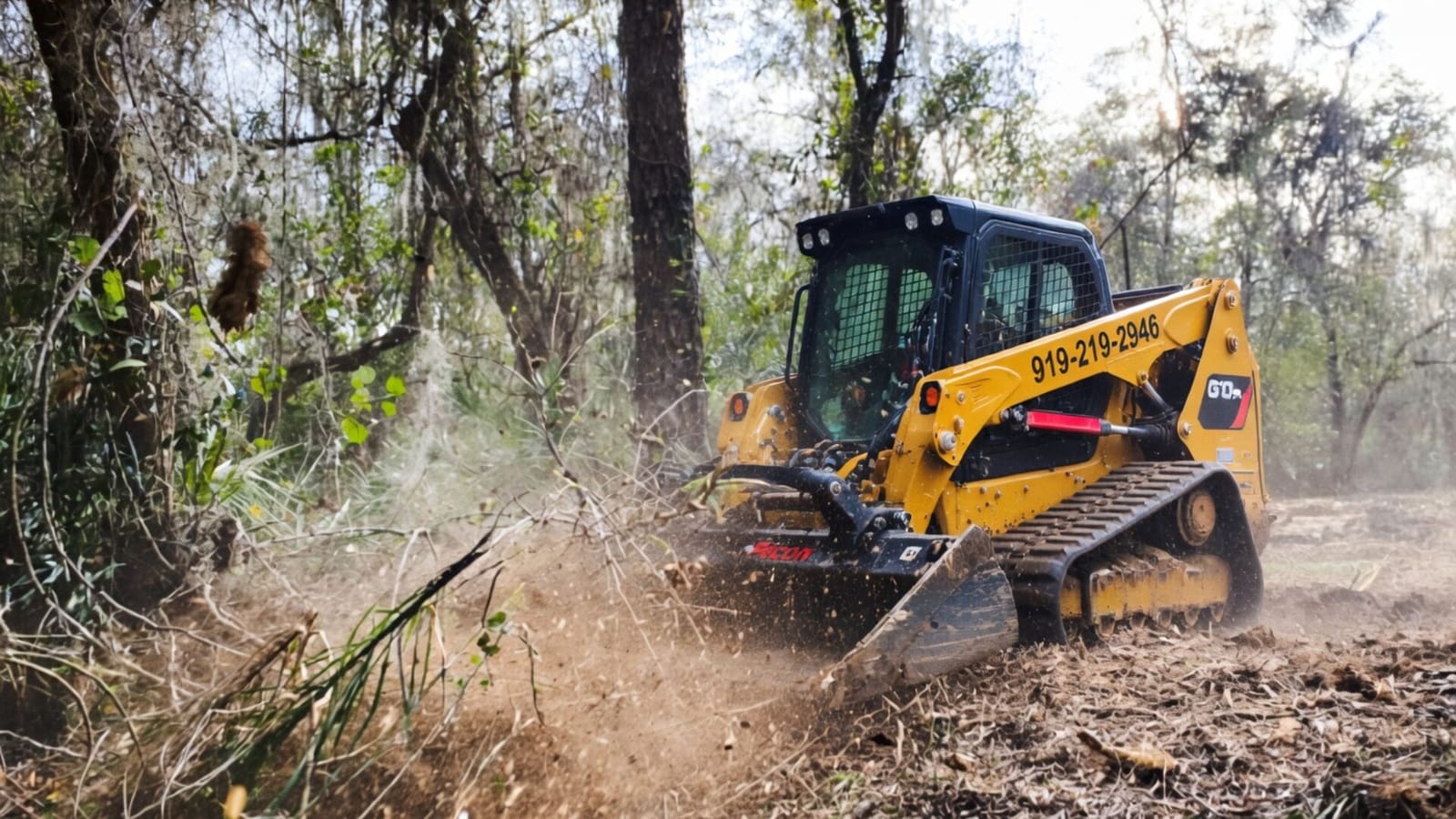
Underbrushing takes out the shrub layer and the small stems beneath a canopy you keep. A tracked mulcher grinds that growth into a mat on the forest floor, so nothing is piled, burned or hauled. What you get back is a stand you can walk through, see across and manage.
At a glance:
- $1,500 to $2,500 an acre is our understory price in all six Georgia markets, with a floor near $1,500 on a small lot.
- Savannah treats a two-inch stem as a tree. On undeveloped city land, clearing anything two inches across or more takes a permit, and the city may approve underbrushing of stems up to four inches.
- The Georgia Forestry Commission pays up to $150 an acre for understory mulching through its GRIP cost share, on practices of 10 acres or more.
- UGA’s root rule: trunk diameter in inches times 2.5 gives the width of the protected circle in feet.
- Nothing gets piled, so the summer burn ban and GFC burn permits never come into an underbrush job.
We walk the stand with you, flag the keepers, and give you one written price.
How Much Does Underbrush Removal Cost in Georgia?
The band is the same across the state. What fills the understory decides where your woods land inside it.
| What fills your understory | Our price per acre | Where it usually lands |
|---|---|---|
| Young sprouts and briar under widely spaced pine | $1,500 – $2,500 | Near the floor: open passes, few keepers in the way |
| Palmetto, gallberry and wax myrtle under flatwoods pine | $1,500 – $2,500 | The middle: a low woody layer that takes extra passes |
| Privet and vine walls in a creek bottom | $1,500 – $2,500 | Toward the top: dense stems and keeper trees close together |
| Scrub oak or hardwood crowding pine after years without fire | $1,500 – $2,500 | The top, and past a light pass it becomes mulching at $1,500 – $4,000 |
Where these numbers come from. Every one of our Georgia pricing pages carries this understory row under a local name: Regrowth & Understory Work on the Augusta pricing page and the Savannah pricing page, Brush & Understory Clearing in Atlanta, Scrub Oak & Understory Work in Columbus, Longleaf Understory Work in Albany and Pine Understory Work in Valdosta. Same band in all six. The floor near $1,500 is the cost of getting a tracked carrier to your gate, which is the same for half an acre as for two.
If you want the small trees gone too, that is forestry mulching, covered in our Georgia forestry mulching cost guide. Whole-tract work is in the Georgia land clearing cost per acre guide.
What Changes the Price of a Georgia Underbrush Job
Plants that sprout back. The Georgia Forestry Commission calls Chinese privet widespread and common throughout all of Georgia. It spreads by sprouts as well as seed, which is why the commission’s control guide says cut stumps should be treated. Sweetgum does the same from the stump and root crown, and the U.S. Forest Service ranks it among the worst competitors of young pine in the Southeast. A thicket of either sits near the top of the band and needs a follow-up plan. We work mechanically and apply no herbicide, so a spray step is priced and done apart from ours.
Palmetto is the exception. On the coast and in South Georgia, saw palmetto rebuilds from its root crowns and rhizomes within about a year of a fire, according to the Forest Service species review. Mechanical work sets it back far harder: roller chopping cut its cover by 90 percent two years later.
How many trees stay, and where their roots run. UGA Extension multiplies trunk diameter by 2.5 for the width of the root protection circle in feet, so a 20-inch oak gets a 50-foot circle. Damage 20 to 30 percent of that zone and the tree’s survival suffers, and the decline usually shows three to seven years later. Roots also sit closer to the surface in clay than in sand. On Piedmont clay we work lighter and slower inside those circles, so a stand with a keeper every few yards prices higher than open pine on sand.
Storm wreckage under the regrowth. Hurricane Helene crossed 8.9 million acres of Georgia forestland in September 2024, with winds near 100 miles an hour from Valdosta to Augusta, and 88 percent of that land is privately owned. Two seasons later, plenty of understories around Augusta hide snapped tops and leaning stems under new growth. That slows the work and pushes a tract up the band. Our guide to clearing storm-damaged land around Augusta covers what to look for.
How long since the stand saw fire. Georgians prescribe burn about 1.4 million acres a year, and longleaf ground is built around it. A pine stand that missed a decade of fire carries oak and sweetgum too thick for a light pass, and that is the top of the band. We do not burn; the mulcher opens the stand, and any fire plan stays with you and a certified burner.
Pro tip: If you own 10 or more acres of pine, call your county GFC forester before you book us. GRIP pays the lesser of $150 an acre or your actual cost for understory mulching, but only on an application approved during its short summer sign-up, so the paperwork has to come before the machine.
Underbrush Removal Across Georgia
The Piedmont: metro Atlanta, Canton, Newnan and upper Columbia County. Red clay, creek bottoms and privet walls. The GFC rates multiflora rose most troublesome in the Piedmont, where it forms impenetrable thickets along forest edges. Shallow roots on clay make keeper trees the main cost factor here.
The Sand Hills and the Fall Line: Augusta, Grovetown, Columbus and Harris County. Deep sand of the Troup and Lakeland kind carries a machine well in almost any week. Native cover on Lakeland ground is blackjack, turkey and post oak with scattered longleaf, so scrub oak under pine is the usual job, and Helene debris is the wild card around Augusta.
The coastal flatwoods: Savannah, Pooler, Richmond Hill, Valdosta and Hahira. On Leon soils the understory is saw palmetto, gallberry, fetterbush and wax myrtle, and the water table sits 6 to 18 inches down for one to four months a year. Book after a dry spell. Chinese tallow, which the GFC calls common in South Georgia, turns up along ditches. Our Savannah flatwoods guide covers timing and scope.
The Dougherty Plain: Albany, Leesburg and Newton. Longleaf, wiregrass and quail ground where hardwood has crept in under the pine. Passes are quick where trees are widely spaced, and limesink depressions get routed around.
The mountains, north of our Atlanta territory. In the Blue Ridge, soils such as the Fannin series carry mountain laurel and rhododendron in the understory. Rabun County’s wildfire plan lists vacant lots between homes covered in dense rhododendron and mountain laurel as a risk. Tell us where your mountain land is, and our crew will contact you about the understory and the access.
Tree Rules, Wildfire Zones and Cost Share in Georgia
Savannah’s ordinance reaches down to small stems. The city’s tree protection ordinance defines clearing as removing trees or other vegetation two inches dbh or greater. It protects every tree over two inches on undeveloped property and any tree in a wetland, and sets a critical root zone of one foot of radius per inch of trunk. The administrator may approve underbrushing of vegetation up to four inches, and in a preserved stand no mechanical clearing of underbrush is allowed without approval. Residential lots with an existing single-family home or duplex are exempt. Our Savannah permit guide walks the steps.
Wildfire zones. The GFC splits defensible space into three rings: 0 to 5 feet from the house, 5 to 30 feet, and 30 to about 100 feet. Underbrushing is the work of the outer two, taking out the shrubs and small trees that act as ladder fuels and carry a ground fire up into the pines.
Cost share. Two GFC programs can pay part of the bill. GRIP covers understory mulching at up to $150 an acre on 10 acres or more. The Invasive Plant Control Program pays $60 an acre, up to $10,000 and no more than 75 percent of cost, for privet, tallow and other listed invasives, but only where herbicide is part of the treatment. Both run short sign-up windows, so check the current one with your county forester.
Frequently Asked Questions
How much does it cost to clear underbrush on one acre in Georgia?
Between $1,500 and $2,500 in all six of our Georgia markets. On a single acre the floor near $1,500 usually decides it. Dense privet on clay with many keeper trees sits near $2,500.
Will underbrushing hurt my oaks and pines?
Not if the crew respects the roots. By UGA’s rule, a 16-inch pine gets a 40-foot circle. We flag the trees you value most, keep the tracks off the ground near them where we can, and leave the mulch mat as a cushion.
Do I need a permit to remove underbrush in Georgia?
Usually not, but city tree rules can apply. Savannah treats two-inch stems on undeveloped land as protected trees, so get the permit or an underbrushing approval first. Elsewhere, check with your city before taking any larger trees.
Does the state help pay for understory mulching?
Sometimes. The GFC’s GRIP program lists understory mulching at $150 an acre on 10-acre practices, with a summer sign-up. Talk to your county forester and get approved before the work is scheduled.
Is underbrushing the same as brush hogging?
No. A brush hog mows open fields and rides over woody palmetto or privet. Underbrushing grinds the growth beneath a canopy you keep. For open pasture, see our Georgia brush hogging cost guide.
Get an Underbrush Removal Quote in Georgia
Pick your nearest Georgia area below and request a free quote. Our crew will contact you to discuss the stand, the gate a trailer would use, which trees stay, and whether you want a park-like floor or a lighter thinning, then walk the stand and put a written understory price in your hands.
Woods across the state line? Our Alabama underbrush removal cost guide and South Carolina underbrush removal cost guide cover those states.
Sources
More from the Cut Brush Blog
Keep reading for more tips and guides on land clearing.
 Cost Guide
Forestry Mulching Cost in Augusta, GA (2026)
Forestry mulching around Augusta runs $1,500 to $4,000 per acre. See what storm timber, sandy Sand Hills ground and two sets of burn rules do to it.
 Guide
Clearing Storm-Damaged Land Around Augusta
Two seasons on, CSRA property still carries broken timber and the thicket that grew through it. What that changes about clearing, and what to ask a bidder.
Cost Guide Forestry Mulching Cost in Georgia (2026 Guide)
Forestry mulching in Georgia runs $1,500 to $4,000 an acre with Cut Brush. See what palmetto, privet, wet flatwoods and the summer burn ban do to your price.
Comparing states? See land clearing costs by state.
Let's Get Started on Your Land
Request a free quote. We'll contact you to discuss your property, access, and the clearing you need.
Get a Free QuoteOr call us directly: (919) 525-3950