
Forestry Mulching Cost in Grand Rapids, MI (2026)
Cut Brush Team · September 12, 2026 · 5 min read

A forestry mulching job around Grand Rapids prices between $1,500 and $4,000 an acre. In West Michigan, where a parcel falls in that band usually comes down to one question: how long since anyone mowed it? A hayfield cut two summers ago near Byron Center mulches quickly. A former pasture outside Belding that has spent twenty years growing autumn olive and glossy buckthorn does not, and it will want a second visit.
West Michigan Bands
| On our Grand Rapids pricing page | Price | What it looks like in Kent, Ottawa or Barry County |
|---|---|---|
| Forestry Mulching | $1,500 – $4,000 / acre | A lightly grown field at the floor; a closed shrub thicket on old farmland at the ceiling |
| Regrowth & Understory Work | $1,500 – $2,500 / acre | Brush and saplings taken out from under a woodlot you keep |
| Land Clearing | $1,500 – $4,500 / acre | Whole-parcel work to a finish named in the quote |
| Lot & Homesite Prep | $1,500 – $4,500 / acre equivalent | Vegetation cleared for a house site, drive and utility path |
The minimum is roughly $1,500 per project: trailering a tracked machine to Cedar Springs costs the same whether it cuts for an afternoon or a week. Pair a fence row with a trail or a field corner and the visit goes further.
A mulching quote covers standing brush and small trees ground to chips on site, with stumps ground flush. Pulling bigger stumps and cutting and hauling larger trees are priced separately. On a homesite we clear the vegetation only; foundation excavation, finish grading and structural work are not part of what we offer. Our Grand Rapids services page shows what each job leaves behind.
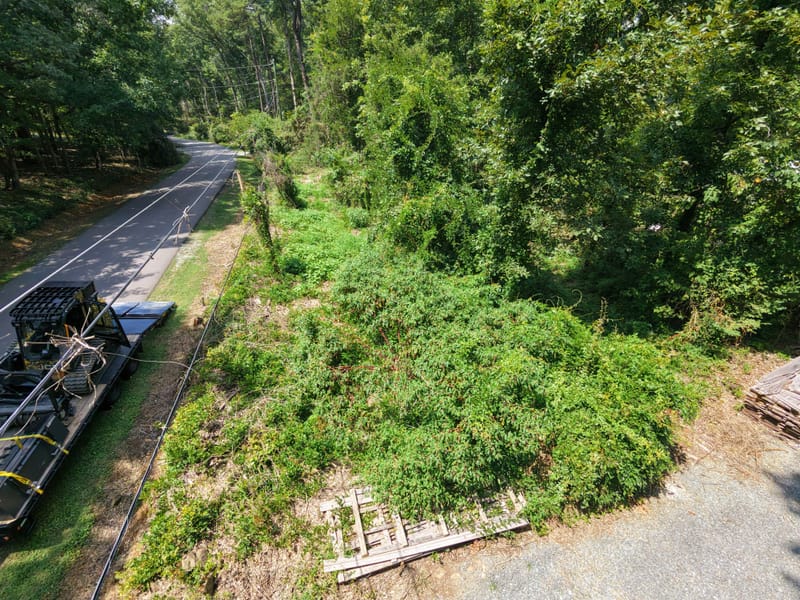
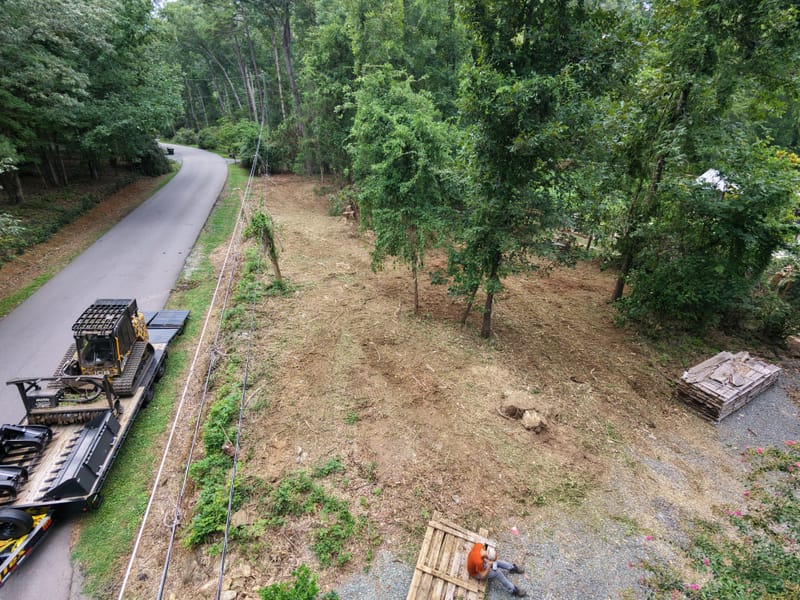
Old Fields on Outwash Sand
Much of Kent and Ottawa counties sits on sand and gravel left behind by retreating glacial ice: light, quick-draining ground a tracked machine crosses easily. Footing rarely limits a job here. What limits it is whatever has grown on that ground since the farming stopped.
Michigan’s invasive species program describes autumn olive as a shrub planted on purpose for wildlife cover and erosion control that is now established statewide and spreads fastest through old fields (Michigan Invasive Species Program). Glossy buckthorn moves into the same reverted ground and fills in beneath it. Ten years after the last mowing, a field outside Middleville or Ionia can be a wall of woody stems where hay once stood, and that is the gap between the bottom and the top of the band. Our article on clearing a reverted field around Grand Rapids looks at the process in detail.
Old farm boundaries add their own time. Woven wire buried in a grown-over fence row, a rock pile from the days of hand clearing, or a line of mature oaks the owner wants saved all mean the operator slows down or works by hand around them. None of it changes the band, but it decides where in the band a parcel lands, so point those spots out on the walk-over.
Two Visits, Not One
Both shrubs return after cutting. The Michigan Natural Features Inventory’s control guidance treats cutting glossy buckthorn alone as an incomplete step because the stumps resprout vigorously (MNFI), and seed already in the soil sends up new plants once the standing growth is gone.
That is why a West Michigan quote for a reverted field carries two lines: the knockdown, and a lighter pass on the regrowth a season or two later. The second visit costs a fraction of the first, and far less than starting over once the thicket has closed again. We do not apply herbicide; if you want stumps treated, that is a licensed applicator’s job, scheduled between our visits.
Water Sets the Permit Line
Michigan’s Part 91 soil erosion rule calls for a permit for an earth change of one acre or more, or for any disturbance within 500 feet of a lake or stream, whichever is reached first. In the Grand, Thornapple, Rogue and Flat river country and around Barry County’s lakes, the 500-foot trigger often arrives before the acreage one. Kent County Road Commission runs the program for the county except in Grand Rapids, Kentwood, Rockford and Walker, which run their own (Kent County Road Commission). Most wetland permits in Michigan go through the state rather than the Army Corps, since EGLE administers the federal program here (EGLE). Our Grand Rapids and Kent County permit guide puts each rule beside its source.
Frequently Asked Questions
How much does it cost to mulch an acre near Grand Rapids?
$1,500 to $4,000. A field mowed within the last few years sits low; one left alone for a decade or two sits high. One acre by itself usually lands near the project minimum.
Why does an old field need a second visit?
Autumn olive and glossy buckthorn regrow from cut stumps and from seed in the soil, so the first pass opens the ground and the second deals with what comes back.
Does clearing near a lake need a permit?
Often. An earth change within 500 feet of a lake or stream can trigger a Part 91 permit whatever the acreage, and the county or city program decides.
Is sandy West Michigan ground cheaper to mulch?
The sand itself helps: it drains fast and carries the machine in most months, so wet weather costs fewer days here than on clay. The growth on top still sets the price.
Pricing Your West Michigan Parcel
Weigh your land against the bands on the Grand Rapids pricing page, read about the territory on our Grand Rapids land clearing page, then request a free quote. Our crew will give you a call about the field and what you want it to become, and you see the scope in writing before we start.
More from the Cut Brush Blog
Keep reading for more tips and guides on land clearing.
 Cost Guide
Forestry Mulching Cost in Michigan (2026 Guide)
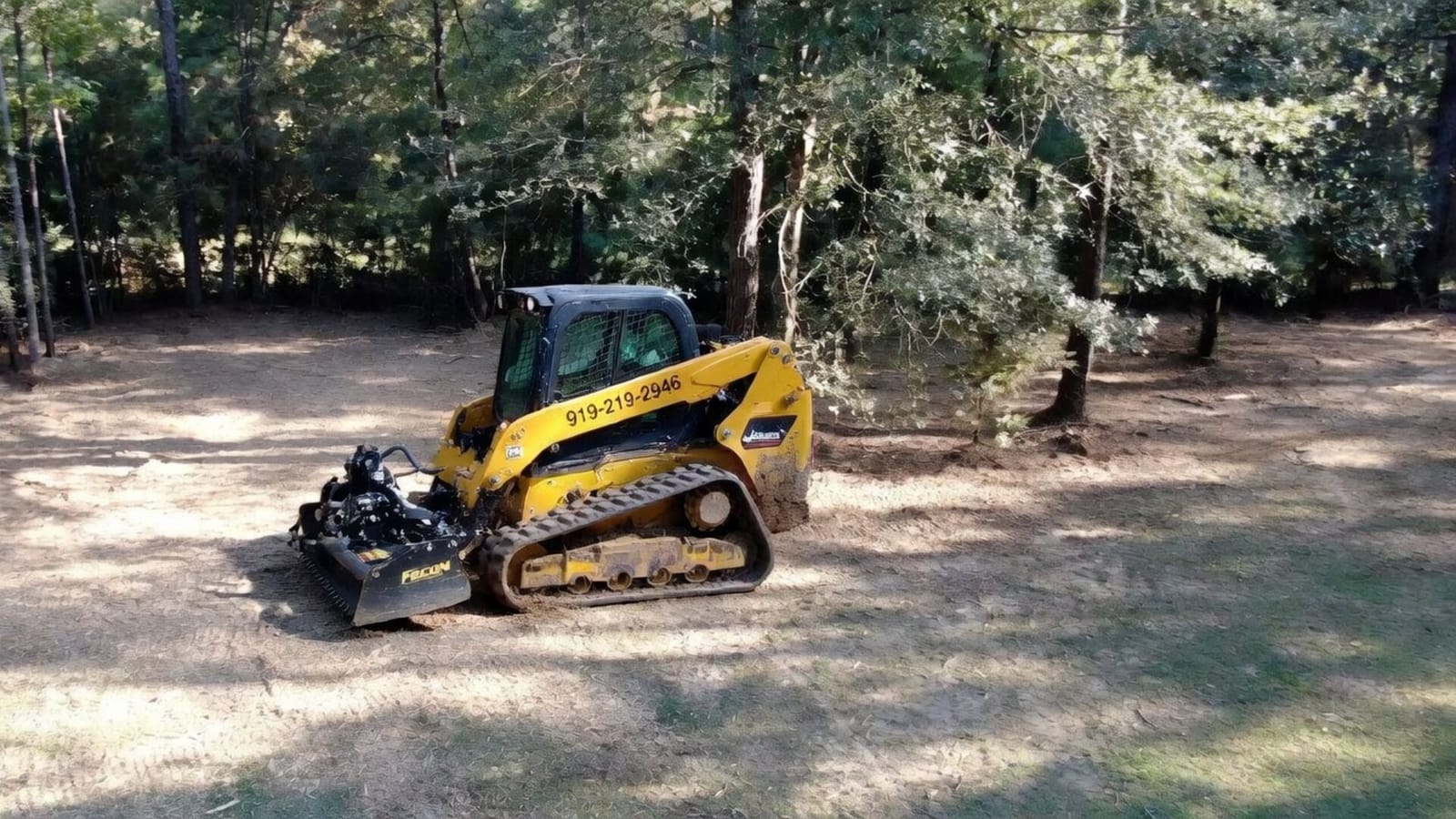
Forestry mulching runs $1,500 to $4,000 an acre with Cut Brush in Michigan. We grind autumn olive, buckthorn and young trees in place across West Michigan.
 Cost Guide
Land Clearing Cost Per Acre in Michigan (2026 Guide)
Land clearing cost per acre in Michigan runs $1,500 to $4,500. See how old-field reversion, water proximity and disposal move the number statewide.
 Guide
Bradford Pear Removal in Michigan: 2028 Rule and Cost
Bradford pear removal in Michigan: $1,500 to $2,500 an acre for understory clearing, plus sprout cuts, ahead of the 2028 listing. Request a free quote.
Let's Get Started on Your Land
Request a free quote. We'll contact you to discuss your property, access, and the clearing you need.
Get a Free QuoteOr call us directly: (919) 525-3950
 Quick answers from Cut Brush