Land Clearing Cost Per Acre in Michigan (2026 Guide)
Cut Brush Team · September 12, 2026 · 7 min read
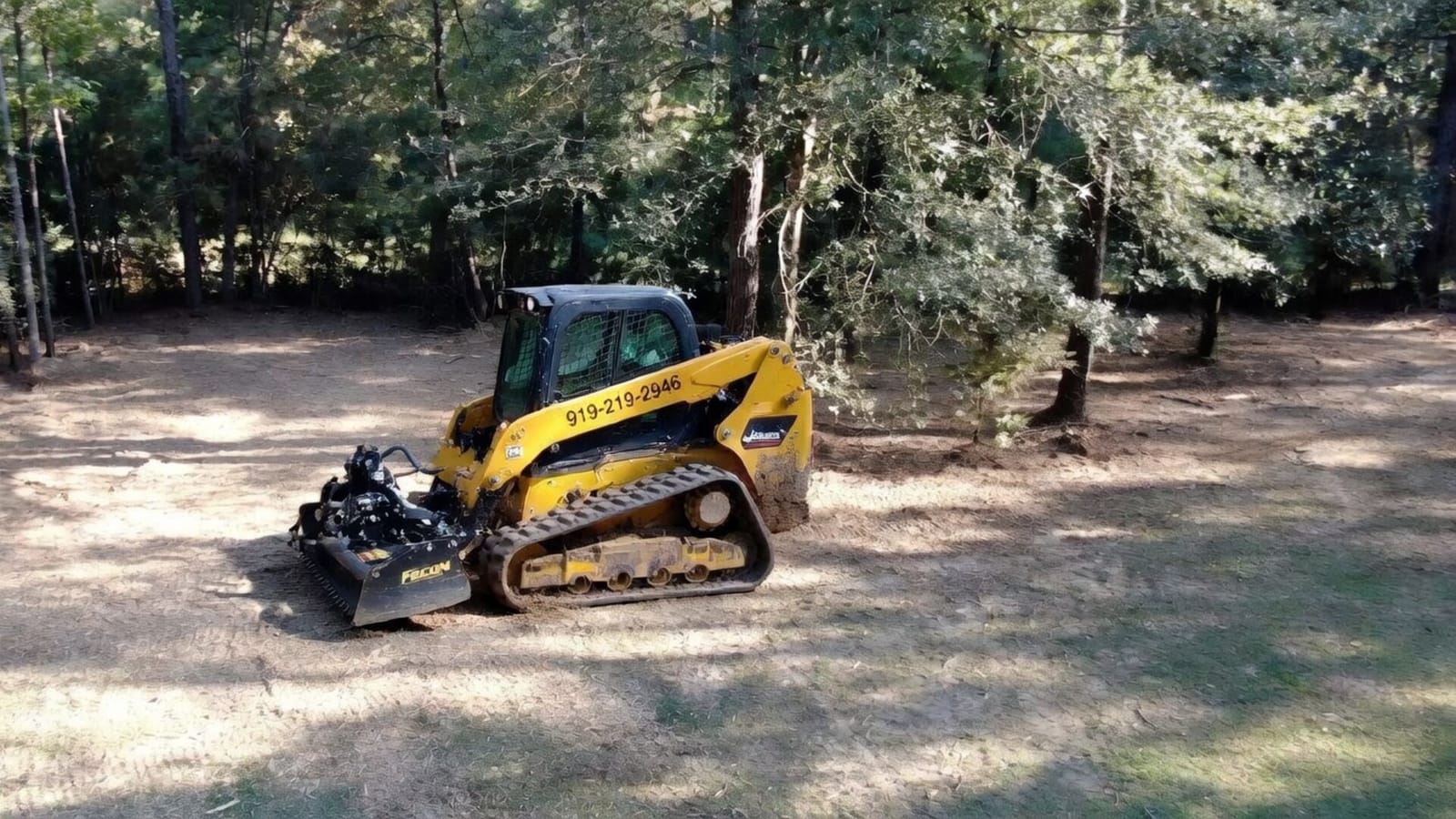
Land clearing cost per acre in Michigan generally runs $1,500 to $4,500. Where a particular tract lands inside that band has less to do with acreage than most people expect, and more to do with three things this state raises that a flat national number misses: whether the ground is an old field that has reverted to brush, how close the parcel sits to a lake or stream, and what happens to the material once it is cut.
This guide covers per-acre pricing by vegetation and condition, the Michigan-specific factors that move a number, and how the state’s own soil and water geography changes the job depending on where you are standing.
The Short Answer, by What Is Standing
Most land clearing in Michigan costs $1,500 to $4,500 per acre in 2026. Vegetation condition and access set the baseline together, because machine hours per acre are most of the price, and both heavy growth and difficult access add hours.
| What is on the acre | Per-acre range | Where you see it |
|---|---|---|
| Open pasture grass on flat, accessible ground | $1,500 – $2,000 | Actively mowed or grazed fields |
| Light regrowth and field edges | $1,500 – $2,500 | Fence lines and pasture margins left a season too long |
| Reverted field, autumn olive or glossy buckthorn thicket | $2,500 – $4,000 | Old farmland idle a decade or more |
| Whole-tract clearing or a lot prepared for building | $1,500 – $4,500 | Anything cut for a house, a barn, a drive or open field |
There is also a practical floor near $1,500 on small jobs, which is what it costs to get a tracked machine onto a property regardless of how little ground there is to cover. Lot and homesite preparation is quoted on the same $1,500 to $4,500 basis, per acre equivalent, because the work is measured by the building envelope rather than by the parcel.
What Actually Moves the Number
1. Whether the field has reverted to brush
Michigan farmland does not sit empty when it goes out of production; it grows a thicket. Autumn olive was planted deliberately across the state for erosion control and wildlife cover and is now established statewide, spreading fastest on exactly this kind of idle, disturbed ground (michigan.gov/invasives). Glossy buckthorn moves into the same reverted fields on its own and resprouts vigorously once cut, which is why guidance treats a single cutting pass as an incomplete step (MNFI). A field that has been idle for fifteen years prices differently than one still in light use, because the standing growth is denser and a return pass on regrowth is more likely to be part of the job.
2. How close the parcel sits to water
Michigan’s Part 91 soil erosion law sets two separate permit triggers, not one: disturbing one or more acres, or any ground disturbance within 500 feet of a lake or stream, whichever comes first. That second trigger does not change what Cut Brush charges to clear an acre, but it changes how much lead time a project needs before equipment shows up, and it catches more rural Michigan clearing than the acreage trigger alone would.
3. Region and soil
Michigan’s clearing conditions are not uniform across the state. West Michigan, around Grand Rapids, sits over glacial outwash sand plains left by the retreating glaciers, generally well-drained and rarely the access problem that steep or waterlogged ground is elsewhere. Northern Michigan and the Upper Peninsula carry more mixed hardwood and conifer forest and a shorter working season. Southeast Michigan’s farmland runs through heavier till soils that hold water longer after rain. A quote written for one of these without knowing which applies is a guess dressed up as a number.
4. Method, and what happens to the material
Traditional clearing has two halves: cutting and disposal. Forestry mulching removes the second. The material is processed where it stands and left across the soil as a chip mat, so there is no pile, nothing to load, and no open burn to arrange. Clear and haul still wins where a site needs to be cut to grade or an owner wants nothing left on top, and it typically costs more, especially where the haul route is long or the ground is soft.
Three Rules That Apply Anywhere in Michigan
Part 91’s dual trigger is a statewide floor. An earth change disturbing one acre or more, or any disturbance within 500 feet of a lake or stream, needs a soil erosion permit somewhere in Michigan, whichever line is reached first. Local enforcement varies: some counties administer it directly, some delegate to a road commission, and some cities run their own program, as covered in our Grand Rapids and Kent County permit guide.
Wetlands are a state program, not just a federal one. Michigan was the first state authorized to administer the federal Clean Water Act Section 404 program itself, so most wetland fill and disturbance runs through the state’s Part 303 program rather than the U.S. Army Corps of Engineers directly (EGLE). Whether a wet area on a parcel counts as a regulated wetland is a site-specific determination.
Open burning is a local call, not a free default. Michigan regulates open burning of brush and debris at the township and local fire-authority level rather than through one uniform statewide permit, and rules and seasonal limits differ by jurisdiction. Checking with the local fire authority before burning is the right first step wherever a property sits.
Requirements vary by parcel, scope and jurisdiction, and the governing authority makes the determination.
Where in Michigan Is Your Land?
The bands above hold statewide. What moves inside them, and which office has to say yes first, changes by region.
Grand Rapids and West Michigan. Kent County (Grand Rapids, Rockford, Cedar Springs, Sparta, Kent City, Lowell, Ada, Cascade, Caledonia, Byron Center), Ottawa County (Allendale, Hudsonville, Jenison, Zeeland, Coopersville, Grand Haven), Allegan County (Wayland, Dorr), Barry County (Hastings, Middleville), Ionia County (Ionia, Belding) and Montcalm County (Greenville) are covered by our dedicated Grand Rapids market. Start with land clearing in Grand Rapids, see current ranges on the Grand Rapids pricing guide, and read what each method actually covers on the Grand Rapids services page. If the ground is a reverted field closing in with autumn olive and glossy buckthorn, our reverted field clearing guide covers why one mulching pass does not finish the job.
The rest of Michigan. Ground elsewhere in the state, including the Upper Peninsula, northern Michigan and Southeast Michigan, is not yet covered by a dedicated Cut Brush hub. Call and we will tell you plainly whether your property falls inside our current service area before anyone quotes it.
When to Book
Spring thaw is the one predictable window to plan around on West Michigan farm ground: as frost leaves the soil, a wet field can turn soft enough to rut under a loaded trailer in a way the same ground handles easily by early summer. Outside that window, most of this territory’s ground is workable across the year, with a hard winter freeze the other practical limit farther north. Flexible timing is worth mentioning when you request a quote.
Frequently Asked Questions
How much does it cost to clear one acre of land in Michigan?
Plan on $1,500 to $4,500 for full clearing, or $1,500 to $4,000 if mulching gets you the finish you need. Open pasture at the floor, a closed reverted-field thicket at the ceiling. Vegetation condition and access decide it, not the acre count alone.
Do small jobs really cost $1,500?
Yes, as a practical floor. Mobilisation costs the same whatever the size, so bundling a fence line, a field edge and a brush patch into one visit is the easiest way to get full value from it.
Is there a cheap season to clear land in Michigan?
No published seasonal discount, but spring thaw on soft farm ground is the one stretch worth avoiding if your timeline allows it. Most other ground in this territory works year-round outside a hard winter freeze farther north.
Can I get a number without a site visit?
You can get a rough range from acreage and photos. A firm written quote takes a walk-through, because what is actually growing on the ground, its proximity to water, and what the parcel is for are the three things aerial views hide and the three most likely to move the price.
Get a Real Number for Your Michigan Property
Understanding the land clearing cost per acre in Michigan starts with your own ground: what is growing on it, how close it sits to water, and what the land has to do next.
Compare your project against the ranges on our Grand Rapids pricing guide, then request a free estimate. We respond within 24 hours, walk the parcel with you, and put every line item in writing so the quote you approve is the price you pay.
More from the Cut Brush Blog
Keep reading for more tips and guides on land clearing.
 Cost Guide
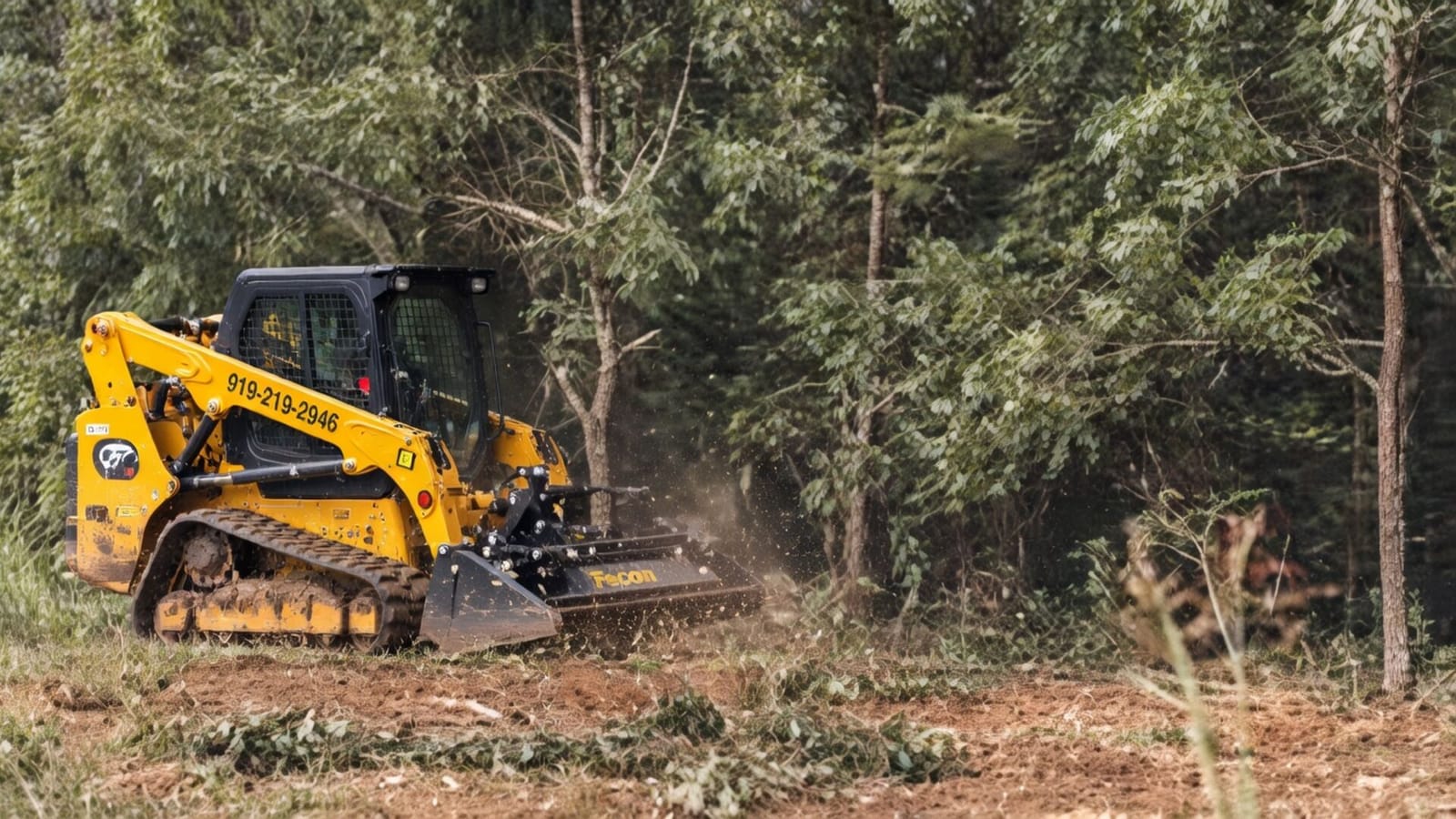
 Forestry Mulching Cost in Grand Rapids, MI (2026)
Forestry mulching around Grand Rapids runs $1,500 to $4,000 per acre. See what a reverted field, water proximity and access do to the hours on your land.
County Guide Land Clearing Permits in Grand Rapids & Kent County, MI (2026)
Do you need a permit to clear land near Grand Rapids? Michigan's Part 91 triggers on acreage or water proximity, and the enforcing office splits by city.
 Guide
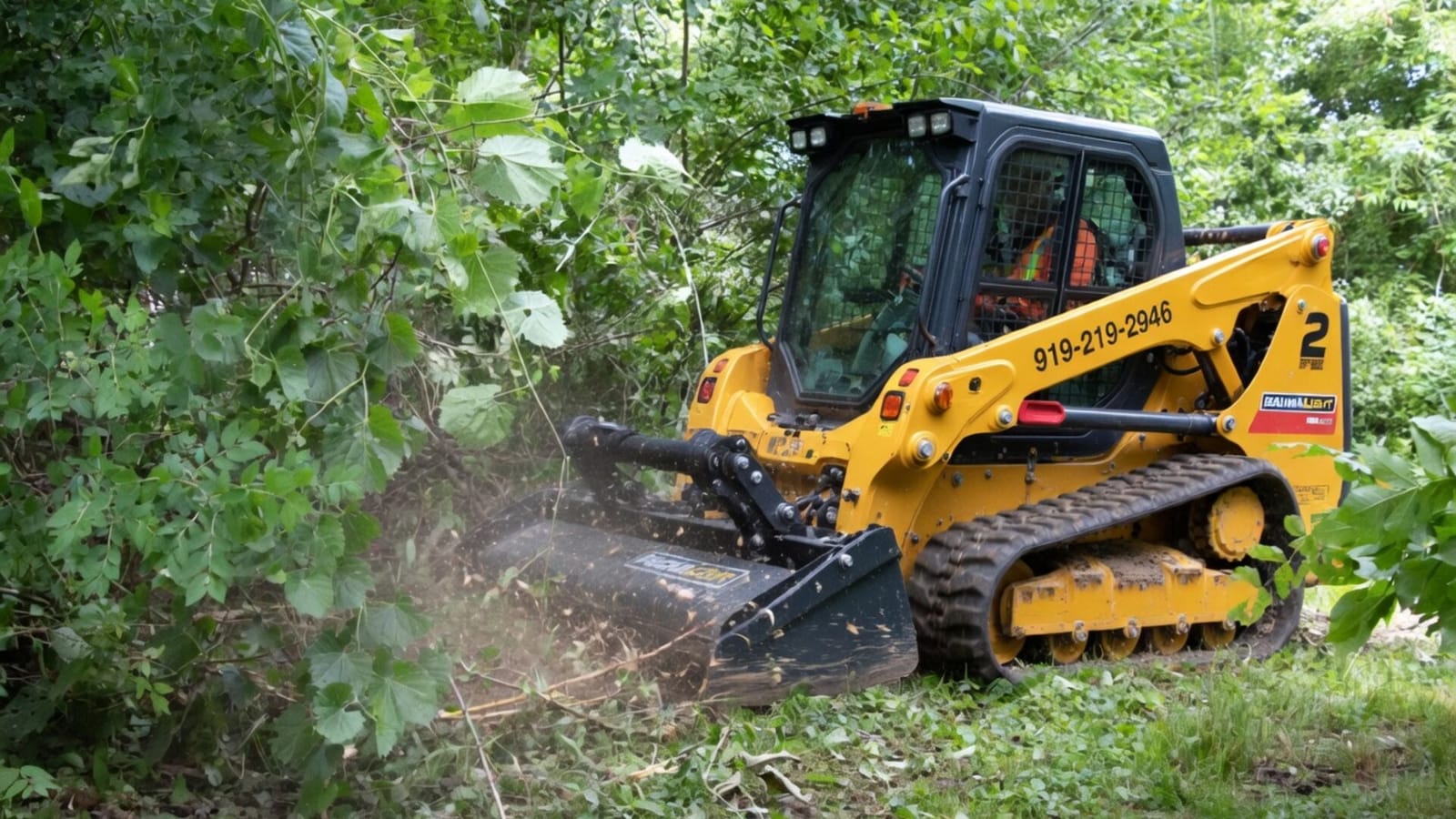
Guide Why One Mulching Pass Doesn't Finish a Reverted West Michigan Field
An idle West Michigan field grows a thicket, not a lawn. Here's why one forestry mulching pass through autumn olive and buckthorn is a start, not an end.
Ready to Get Started on Your Land?
Get a free, no-obligation estimate for property in Grand Rapids & West Michigan.
Get Your Free QuoteOr call us directly: (919) 525-3950