
Forestry Mulching Cost in Orlando (2026 Pricing)
Cut Brush Team · September 3, 2026 · 4 min read

In most places, choosing between mulching and hauling is a preference. In Orange County it is closer to a forced move, and that changes how you should read a quote.
Forestry mulching around Orlando runs $1,500 to $4,000 per acre, with lighter brush and invasive passes often landing between $1,500 and $2,500. Here is what drives the number, and why the alternative is unusually expensive here.
First, Why Hauling Costs So Much in This County
Burning yard waste and tree-cutting debris generated on residential property in Orange County is prohibited unless you use a permitted air curtain incinerator or obtain an open burning authorization from the Florida Forest Service beforehand. And the county’s own Air Quality Management section will not authorize open burning of that material.
So the traditional cheap disposal route is closed. That leaves trucking, which means paying for loading, hauling, and disposal on top of the clearing itself. On a multi-acre parcel the trucking alone can rival the cost of the clearing.
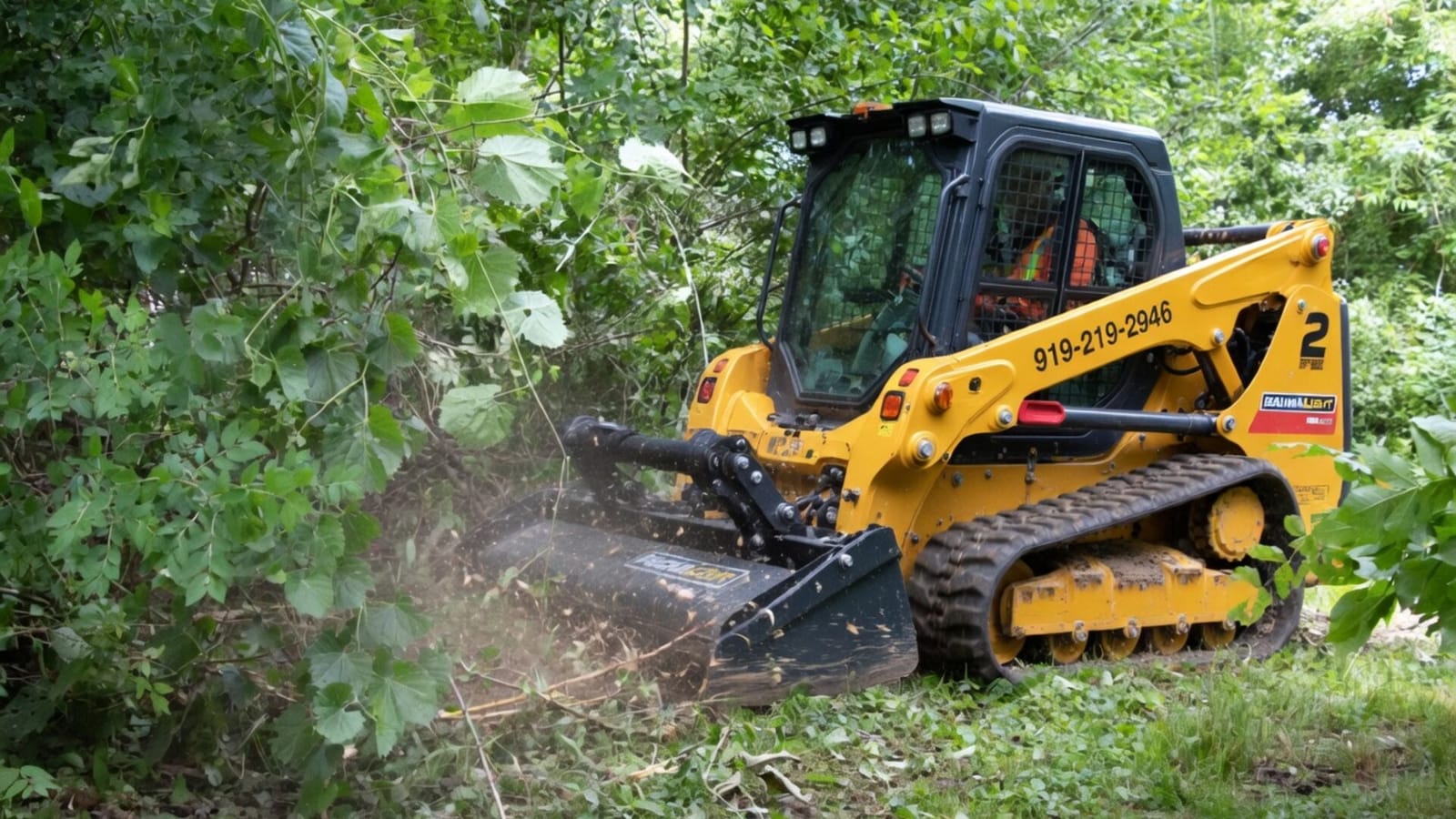
Mulching deletes that entire line item, because the material never becomes a pile. It is processed where it stands and spread as a mat. That is the single biggest reason mulching dominates residential clearing work in this county.
What Drives the Hours
Stem size and density
A drum moves through small stems quickly and slows sharply as diameter climbs. An acre carrying two hundred small stems often prices below an acre carrying forty large ones. Anyone quoting your parcel properly is looking at what is actually standing rather than estimating canopy from the street.
How much has to be worked around
This is the local multiplier. Orange County requires a permit to remove any tree larger than four inches in diameter at chest height, and specimen trees must be preserved where reasonable options exist, with approved removals replacing at two to one on cumulative caliper. That means a lot of Central Florida clearing is selective: the understory and invasives come off while the protected canopy stays.
Working around trees is slower per acre than clearing straight through, and that time is exactly what a quote prices.
Whether invasives are in scope
Chinese tallow and camphor are not simply cut. UF/IFAS guidance for tallow is to cut mature trees and apply herbicide to the freshly cut stump, pull immature plants by hand, and remove seedlings before they reach seed-bearing maturity, with triclopyr ester and triclopyr amine most effective. Camphor responds to mowing at the seedling stage and herbicide on trees and stumps.
A mulching pass over an infested parcel opens it. The treatment programme is what keeps it open. Those are two different prices and an honest quote separates them.
Access
Gated communities, narrow easements, soft sandy approaches, and long drives all burn hours before any clearing happens. It is the variable owners most often forget to mention on the phone.
Mulching Against the Alternatives
| Method | Cost driver | What you are left with |
|---|---|---|
| Forestry mulching | Machine hours | Cover on site, nothing to dispose of |
| Cut and haul | Cutting plus trucking plus disposal | Bare ground, highest total cost here |
| Cut and burn | Largely unavailable on residential property | A pile you cannot legally light |
| Air curtain incinerator | Equipment plus permitting | Ash, and a process most owners will not want |
What the Mat Does on Sandy Ground
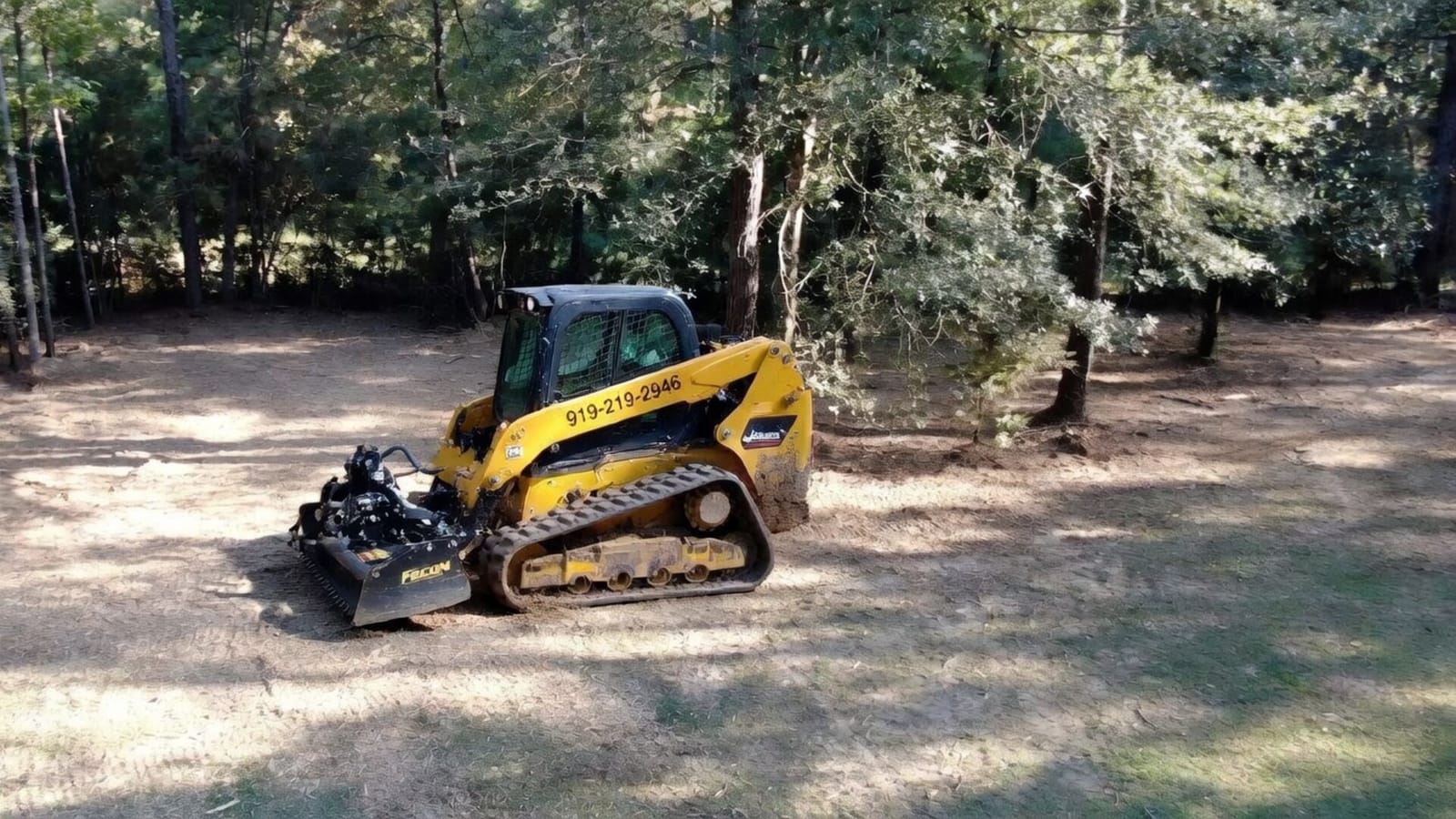
Central Florida soil is sandy and does not hold a bare surface well. A mulch layer keeps the ground covered through the afternoon storms, breaks down into organic matter over time, and leaves the parcel walkable the day the machine leaves rather than a field of exposed sand.
Depth follows the material. A light understory pass leaves a thin scattering; a heavy stand leaves a substantial mat. Where the ground is going back to grass, the contractor aims thin enough for it to come through; on disturbed edges and slopes they deliberately leave more.
What Mulching Does Not Include
Stumps and grade. The drum works at and slightly below grade. It is not stump grinding and it is not dirt work. A building pad cut to grade needs clearing plus grading, not mulching alone.
A permit. Method does not change the tree rules. Orange County still counts from four inches, still charges $25 per acre residential and $50 per acre commercial for removal permits, and still protects specimen trees. Our Orange County permit guide covers it.
Permanent removal of invasives. Covered above. Tallow and camphor come back from a cut.
Getting a Real Number
Ranges are for budgeting. The number you pay comes from someone standing on your parcel counting what the machine will actually meet, what is staying, and how the material leaves or does not.
The Orlando pricing guide has every range side by side, the forestry mulching page covers how the work runs, and if your property is anywhere around Orlando, Kissimmee, Clermont, Sanford, or St. Cloud, get a free quote from a qualified local contractor who walks it and puts the price in writing.
Related Services
Learn more about the services mentioned in this article.


More from the Cut Brush Blog
Keep reading for more tips and guides on land clearing.
 Services
 Chinese Tallow Removal in Florida: Why Cutting It Is Not Enough
Chinese tallow is in almost every Florida county. How to identify it, why a cut alone brings it back, and what UF/IFAS recommends for removing it properly.
 Guide
Guide Orange County Tree Removal Permits: The Four-Inch Rule and the Burn Ban You Cannot Get Around
Orange County requires a permit to remove trees over four inches. Here is what that means for clearing a lot near Orlando, what it costs, and why you cannot burn the debris.
Cost Guide Land Clearing Cost Per Acre in Florida (2026 Guide)
Land clearing cost per acre in Florida runs $1,500 to $4,500. See 2026 Ocala and Marion County pricing by vegetation type, then get matched with a local pro.
Ready for a Free Quote?
Get a free, no-obligation quote from a qualified local contractor in Orlando & Central Florida. Cut Brush will connect you with the right local expert.
Get Your Free QuoteOr call us directly: (919) 525-3950