
Orange County Tree Removal Permits: The Four-Inch Rule and the Burn Ban You Cannot Get Around
Cut Brush Team · September 3, 2026 · 5 min read

Two rules shape almost every clearing project in Orange County, and both of them surprise people who have cleared land somewhere else.
The first is that the county counts trees from four inches in diameter. The second is that once those trees are down, you very likely cannot burn them.
Together they decide how a project here gets planned, priced, and scheduled. Here is what each one actually requires.
Before we start: Cut Brush connects property owners with local land-clearing contractors. We are not the permitting authority and cannot make a determination for your parcel. What follows is what commonly applies, with sources, so you know which office to call.
Rule 1: The Four-Inch Tree Removal Permit
Orange County requires a permit to remove a tree from private property if the tree is larger than four inches in diameter at chest height.
Read that again, because most tree ordinances start at something like 18 or 24 inches. Four inches is a young tree. On a wooded parcel it means the survey is not a formality you tick off, it is the first substantive step in the project.
Fees: $25 per acre for private property residential removals, $50 per acre for commercial removals.
What the application needs: every regulated tree and proposed preserved tree identified with site location, diameter at breast height, common name, and identification of heritage and specimen trees where applicable.
Source: the county’s tree removal permit page. The Zoning Division publishes an arborist contact at 407-836-5807 and arborist@ocfl.net.
Specimen trees get more protection again
Reasonable efforts must be made to preserve specimen trees, and a permit to remove one is granted only when conditions leave no reasonable option to preserve it.
Where the zoning manager does approve a specimen removal, replacement runs at a two to one ratio of cumulative caliper installed against cumulative diameter of the trees removed. See Orange County Code §15-283.
The county has also been running a tree ordinance update process with public engagement, so it is worth checking the current text rather than relying on any article, including this one.
Rule 2: You Almost Certainly Cannot Burn the Debris
This is the one that changes project economics, and people routinely plan around a burn pile that will never be lit.
Burning yard waste and tree-cutting debris generated on residential property is prohibited in Orange County, except when using a permitted air curtain incinerator or when an open burning authorization is obtained from the Florida Forest Service beforehand.
And here is the sting: the Orange County EPD Air Quality Management section will not authorize open burning of yard waste or tree cutting debris. Source: the county’s open burning rules.
Where a Florida Forest Service authorization is possible, it is requested through the Orlando District Field Unit at 407-888-8760, either after 4 p.m. the day before the burn or on the day of the burn, and the service will only authorize burning of vegetative debris generated at the site of the burn. See the Florida Forest Service open burning FAQ and the state’s open burning overview. Local fire departments can impose additional rules, and a burn ban may be in effect during drought.
What That Leaves You
Every clearing project here has to answer what happens to the material. There are two real answers.
Haul it off. Reliable and expensive. You pay for loading, trucking, and disposal on top of the clearing itself, and on a multi-acre parcel the trucking alone can rival the clearing cost. It also means repeated heavy traffic down whatever approach you have.
Process it in place. Forestry mulching grinds the material where it stands and leaves it on the ground as a mat. No pile, so nothing to authorize, nothing to load, no disposal fee. On sandy Central Florida soil that layer is genuinely useful: it keeps the surface covered through the afternoon storms and breaks down into organic matter.
That is why mulching is the default on most Orange County work rather than a stylistic preference. It is the option that does not need anyone’s permission.
The Trees You Probably Do Want Gone
Not every tree on a Central Florida parcel is worth protecting, and the invasives are usually what an owner actually wants removed.
Chinese tallow was introduced as an ornamental in the 18th century, grows to about 30 feet, invades everything from wetland to upland habitat, and is now found in almost every county in Florida. UF/IFAS guidance is to cut mature trees and apply herbicide to the freshly cut stump, pull immature plants by hand, and remove seedlings before they reach seed-bearing maturity, with triclopyr ester and triclopyr amine the most effective actives. See UF/IFAS AG148.
Camphor tree is invasive in North and Central Florida, was brought to Florida for cultivation in 1875, and is easy to identify by the smell of a crushed leaf. Mowing kills seedlings; herbicide is effective on trees and stumps. See UF/IFAS Gardening Solutions.
Cut either one and walk away and the parcel gives you the stand back. That follow-through is real work and belongs in a quote.
A Practical Sequence
- Walk the parcel with a tape. Anything over four inches at chest height is in scope.
- Identify the specimen trees. Their removal is the hardest to get approved and the most expensive to mitigate.
- Decide the disposal method before clearing starts. It changes the price more than almost anything else here.
- Plan the invasive treatment, not just the cut, if tallow or camphor are on the parcel.
- Call the county. The Zoning Division arborist answers tree questions; Air Quality Management answers burning questions.
Where This Leaves the Budget
Most clearing around Orlando runs $1,500 to $4,500 per acre, with lighter understory near the bottom and dense canopy with a lot of protected trees to work around near the top. Our Orlando pricing guide breaks down every range and what moves it.
And if you would rather have someone walk the parcel, measure what the county counts, and tell you plainly which rules touch your ground, get a free quote from a qualified local contractor who does exactly that.
Related Services
Learn more about the services mentioned in this article.


More from the Cut Brush Blog
Keep reading for more tips and guides on land clearing.
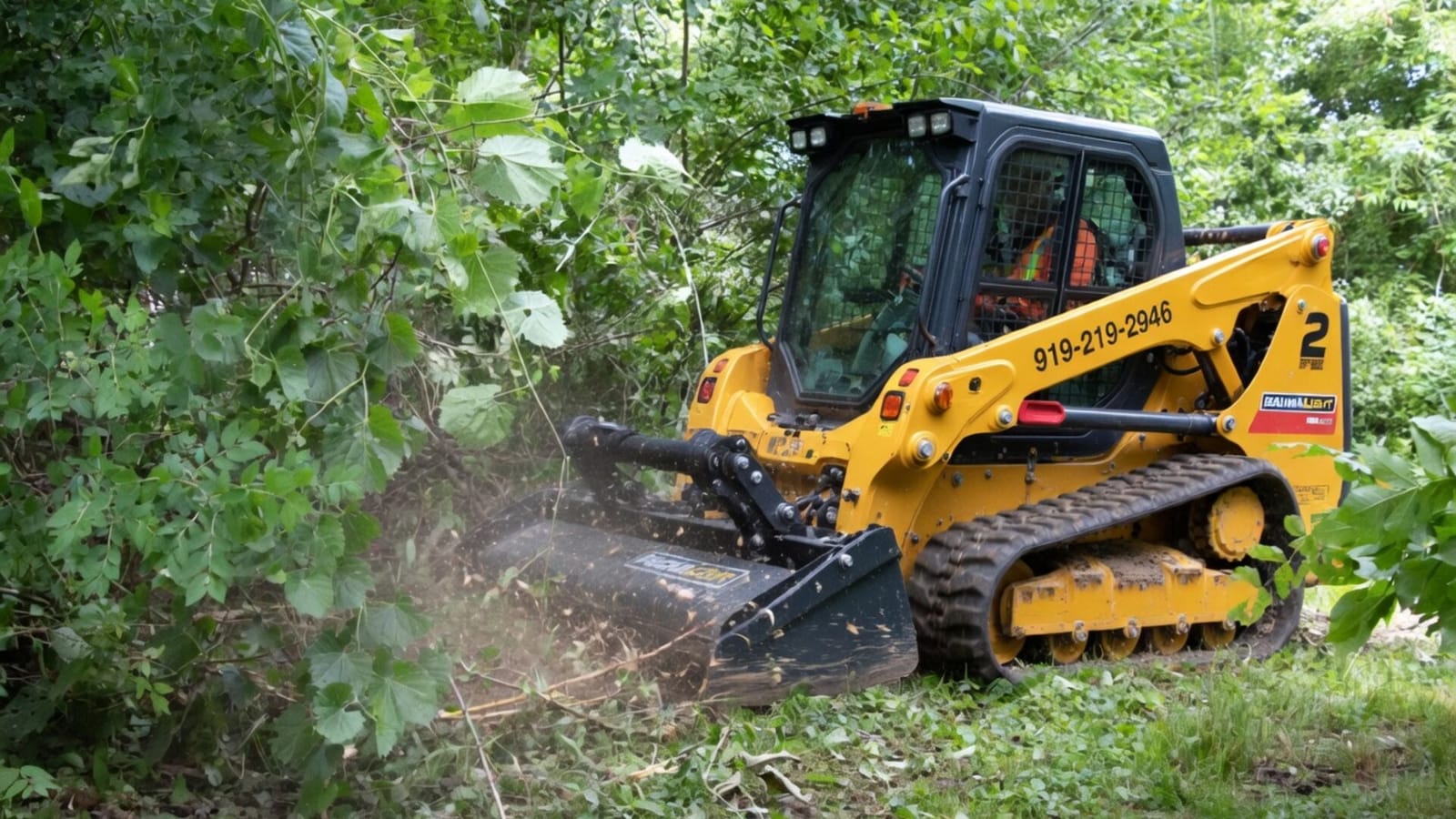 Services
 Chinese Tallow Removal in Florida: Why Cutting It Is Not Enough
Chinese tallow is in almost every Florida county. How to identify it, why a cut alone brings it back, and what UF/IFAS recommends for removing it properly.
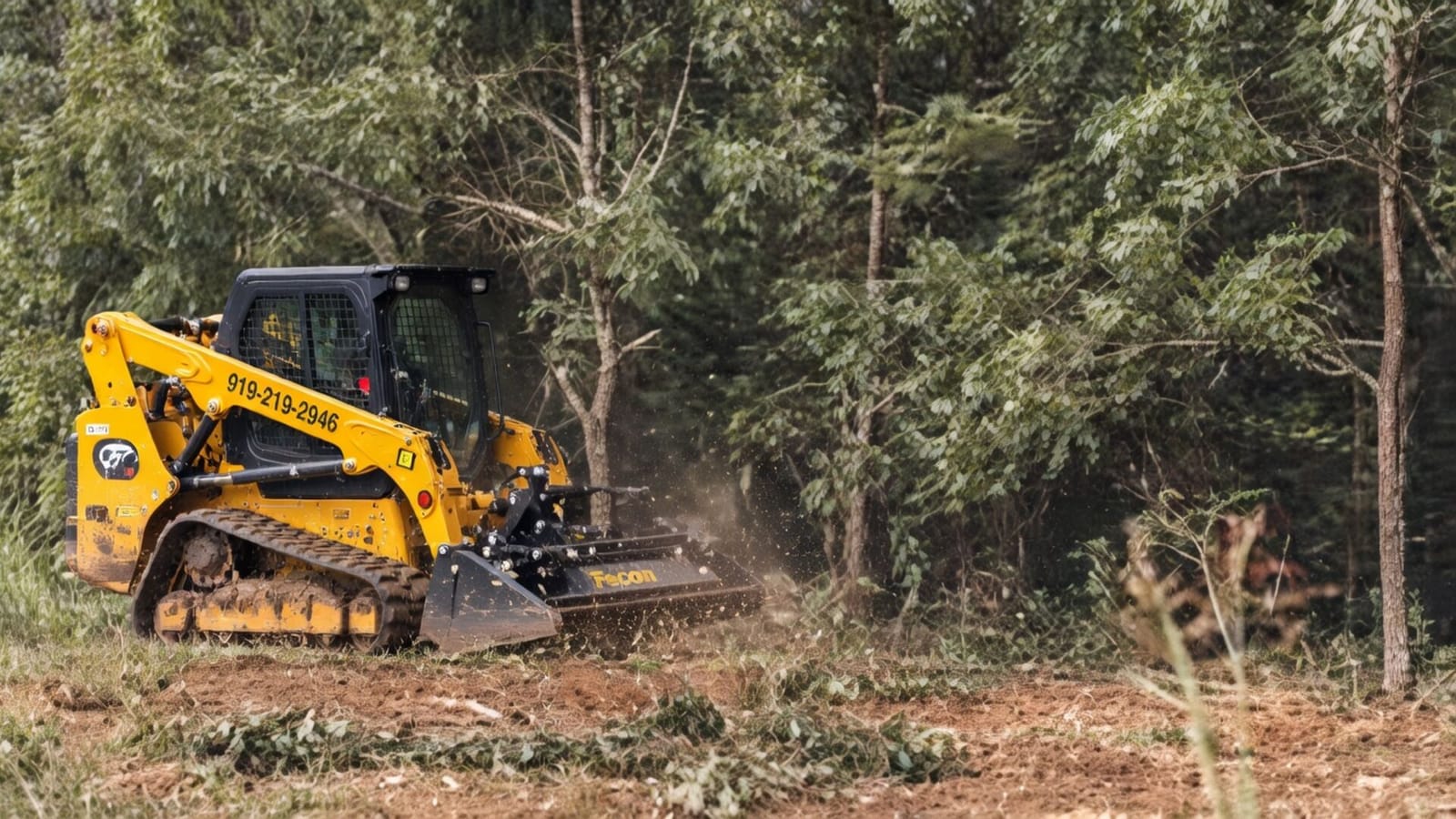 Cost Guide
 Forestry Mulching Cost in Orlando (2026 Pricing)
Forestry mulching cost in Orlando runs $1,500 to $4,000 per acre. Why it beats hauling in a county where you cannot burn debris, and what drives the hours.
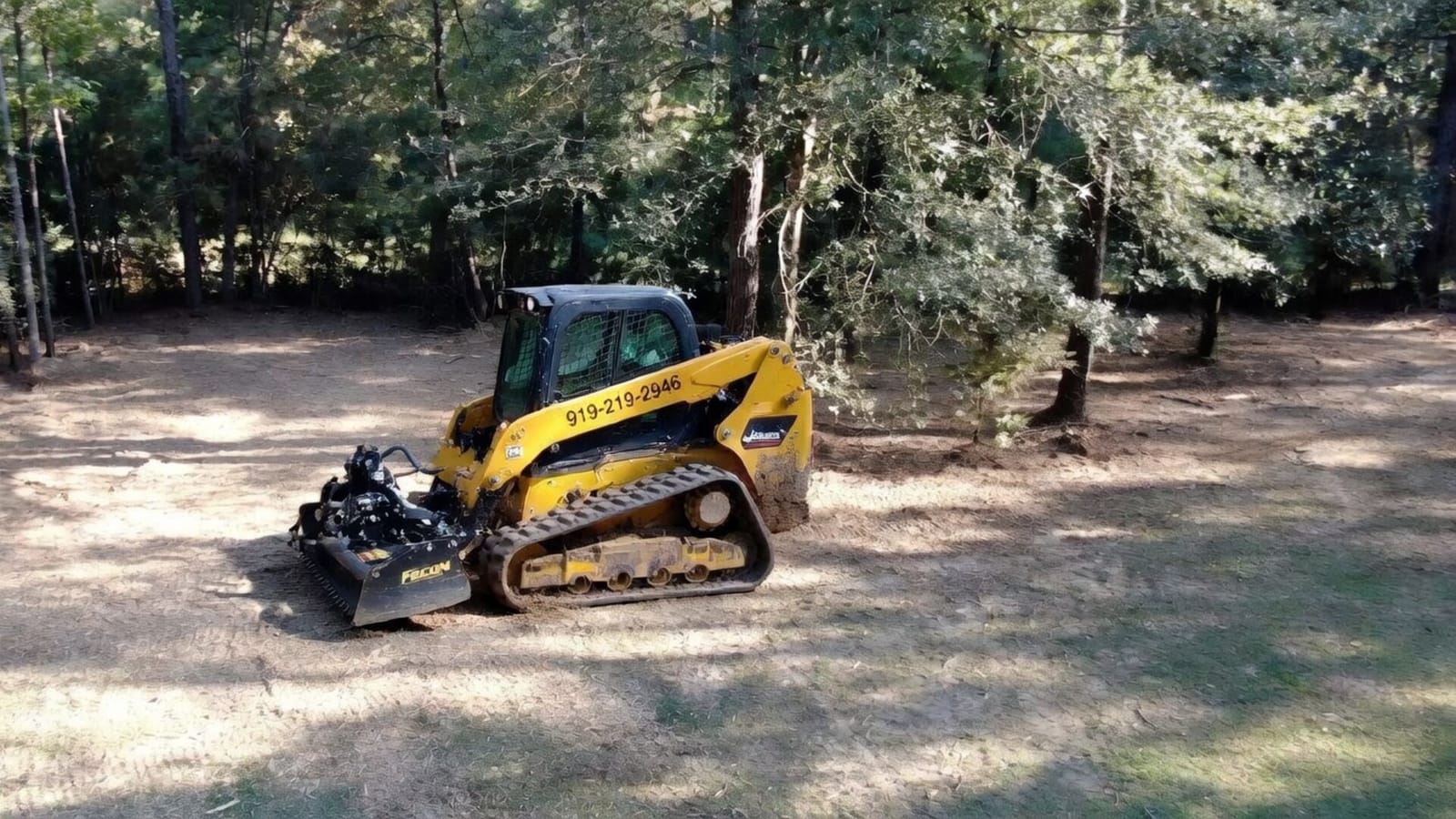 Cost Guide
 Land Clearing Cost Per Acre in Florida (2026 Guide)
Land clearing cost per acre in Florida runs $1,500 to $4,500. See 2026 Ocala and Marion County pricing by vegetation type, then get matched with a local pro.
Ready for a Free Quote?
Get a free, no-obligation quote from a qualified local contractor in Orlando & Central Florida. Cut Brush will connect you with the right local expert.
Get Your Free QuoteOr call us directly: (919) 525-3950