
Land Clearing and Grading Cost in Louisiana (2026 Guide)
Cut Brush Team · November 9, 2026 · 8 min read

Clearing land in Louisiana costs $1,500 to $4,500 an acre with our crew, and grading is a second bill from your excavating contractor. Around New Orleans that second bill is mostly fill: raising a pad on low clay ground, not shaving a slope flat. Most South Shore lots are a fraction of an acre, so our $1,500 project minimum sets the clearing price more often than the per-acre rate does.
At a glance:
- Our clearing price: $1,500 to $4,500 an acre for land clearing, the same band per acre equivalent for a house footprint, drive and utility path.
- Small lots: a job that prices out under $1,500 is quoted at the $1,500 minimum, a charge for the whole job and not a fee on top.
- Not in our price: fill, grading, compaction and build pads. We clear to the ground so your builder or dirt contractor can grade.
- Stormwater: disturbing 1 acre or more needs a signed stormwater plan and a posted notice before work starts; 5 acres or more also needs a Notice of Intent filed with LDEQ.
- New Orleans: any grading or filling is development and needs a permit from Safety and Permits.
Our crews clear land across New Orleans and the South Shore, in Orleans, Jefferson, St. Bernard, Plaquemines and St. Charles parishes.
How Much Does Land Clearing and Grading Cost in Louisiana?
A clear and grade job is two or three trades in sequence. The table splits the money by who does each phase, so you can line up bids that price the same thing.
| Phase | Who does it | Price |
|---|---|---|
| Flood zone and permit answers: elevation certificate, city or parish permit | You, with a land surveyor and your builder | Set by the surveyor and the permit office |
| Clearing the lot: brush, vine and Chinese tallow mulched, trees taken down, stumps ground flush | Cut Brush | $1,500 – $4,500 an acre; small lots at the $1,500 project minimum |
| Opening a house footprint, drive and utility path on a wooded or overgrown lot | Cut Brush | $1,500 – $4,500 per acre equivalent |
| Stumps pulled below grade under the pad, very large trees cut and hauled | Cut Brush, when you need it | Priced in the same quote |
| Fill, compaction and the pad, then finish grading and drainage | Your excavating contractor | Their own quote |
Where these numbers come from. The clearing rows are the rates on our New Orleans pricing guide, the one price list our Louisiana crew works from. We do not price the dirt half, because we do not do it. A pad’s cost turns on how high it has to go and how many yards of fill that takes, and only the excavator who builds it can quote that.
A quarter acre at the top of the mulching band works out to $1,000 of machine time, so a quarter-acre lot in Metairie, Chalmette or Harvey is quoted at the minimum. Grouping a neighbour’s lot into the same visit is the simplest way to get more from it.
Why South Shore Dirt Work Is Fill, Not Leveling
Clearing prices behave much the same across the five parishes. The dirt side does not, and the reason is the ground under the lot.
The ground sits at or below sea level. Harahan clay, the drained backswamp soil whose reference site is in Gretna, lies at or slightly below sea level behind the levees, kept dry by pumps, with water 12 to 36 inches down. A house pad on that ground goes up, so the excavator’s bill is mostly fill hauled in and spread, not soil cut and moved.
Heavy clay swells and cracks. Clay of this kind swells when wet and cracks open when dry, which is what makes foundations, roads and pipes hard to build on it. Fill over it goes down in compacted layers. When you compare pad bids, ask each one whether compaction and testing are in the price.
Some lots are former swamp. Westwego soils, around Avondale and along the river’s old distributaries, formed in semifluid clay and organic material on drained swamps, 2 to 3 feet below sea level. Organic layers dried out by drainage shrink and do not swell back. On a lot like that, ask your builder whether soil borings already exist for the subdivision before anyone prices fill.
Rain sets the start date, not the rate. Even the higher natural levee soils along the river hold water perched 1.5 to 4 feet down from December through April. A tracked machine on saturated clay slows down and ruts the lot, so the start waits for the ground to firm. A flexible start is often worth more than a discount.
Pro tip: Mark the pad, drive and utility path with your builder before we arrive. Under the pad we take stumps out below grade so the fill sits on clay, not on a mulch mat; everywhere else we grind flush and leave the mulch as cover until the dirt contractor shows up.
Clearing and Grading Across Louisiana
East bank, Orleans and Jefferson (New Orleans East, Metairie, Kenner). Built-out neighbourhoods on drained backswamp clay. Jobs are vacant lots and overgrown back halves, so access from the street and the project minimum drive the clearing price. See land clearing around New Orleans.
The West Bank (Gretna, Harvey, Marrero, Westwego, Avondale). Harahan and Westwego soils, with tallow thickets behind houses and on lots left unmowed. One knockdown does not control tallow for good; our Chinese tallow removal guide covers the follow-up, which a separate applicator handles.
The river parishes (Destrehan, Luling, Hahnville in St. Charles). The front of a tract is natural levee silt loam, the firmest ground in the market. The back runs off the levee toward the swamp onto poorly drained clay, so the clearing and the fill can both change from one end of a deep lot to the other.
St. Bernard and Plaquemines (Chalmette, Meraux, Belle Chasse). Low ground where the coastal question comes before the clearing. Our forestry mulching cost guide for New Orleans walks through a lot, a half acre and an acre.
Baton Rouge, the North Shore and north Louisiana. Different ground, such as the loess soils of the Felicianas. Our Louisiana land clearing cost per acre guide covers each region, the wetland and coastal rules and burning.
Permits Before You Clear, Fill or Grade in Louisiana
Statewide stormwater. LDEQ does not regulate a single job that disturbs less than 1 acre, unless the lot is part of a larger subdivision plan that reaches 1 acre. From 1 acre up to 5, coverage comes from the small construction permit: a written stormwater plan, signed before earth disturbing work begins, and a notice posted near the site entrance. There is no LDEQ fee for it. At 5 acres or more, a Notice of Intent goes to LDEQ first. Clearing, grading and excavation all count as disturbance, and a house with a drive and a pond on a 3 acre tract can pass 1 acre without anyone planning to.
The gap between trades. On a covered site, once clearing or grading stops on part of the lot and will not restart within 14 days, stabilization has to begin there immediately. Book the dirt contractor before we finish, so the cleared lot does not sit bare.
New Orleans. Any change to the ground, including grading and filling, is development, and all development in the city needs a permit from the Department of Safety and Permits. Every contractor working on a site where ground is disturbed provides erosion and sediment control and protects nearby catch basins. A post-construction stormwater plan applies at 5,000 square feet of hard surface or 1 acre of site, but not to houses, duplexes or residential buildings of fewer than six units. If your lot needs an elevation certificate and none is on file, a land surveyor prepares it.
The other four parishes. Jefferson, St. Bernard, Plaquemines and St. Charles parishes each have their own permit office. Call yours before fill is ordered and ask what floor elevation the lot needs, since that decides how many yards the pad takes.
Mulching leaves no brush pile, so on most South Shore lots there is nothing to burn or haul.
Frequently Asked Questions
How much does a house pad cost in the New Orleans area?
We do not build pads, so the number comes from your excavating contractor. Two things move it most: how high the permit requires the floor to sit, and whether compaction and testing are in the bid. Get the clearing price separately so you can see what each trade charges.
Should I hire clearing and dirt work through my builder or on my own?
Either works. Hiring the clearing yourself shows you its real price instead of a line buried in the build contract. Whoever hires, put the pad and drive layout in writing so the clearing and the fill are scoped to the same footprint.
Do I need a permit to clear and fill a lot in Louisiana?
Grading or filling in New Orleans needs a city permit at any size; in the other South Shore parishes, ask the parish permit office before work starts. Statewide, stormwater coverage starts when the job disturbs 1 acre and steps up to a Notice of Intent at 5.
Does Cut Brush bring fill or grade the lot?
No. We clear, mulch and handle stumps to the depth the pad needs, then hand the lot to your dirt contractor. We do not grade, bring fill, build pads, install septic or pull permits.
How soon can the dirt contractor start after you clear?
As soon as the clearing is done and the ground is dry. On a site of 1 acre or more, cleared ground left idle more than 14 days needs stabilization, so it pays to book both trades together.
Get a Clearing Price Before You Price the Pad
Request a free quote and our crew will contact you to discuss the property, the access and the clearing needed. Pick the nearest area below. The clearing rates are on our New Orleans pricing guide, and the other Louisiana guides price forestry mulching, brush hogging and underbrush removal.
Sources
- LDEQ, LPDES general permits: construction stormwater coverage from 1 acre (LAR200000) and 5 acres (LAR100000)
- City of New Orleans, floodplain management: permits for grading and filling, elevation certificates
More from the Cut Brush Blog
Keep reading for more tips and guides on land clearing.
 Cost Guide
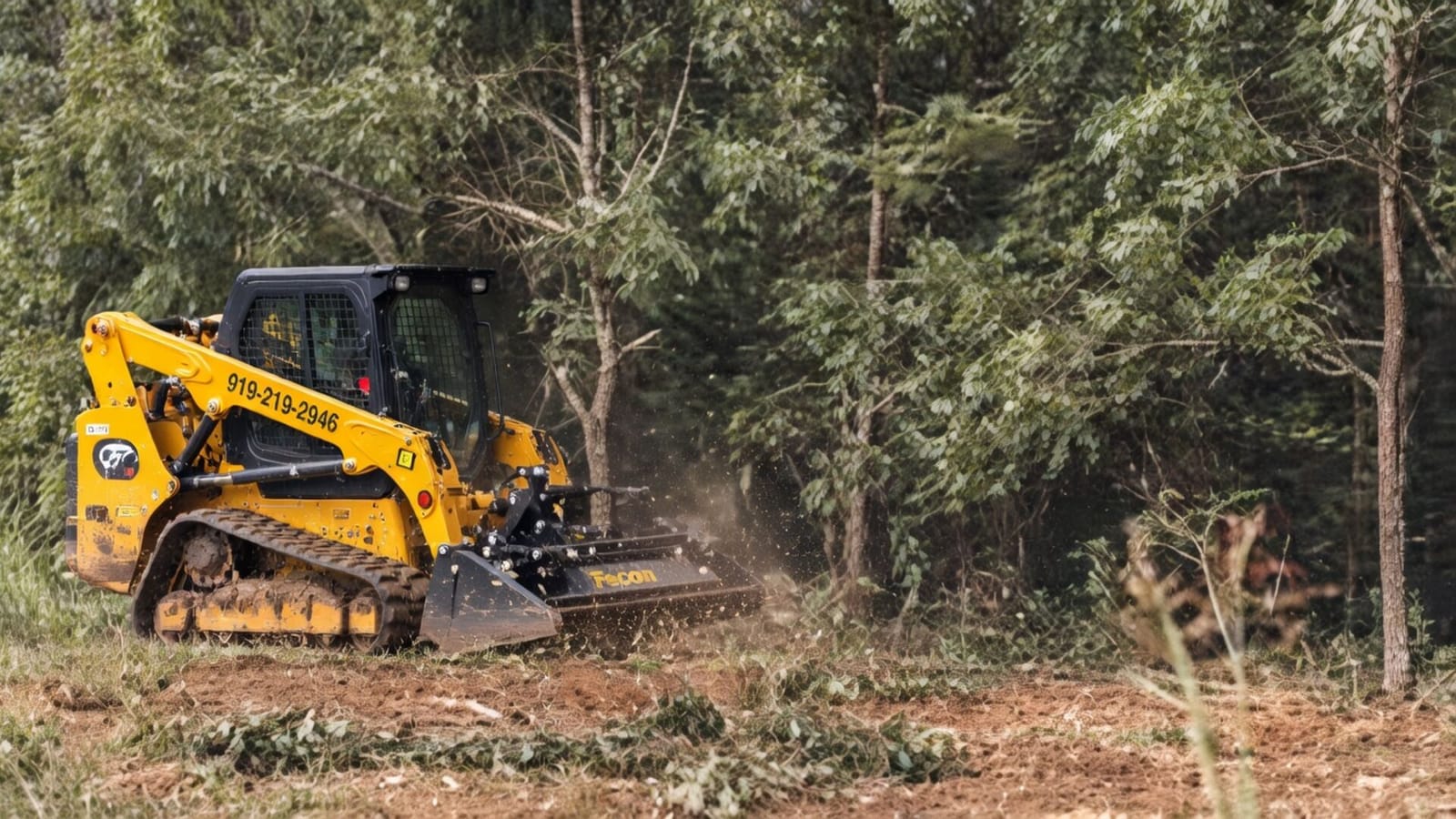
Forestry Mulching Cost in New Orleans, LA (2026)
Forestry mulching around New Orleans runs $1,500 to $4,000 an acre. Per acre against day rates, what slows an acre down, and what a city lot really costs.
 Cost Guide
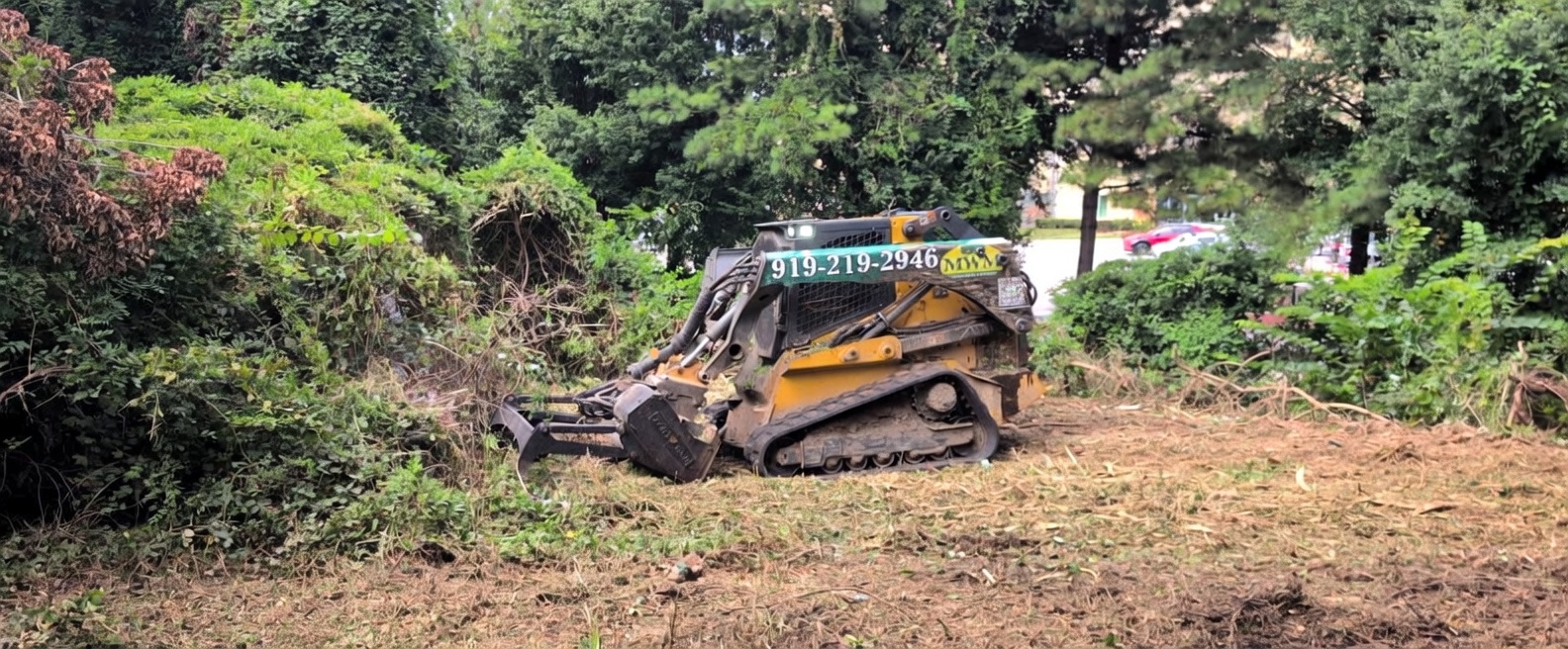
Brush Hogging Cost Per Acre in Louisiana (2026 Guide)
Brush hogging in Louisiana runs $75 to $400 an acre, set by how long the field has gone unmowed. Where Chinese tallow and cogongrass make mowing the wrong job.
Cost Guide Forestry Mulching Cost in Louisiana (2026 Guide)
Forestry mulching in Louisiana runs $1,500 to $4,000 an acre, with a $1,500 minimum. How tallow, wet clay, live oaks and coastal rules move a quote.
Comparing states? See land clearing costs by state.
Let's Get Started on Your Land
Request a free quote. We'll contact you to discuss your property, access, and the clearing you need.
Get a Free QuoteOr call us directly: (919) 525-3950
 Quick answers from Cut Brush