What to Know Before Clearing Land Around New Orleans
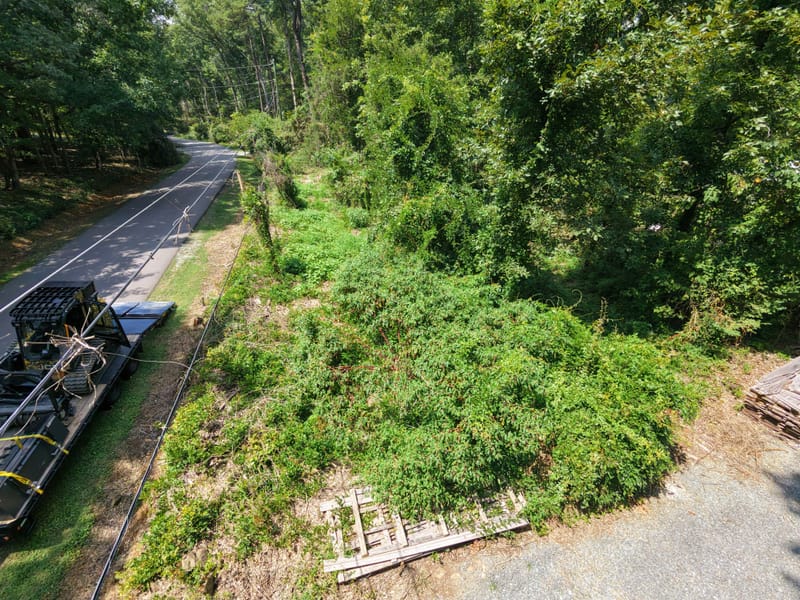
Overgrown lots and city rules. New Orleans limits grass and weeds on private
property to 10 inches. In April 2021 the city said a Notice of Violation gives the owner five days
to fix it, after which the city cuts the lot and bills the owner, at least $300 for the first cut.
Separately, development or redevelopment of a site of one acre or more comes under the
city's Stormwater Code, and trees in the right of way or a neutral ground belong to the city and
need a Parks and Parkways permit before anyone works on them. Requirements vary by parcel, scope and
jurisdiction, and the governing authority makes the determination.
Soft ground and the Coastal Zone. Federal land cover data puts about half the
ground within 15 miles of eastern New Orleans in wetland and most of the rest in development, with
under one percent in upland forest. All five parishes we serve run local coastal management
programs approved by the state Office of Coastal Management. A Solicitation of Views, with the fee
waived, tells you whether a property sits in the Coastal Zone, and low ground that may be wetland
gets that answer before a machine is booked. Clearing one acre or more also brings in state
stormwater rules from LDEQ.
Tallow comes back from the root. The U.S. Geological Survey describes Chinese tallow
as a common tree in the old fields and bottomland swamps of coastal Louisiana, and Louisiana law
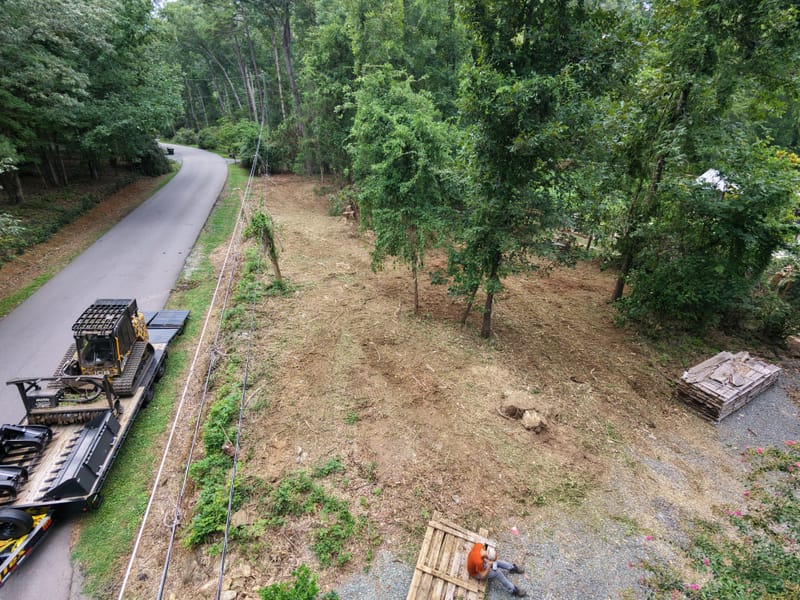
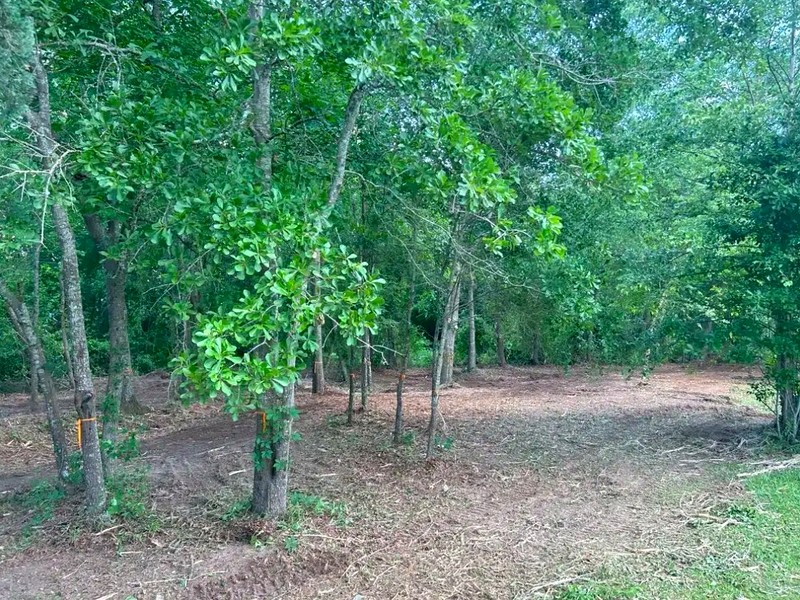
declares it a noxious plant that may be destroyed wherever found in the state. Mulching opens the
ground; treatment of the regrowth by a licensed applicator keeps it down. The
Chinese tallow
removal guide sets out the order.