
Underbrush Removal Cost in Louisiana (2026 Guide)
Cut Brush Team · November 9, 2026 · 9 min read
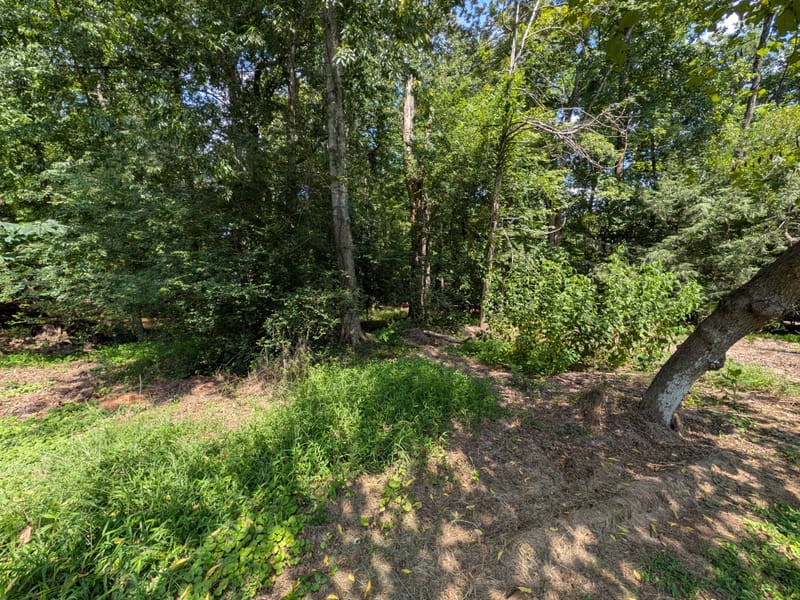
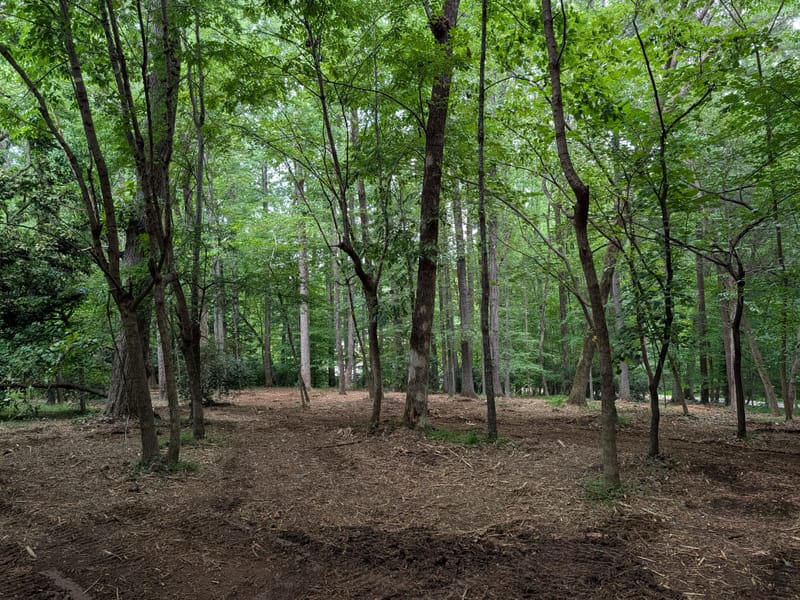
The live oak you bought the lot for is still there. You just cannot see its trunk for the Chinese tallow, vine and brush packed in underneath. Underbrush removal in Louisiana costs $1,500 to $2,500 an acre with Cut Brush, and a lot well under an acre is priced at our $1,500 project minimum. That is our Tallow & Understory Clearing rate: the growth under your trees comes out, and the oaks and pines you want stay standing.
At a glance:
- Tallow, vine and brush under trees you keep: $1,500 to $2,500 an acre
- A quarter-acre city lot: the $1,500 minimum, since even the top of the band works out to $625 there
- Chinese tallow is a declared noxious plant in Louisiana and may be destroyed wherever it is found in the state
- In New Orleans, grass and weeds over 10 inches make a lot overgrown, and the city’s lot abatement program can cut a lot the owner leaves that way
- Under 1 acre of disturbance is outside the state’s construction stormwater permits; clearing 1 acre or more for a building site is not
- Treating the regrowth is a licensed applicator’s line, quoted by them and never part of our price
Our crew works New Orleans and the South Shore: Orleans, Jefferson, St. Bernard, Plaquemines and St. Charles parishes. The prices in this guide are the ones we publish for that market.
How Much Does Underbrush Removal Cost in Louisiana?
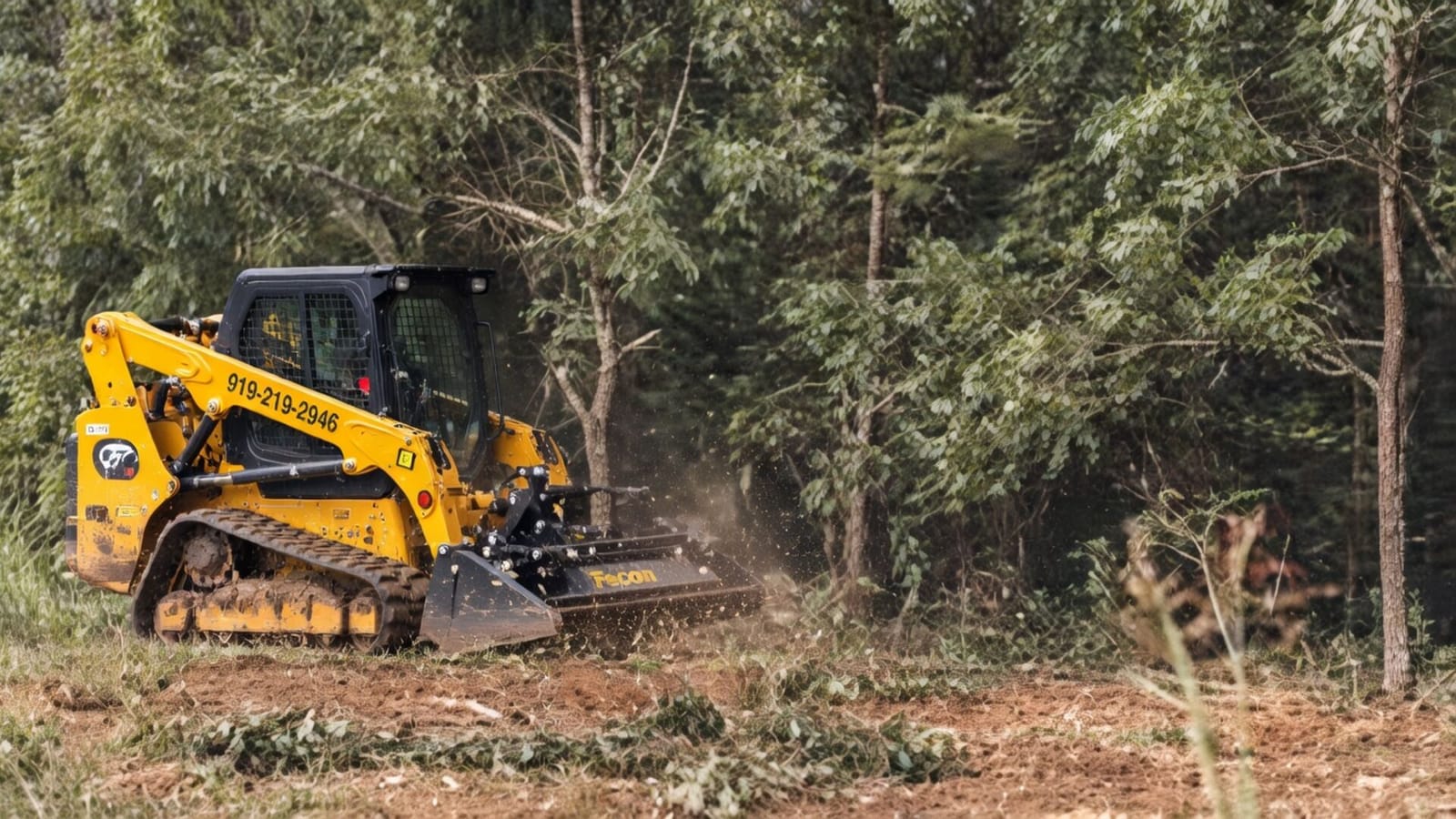
Underbrush removal, or understory clearing, takes out the shrub and sapling layer beneath a canopy you keep. On a Louisiana lot that layer is usually tallow saplings, vine and brush. A tracked forestry mulcher grinds it where it stands, so nothing is piled, burned or hauled.
| What is under your trees | Our price | What it looks like |
|---|---|---|
| Tallow, vine and brush cut out from under oaks and pines you keep | $1,500 – $2,500 / acre | The back half of a lot, a fence line or a lot edge gone to tallow |
| The same work on a lot well under an acre | $1,500 per project | A vacant lot in Chalmette or a yard edge in Harvey |
| A thicket where the larger trees come down too | $1,500 – $4,000 / acre | An old, dense stand on soft ground, priced as forestry mulching |
| Everything cleared, canopy included | $1,500 – $4,500 / acre | A whole parcel taken to the finish in the quote, priced as land clearing |
| An open field of grass and saplings under 2 to 3 inches | $75 – $400 / acre | Mowing with a brush hog, not understory work |
Where these numbers come from. These are the rates our crew prices from on the South Shore, published on our New Orleans pricing guide, where the understory row is called Tallow & Understory Clearing. An acre lands anywhere in its band depending on how thick the stand is, how many trunks stay and how firm the ground is. The $1,500 minimum is the least a whole job costs, not a fee on top.
What Changes the Price of a Louisiana Understory Job
Live oak roots run far past the canopy. A live oak’s roots typically spread two to three times wider than its dripline, so under a big oak most of the yard is root zone. Working over that much root zone means lighter, slower passes, so a lot with several oaks worth saving prices toward the top of the band.
How long tallow has had the lot. One summer without mowing leaves grass and soft brush. Years of neglect leave tallow saplings, often several stems from each old cut, and the head takes them one at a time. Stem count, more than acreage, is what we look at first.
How wet the ground is. About half the land near New Orleans is wetland, and a tracked machine on saturated soil slows down and can rut a yard. Weather moves the start date, not the rate, so a flexible date often saves more than haggling.
Getting the machine in. A trailer that unloads at the curb beside open ground keeps the hours on cutting. A narrow lot between two houses, a fence that comes down and goes back up, or a culvert at the street adds time. Trees on a New Orleans neutral ground or in the right of way belong to the city and need a Parks and Parkways permit, so our crew leaves them alone.
Will the Underbrush Grow Back?
Some of it will, which makes a Louisiana understory job a plan, not one visit.
- Chinese tallow does not stay gone after one cut. Mechanical removal on its own is not long-term control, and a lot cut once tends to come back with several stems from each old stump, so the sprouts need treating in the next growing season and checking after that. Our Chinese tallow removal guide sets out the full mulch, treat and check-back plan.
- Chinese privet spreads by seed and by root suckers. Cut stumps resprout unless the fresh cut is treated, which is herbicide work done to the label.
- Cogongrass spreads underground by rhizomes and travels on machines carrying soil from an infested site. A mulcher does not cure it. Before a machine comes onto your land, ask where it worked last and whether it was cleaned.
What that means for your budget: the first pass is the big cost, because it takes the woody stems down and opens the ground. Treating the sprouts is a separate line from a licensed applicator. Ask for it to be quoted beside ours so you see the whole plan, not only the first visit.
Pro tip: If the next lot is just as grown up in tallow, clear both in one visit. The trip costs the same for two hours as for eight, so two neighbors can share the $1,500 minimum, and the seed trees next door come down at the same time.
Underbrush Work Across Louisiana
New Orleans and the South Shore. Most jobs here are lots, not acreage: tallow thickets behind houses in Metairie, Gretna or Meraux, under live oaks, on low ground that holds water after rain. Expect the $1,500 minimum on a typical city lot and the per-acre band on larger ground near Hahnville or Belle Chasse. See land clearing around New Orleans, and our New Orleans forestry mulching cost guide shows how the acre band scales down to a lot.
North of Lake Pontchartrain, the Florida Parishes. Pine country around Hammond and Bogalusa, where cogongrass was first found in Washington Parish and now reaches most of the southeastern parishes. On ground with cogongrass nearby, the cleaning of the machine before and after the job matters as much as the price.
Central and western pine country. Around the Kisatchie National Forest, pine stands that go years without fire fill with a crowded midstory of hardwoods until the canopy closes. Taking that midstory out from under widely spaced pines is understory work, and open spacing moves fast, toward the lower half of the band.
For the Delta, the Atchafalaya Basin and the southwest prairies, our Louisiana land clearing cost guide covers the ground and what it does to a per-acre price.
Permits, Overgrown Lots and Burning
Overgrown lots in New Orleans. Cutting the grass and weeds on a lot is the owner’s duty under city ordinance, and the city’s Chapter 66 program abates overgrown lots, vacant ones near schools, parks and public buildings first. That abatement is a grass cut; a lot full of tallow saplings is past a mower and needs understory work.
Stormwater. Disturbing less than 1 acre is not regulated by the state’s construction stormwater permits. From 1 acre up to 5 acres falls under the small construction permit, and 5 acres or more under the large one. Clearing brush from under trees you keep is not a building project; clearing an acre or more for a house or a subdivision lot is, so ask before that job starts.
Wetlands, coastal review and burning. All five South Shore parishes run approved local coastal programs, and low ground can need a coastal answer before any clearing; a Solicitation of Views asks for one and carries no fee. Land-clearing fires must burn at least 1,000 feet from anyone else’s home, which rules them out on almost every city lot. The Louisiana land clearing cost guide covers both; mulching leaves nothing to burn or haul.
Frequently Asked Questions
How much does it cost to clear underbrush from a small lot in Louisiana?
A lot under about half an acre is usually priced at our $1,500 project minimum, because a quarter acre at the top of the understory band works out to $625. The minimum is the whole price for the job, not a charge added to it. Larger ground follows the $1,500 to $2,500 per-acre band.
Is clearing the underbrush cheaper than clearing the whole lot?
Usually, yes. Understory work runs $1,500 to $2,500 an acre because the trees stay and nothing is hauled. Full forestry mulching runs $1,500 to $4,000 an acre and land clearing $1,500 to $4,500. Our Louisiana forestry mulching cost guide prices the job when the larger trees come down too.
Will New Orleans cut my overgrown lot?
It can. A lot counts as overgrown once grass and weeds pass 10 inches, and the city’s Department of Code Enforcement abates lots owners leave that way, with neighbours reporting them through 311. Getting the lot cleared first keeps the job, and the price, in your hands.
What happens to the brush after it is cleared?
It stays on the ground as a layer of chips, so there are no burn piles and no haul-off loads in the price. Under a live oak, keep that layer thin: more than about 2 inches added in a year, or a heavy cover of soil or cloth, can starve the roots of air. Point out the trees that matter most and ask that the chip layer stay thin under them.
Is there cost-share money for clearing underbrush in Louisiana?
For timberland, possibly. Louisiana’s Forest Productivity Program is open to owners of at least 10 contiguous acres suitable for growing timber, and its competing vegetation practice pays toward herbicide or prescribed burning, not mulching. A state forester or consulting forester has the application. A house lot does not qualify.
Get an Underbrush Removal Quote in Louisiana
Request a free quote, pick the nearest area below, and our crew will contact you to discuss your property, the access and the clearing you need under your trees. For open field rather than woods, our Louisiana brush hogging cost guide is the better fit; for a building site, the land clearing and grading guide shows who does each phase.
Sources
- City of New Orleans, Chapter 66 Lot Abatement Program: the 10-inch overgrown lot rule and city abatement
- Louisiana Department of Environmental Quality, construction stormwater FAQ: the 1-acre and 5-acre permit thresholds
Also used: La. R.S. 3:1791; LAC 33:III.1109; LSU AgCenter on live oaks, tallow, privet and cogongrass; the Forest Productivity Program.
More from the Cut Brush Blog
Keep reading for more tips and guides on land clearing.
 Cost Guide
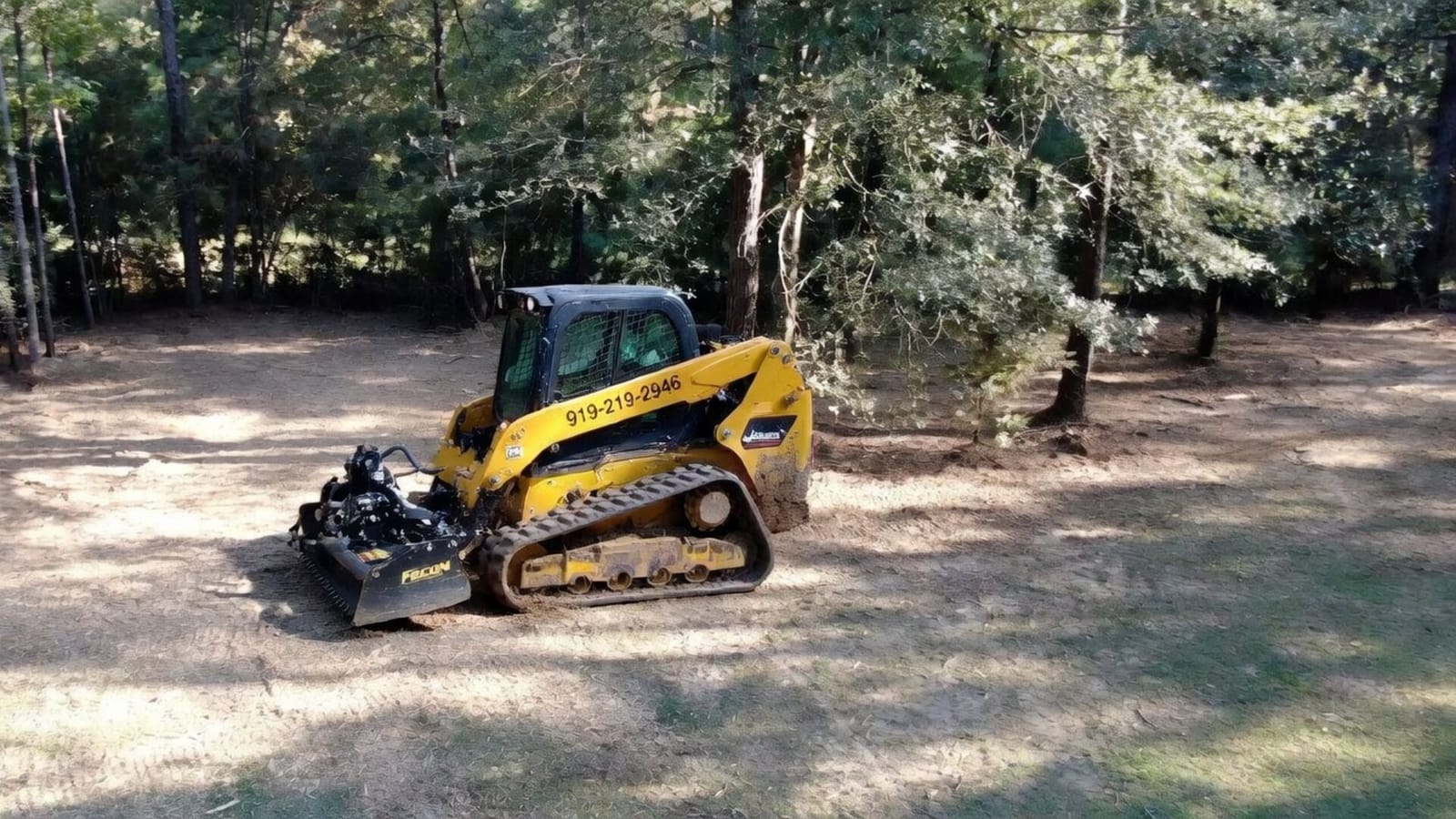
Land Clearing Cost Per Acre in Louisiana (2026 Guide)
Land clearing in Louisiana runs about $1,500 to $4,500 per acre. How wetlands, soft alluvial clay and the state's burn rules move a quote, and where to get one.
 Cost Guide
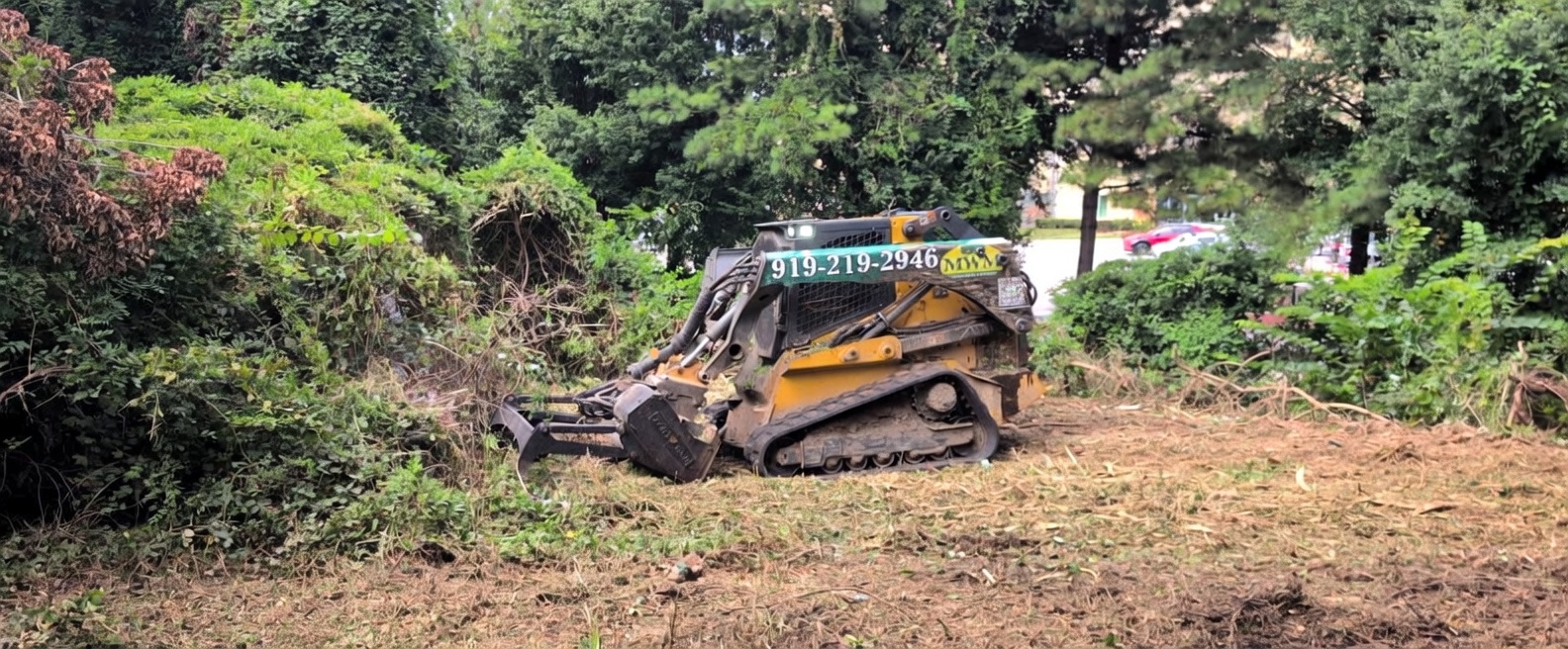
Brush Hogging Cost Per Acre in Louisiana (2026 Guide)
Brush hogging in Louisiana runs $75 to $400 an acre, set by how long the field has gone unmowed. Where Chinese tallow and cogongrass make mowing the wrong job.
 Cost Guide
Forestry Mulching Cost in Louisiana (2026 Guide)
Forestry mulching in Louisiana runs $1,500 to $4,000 an acre, with a $1,500 minimum. How tallow, wet clay, live oaks and coastal rules move a quote.
Comparing states? See land clearing costs by state.
Let's Get Started on Your Land
Request a free quote. We'll contact you to discuss your property, access, and the clearing you need.
Get a Free QuoteOr call us directly: (919) 525-3950
 Quick answers from Cut Brush