
Land Clearing and Grading Cost in Wyoming (2026 Guide)
Cut Brush Team · November 9, 2026 · 9 min read

We charge $1,500 to $4,500 per acre equivalent to clear a Wyoming house site, and the grading is a second bill from your excavating contractor. North of Cheyenne the clearing half is often small: a windbreak row across the planned drive, Russian olive in a draw, a few volunteer trees where the house will sit.
At a glance:
- Lot and homesite prep: $1,500 to $4,500 per acre equivalent for the house footprint, shop, drive and utility route, with a minimum charge of about $1,500
- Grading, pads and fill: quoted by your excavating contractor; Cut Brush never grades or builds pads
- Laramie County permit: a Grading, Erosion and Sediment Control (GESC) permit for any project disturbing 1.0 acre or more, homes included
- Near a draw: clearing, grubbing, grading or filling within 100 feet of a major drainage way or FEMA flood hazard area needs that permit at any size
- State stormwater: 1 to under 5 acres falls under a no-application DEQ permit; 5 acres or more needs a Notice of Intent and a stormwater plan
- Before anyone digs: call 811 at least two full business days ahead
Our Wyoming crew works through our Ranchettes market, covering Ranchettes, north Cheyenne and Southeast Wyoming across Laramie, Goshen and Albany counties. We take the lot to ground level and hand it to your dirt contractor; we do not grade, build pads, install septic or pull permits.
How Much Does Land Clearing and Grading Cost in Wyoming?
On a Laramie County acreage lot, site prep breaks into phases, and each one has a different owner.
| Phase | Who does it | Price |
|---|---|---|
| Clearing the house site, shop, drive and utility route | Cut Brush | $1,500 – $4,500 per acre equivalent |
| A windbreak row or fence line in the way | Cut Brush | $1,500 – $2,500 an acre, by the share of an acre the row covers |
| Stumps out below grade under the footprint and drive | Cut Brush | A separate line in our quote; elsewhere stumps are ground flush |
| GESC permit and any state stormwater coverage | You or your builder | County permit fees; DEQ’s large permit (5 acres or more) is $200 per 12 months |
| Cut, fill, pad and drainage | Your excavating contractor | Their own quote |
| Reseeding so the GESC permit can close | You, your builder or a landscaper | Their own quote |
Where these numbers come from. Both clearing bands are the lot and homesite prep and windbreak and fence line rates on our Ranchettes pricing page. Work that covers less ground than the minimum is charged the minimum of about $1,500 in place of an acre rate, with nothing added. We stop at ground level, so there is no grading figure from us: the pad, the cut and fill, and any base brought in are priced by the contractor who moves the dirt.
What Moves the Number on a Wyoming Lot
How much is actually growing. Within 15 miles of Ranchettes the land is 84.8 percent grassland, and shrub, forest and pasture together cover about 0.1 percent. So most clearing north of Cheyenne is an old shelterbelt, fence line brush or Russian olive along a draw, and plenty of jobs land at the minimum. On a bare prairie lot the whole site prep budget can be dirt work.
Stumps where the footprint goes. Our default is stumps ground flush. That suits a yard or a pasture, but a footing or a driveway base wants them out below grade, and every pulled stump leaves a hole the dirt contractor fills and compacts. Show us where the house, shop and drive go, and only those stumps come out.
Swelling clay under the pad. The shrink-swell clays found most often in Wyoming are bentonite and calcium montmorillonite, which come mostly from Cretaceous shales and volcanic ash deposits. They grow when wet and shrink when dry, and a house or road built on them without mitigation can crack or fail. The state hazard map works only at a regional scale, so a site-specific soils test before the pad is designed is money well spent; it decides what your excavating contractor digs out and brings in.
A 36-inch frost line. Homes in Laramie County are designed to a frost depth of 36 inches, so footings sit at least that far below finished grade. The grade your contractor sets is where that measurement starts, which is one more reason to settle the pad height before the foundation crew arrives.
How close the work is to a draw. Russian olive fills the draws (our Wyoming Russian olive guide covers the regrowth), and that is where the rules tighten. Clearing, grubbing, grading or filling within 100 feet of a major drainage way or a FEMA flood hazard area needs a Laramie County GESC permit whatever the acreage. Placing fill in a floodplain also takes the county’s Floodplain Development Permit, whose application covers fill and bridge or culvert work.
Where in Wyoming Is Your Land?
Ranchettes, north Cheyenne and the rest of Laramie County. Ranchettes, Fox Farm-College and South Greeley sit in unincorporated Laramie County, where the GESC permit sets the order of work; Burns and Pine Bluffs are towns, so check with the town office there as well. A site under an acre with negligible impact may qualify for the lighter Low Impact permit, and the county decides which applies. Agricultural land uses are exempt, but land grading never counts as a routine farming practice. Residential uses outside the county’s zoned boundary are exempt too, so ask Planning and Development at 3966 Archer Parkway, Cheyenne (307-633-4303) which side of that line your parcel falls on.
Laramie, WY and Albany County. Unincorporated Albany County issues a zoning certificate for a new home, barn, garage or shed, valid for two years. Dirt work can start before the certificate is approved, but construction begun before approval carries a $100 late fee. So clear and rough-grade early, and hold the building until the certificate is in hand. The Planning office is at 1002 South 3rd Street in Laramie, 307-721-2568.
LaGrange and Goshen County. Our crew covers LaGrange too, and the Laramie County GESC permit stops at the county line. Before your dirt contractor books the job, ask Goshen County which rules apply to your parcel.
Permits Before You Clear and Grade in Wyoming
Laramie County. A GESC permit covers any project disturbing 1.0 acre or more, residential included; fill or excavation of 50 or more cubic yards not tied to building a detached single-family home; utility lines over 1,000 linear feet outside the county right-of-way; and the drainage way rule above. A Standard permit application includes a signed copy of the applicable state stormwater permit, and from 5 acres of disturbance a copy of the stormwater pollution prevention plan. Under the county’s Land Use Regulations, the erosion controls are the job of the person developing the land, which is you or your builder, and the county can stop work on a site that falls out of compliance.
The permit also has an end. On residential subdivision projects it must be closed before a Certificate of Occupancy, and closing means perennial cover at 70 percent of the native background on every unpaved area, with the silt fence and temporary check dams gone. On the shortgrass around Cheyenne that reseeding takes time, and the county can hold other permits until it is done.
Pro tip: Put the excavating contractor who will actually grade on the GESC permit. Replacing the contractor named on it means a new GESC application and any transfer fee, and skipping the transfer brings a stop work order.
State stormwater. Statewide, construction activity that disturbs 1 acre to just under 5 sits under DEQ’s Small Construction General Permit without filing anything, as long as the work follows its conditions. From 5 acres the Large permit applies: file a Notice of Intent with a stormwater plan and a map of access from a public road, and pay $200 for each 12 months of coverage, capped at $1,000 for a five-year term. A smaller lot still counts when it is part of a larger common plan of development or sale that reaches those sizes.
Digging and burning. Wyoming law requires notice to the 811 center at least two full business days before any excavation; from outside the state the number is 800-849-2476. Pile burning and the county fire warden’s rules are in our Wyoming land clearing cost guide.
Frequently Asked Questions
Do I need a permit to clear and grade my land in Laramie County?
If the project disturbs 1.0 acre or more, yes: a GESC permit, homes included. Under an acre you can still need one within 100 feet of a major drainage way or floodplain, or for 50 cubic yards of fill not tied to a single-family house. Agricultural land uses and residential uses outside the county’s zoned boundary are exempt, so call 307-633-4303 before the work starts.
Does Cut Brush do the grading in Wyoming?
No. Our crew clears to ground level and stops there; we do not grade, build pads, bring in fill, install septic or pull permits. Ask us to time the clearing for the week before your excavating contractor starts.
How much does it cost to prepare land for a house in Wyoming?
The clearing side runs $1,500 to $4,500 per acre equivalent, with a minimum of about $1,500. The grading, pad, fill and any fix for swelling clay come from your excavating contractor, and on open grassland north of Cheyenne, where there is little to clear, that half can be most of the budget. Add the GESC permit and the reseeding needed to close it.
How deep is the frost line around Cheyenne?
Homes in Laramie County are designed to a 36-inch frost depth. Footings go below it, so fix the finished grade before the foundation is dug.
Should the stumps come out before the dirt contractor arrives?
Only where something is built or paved. Under the house, shop and drive we take stumps out below grade as a separate line in the quote, and the dirt contractor fills and compacts the holes. Everywhere else, flush stumps cost less and leave nothing to fill.
Get a Clearing Quote Before You Book the Grader
Request a free quote and pick the nearest area below. Our crew will contact you to discuss the property, the access and the clearing you need, then put the clearing price in writing so your excavating contractor can price the dirt work on a clean lot. Every clearing band is on our Ranchettes pricing page, and the growth itself is covered in our Wyoming forestry mulching, underbrush removal and brush hogging cost guides.
Sources
More from the Cut Brush Blog
Keep reading for more tips and guides on land clearing.
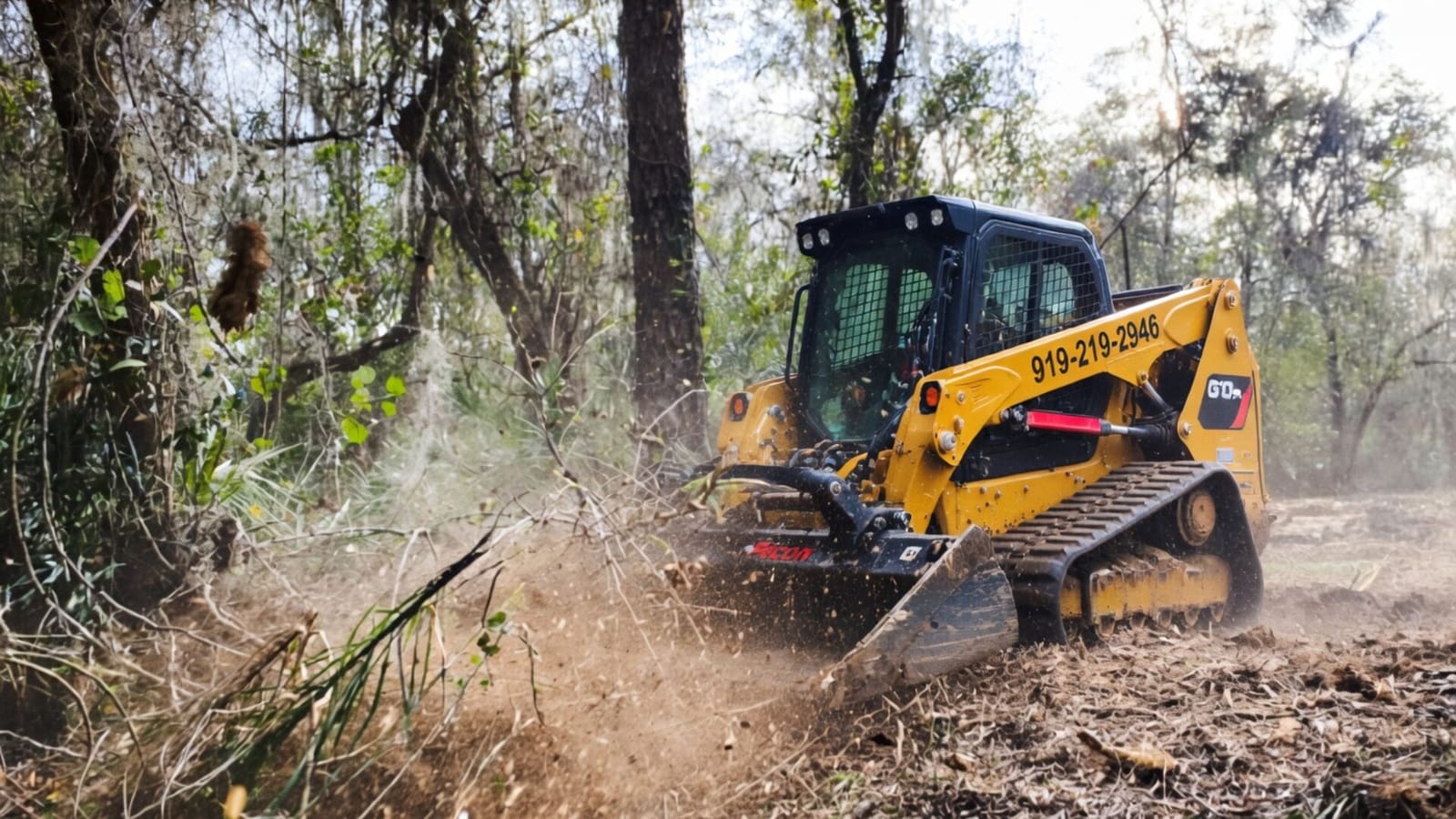 Cost Guide
Underbrush Removal Cost in Wyoming (2026 Guide)
Underbrush removal in Wyoming runs $1,500 to $2,500 an acre for windbreak and fence line work near Cheyenne, from a $1,500 minimum. See what moves the price.
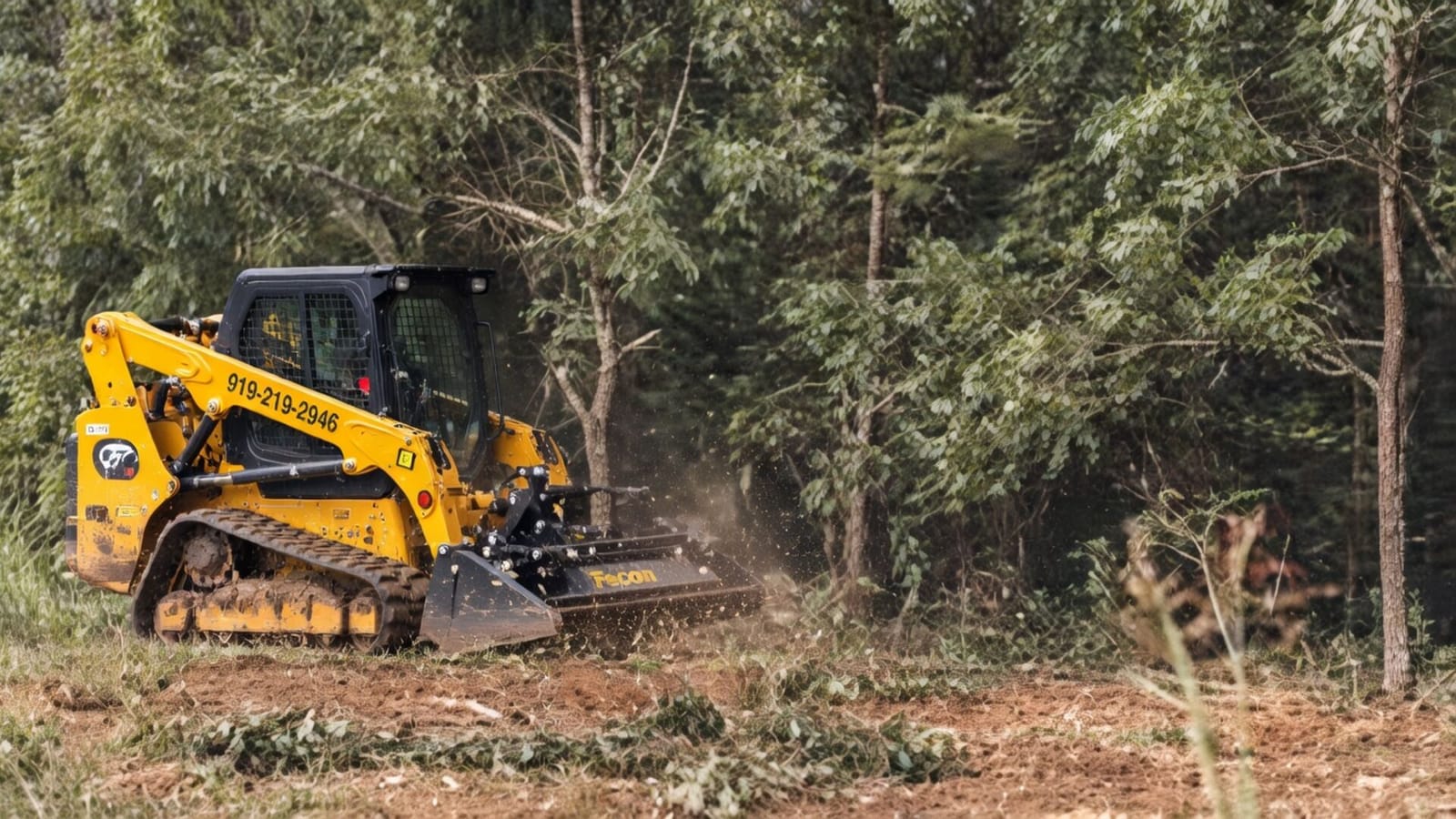 Cost Guide
Forestry Mulching Cost in Ranchettes & Cheyenne, WY
Forestry mulching in Ranchettes and Cheyenne, WY: $1,500 to $4,000 an acre. Windbreak row costs, mulching versus cutting. Request a free quote today.
Cost Guide Land Clearing Cost Per Acre in Wyoming (2026 Guide)
Land clearing in Wyoming: $1,500 to $4,500 per acre. Juniper, Russian olive and windbreak rows cleared, stumps flush. Request a free quote for your land today.
Comparing states? See land clearing costs by state.
Let's Get Started on Your Land
Request a free quote. We'll contact you to discuss your property, access, and the clearing you need.
Get a Free QuoteOr call us directly: (919) 525-3950
 Quick answers from Cut Brush