
Brush Hogging Cost Per Acre in Oklahoma (2026 Guide)
Cut Brush Team · October 9, 2026 · 8 min read

The back pasture went a couple of summers without a cutter. Now there is plum thicket in the draw, blackberry along the fence and little cedars poking up through the grass, and you want to know what it costs to knock it all down. Brush hogging in Oklahoma runs $75 to $400 an acre with Cut Brush, and our crews work it around Duncan, Oklahoma City, McAlester and Durant. The price tracks one thing above all: how long since the field was last cut.
At a glance:
- Our price: $75 to $150 an acre for a field cut within the past year, rising to $200 to $400 for one left three years or more.
- Minimum: $250 to $500 a visit, where one small field usually starts.
- Where mowing stops: once saplings pass 2 to 3 inches thick, it is no longer a brush hog job, and that ground moves to our $1,500 to $2,500 an acre cedar and pasture work.
- What a cutter will not kill: the Oklahoma Department of Wildlife Conservation lists winged elm, locust, young oaks, shinnery oak, mesquite, plum and blackberry as plants that sprout back from the roots.
- Burning the cuttings: county commissioners can ban burning by resolution for up to 14 days at a time and renew it while fire danger holds.
Choose the nearest of our four Oklahoma areas at the bottom of this page. We look at the field, tell you whether a cutter will finish it, and put the price in writing.
How Much Does Brush Hogging Cost in Oklahoma?
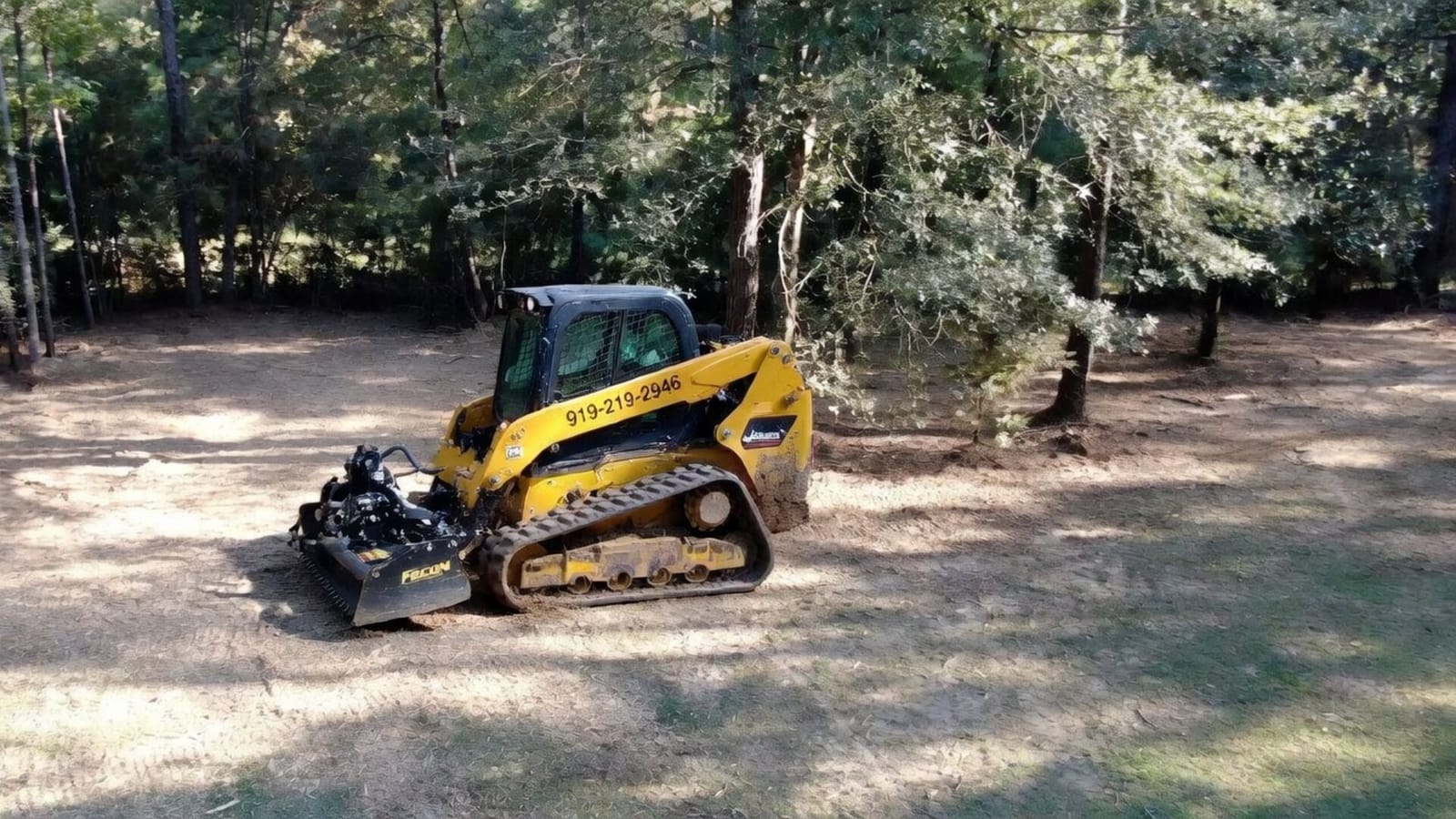
Brush hogging is a tractor pulling a heavy rotary cutter through growth that would wreck a lawn mower: tall grass, weeds, briars and saplings up to about two inches thick. The cuttings stay on the field. We price it by the condition of the field when we arrive.
| Field condition | Our price per acre | What it looks like in Oklahoma |
|---|---|---|
| Mowed within the past year | $75 – $150 | Grass and last season’s weeds, no woody stems |
| 1–2 seasons of growth | $125 – $250 | Waist-high grass, plum and blackberry starting, cedar seedlings below the knee |
| 3+ years overgrown | $200 – $400 | Thick brush, winged elm and cedar saplings up to 2 inches |
| Reverting to woods | Not a brush hog job | Saplings over 2–3 inches, cedar taller than the tractor, privet along the woods |
Where these numbers come from. This is the brush hogging rate card Cut Brush publishes, and we price Oklahoma fields by it, since our four Oklahoma pricing pages cover the heavier cedar work rather than mowing. A field in the last row gets priced from the $1,500 to $2,500 row on the Duncan pricing page and the other three Oklahoma pages, where the same band goes by a local name. For a sense of the local market, Oklahoma State University’s most recent custom rates survey put brush hogging at $55.24 an hour statewide, from 29 answers.
What Changes the Price of Mowing an Oklahoma Pasture
Red clay, wet or dry. OSU names heavy soils among the reasons custom rates run high, and the Duncan country shows why. The Foard soil, first mapped in Cotton County near Emerson, is a very slowly draining silty clay over red beds. After a rain it holds a tractor off the field for days; in a dry spell it sets up hard and rough. Either way, the cutter covers fewer acres an hour.
Brush that comes back thicker. ODWC’s private lands biologists put it plainly: mowing knocks winged elm, locust, young oak, shinnery oak, mesquite, plum and blackberry to the ground, but the roots live and send up as many sprouts as before, or more. A field mowed only to hold those back is a yearly bill. Where a thicket covers more than 30 percent of the ground, ODWC’s advice is to mow for access and then spray the regrowth.
Cedar, while it is small. OSU fact sheet L-320 records that eastern redcedar does not sprout when cut below its lowest live branch. A cutter taking knee-high seedlings off at ground level kills them, which makes a pass through young cedar the cheapest cedar control there is. Once the lowest limbs ride above the deck or the trunk is past what a shredder will take, the job moves out of mowing.
Sericea lespedeza. OSU’s NREM-2874 says mowing weakens sericea only if it is cut close several times a year, each time it reaches 12 to 18 inches, with the late-season cut doing the most harm. It also says mowing will not kill it. A sericea pasture means several visits a season, not one.
Firebreaks and fence lines. ODWC asks landowners to mow constructed firebreaks at least 12 to 15 feet wide, and seldom over 30, at least twice a year. That is long, narrow work that comes around every spring and fall, so it pays to book it with the main field.
Pro tip: If the goal is wildlife rather than a clean look, ask for strips instead of the whole field. ODWC suggests mowing lanes 20 to 30 feet wide in August and leaving six to eight inches of stubble, so doves and turkey can reach the seed. Fewer acres cut means a smaller bill.
Brush Hogging Across Oklahoma
Southwest Oklahoma around Duncan. Marlow, Walters and Waurika sit on red bed clay, and most of the work here is young cedar coming into grazing ground, which a cutter can still handle while it is small. Toward the Red River the Tillman soil lists mesquite and prickly pear among its native plants, and mesquite is one of the resprouters ODWC warns about. When the cedar has outgrown a mower, our Duncan cedar clearing guide covers the next step.
Central Oklahoma. Creek bottoms set the calendar around the metro. The Port soil, first described in Grady County east of Chickasha, is flood plain ground that goes under briefly now and then between March and October, so plan bottom-ground mowing around a wet spring. Section lines and fence rows full of young cedar fall under the Regrowth & Understory Work row on the Oklahoma City pricing page.
Southeast Oklahoma around McAlester. The Counts soil of Pittsburg County carries a very slowly draining clay subsoil, and pastures here were cut out of post oak and blackjack woods. Young oaks, one of ODWC’s resprouters, crowd every edge. Privet along a woods line is past a mower’s reach; the Oklahoma underbrush removal cost guide prices that work.
Texoma country around Durant. The Durant soil, named for the town, is a very slowly draining clay that cracks open in dry weather, which makes for a rough ride at mowing speed in late summer. Cedar pushing in from the pasture edges is the usual reason a field outgrows a cutter here.
Fire Weather and Burning Rules for Oklahoma Mowing
Fire weather. Oklahoma Forestry Services issues a Fire Weather Watch for conditions 12 to 72 hours out and a Red Flag Warning for the next 24 hours, and warns that in those conditions a simple spark can start a major wildfire. We hold a mowing job for a calmer day while a warning is up.
Burning the cuttings. Shredded grass stays where it drops; it is the limbs and saplings cut out of fence rows that end up in a pile. A county burn ban can run up to 14 days and be renewed, and a county violation carries a fine of up to $500. Leaving that brush to rot is the dependable plan.
Cost share does not cover mowing. The Oklahoma Conservation Commission’s brush management rates pay for mechanical cedar control defined as mulching, bulldozer, grubber or excavator work. Shredding is not on that list, and the four counties around Duncan are not among this year’s 23 eligible districts. Once a pasture is past mowing, the Oklahoma forestry mulching cost guide takes over.
Frequently Asked Questions
How much does it cost to bush hog an acre in Oklahoma?
We charge $75 to $400 an acre, set by how long since the last cut. On one or two acres, the $250 to $500 minimum usually decides the price, because the trailer trip costs the same for two acres as for twenty.
How often should I brush hog a pasture in Oklahoma?
Once a year keeps most fields in the cheapest row and catches cedar seedlings while a cutter still kills them. Firebreaks want two passes a year, and a sericea pasture needs several cuts a season to hold it back.
Does bush hogging kill cedar trees?
Small ones, yes. OSU’s L-320 says a redcedar cut below its lowest live branch does not resprout, so mowing seedlings off at the ground ends them. A cedar whose lowest limbs sit above the deck survives, and once trunks pass what a shredder can take, it becomes cedar clearing.
Will brush hogging get rid of mesquite or blackberries?
No. ODWC lists both among the plants that come back after mowing, often with more stems than before. Mowing controls their height for a season; holding them back takes a spray on the regrowth.
When is a field too far gone for a brush hog?
When saplings pass 2 to 3 inches thick, cedar stands taller than the tractor, or privet has walled off the woods edge. We will tell you that on the walk and price the job from our $1,500 to $2,500 an acre row instead.
Get a Brush Hogging Quote in Oklahoma
Pick the nearest area below and request a free quote. Our crew will contact you to talk through the worst corner and the gate a tractor would use, what is growing (grass, sericea, plum, elm, young cedar), how tall the tallest cedar stands, whether cattle are on the field, and what you are after: a single cut, wildlife strips, firebreaks kept open, or ground cleared past what mowing can do. Mowing on the other side of the state line? See our Texas brush hogging guide and Arkansas brush hogging guide.
Sources
More from the Cut Brush Blog
Keep reading for more tips and guides on land clearing.
 Cost Guide
Forestry Mulching Cost in Duncan, OK (2026)
Forestry mulching around Duncan, OK runs $1,500 to $4,000 per acre. How cedar height, stand density, burn bans and access move a Stephens County quote.
 Guide
Land Clearing Permits in Duncan & Stephens County, OK
When clearing land near Duncan, OK needs a permit: city floodplain rules, Stephens County, ODEQ stormwater from one acre and burn bans.
Cost Guide Forestry Mulching Cost in Oklahoma (2026 Guide)
Forestry mulching in Oklahoma runs $1,500 to $4,000 an acre with Cut Brush. See how cedar height, sandstone, privet and state cost share move your price.
Comparing states? See land clearing costs by state.
Let's Get Started on Your Land
Request a free quote. We'll contact you to discuss your property, access, and the clearing you need.
Get a Free QuoteOr call us directly: (919) 525-3950