
Bexar County Burn Ban: What to Do With Brush When You Cannot Burn It
Cut Brush Team · September 3, 2026 · 5 min read

You cleared the brush. It is in a pile. And the county just posted a burn ban.
This is one of the most common ways a land project stalls around San Antonio, and it is entirely avoidable if you plan the disposal before the clearing. Here is how burn bans work in Bexar County, where to check the real status, and what your options are when the pile cannot be lit.
How Burn Bans Work Here
Burn bans in Texas are declared at the county level by the commissioners court, based on drought and fire conditions, and they apply to unincorporated parts of the county. Cities have their own rules on top.
Bexar County has spent significant stretches of recent years under a ban. In February 2026 the county extended its burn ban for 90 days, effective through May 11, citing extremely dry conditions, heavy ground fuel, and a drought index climbing past 500 in parts of the county.
Violating a county burn ban is a Class C misdemeanor punishable by a fine of up to $500.
During that ban, the county allowed one narrow exception: residents of unincorporated Bexar County could burn trash in burn barrels fitted with a metal wire mesh screen lid to keep sparks contained. That is a household trash provision, not a land clearing provision. A brush pile from five acres of cedar is not covered by it.
Where to Check the Actual Status
Bans start, extend, and lift. Any article, including this one, is a snapshot. Two authoritative places to check before you strike a match:
- Bexar County Alert Center for the county’s own current posting.
- Texas A&M Forest Service burn ban map for a statewide view, useful if your land is in Comal, Kendall, Medina, Guadalupe, or Wilson County.
If you own land in more than one county, check each one. Neighboring counties frequently have different statuses on the same day.
The Four Options for Cleared Brush
1. Burn it
Cheapest when it is available, and it is often not available exactly when you need it. Beyond the ban question, burning brush means managing smoke, neighbors, and risk on your own property, and around San Antonio the months when a big pile is most tempting are usually the months conditions are driest.
Even outside a ban, Texas has statewide outdoor burning rules administered by TCEQ that govern when and how outdoor burning may occur, and cities have their own restrictions inside their limits. “The ban lifted” is not the same as “anything goes.”
2. Haul it off
Reliable and expensive. You are paying for loading, trucking, and disposal on top of the clearing itself, and on a multi-acre job the trucking alone can rival the cost of the clearing. It also means heavy traffic on your drive, which on a long caliche approach is its own problem.
Worth it when a site must be stripped bare for construction. Hard to justify otherwise.
3. Chip it
Works well on a small scale and for limbs and trunks of manageable size. It becomes impractical fast on acreage, because feeding a chipper by hand is slow and someone has to move the material to the machine.
4. Mulch it in place
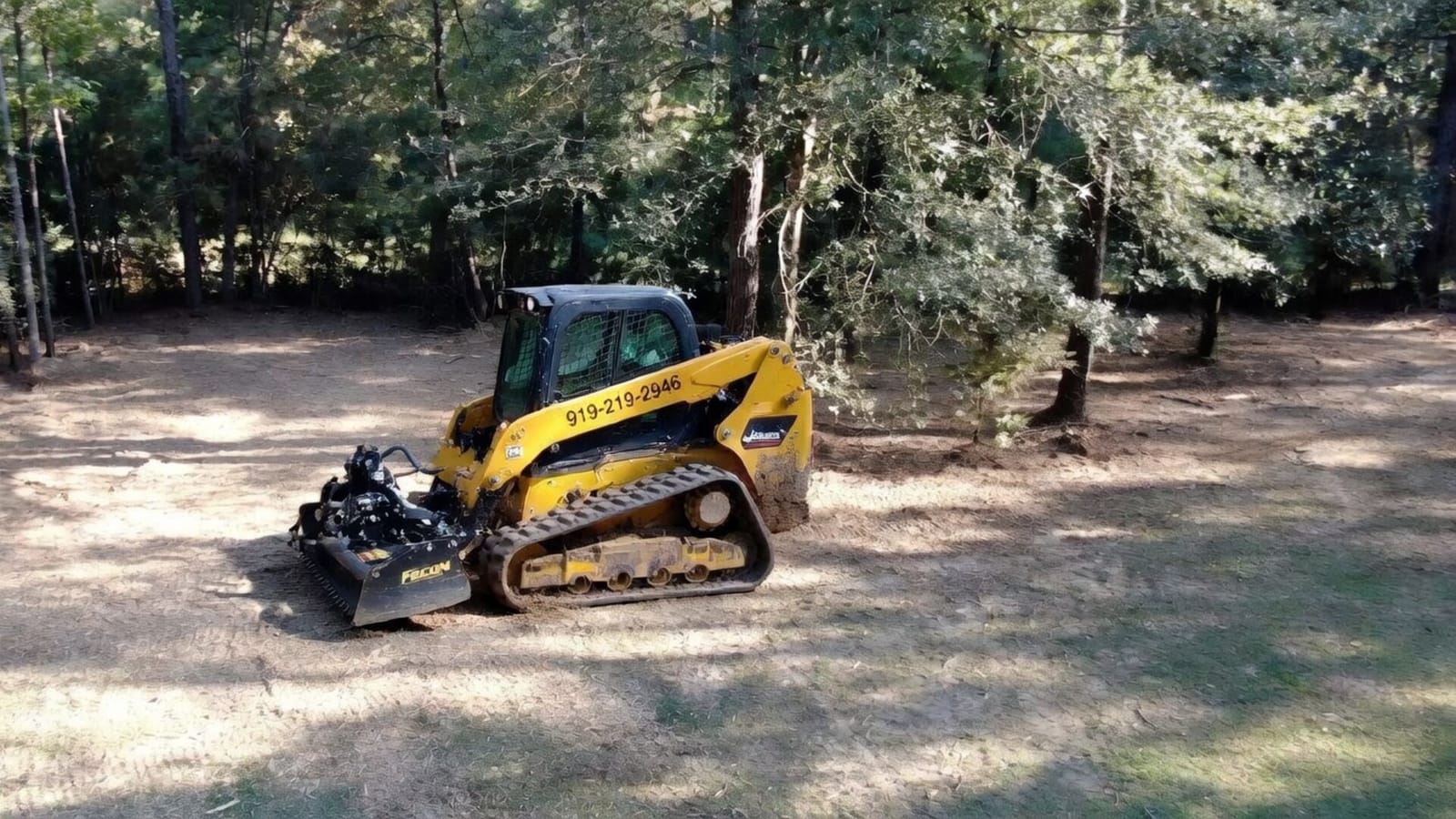
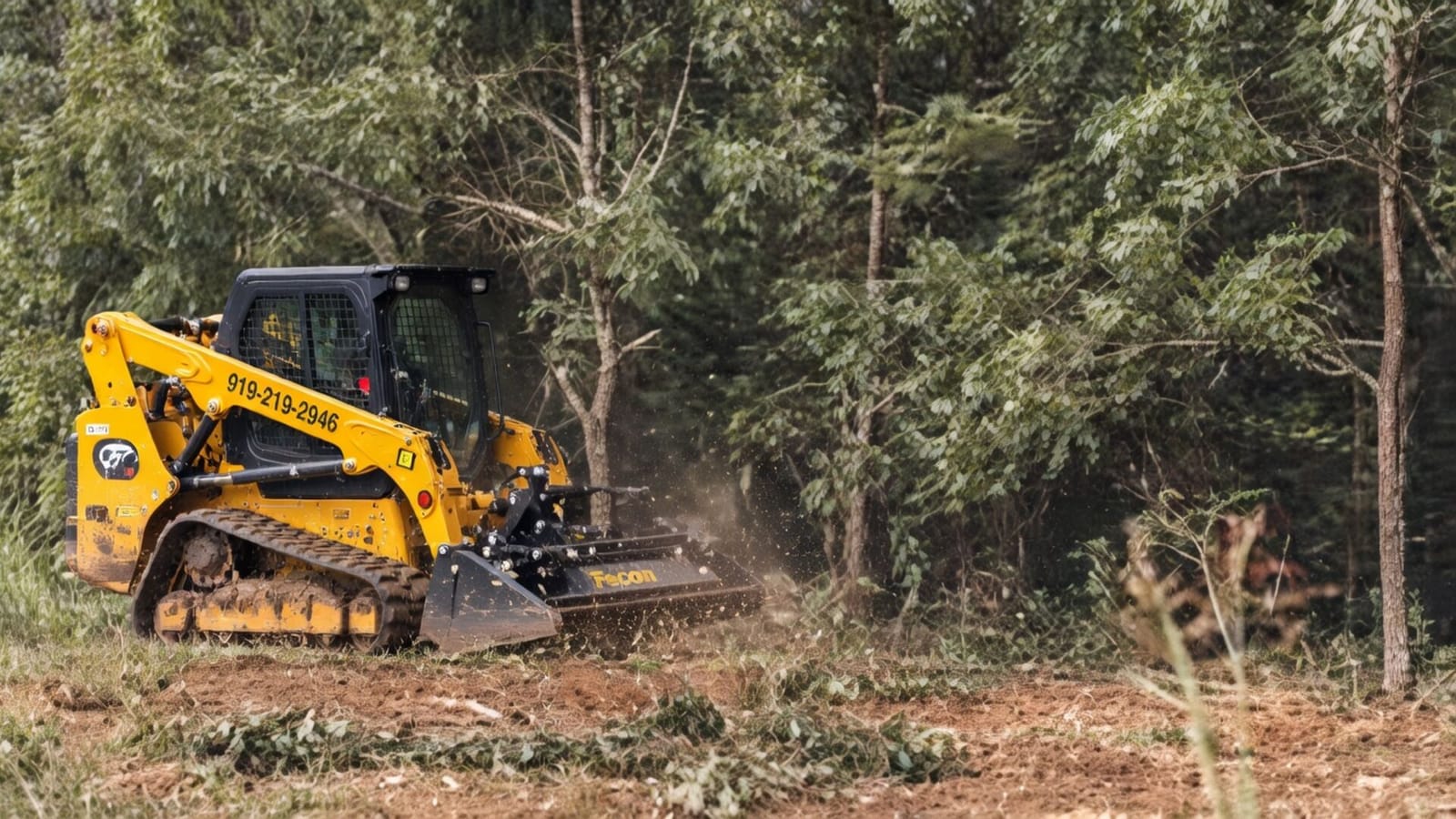
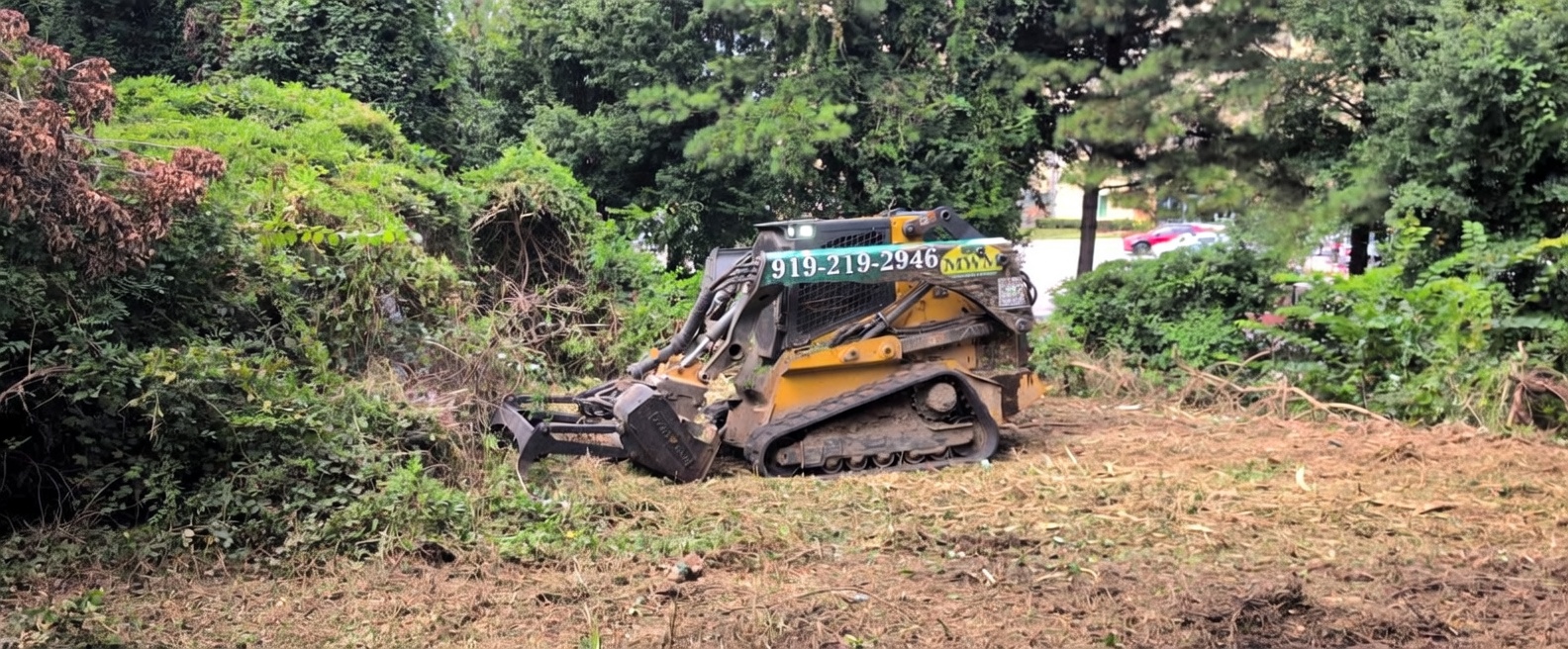
This is the option that removes the burn ban from your project entirely. Forestry mulching processes vegetation where it stands and leaves it as a layer on the ground. There is no pile, so there is nothing to burn, nothing to load, and no disposal fee.
On Hill Country ground there is a second argument for it. Soil over Edwards Plateau limestone is thin, and bare ground on a slope loses what little it has in the first serious storm. San Antonio averages roughly 30 to 34 inches of rain a year with May the wettest month, so those storms arrive on a schedule. A mulch mat holds the ground and breaks down into organic matter the soil is short of.
A Pile You Already Have
If the clearing is already done and the pile is sitting there under a ban, the options narrow to hauling, chipping, or waiting. Some operators can bring a mulching machine to an existing pile and process it in place, which is usually cheaper than trucking, though it is less efficient than mulching standing vegetation would have been.
The lesson most owners take from this once: decide the disposal method before the clearing starts, not after.
Fire Risk Is the Reason the Rules Exist
It is easy to read a burn ban as bureaucracy. The county’s own reasoning in February 2026 was heavy ground fuel plus drought, which is the exact recipe for a fire that leaves your property and becomes somebody else’s.
A stacked brush pile is concentrated fuel sitting on your land, and it stays that way for months if the ban holds. Ground-level mulch is a very different fuel profile from a ten-foot pile of dried cedar. For landowners specifically thinking about defensible space around a house, that difference is the whole point.
Planning Around It
If you are scheduling clearing work in Bexar, Comal, Kendall, or the surrounding counties this year, three things are worth building into the plan:
- Choose the disposal method first. It changes the price, the schedule, and whether a ban can stop you.
- Check the ban status for your specific county, not the region.
- Watch the oak calendar too. Texas A&M Forest Service advises against pruning or wounding oaks February through June, so if live oaks are in the scope, that shapes the sequence as well. Our oak wilt guide covers it.
For what any of this costs, the San Antonio pricing guide has per-acre ranges by method. And if you would rather have someone look at the property and tell you which approach makes sense on your ground, the walk-through is free.
Related Services
Learn more about the services mentioned in this article.


More from the Cut Brush Blog
Keep reading for more tips and guides on land clearing.
 Guide
Guide San Antonio Land Clearing Permits: Trees, the Aquifer, and County Rules
What San Antonio land clearing permits actually require in 2026: city tree thresholds, Edwards Aquifer plans, and Bexar County storm water rules, explained plainly.
 Cost Guide
 Forestry Mulching Cost in San Antonio (2026 Pricing)
Forestry mulching cost in San Antonio runs $1,500 to $4,000 per acre. What drives the hours on Hill Country cedar, and when mulching beats clearing and hauling.
 Cost Guide
 Brush Hogging Cost Per Acre in Texas (2026)
Brush hogging in Texas averages about $47 an acre in AgriLife's 2026 survey. See regional rates, why small tracts cost more, and when shredding is not enough.
Let's Get Started on Your Land
Request a free quote. We'll contact you to discuss your property, access, and the clearing you need.
Get a Free QuoteOr call us directly: (919) 525-3950