
Forestry Mulching Cost in San Antonio (2026 Pricing)
Cut Brush Team · September 3, 2026 · 6 min read

Forestry mulching is priced by time, not by area. That single fact explains why two neighbors with identical five-acre lots get quotes thousands of dollars apart, and why an honest number never comes over the phone.
Around San Antonio, forestry mulching runs $1,500 to $4,000 per acre, with lighter cedar-and-brush passes often landing between $1,500 and $2,500. Here is what decides where your acre lands, and how to think about the mulching-versus-hauling choice on Hill Country ground.
What You Are Actually Paying For
A mulching head is a drum with teeth. It grinds standing vegetation into chips and leaves them on the ground. The cost of a job is essentially the number of hours that drum has to run, multiplied by what it costs to have that machine and operator on your property.
So the question is never “how many acres.” It is “how many hours will this acre take.” Four things drive that:
1. Trunk diameter, not tree count
This is the big one on Hill Country ground. A drum moves through ankle-high Ashe juniper regrowth quickly. Give it stems in the 6-to-10-inch range and it slows down substantially, because each one takes real time to process rather than a pass and a push.
An acre with two hundred small stems can be cheaper than an acre with forty large ones. When someone walks your parcel to quote it, watch whether they are looking at trunk diameter or just estimating canopy cover. The first produces an accurate number; the second produces a surprise.
2. What species you have
Around Bexar County the usual mix is Ashe juniper, mesquite, huisache, and prickly pear, with understory filling in between. They do not behave identically. Juniper is dense and fibrous. Mesquite is hard and often multi-stemmed at ground level. Prickly pear is easy to knock down and messy to leave. Understory brush is the fast part of any job.
3. Rock, slope, and soil depth
Thin soil over Edwards Plateau limestone means ledge, loose caliche, and rock the machine has to work around rather than through. Steep faces slow everything and change what is safe to attempt. Flat ground with soil depth is the fast, cheap version of your project.
4. How selective you want it
Clearing everything in a straight line is the fastest thing a mulcher does. Working around live oaks, keeping a shade tree here and a motte there, preserving a view corridor but not the ground beside it: all of that is slower per acre, and all of it is usually worth it. Selective work is most of what we do here, but it should be priced as what it is.
Mulching Against the Alternatives
| Method | Typical cost driver | What you are left with |
|---|---|---|
| Forestry mulching | Machine hours | Ground cover on site, nothing to dispose of |
| Cut and pile, then burn | Cutting plus burning window | A pile, and a dependency on burn ban status |
| Cut, load, and haul | Cutting plus trucking plus dump fees | Bare ground, highest total cost |
| Dozer and grub | Machine hours plus disposal | Bare, disturbed ground and stumps to deal with |
The burning column is not hypothetical in this part of Texas. Unincorporated Bexar County extended a burn ban for 90 days in February 2026, citing drought conditions and a drought index climbing past 500 in parts of the county, and violating a county burn ban is a Class C misdemeanor carrying up to $500. If your plan is to stack it and light it, your plan has a weather dependency and a legal one.
Mulching removes the disposal line item entirely, which is usually where the cost comparison is decided.
Why the Mulch Layer Is Worth Something Here
On deep soil, leaving chips on the ground is a convenience. On thin soil over limestone, it is closer to a benefit.
Shallow Edwards Plateau soil strips fast once it is bare, and an exposed slope loses what little it has on the first real storm. A mulch mat holds that ground through rain and breaks down over time into organic matter the soil is genuinely short of. San Antonio averages roughly 30 to 34 inches of rain a year, with May the wettest month, so the storms that would move bare soil are not rare.
Depth of the layer depends on how much material came off. A light pass leaves a thin scattering. A heavy juniper stand leaves a substantial mat. On pasture reclamation the target is thin enough for grass to come through; on slopes, leaving more is usually the right call.
What Mulching Does Not Solve
Two honest caveats.
It does not remove stumps. The drum grinds material at and slightly below grade, but this is not a stump grinding service and it is not a grading service. If you are cutting a building pad to grade, you need clearing plus dirt work, not mulching alone.
It does not stop regrowth. Mesquite, huisache, and juniper all come back. General brush management guidance in Texas puts woody cover returning within five to ten years without follow-up, with maintenance every three to five years costing far less than a full reclearing. NRCS funds this as brush management, conservation practice code 314, through EQIP, with rates varying by brush density and method. Anyone selling you a single pass as permanent is not being straight with you.
Rules That Can Affect Scope
Method does not exempt a project from the rules. Clearing over the Edwards Aquifer is a regulated activity under the TCEQ program covering Bexar, Comal, Medina, and five other counties, with approval required before soil disturbance on the recharge zone and a five-acre trigger in the contributing zone.
Inside San Antonio city limits, the tree ordinance sets a 10-inch significant-tree threshold specifically for Ashe juniper, mesquite, huisache, Arizona ash, and hackberry, against 6 inches for most species, with heritage trees from 24 inches preserved at 100%. Completed single-family, two-family, and three-family homesites are exempt. Our permits guide covers the details.
One more, specific to mulching mature juniper: the golden-cheeked warbler nests in mature Ashe juniper mixed with deciduous trees and has been federally listed as endangered since 1990, with nesting season running roughly March through August. Whether a given parcel carries habitat is a question for U.S. Fish and Wildlife Service and a qualified biologist, not a contractor, but it is worth raising before scheduling on ground with old-growth stands.
Getting a Number
If you want the whole picture including land clearing and lot prep, the San Antonio pricing guide has every range side by side. If you want a number for your actual parcel, the walk-through is free and the written quote usually follows within a day.
And if you are still deciding between methods, the forestry mulching service page covers what the process looks like from the first walk to the finished ground.
Related Services
Learn more about the services mentioned in this article.


More from the Cut Brush Blog
Keep reading for more tips and guides on land clearing.
 Cost Guide
 Forestry Mulching Cost in Texas (2026 Per-Acre Guide)
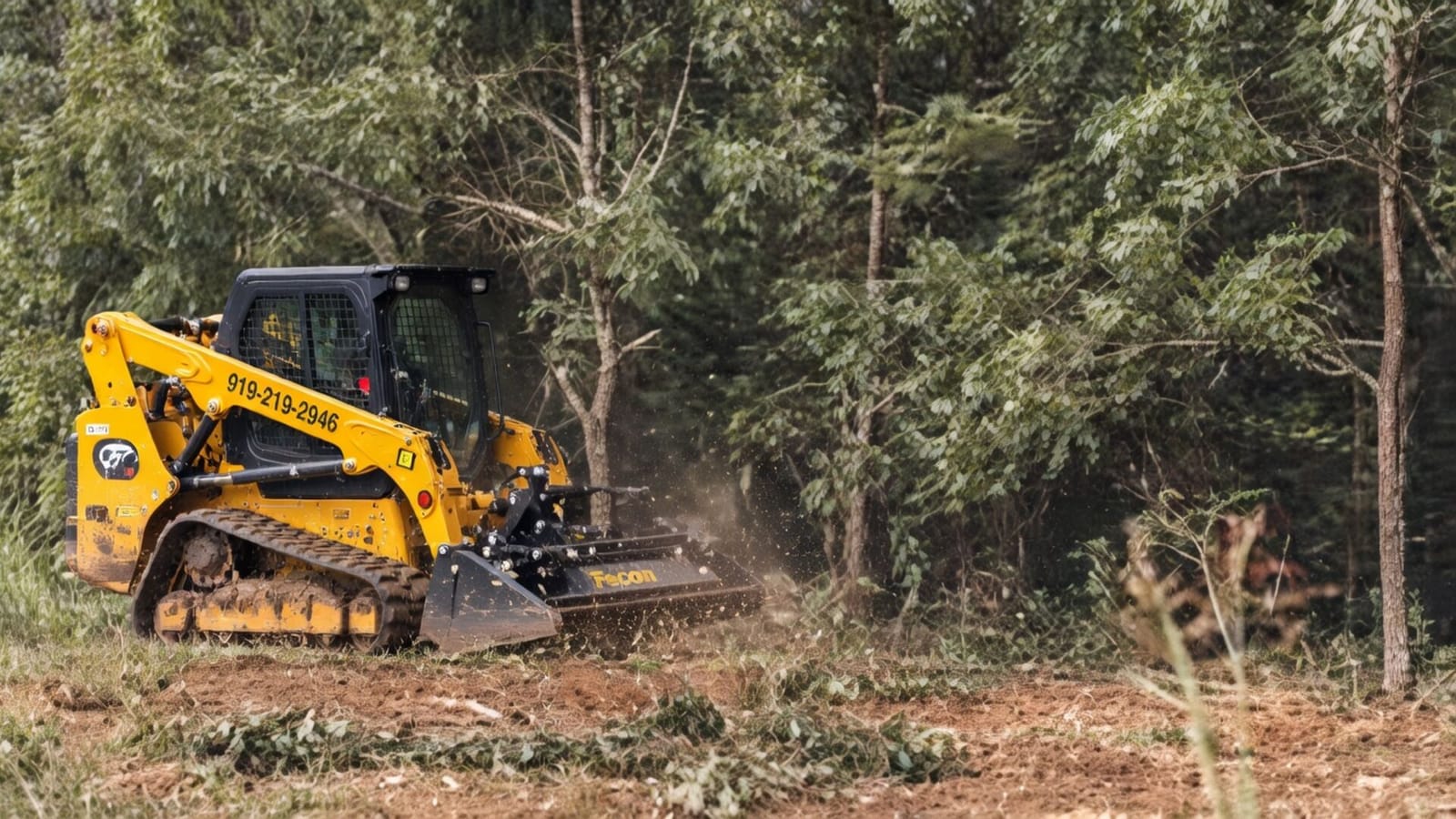
Forestry mulching in Texas runs $1,500 to $4,000 an acre. See why cedar and rock, Blackland clay, yaupon and burn rules move a quote in each part of the state.
 Cost Guide
 Land Clearing Cost Per Acre in Texas (2026 Guide)
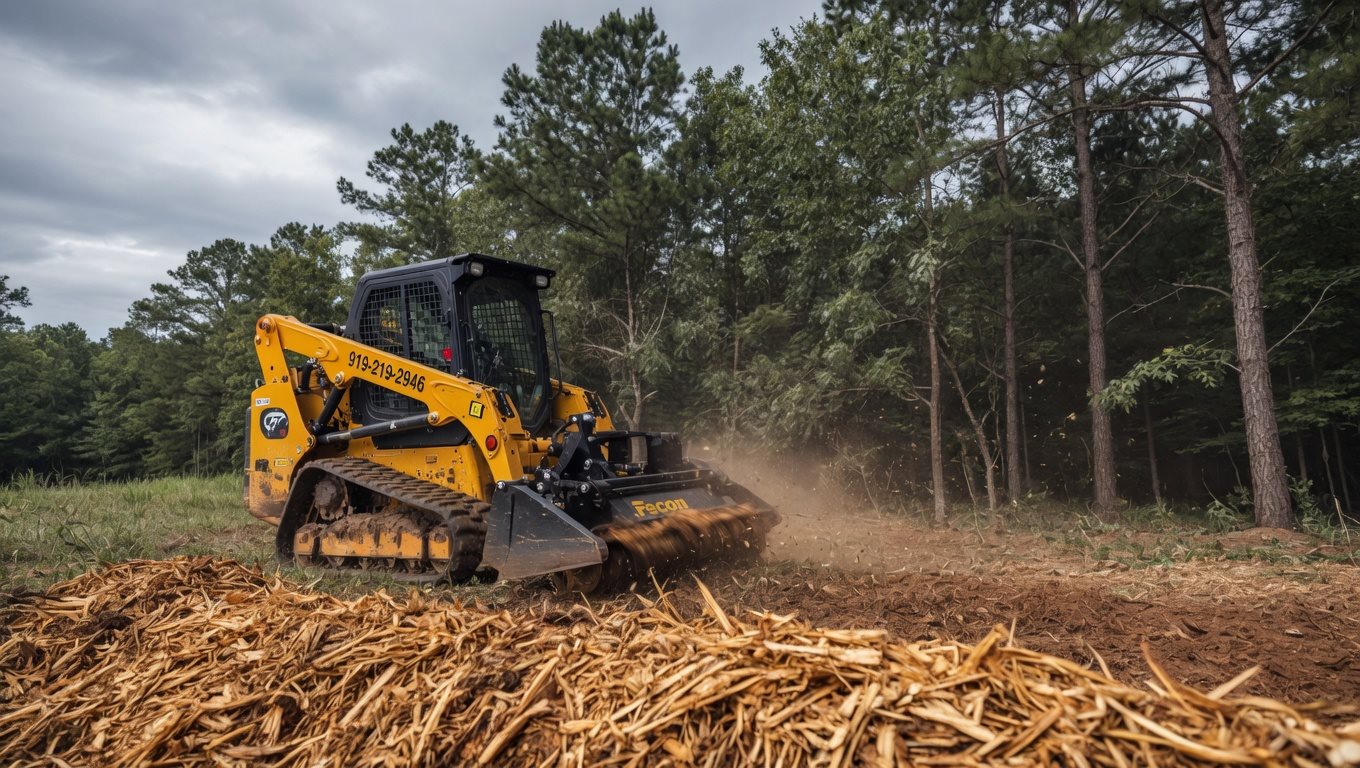
Land clearing cost per acre in Texas runs $1,500 to $4,500. See what cedar density, rock, and access do to a quote, with real Hill Country ranges by vegetation type.
 Cost Guide
 Underbrush Removal Cost in Texas (2026 Pricing)
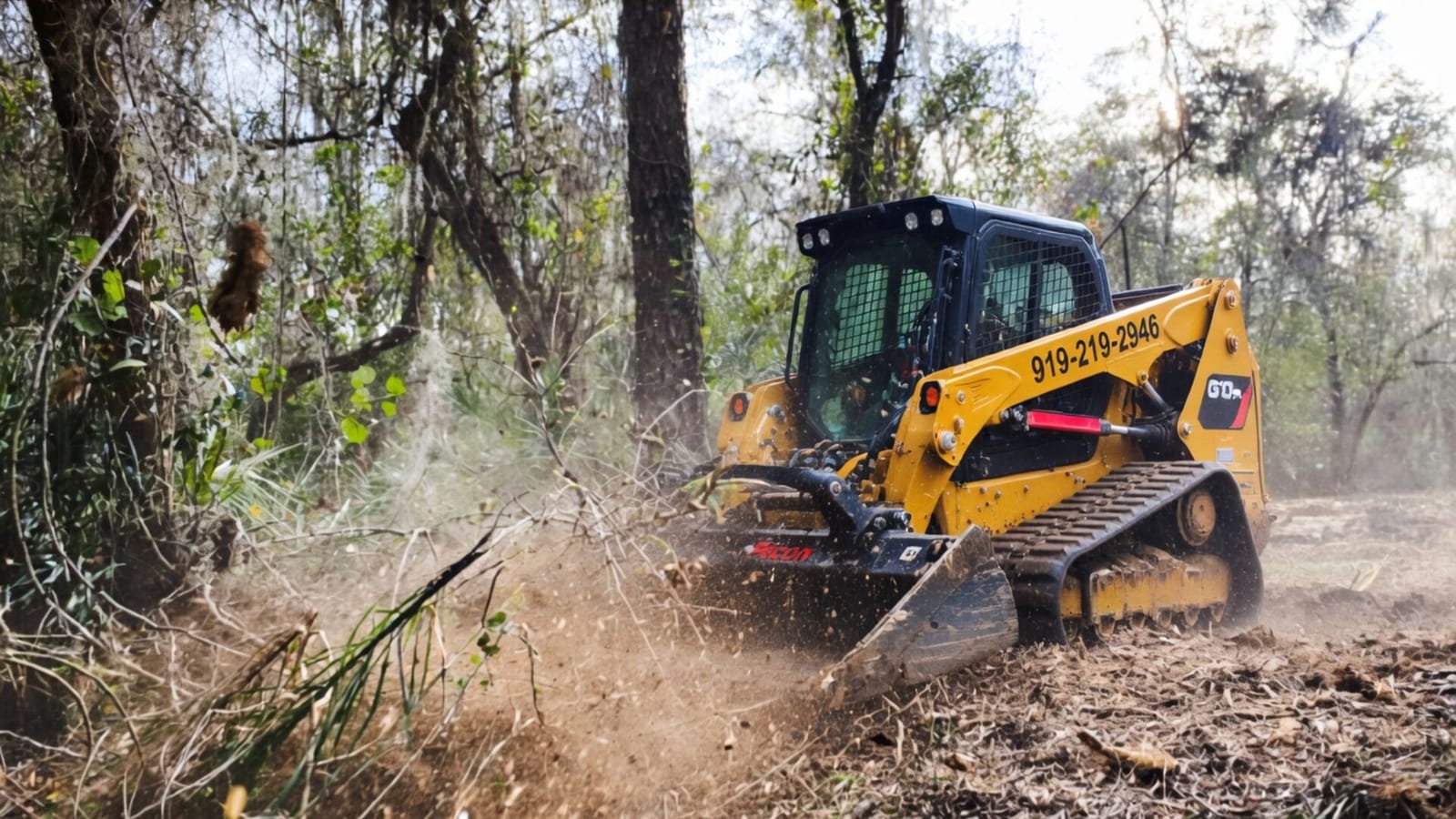
Underbrush removal in Texas runs $1,500 to $2,500 an acre, up to $3,500 in East Texas. See what yaupon, privet, keeper trees and cost-share programs change.
Let's Get Started on Your Land
Request a free quote. We'll contact you to discuss your property, access, and the clearing you need.
Get a Free QuoteOr call us directly: (919) 525-3950