
San Antonio Land Clearing Permits: Trees, the Aquifer, and County Rules
Cut Brush Team · September 3, 2026 · 8 min read

Most people ask this question backwards. They ask whether they need a permit to clear their land, when the useful question around San Antonio is which set of rules reaches their particular parcel. There are three that commonly apply, they come from three different offices, and only one of them cares about trees.
This guide walks through all three: the City of San Antonio tree preservation rules, the Edwards Aquifer program run by the state, and the Bexar County permits that apply out in the unincorporated county. It also flags the two calendar constraints that are not permits at all but will still change when your project can happen.
One thing before we start. Cut Brush clears land; we do not issue permits and we cannot make a determination for your parcel. What follows is what commonly applies, with the primary sources linked, so you know which desk to call. The governing authority or a qualified professional makes the final call on your property.
Rule 1: The City of San Antonio Tree Preservation Ordinance
If your property sits inside San Antonio city limits, the tree rules live in the Unified Development Code, section 35-523. The core of it is a diameter table.
A significant tree is generally 6 inches DBH (diameter at breast height) or larger. But the code carves out species, and the carve-out matters enormously here:
| Species group | Significant at |
|---|---|
| Most species | 6 inches DBH |
| Ashe juniper, mesquite, huisache, Arizona ash, hackberry | 10 inches DBH |
| Texas persimmon, redbud, mountain laurel, condalia, possum haw, hawthorn | 5 inches DBH |
A heritage tree is 24 inches DBH or larger for all species, or 12 inches for that small-species list.
Read that middle row again, because it is the single most useful fact in this article for a Hill Country landowner. The trees most people want removed, cedar and mesquite, carry a higher protection threshold than an average tree. A 7-inch Ashe juniper is not a significant tree under the ordinance. A 7-inch live oak is.
What preservation actually requires
- Single-family: preserve 35% of significant trees within each platted lot
- Multi-family and nonresidential: preserve 40% across the site
- Heritage trees: 100%
- Floodplain and environmentally sensitive areas: 80% of all trees
Mitigation runs 1:1 for significant trees and 3:1 for heritage trees, with some species at 1:1. There is a canopy fee assessed when a permit issues: $15.00 per lot for residential and $25.00 per acre or portion of an acre for commercial.
What triggers a permit
Grading and clearing trigger it. So do new construction adding more than 2,500 square feet, parking lots over 2,500 square feet, removing protected trees, chemical or biological treatment that kills a tree, and trenching or excavation that damages one. Before the City Arborist issues a permit, you generally need a tree preservation plan that includes a survey showing every significant and heritage tree on the property.
The exemption most homeowners land in
The code exempts significant and heritage trees on property where construction of single-family, two-family, or three-family residential dwelling units has been completed. In plain terms: an existing house on a finished lot is treated very differently from raw land being developed. If you are clearing a back section of a lot with a finished home on it, you are likely in different territory than a builder clearing a new tract. Confirm your situation with the city rather than assuming.
Read the ordinance text at San Antonio UDC Sec. 35-523 and the city’s own tree ordinance fact sheet.
Rule 2: The Edwards Aquifer, and Why It Comes First
This is the one that catches people out, because it applies whether or not you are inside a city, and because it has to be resolved before soil is disturbed rather than at the end.
The Texas Commission on Environmental Quality runs the Edwards Aquifer Protection Program, covering eight counties: Williamson, Travis, Hays, Comal, Bexar, Medina, Uvalde, and Kinney. It regulates activities with the potential to pollute the aquifer across the recharge, transition, and contributing zones.
Land clearing is named as a regulated activity. The state’s guidance is direct: if you plan a regulated activity over the Edwards Aquifer, you must submit your plan to TCEQ for approval prior to disturbing soil at the site. On the recharge zone the instrument is a Water Pollution Abatement Plan under 30 Texas Administrative Code Chapter 213.
In the contributing zone, there is a threshold. Under 30 TAC 213.21(b), the rules reach regulated activities disturbing at least five acres, and also activities disturbing less than five acres when they are part of a larger common plan of development or sale that cumulatively disturbs five or more acres. TCEQ’s workflow page walks through which plan, if any, a project needs.
How to answer this in five minutes
TCEQ publishes an Edwards viewer map. Put your address in and find out which zone you are on. That single step tells you whether this section applies to you at all, and it is free. TCEQ also maintains separate guidance for private residences on the aquifer.
Do not take a neighbor’s word for which zone your land is in. The zone boundaries do not follow property lines, roads, or city limits.
Rule 3: Bexar County, Out in the Unincorporated Areas
Outside city limits, the county picks up. Two permits come up regularly on clearing projects:
- Storm Water Quality Permit. Required when one acre or more of soil is disturbed on a site, or as part of a common plan of development. Fee: $500.
- Floodplain Development Permit. Required for property that is encumbered by, or within 100 feet of, a FEMA-designated 1% annual chance (100-year) floodplain. Fee: $50.
Timing matters here. Review is 30 days for first submittals and 15 days for resubmittals, and the county recommends submitting a site development or floodplain permit at least 45 days before the Permit Verification Form. Bexar County Public Works Development Services sits at 1948 Probandt Street. Details are in the county’s permits verification guidance and on the floodplain permit page.
If you are in a neighboring county
- Kendall County does not regulate land use and has not adopted zoning in unincorporated areas. The County Engineer’s Office handles subdivision of property and permits things like driveways, right-of-way work, outdoor lighting, on-site sewage, and site improvements. See Kendall County Development.
- Comal County regulates division of land through its subdivision regulations, and lists the permits that may apply before construction on its permits page.
The Two Calendars That Are Not Permits
You can hold every approval in hand and still be told to wait. Two seasonal issues drive that around San Antonio.
Oak wilt. Texas A&M Forest Service advises against pruning or wounding oaks from February through June, when fungal mat production, sap beetle activity, and oak susceptibility all peak, and recommends painting every oak wound immediately regardless of season. The preferred pruning window is the dormant period, November through January. This is guidance rather than a permit, but ignoring it can cost you a stand of live oaks.
Burn bans. Unincorporated Bexar County extended a burn ban for 90 days in February 2026 citing drought conditions, and violating a county burn ban is a Class C misdemeanor with a fine up to $500. Bans come and go, so check the county alert center or the Texas A&M Forest Service burn ban map for current status.
There is also habitat to consider. The golden-cheeked warbler has been federally listed as endangered since 1990 and nests in mature Ashe juniper mixed with deciduous trees, roughly March through August. Kendall County’s permitting materials note that some areas may carry restrictions during nesting season that limit clearing in certain months. If your parcel carries mature juniper stands, that is a question for U.S. Fish and Wildlife Service and a qualified biologist before it is a question for a contractor.
A Practical Sequence
- Check the aquifer zone on the TCEQ viewer. It is free and it decides whether the longest-lead item applies to you.
- Work out whether you are in the city or the county. City means tree ordinance; unincorporated means county storm water and floodplain permits.
- Measure the trees you want removed. If they are cedar or mesquite inside the city, the 10-inch threshold may put them outside the significant-tree category entirely.
- Count your disturbed acreage. One acre is the county storm water trigger; five acres is the contributing zone trigger.
- Look at the calendar. Oaks in scope means sequencing around February through June. Debris burning means checking the ban status, or avoiding the issue entirely.
- Call the offices, not the internet. The city, the county, and TCEQ each answer for their own rules.
Where Mulching Changes the Math
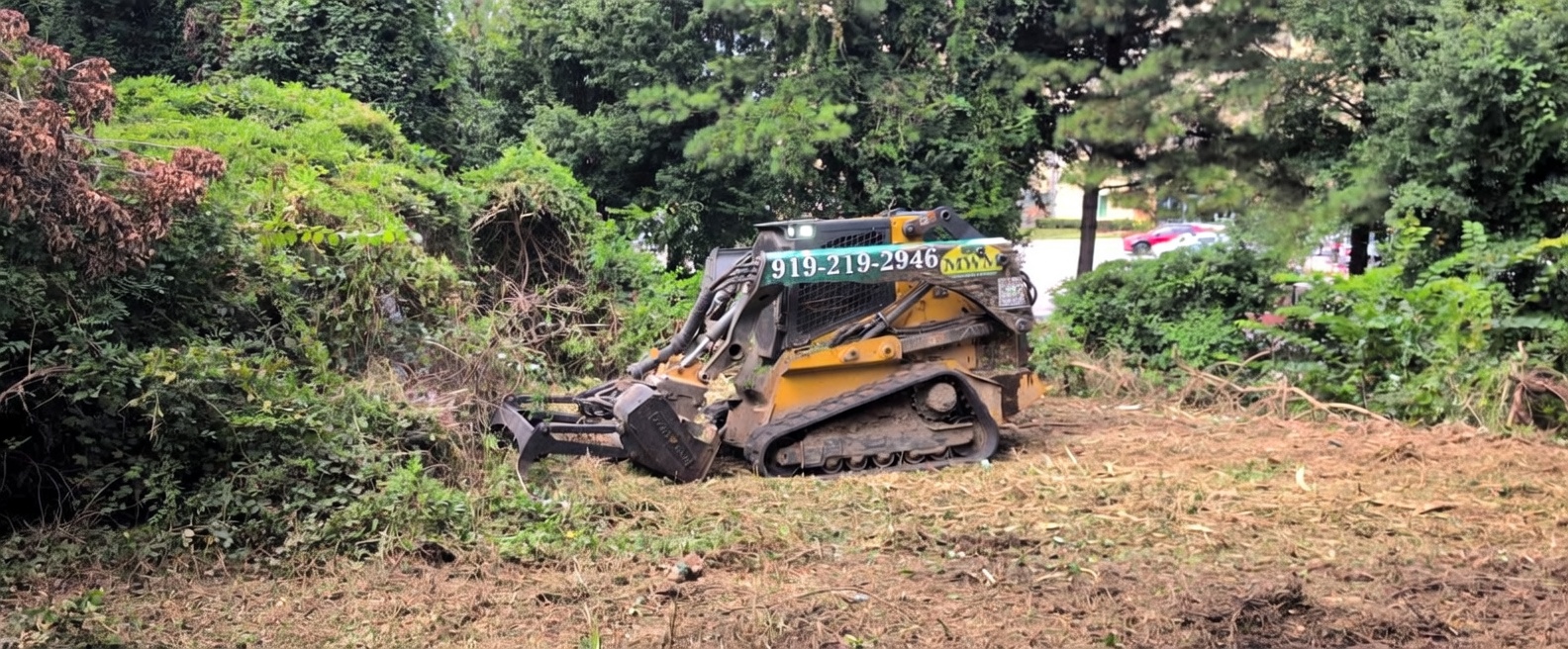
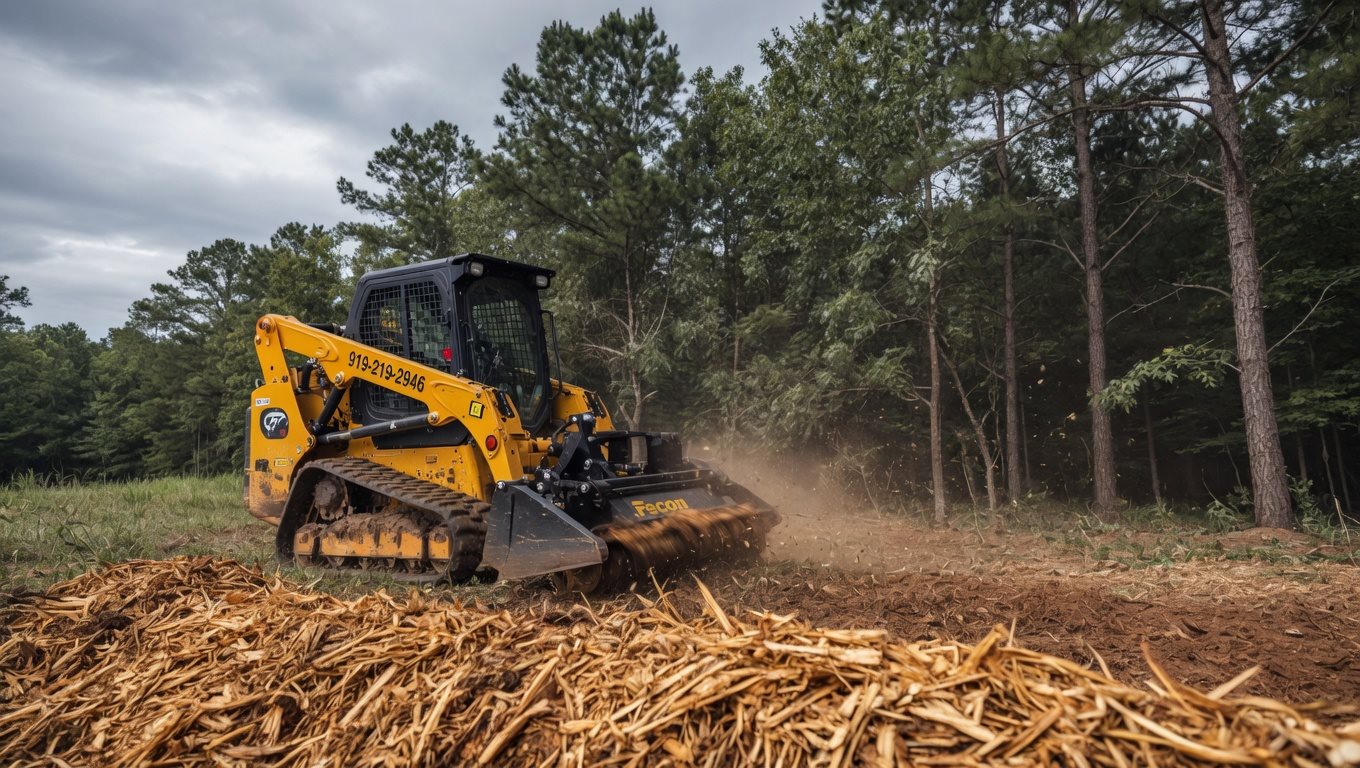
One reason forestry mulching is so common on Hill Country projects is that it removes the debris question from the permit conversation. There is no pile, so there is nothing to burn, nothing to haul, and no burn ban standing between you and a finished project. The material stays on the ground as cover, which on thin soil over limestone is worth having regardless.
It does not exempt you from the aquifer rules or the tree ordinance. Clearing is clearing. But it removes one of the three things that usually delays a project here.
If you want the cost side of the picture, our San Antonio pricing guide lays out per-acre ranges and what moves them. And if you would rather have someone walk the parcel with you and flag which of these rules is likely to matter, that walk-through is free.
Related Services
Learn more about the services mentioned in this article.


More from the Cut Brush Blog
Keep reading for more tips and guides on land clearing.
 Guide
Guide Bexar County Burn Ban: What to Do With Brush When You Cannot Burn It
How Bexar County burn bans work, where to check the current status, what the penalties are, and the four ways to get rid of cleared brush when burning is off the table.
 Cost Guide
 Land Clearing Cost Per Acre in Texas (2026 Guide)
Land clearing cost per acre in Texas runs $1,500 to $4,500. See what cedar density, rock, and access do to a quote, with real Hill Country ranges by vegetation type.
Cost Guide Brush Hogging Cost Per Acre in Texas (2026)
Brush hogging in Texas averages about $47 an acre in AgriLife's 2026 survey. See regional rates, why small tracts cost more, and when shredding is not enough.
Let's Get Started on Your Land
Request a free quote. We'll contact you to discuss your property, access, and the clearing you need.
Get a Free QuoteOr call us directly: (919) 525-3950