Forestry Mulching Cost in the Hudson Valley, NY (2026)
Cut Brush Team · September 12, 2026 · 6 min read
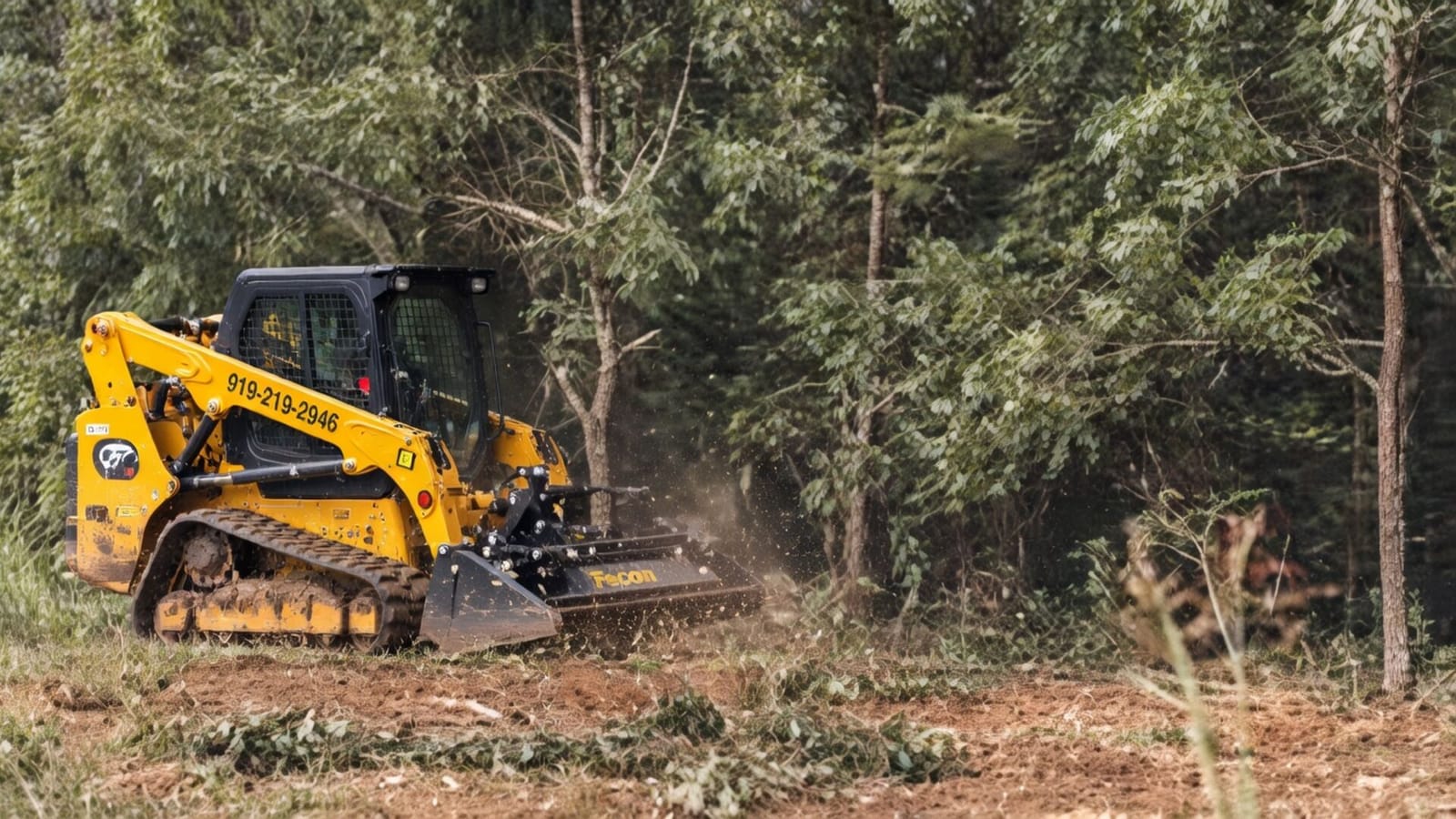
Forestry mulching in the Hudson Valley runs $1,500 to $4,000 per acre. Thin regrowth on a dry September field sits at the floor; a stony upland matted with barberry and bittersweet sits at the ceiling. The variable that moves a valley number most is not acreage and not species: it is the month, because ground that carries a machine cleanly on frost will not carry the same machine through a thaw.
What Does Forestry Mulching Cost Per Acre Around the Valley?
| Condition | Range | Why it prices there |
|---|---|---|
| Light brush and saplings, dry level ground | $1,500 – $2,000 / acre | One clean pass, long uninterrupted lines |
| Understory beneath timber you are keeping | $2,000 – $3,000 / acre | Working around keeper trees, slower and more careful |
| Stony upland or a decade of invasive shrub | $3,000 – $4,000 / acre | Shallow passes, stone wear, dense woody material |
| Whole-parcel clearing to a named finish | $1,500 – $4,500 / acre | A different scope entirely, covered below |
A practical floor near $1,500 per visit applies at any size, because putting a tracked machine up a valley drive costs the same whether it works for one hour or eight. Under about two acres, bundle a hedgerow, a field margin and a brush patch into one trip. Every figure here is a budgeting band, and the walk-through that turns it into a written number is free.
The Working Month Is This Market’s Hour Meter
Ask three contractors what your acre costs and the spread usually comes from when each of them pictured doing it.
Both of the valley’s common soils hold water. Along the river the Hudson series formed in clayey and silty lacustrine sediments, with conductivity the USDA describes as low through moderately high in the lower part of the subsoil. Inland, the Mardin series sits over a very firm pan with a seasonal water table typically 36 to 61 centimetres down (USDA NRCS).
So the working window is short and worth money. Frozen ground and a dry late summer are both cheap. A wet spring is slower, costs more and leaves a surface that would have stayed clean a month later. If your project can wait out a wet spell, say so.
Stone Is the Other Thing a Photograph Hides
West of the river the ground is glacial till, and the Mardin profile carries 15 to 60 percent rock fragments inside its pan. Stone in the working layer is slow in a way brush never is: it wears a head, forces a shallower pass and limits how close to the soil anyone can safely cut.
Two fields that look identical from the air can price a third apart because one is full of glacial stone and the other is old lake bottom. So the useful thing to tell us is not the species list. It is how much ground there is, whether it is river-side bottom or upland, how a trailer would reach it, and what the land has to do once it is open.
Mulching or Clearing: Which One Did You Price?
This is the most common reason two quotes look nothing alike.
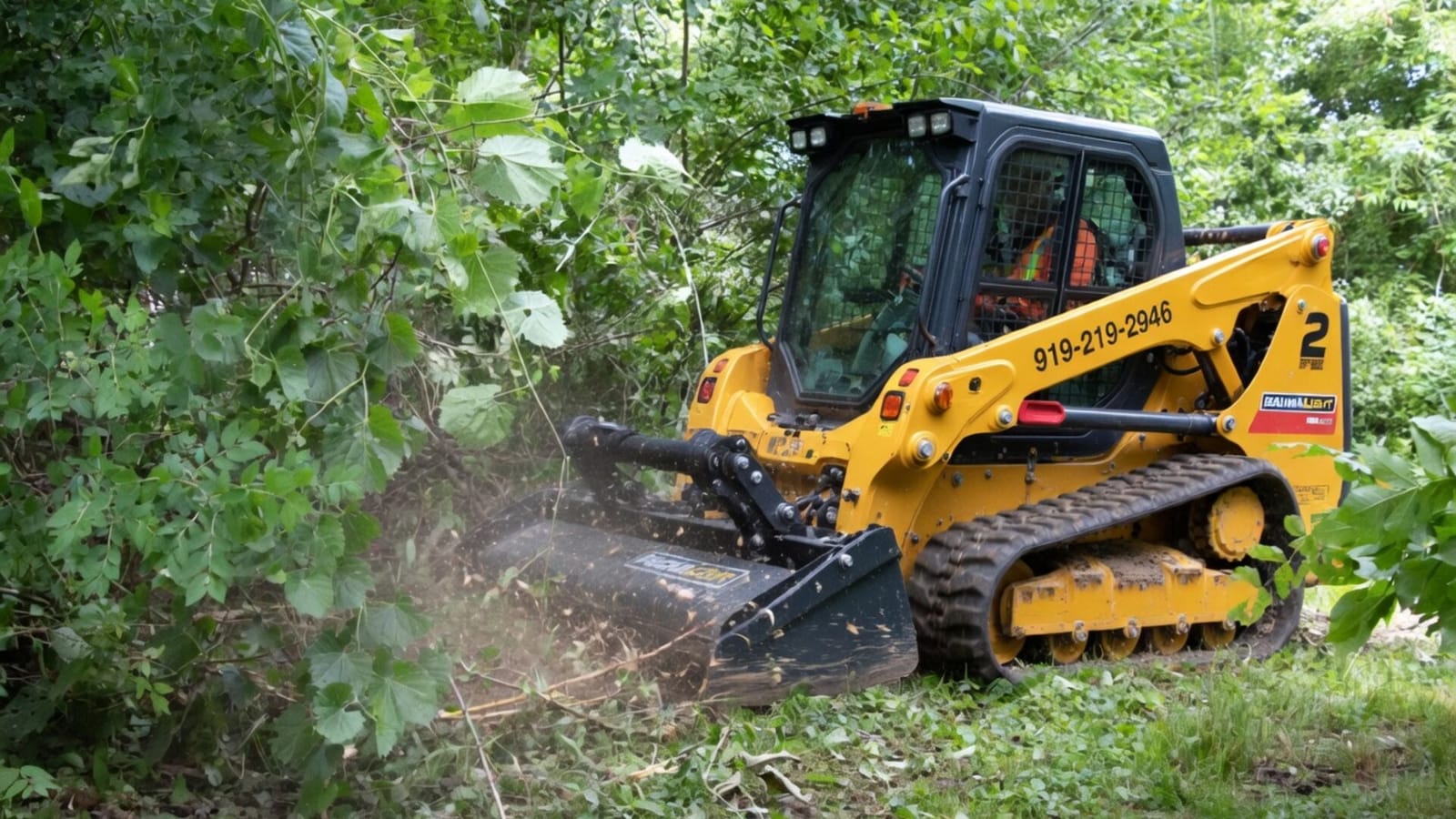
Forestry mulching is one tracked machine processing standing brush and small trees where they are. Stumps are cut flush rather than pulled, the chip stays on the soil, and the ground finishes open and walkable but neither graded nor build ready.
Land clearing is whole-parcel work whose ending is named in the scope: whether stumps leave the soil, whether material leaves the property, whether a pad is cut and held. It runs $1,500 to $4,500 per acre and it is what a house, a barn, a drive or a septic field needs.
Mulching is usually cheaper because it deletes loading and hauling, and it only stays cheaper if it gets you the finish you need. Ask any bidder which of the two they quoted, in writing. Both bands sit on the Hudson Valley pricing guide.
With Burning Mostly Closed, Disposal Is the Line to Watch
In many states burning the brush is the cheap alternative. In New York it usually is not available at all.
DEC prohibits the burning of brush statewide from 16 March through 14 May every year. Outside that window, on-site brush burning is allowed only in towns whose total population is under 20,000 residents, and only for material less than 6 inches in diameter and 8 feet in length. Loose leaves and refuse are banned year round, and local law may be stricter (NYSDEC).
Between the spring closure and the population test, many valley owners have no legal fire at any point in the year. That leaves chip on the ground, which carries no disposal cost, or material on a truck, which is the biggest line most people forget to budget.
Where the Permit Sits in Your Budget
Permits change your calendar rather than our rate, and New York puts them somewhere most owners do not expect. Dutchess County’s Soil and Water Conservation District states that counties have no role in running the stormwater program while many towns and villages add restrictions of their own, and it names Beekman, Pawling, East Fishkill and the Village of Pawling as requiring coverage at 5,000 square feet rather than the state’s one acre (Dutchess County SWCD).
Requirements vary by parcel, scope and jurisdiction, and the governing authority makes the determination. Our Hudson Valley permit guide puts each threshold beside its source.
Frequently Asked Questions
How much does it cost to mulch one acre in the Hudson Valley?
Budget $1,500 to $4,000 for an acre, with light regrowth at the floor and stony or heavily invaded ground at the ceiling. A single acre usually prices close to the project floor, so bundling work into one visit gets you more ground for the money.
Is winter really a good time to clear here?
Often the best time. Frozen ground carries a tracked machine well, brittle out-of-leaf brush processes faster, and there is no wet surface to mark up. The trade is access: a drive passable in October may not be after a storm, which is why we ask about the approach before the acreage.
Will the brush grow back after mulching?
Some of it will. Anything that resprouts from a cut stem or root system returns, and the valley’s invasive shrubs answer light quickly. A maintenance pass in a few years costs a fraction of re-clearing a rebuilt thicket, and the statewide view is in our New York cost per acre guide.
Get a Real Number for Your Hudson Valley Parcel
What turns forestry mulching cost in the Hudson Valley into one figure is somebody standing on the ground: what is growing, what is under it, how a machine gets in, and what the land has to do next.
See the local conditions on our Hudson Valley land clearing page, then request a free quote. We put the scope in writing, so the figure you approve is the figure you pay.
More from the Cut Brush Blog
Keep reading for more tips and guides on land clearing.
 Cost Guide
 Land Clearing Cost Per Acre in New York (2026 Guide)
Land clearing cost per acre in New York runs $1,500 to $4,500. What glacial stone, a short working season and a town-by-town permit map do to the number.
 Guide
Guide Land Clearing Permits in the Hudson Valley, NY
New York has no county land disturbance permit. Your town holds it, the state starts at one acre, and wetlands are no longer settled by a map. Sources here.
 Guide
Guide Japanese Barberry, Ticks and Overgrown Hudson Valley Land
Barberry thickets hold far more blacklegged ticks. Clearing it once cut tick numbers for six years. What that means for overgrown Hudson Valley property.
Ready to Get Started on Your Land?
Get a free, no-obligation estimate for property in the Hudson Valley of New York.
Get Your Free QuoteOr call us directly: (919) 525-3950