Land Clearing Permits in the Hudson Valley, NY
Cut Brush Team · September 12, 2026 · 7 min read
Most people begin a permit question with “how many acres.” In the Hudson Valley the more useful question is which town, because New York does not issue a county land disturbance permit at all. The municipality holds it, and the threshold changes from one town line to the next.
Every threshold below carries its official source. Requirements vary by parcel, scope and jurisdiction, and the governing authority makes the determination for your ground.
In New York the Permit Is a Town Permit
Dutchess County’s Soil and Water Conservation District puts it about as plainly as a public agency can: counties “have no role in the implementation of the stormwater program,” while “many municipalities (towns and villages) place additional restrictions on construction activities.”
It also gives the range. The state trigger is one acre, but “the Towns of Beekman, Pawling, East Fishkill and the Village of Pawling require permit coverage for projects disturbing 5,000 square feet or more,” and a long list of municipalities run their own stormwater systems with their own review and inspection steps on top. The district’s advice is to check with your local municipality (Dutchess County SWCD).
So two parcels a mile apart, in the same county, can owe entirely different paperwork. Around Poughkeepsie the Town’s own erosion and sediment control chapter reaches “any activity which removes or significantly disturbs trees, brush, grass or any other kind of vegetation,” which describes clearing rather than construction. The first call is to a town or city office, by name, not to the county.
The State Layer Starts at One Acre
Above the municipality sits New York State. Before construction begins, the owner or operator of any activity involving soil disturbance of one or more acres must obtain coverage under the state’s general permit for stormwater discharges from construction activity, applied for through DEC and requiring a stormwater pollution prevention plan. Inside the New York City watershed east of the Hudson River the same requirement applies to disturbance of 5,000 square feet or more but less than an acre (NYSDEC).
Note what that threshold counts: soil disturbance, not stem count and not method. Grinding brush in place and leaving the root mat intact disturbs less soil than grubbing the same parcel, and that difference can matter to how a reviewer reads a scope.
West of the River, New York City Reviews the Plan
Ulster and Sullivan counties sit inside the Catskill and Delaware watershed that supplies New York City, and that brings a second reviewer with its own rules.
Under the city’s watershed rules and regulations, a stormwater pollution prevention plan must be developed and submitted to New York City’s water agency for development or disturbance of more than 5 acres of total land area, which does not have to be contiguous, and for clearing or grading land involving two or more acres within 100 feet of a watercourse or on a slope exceeding 15 percent. New impervious surfaces are not permitted within 100 feet of a watercourse or 300 feet of a reservoir (Greene County SWCD).
That second threshold is worth reading twice, because it is written about clearing itself rather than about building. Two acres, near water or on a slope, is not a large job here.
Wetlands Are No Longer a Map Question
This is the change most likely to catch someone who cleared land here a few years ago.
From 1 January 2025, DEC’s regulatory protection of freshwater wetlands is no longer limited to wetlands shown on the state’s freshwater wetlands maps. A wetland is regulated if it is at least 12.4 acres or is classified as of unusual importance, and that threshold drops to 7.4 acres on 1 January 2028. A 100 foot adjacent area, measured out from the wetland boundary, is regulated too.
For clearing work the detail that matters is the activity list: “clear cutting of trees or other vegetation in a wetland” is a major regulated project, while selective cutting of trees is exempt. The only way to confirm whether a regulated wetland is present on a parcel is a jurisdictional determination from DEC, which the department has 90 days to issue and which is then effective for five years (NYSDEC).
Read together, those two lines mean the method you choose can decide whether you need a permit at all. That is a conversation to have before anyone quotes.
Burning the Brush: Closed in Spring, and Closed to Most Towns
New York’s open burning rule turns on the calendar first and your town’s population second.
DEC prohibits the burning of brush from 16 March through 14 May because of the increased wildfire risk in that period. Outside that window, downed limbs and branches “less than 6 inches in diameter and 8 feet in length” may be burned on site only “in towns with total population less than 20,000 residents.” Burning loose leaves, refuse and trash is prohibited regardless of season, and towns, villages, cities and counties may all pass ordinances stricter than the state rule (NYSDEC).
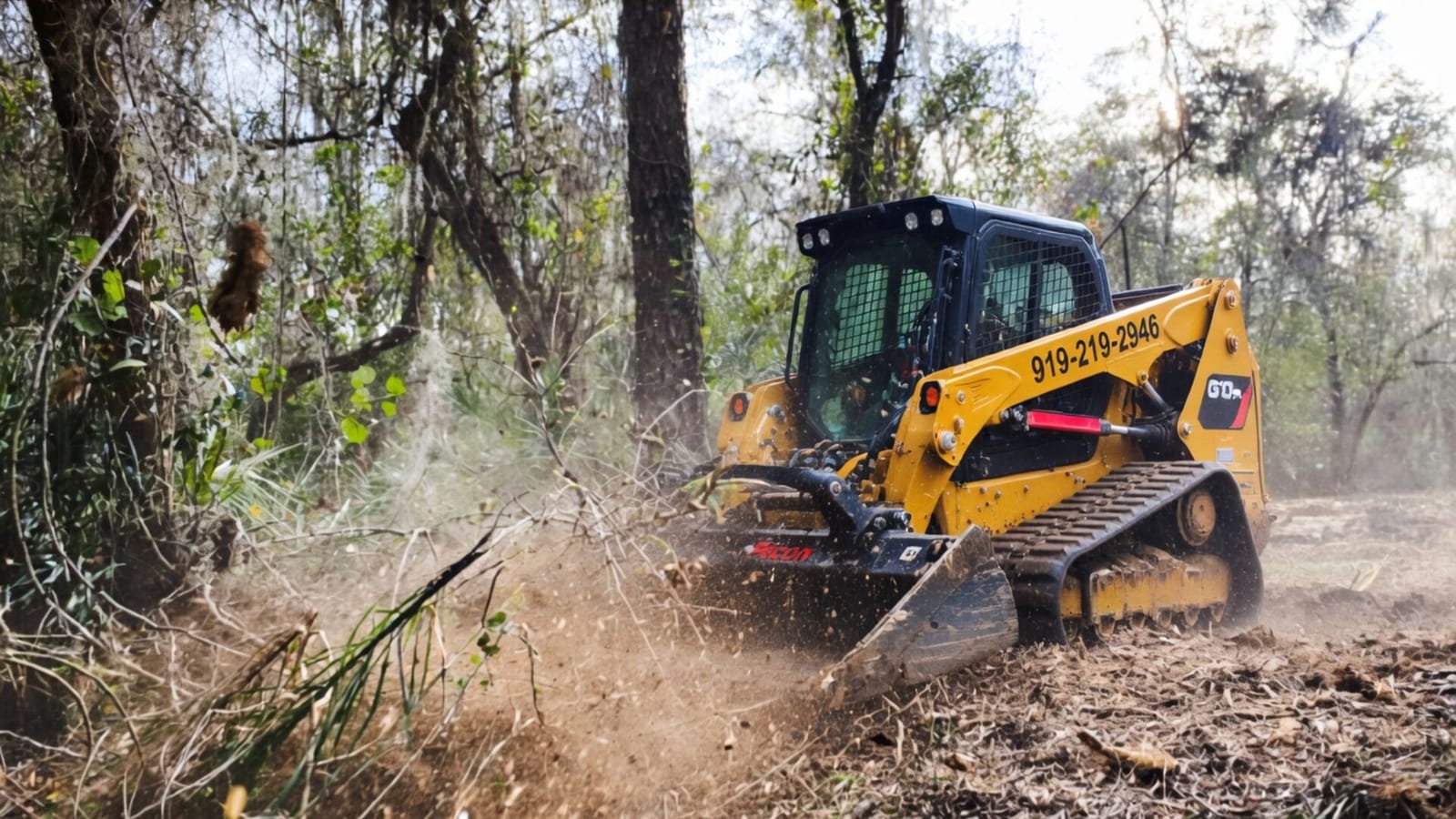
For owners in the valley’s larger towns that adds up to no legal fire at any time of year. Mulching sidesteps it: the material is processed where it stands and stays on the soil as cover, so there is no pile to build, watch or dispose of. What that trade costs is priced in our forestry mulching cost guide.
Licensing: No State Licence, and a County Map Worth Checking
Worth knowing before you compare bids, and separate from the permit question.
New York issues no statewide contractor licence. Licensing is decided county by county, and the New York Attorney General’s own consumer fact sheet names where it applies: “Home improvement contractors must be licensed in New York City, Suffolk, Nassau, Westchester, Putnam, and Rockland counties” (NY Attorney General). Verified 12 September 2026.
Cut Brush’s Hudson Valley service area is Orange, Dutchess, Ulster and Sullivan counties. This page claims no New York licence, classification or exemption of any kind, because whether a particular scope of vegetation work falls inside any county’s home improvement definition is a question for that county rather than for a contractor’s website. Individual towns and villages may also register contractors. Asking any bidder what they hold, and in which jurisdiction, is reasonable due diligence.
Frequently Asked Questions
Do I need a permit to clear half an acre in the Hudson Valley?
Possibly, and the answer comes from your town rather than your county. Half an acre is well past 5,000 square feet, which is the trigger in several valley municipalities and everywhere inside the New York City watershed east of the Hudson, while the plain state threshold is an acre. Ask the municipality by name before scheduling.
Does forestry mulching need a permit?
It depends on how much soil the work uncovers and where, not on the name of the method. Grinding in place leaves the root mat intact and disturbs less soil than grubbing the same ground. Near a wetland the distinction is sharper, because clear cutting vegetation in a wetland is regulated while selective cutting is exempt.
How do I find out whether there is a regulated wetland on my land?
Ask DEC for a jurisdictional determination. Since the start of 2025 a wetland does not have to appear on the state maps to be regulated, so a map search alone no longer settles it.
Get the Permit Question Settled Before You Price the Work
The valley picture is layered rather than complicated: a town permit at the bottom, a state acre over it, a New York City reviewer west of the river, a wetland rule that no longer depends on a map, and a burn ban that closes the cheap disposal route. Settle who pulls what in the contract before work starts. Cut Brush can flag what commonly applies and help identify the right office, and we work to the permit you hold.
Ranges are on the Hudson Valley pricing guide, statewide context is in our New York land clearing cost per acre guide, local conditions are on our Hudson Valley land clearing page, and when you are ready, request a free quote.
More from the Cut Brush Blog
Keep reading for more tips and guides on land clearing.
 Guide
Guide Japanese Barberry, Ticks and Overgrown Hudson Valley Land
Barberry thickets hold far more blacklegged ticks. Clearing it once cut tick numbers for six years. What that means for overgrown Hudson Valley property.
 Cost Guide
 Forestry Mulching Cost in the Hudson Valley, NY (2026)
Forestry mulching in the Hudson Valley runs $1,500 to $4,000 per acre. What the working season, glacial stone and New York's burn rules do to your quote.
 Cost Guide
 Land Clearing Cost Per Acre in New York (2026 Guide)
Land clearing cost per acre in New York runs $1,500 to $4,500. What glacial stone, a short working season and a town-by-town permit map do to the number.
Ready to Get Started on Your Land?
Get a free, no-obligation estimate for property in the Hudson Valley of New York.
Get Your Free QuoteOr call us directly: (919) 525-3950