Land Clearing in Rhinebeck, NY

Overgrown fields, brushy woodland edges and grown-in acreage cleared across the Town of Rhinebeck, from Rhinecliff to the farms off Route 9. Most land clearing runs $1,500 to $4,500 an acre.

Licensed & Insured
Free Estimates
Rhinebeck, NY

Clearing Land in Rhinebeck

Most land clearing in Rhinebeck costs $1,500 to $4,500 an acre. Forestry mulching runs $1,500 to $4,000 an acre, and clearing brush out from under standing trees $1,500 to $2,500. We open up overgrown meadows, cut back woodland edges and stone walls, clear room for a barn, a garden or a view, and take out the thorny understory that makes land impossible to walk.

A lot of Rhinebeck land is quietly turning back into woods. Over the last twenty years hundreds of acres of open meadow and shrubland here have grown up into young forest, and young forest that grows up on old fields tends to be thick with invasive brush. If a field you remember as open is now head-high in shrubs, it is on the same path, and it is far cheaper to clear now than once the saplings are trees.

Rhinebeck also protects its water closely. Wetlands and the creeks that feed the Landsman Kill, Rhinebeck Kill and Crum Elbow Creek carry 100 foot buffers, so we plan every job to stay out of the buffers you or the Town have identified.

Rhinebeck's Clearing Rules, in Plain Terms

These are the Town of Rhinebeck's rules, which cover almost all acreage. The Village of Rhinebeck has its own code (see the FAQ below). For a large job, the Town's Zoning Enforcement Officer makes the final call on how your plan is classed.

Where the work is What applies
Within 100 feet of a wetland Clear cutting and removing trees, shrubs or other vegetation are prohibited, and grading, driveways or equipment storage need a Planning Board permit. Mowing and upkeep of an existing lawn and removing dead or diseased trees are allowed.
Within 100 feet of a creek or stream Cutting trees 6 inches across or larger, grading or other changes need a special use permit from the Planning Board. Small seasonal streams count too.
A large area of woods Clear-cutting all the trees in one area is not allowed without a special use permit, and a selective timber harvest over a quarter acre needs a permit from the Zoning Enforcement Officer.
Dead, diseased or invasive growth Routine woodland upkeep to remove dead, diseased or damaged trees or invasive plants is outside the clear-cutting ban. Inside a wetland buffer, invasive removal still needs a permit.
An acre or more of disturbed ground The state construction stormwater rules apply, and the Town reviews the erosion plan and inspects the site.

Farm clearing in the agricultural district and harvests under a state forest management plan are treated differently from house-lot clearing. If your land is farmed or under a forest plan, tell us, because it changes what is allowed.

New York's own wetland rules sit on top of the Town's: the state regulates freshwater wetlands of 12.4 acres or more (7.4 acres from 2028) and a 100 foot strip around them. Our guide to land clearing permits in the region covers the state side.

What Clearing Looks Like

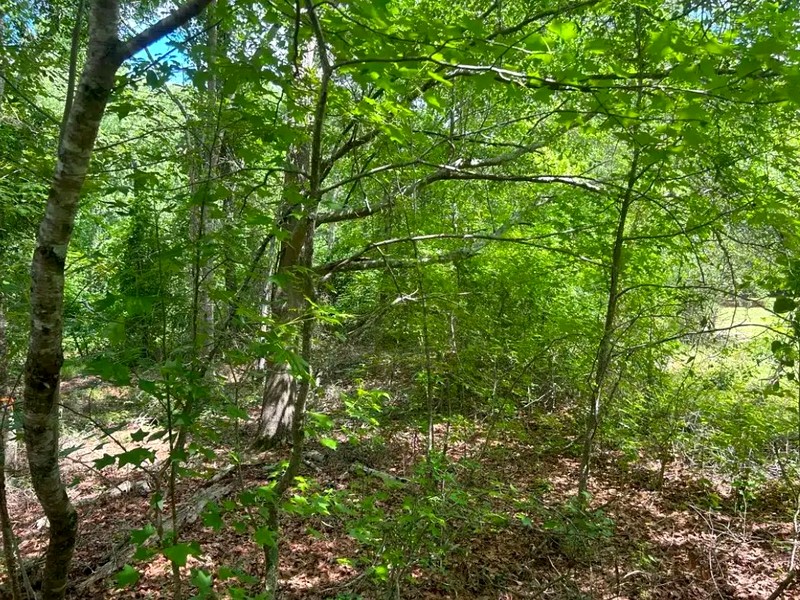
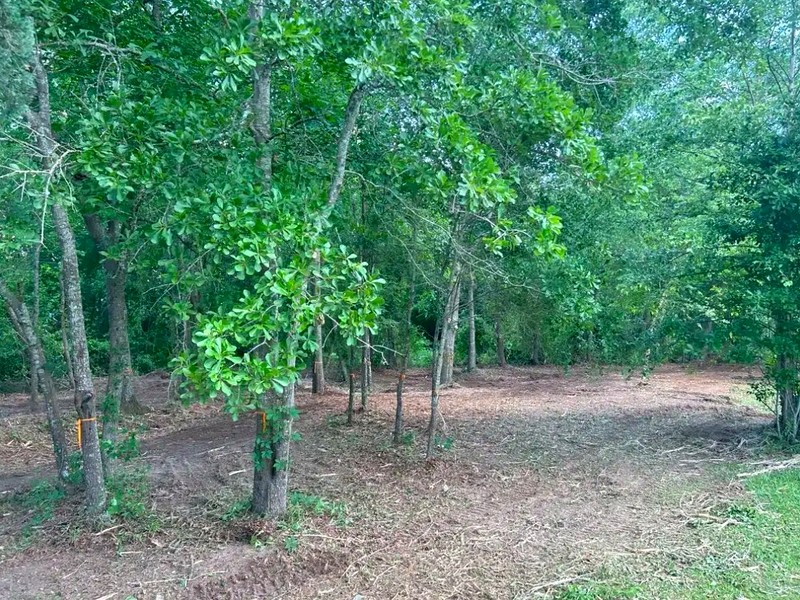
Brush that swallowed a field edge, cut back to open ground with the good trees left standing.

An old field edge lost under brush and climbing vines BEFORE
The same edge cut back to open ground with the keeper trees still standing AFTER
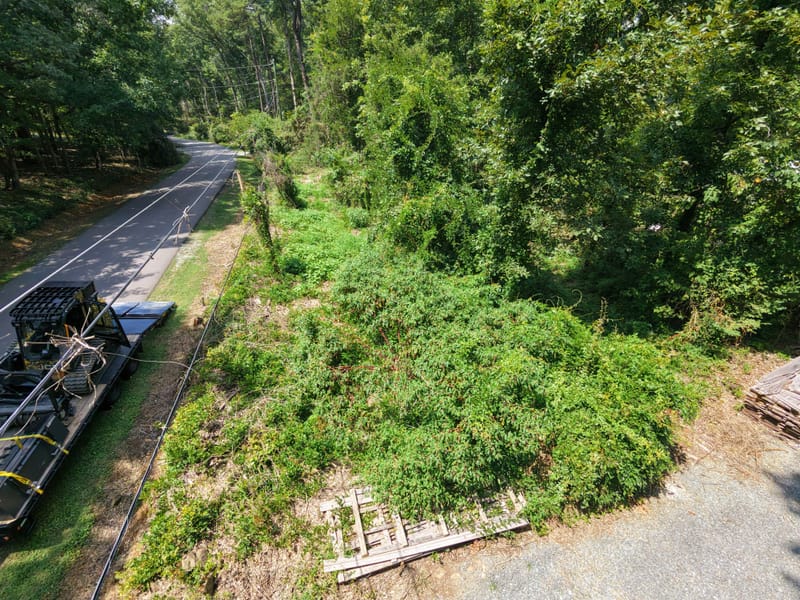
From above, a roadside lot overrun with vines and brush before mulching BEFORE
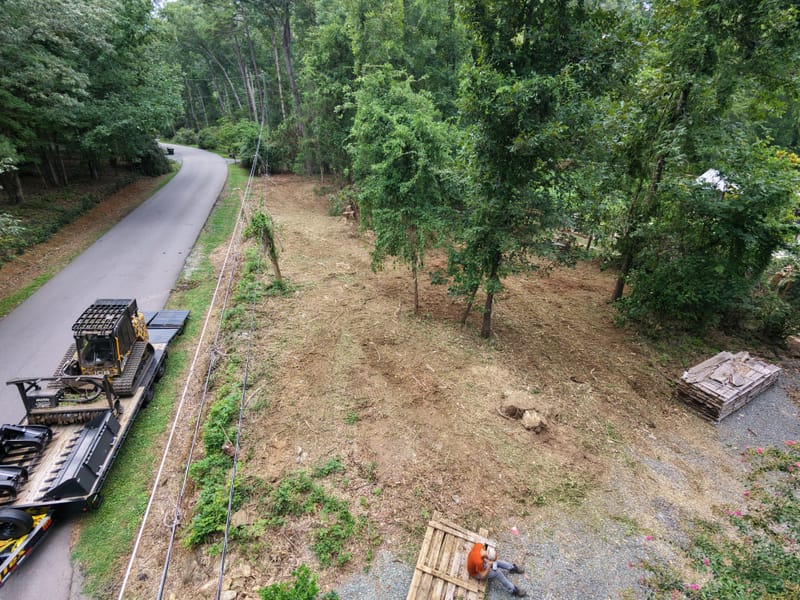
From the same spot, the lot cleared to bare ground with the tall trees kept AFTER

Multiflora Rose, Barberry and What Grows Back

The two plants behind most Rhinebeck brush jobs are multiflora rose and Japanese barberry, and New York bans the sale of both. Multiflora rose turns a field edge into a wall of thorns, spreads from seed that lasts in the soil for up to 20 years, and sprouts again from its roots. Barberry fills the floor of disturbed woods and roadsides and is known for holding ticks.

Cutting either one down clears the ground fast, but neither is beaten in one pass: both come back from the roots. Keeping a field open means cutting the regrowth several times a year for a few years. We clear the bulk of it and tell you plainly what the follow-up will take. More in our guide to barberry and ticks.

What Our Customers Say

Real Cut Brush customers, in their own words.

5.0
★★★★★
5-Star Rating on Google

Amanda Elliott

Forestry Mulching

★★★★★

We hired Cut Brush for approximately three acres of forestry mulching and couldn't be happier. Communication was outstanding from the very beginning, the crew was professional and efficient, and we loved the regular updates and photos throughout the project. It's refreshing to work with a company that values communication and quality workmanship. Highly recommend!

Jessica Richardson

Brush Clearing

★★★★★

They did an amazing job getting rid of them pesky vines!

Stan Creech

Land Clearing

★★★★★

Greg did a fantastic job with our land that was overgrown with vines, brush and trees. It took about 1 1/2 days of constant work with the machine to get this 0.6 acres under control. Greg was here at 8am sharp, just as promised. Very professional and reliable. 100% satisfied customer! I highly recommend Cut Brush for land clearing.

Rhinebeck Land Clearing FAQ

It depends on where on your land the work is. Near wetlands, creeks and streams the Town of Rhinebeck is strict: within 100 feet of a wetland, clear cutting is prohibited, and within 100 feet of a stream, cutting trees 6 inches across or larger needs a Planning Board permit. Clear-cutting a whole area of woods is not allowed without a special use permit. Removing dead or diseased trees and invasive brush is routine upkeep. Before a large job, ask the Town's Zoning Enforcement Officer how your plan is classed; we plan the work around any buffer you or the Town have identified before we quote.
Most acreage is in the Town. The Village of Rhinebeck is a separate village inside the Town with its own code; there, a permit is needed to cut street, park and roadside trees, and private trees come under review mainly when you apply to build or subdivide. Your tax bill tells you which applies.
Most land clearing runs $1,500 to $4,500 an acre, forestry mulching $1,500 to $4,000 an acre, and clearing brush from under standing trees $1,500 to $2,500 an acre. Thick multiflora rose, big trees and wet ground push toward the top. Smaller jobs start at about $1,500. See the pricing page for the breakdown, or ask for a free quote.
They add up fast. Under the Town wetlands law a first offense costs $500 to $1,000 and later ones $1,000 to $5,000, and each day the violation continues counts as a separate offense. That is why we plan every job to stay out of any wetland or stream buffer you or the Town have identified, unless you have a permit.
It will try for years. One plant can drop a huge number of seeds that stay alive in the soil for up to 20 years, and it sprouts again from its roots. Clearing it once opens the field; keeping it open means mowing or cutting the regrowth several times a year for a few years. We tell you what that follow-up looks like before you commit.
With forestry mulching it stays on your land as a layer of chips, so there is nothing to haul or burn. Burning brush is banned statewide from mid-March to mid-May anyway. If you clear by hand, the Town landfill on Stone Church Road takes brush on the last Saturday of the month, April through November, 9 am to 1 pm.

Beyond Rhinebeck

Rhinebeck is part of our land clearing service area in the Hudson Valley, which takes in Orange, Dutchess, Ulster and Sullivan counties. If your land is in Red Hook, Hyde Park or across the river around Kingston, the quote works the same way; only the town rules change.

Ready to Clear Your Rhinebeck Land?

Get a free, no-obligation quote. We walk the land, plan the work to stay out of the buffers you or the Town have identified, and give you a firm price.

Get Your Free Quote

Or call us directly: (919) 525-3950

Call Free Quote