
Fort Worth Land Clearing Permits: City, County, and the Rules People Miss
Cut Brush Team · September 3, 2026 · 6 min read

The answer surprises most people: if your land is in unincorporated Tarrant County or unincorporated Parker County, you probably do not need a permit for the clearing itself.
Neither county enforces zoning. Neither publishes a permit requirement specifically for land clearing or tree removal. That is genuinely different from a lot of the country, and it is why North Texas landowners sometimes assume there are no rules at all.
There are rules. They are just narrower than people expect, and they hit different things. Here is the actual picture for Fort Worth and the counties around it.
Before we start: Cut Brush clears land. We are not a permitting office and cannot make a determination for your parcel. Everything below is what commonly applies with the sources linked, so you know which desk to call.
First Question: City, ETJ, or Open County?
This single question changes everything, and it is worth answering before anything else.
- Inside Fort Worth city limits: the urban forestry ordinance applies, and it cares a lot about which trees you are removing.
- In a city’s Extra Territorial Jurisdiction: properties in a city’s ETJ need municipal approval before county plat approval.
- In the open unincorporated county: no zoning, no clearing permit, but three narrower triggers that catch people out.
If you are not sure which one you are in, the county can tell you. Tarrant County also runs a Pre-construction Advisory Committee where owners and developers can meet with staff and the Fire Marshal to talk through requirements before proceeding, which is a genuinely underused resource.
Inside Fort Worth: The Two Trees That Matter
The city’s urban forestry ordinance requires a permit for trees 24 inches DBH or greater for most species. But it sets a lower threshold, 18 inches DBH, for post oak and blackjack oak located east of Interstate 35W.
That is not an arbitrary detail. Post oak and blackjack oak are the two species that define Cross Timbers country. A generic tree rule would barely touch a tract out here; this one is aimed squarely at it.
Other points from the ordinance:
- Developers must preserve 25% of existing tree canopy when developing a property, or seek a waiver.
- A removal permit is not required to take a single dead, dying, diseased, or hazardous tree from a single-unit property under one acre.
- If removal would reduce tree canopy by more than 75%, an Urban Forestry Permit with a canopy management plan is required.
- Permit fees: $250 base for the first five acres including one revision, $15 per additional acre, $100 per additional revision.
A 2025 update proposed adding post oak and blackjack oak to the city’s protected species list, taking it from 26 species to 47, and raising canopy preservation for those two species to 50%. Treat that as proposed rather than settled, and check the current ordinance text before planning around it.
Sources: the urban forestry ordinance and Fort Worth Report’s coverage of the proposed update.
Unincorporated Tarrant County: Three Real Triggers
Tarrant County’s development page is clear that the county does not enforce zoning in unincorporated areas but does maintain development standards. What it regulates:
- Platting and subdivision. Required to divide a property into two or more parts. Subdivision design, roadway construction, drainage, stormwater management, and utility coordination all come with it.
- Stormwater Control Permit. Required for sites over one acre. This is the one that catches clearing projects, because an acre goes quickly on a rural tract.
- Floodplain Development Permit. Triggered by development in flood-prone areas.
Residential building permits are not required in unincorporated areas, though homes built for resale must post a notice and be inspected.
Unincorporated Parker County
Parker County’s permitting page states plainly that there are no zoning requirements within unincorporated areas. The Permitting Department regulates:
- On-site sewage facilities
- All development within special flood hazard areas
- Health and safety code violations
- The stormwater program
The page does not address permits for land clearing or tree removal. If your project touches a flood hazard area or involves a septic system, that department is your call: 817-598-6175, Monday to Friday, 7am to 4pm.
The Rule That Is Not a Permit: Burning
You can hold every approval and still be unable to get rid of what you cut.
Tarrant County Commissioners Court has issued 90-day outdoor burn bans for unincorporated areas at the Fire Marshal’s request with Texas A&M Forest Service support, citing severe drought and wildfire risk. Violations carry a fine of up to $500, with exceptions for cooking, welding, and fire pits when safety guidelines are followed.
Even with no ban in effect, burning in unincorporated Tarrant County is a process:
- Call Tarrant County Regional Communications at 817-232-9800 on the day you plan to burn to register the address and confirm it is an allowable burn day.
- Begin no earlier than one hour after sunrise, end no later than one hour before sunset.
- Burn downwind and at least 300 feet from structures on adjacent properties.
Officials also advise rural owners to clear dry debris and keep a 30-foot mowed perimeter around structures. Our burn ban guide covers the process in more detail, and the Texas A&M Forest Service burn ban map shows current status by county.
The Other Calendar: Oaks
Not a permit either, but it can cost you trees. Texas A&M Forest Service advises against pruning or wounding oaks from February through June, when oak wilt spreads most easily, and recommends painting every oak wound immediately regardless of season, with November through January as the preferred window. Our oak wilt guide explains what that means on a clearing job.
A Practical Sequence
- Establish which jurisdiction you are in. City, ETJ, or open county. Everything follows from this.
- Measure the trees you plan to remove, especially post oaks and blackjack oaks if you are inside the city east of I-35W.
- Add up the disturbed acreage. One acre is the Tarrant County stormwater trigger.
- Check the floodplain. Both counties regulate development in flood hazard areas.
- Decide the debris method before clearing starts. Burning has a process and a ban risk; mulching has neither.
- Call the offices. The city, the county, and any relevant state program answer for their own rules, and Tarrant’s advisory committee exists for exactly this.
Where Mulching Simplifies It
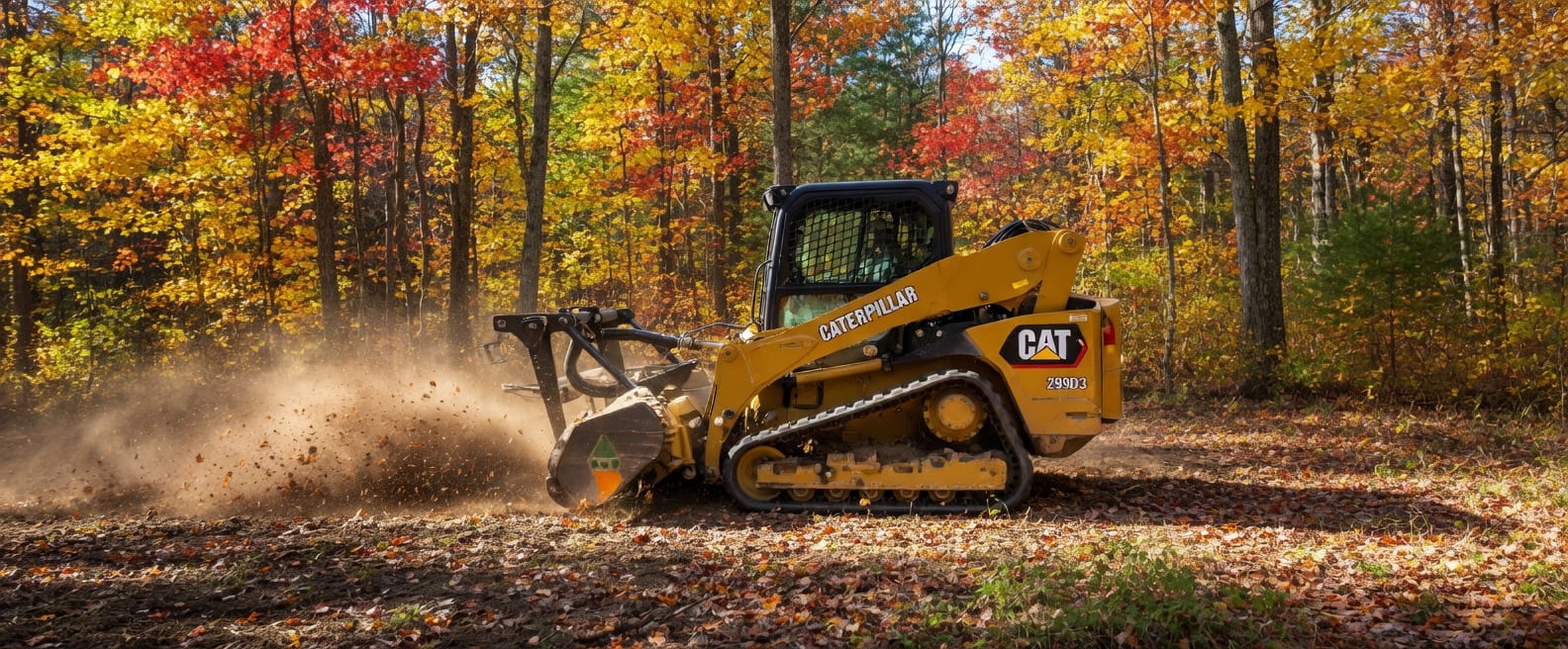
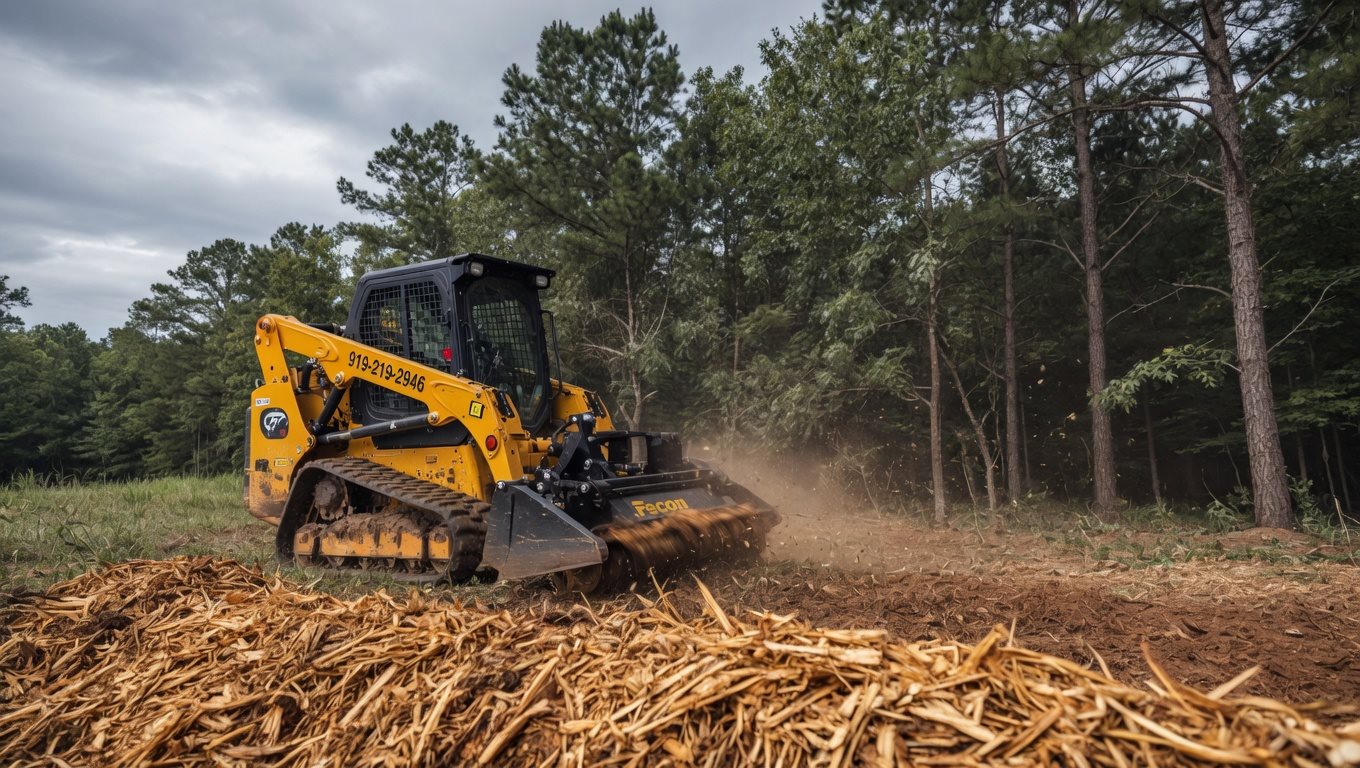
One reason forestry mulching is common on North Texas tracts is that it removes the debris question entirely. Material is processed where it stands and left as ground cover, so there is no pile, nothing to register, nothing to burn, and nothing to haul.
It does not exempt you from the tree ordinance or the county’s stormwater and floodplain triggers. Clearing is clearing. But it takes the single most schedule-dependent part of the job off the table.
For what the work costs, see the Fort Worth pricing guide. If you would rather have someone walk the tract and flag which rules are likely to apply, that walk-through is free.
Related Services
Learn more about the services mentioned in this article.


More from the Cut Brush Blog
Keep reading for more tips and guides on land clearing.
 Guide
Guide Clearing Land in the Cross Timbers: Post Oak, Sand, and What to Keep
The Cross Timbers runs on sandy soil, post oak and blackjack oak. What that means for clearing a North Texas tract, which trees are protected, and what to leave standing.
 Guide
Guide Burn Bans in Tarrant and Parker County: How to Check and How to Burn Legally
How Tarrant and Parker County burn bans work, where to check today's status, and the registration call and setback rules that apply even when no ban is in effect.
 Cost Guide
 Land Clearing Cost Per Acre in Texas (2026 Guide)
Land clearing cost per acre in Texas runs $1,500 to $4,500. See what cedar density, rock, and access do to a quote, with real Hill Country ranges by vegetation type.
Let's Get Started on Your Land
Request a free quote. We'll contact you to discuss your property, access, and the clearing you need.
Get a Free QuoteOr call us directly: (919) 525-3950