Japanese Barberry, Ticks and Overgrown Hudson Valley Land
Cut Brush Team · September 12, 2026 · 5 min read
Japanese barberry understories “harbor greatly enhanced levels of blacklegged ticks,” the species that carries Lyme disease, and clearing the shrub once held tick numbers down for as long as six years (USDA Forest Service). That is why a large share of the brush clearing bought in the Hudson Valley is not about tidiness at all.
If the ground between your house and your treeline has filled with a low, thorny, densely branched shrub, this page is about what it is doing and what clearing actually changes.
Why Barberry and Ticks Travel Together
Barberry is not merely present in the valley. It forms a closed, knee-high to waist-high layer that shades out almost everything else and is unpleasant enough to walk through that most people simply stop going in.
That structure is the problem. A thicket holds humidity near the ground, which is what a blacklegged tick needs to survive between hosts, and it gives white-footed mice dense cover from predators. Mice are what the larval ticks feed on and the reservoir that infects them. Shade, damp and mice in one place produces a great many infected ticks in that same place.
Barberry is classified as invasive in twenty states and four Canadian provinces, so none of this is a local peculiarity. What is local is how much of the valley it now holds.
What Clearing It Actually Changed
The useful part of the research is that somebody measured the outcome rather than assuming it.
Controlling barberry in a wooded area once produced a significant reduction in blacklegged ticks, and in ticks carrying the Lyme bacterium, for as long as six years. In the managed plots the numbers fell close to the levels found in plots that never had barberry at all. Over the longer run both barberry and tick numbers rebuilt, which is why the researchers suggest returning roughly every five years rather than treating one visit as permanent.
Two things follow. Clearing the shrub is a real intervention with a measurable effect, not a cosmetic one. And it is a maintenance commitment rather than a single purchase.
This Is Well Studied Ground, Locally
The valley is not guessing about tick-borne disease. Researchers at the Cary Institute of Ecosystem Studies in Millbrook, Dutchess County, have been studying how acorns, rodents, ticks, predators and climate interact to shape Lyme risk since 1991, a study now more than thirty-five years long (Cary Institute).
One of that work’s findings is worth holding next to a clearing decision: the forest composition of Dutchess County is changing, with oaks gradually giving way to maples. Acorn years drive mouse numbers, and mouse numbers drive infected ticks. The vegetation on your land is part of a system, not just scenery, and the part of it you can directly change is the shrub layer.
What It Looks Like, and What Grows With It
Barberry is a low shrub with small oval leaves, single spines at the nodes, inner wood that is bright yellow when cut, and red berries that hang through winter. It leafs out early and holds its leaves late, which is often the easiest way to spot it: in April and again in November it can be the only green thing on the woodland floor.
It rarely arrives alone. The same overgrown valley ground usually carries Oriental bittersweet climbing the hedgerows, multiflora rose through old pasture, knotweed along the creek lines and tree-of-heaven on cut banks and roadsides. All of them respond to light, all of them resprout, and all of them are easier to deal with as one job than as five.
Cutting Takes the Top, Not the Root
Be clear about what a machine does and does not do, because this is where expectations go wrong.
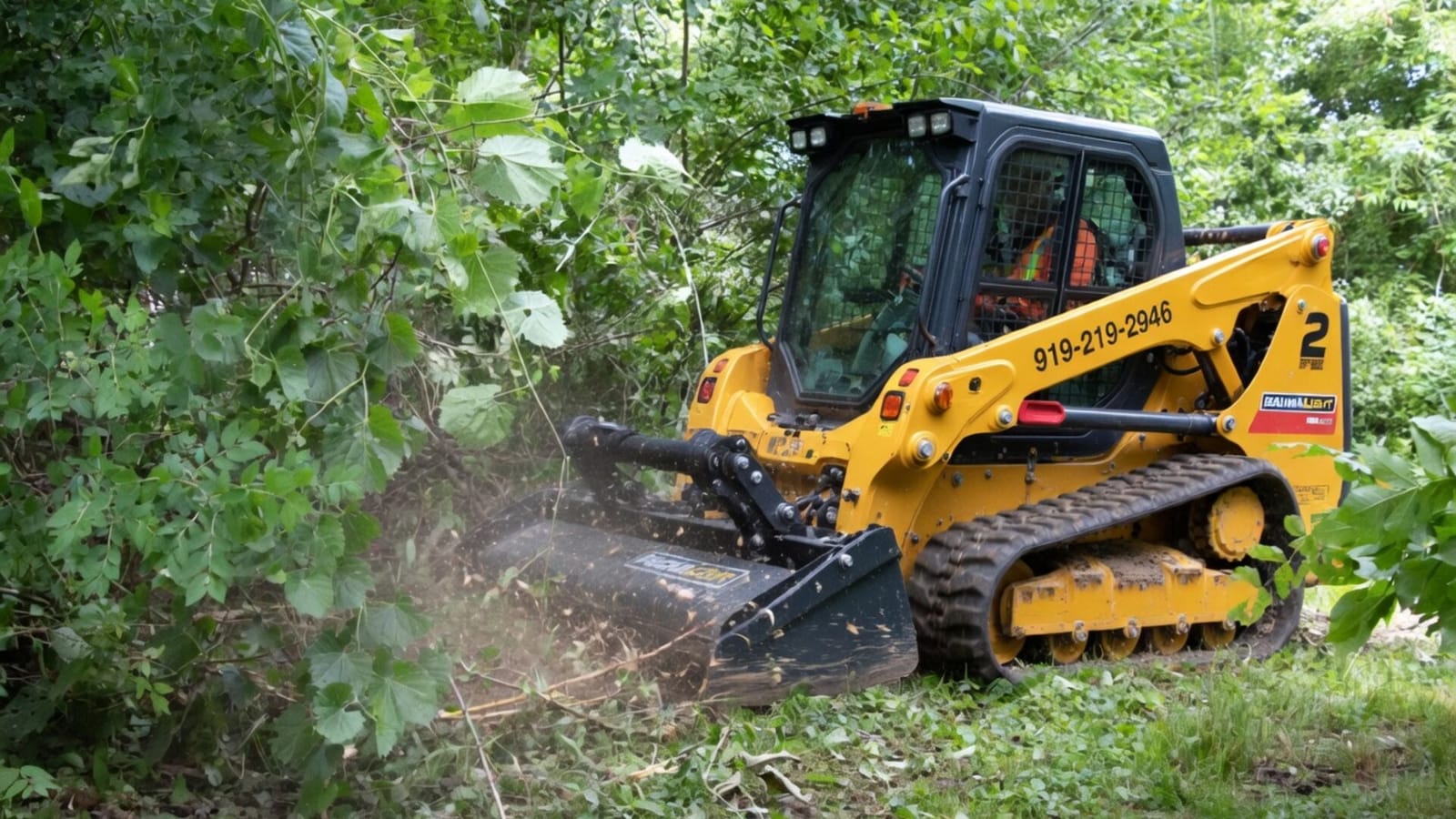
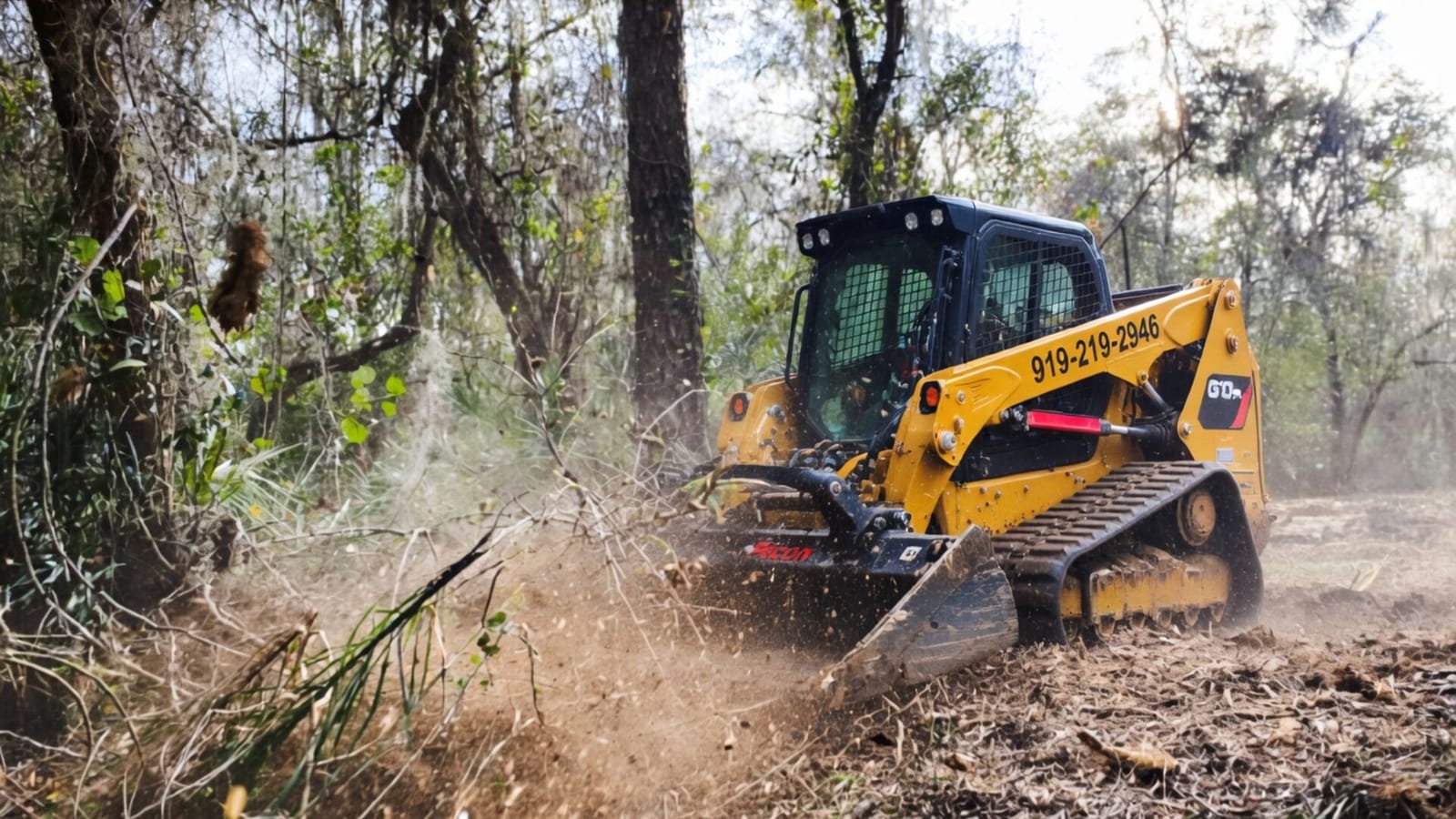
A mulching head processes the standing shrub into chip and leaves it on the soil. The thicket is gone, the ground is walkable, the humidity trap and the mouse cover are gone with it, and the measured tick benefit comes from exactly that. What stays is the root crown, and barberry resprouts from it.
So the real shape of the work is one clearing pass that changes the site immediately, followed by a lighter return pass before the shrub rebuilds its canopy. That is materially cheaper than letting it close back in and starting again. What the pass itself costs sits on the Hudson Valley pricing guide, and the methods we use on this ground are set out on the Hudson Valley services page.
One New York constraint worth knowing before you plan a burn pile instead: DEC prohibits brush burning statewide from 16 March through 14 May, and outside that window on-site burning is allowed only in towns under 20,000 residents (NYSDEC). For most valley owners there is no legal fire, which is part of why processing the material in place is the usual answer here.
Frequently Asked Questions
Will clearing barberry get rid of ticks on my property?
It will not eliminate them, and nobody should promise that. What the research measured was a significant and lasting reduction in how many ticks, and how many infected ticks, a treated area held. Removing dense low cover between your house and the woods is a real change to where ticks can survive.
When is the best time to clear it?
Late autumn and winter work well. The shrub is easy to identify while it still holds leaves, the ground carries a machine better, and there is no nesting season to work around. The wider seasonal argument for valley clearing is in our forestry mulching cost guide.
How often does it need doing again?
Plan on roughly every five years for ground you want to keep open, which is the interval the barberry research points to. A return pass costs a fraction of the first one.
Get the Shrub Layer Off Your Land
Overgrown valley ground is rarely just untidy. Opening the floor between your buildings and your treeline is the one part of this system you can actually change.
See the local conditions on our Hudson Valley land clearing page, then request a free quote. We tell you what will grow back, and when, before we quote.
More from the Cut Brush Blog
Keep reading for more tips and guides on land clearing.
 Guide
Guide Land Clearing Permits in the Hudson Valley, NY
New York has no county land disturbance permit. Your town holds it, the state starts at one acre, and wetlands are no longer settled by a map. Sources here.
 Cost Guide
 Forestry Mulching Cost in the Hudson Valley, NY (2026)
Forestry mulching in the Hudson Valley runs $1,500 to $4,000 per acre. What the working season, glacial stone and New York's burn rules do to your quote.
 Cost Guide
 Land Clearing Cost Per Acre in New York (2026 Guide)
Land clearing cost per acre in New York runs $1,500 to $4,500. What glacial stone, a short working season and a town-by-town permit map do to the number.
Ready to Get Started on Your Land?
Get a free, no-obligation estimate for property in the Hudson Valley of New York.
Get Your Free QuoteOr call us directly: (919) 525-3950