
Kudzu Removal in South Carolina: Cost and Control Plan
Cut Brush Team · October 1, 2026 · 8 min read

Kudzu removal in South Carolina starts with a figure from Clemson. Its Home and Garden Information Center says that under ideal conditions “kudzu can grow as much as a foot per day,” and a Carolina summer comes close to ideal. A vine that is a fringe at the bottom of a road bank in May can be over the fence, across the pasture edge and up the first pines by Labor Day.
Getting rid of it takes more than one cutting, because the plant keeps its strength underground. This guide explains why South Carolina suits it, what keeps a patch alive, why bush hogging alone never finishes it, how a plan over several seasons works, what it costs per acre, and how the job differs between the Upstate, the Midlands and the Lowcountry.
Why Is South Carolina Such Easy Ground for Kudzu?
Long, hot growing seasons, heavy rain and no shortage of disturbed soil. Every highway cut, rail embankment, logged edge and stalled building lot gives the vine bare, sunny ground to start from, and little of it is ever mowed again.
The Upstate gives it the most. Pacolet soils on Piedmont uplands there commonly sit on 15 to 25 percent slopes with clay 12 to 26 inches down (USDA NRCS, Pacolet series), and the State Climatology Office puts Foothills rainfall at 60 to more than 70 inches a year (SC Department of Natural Resources). Steep, wet, sunny banks are where kudzu spreads fastest and where a machine finds it hardest to work.
It reaches into town as well. In March 2024 Greenville’s parks staff brought forty goats into Cleveland Park; FOX Carolina reported they would be “eating away poison ivy, kudzu, and other invasive species along the Reedy River over the next month.”
What Keeps a Kudzu Patch Alive?
A network of rooted crowns sitting on big storage roots. Wherever a vine node lies on bare soil it can root and form a crown, a woody knob able to send up new vines on its own. An old patch is less one plant than hundreds of anchored points per acre.
Under the crowns are thick roots packed with stored starch. Clemson warns that “kudzu can regenerate from any viable portion of its extensive root system,” which is why tearing at the leaves or cutting the vines once does so little.
The crown is still the place to aim. Extension work in neighbouring Alabama finds that kudzu does not regrow from below the root crown or sprout from its lateral roots, so a crown that is killed or starved stops producing vines even though the deep roots stay put (Alabama Cooperative Extension System).
Left alone, the vines head upward. They climb trunks and spread across the canopy, and the shade and weight kill healthy pines and hardwoods within a few seasons, which is how a woodland edge turns into a wall of green.
Why Doesn’t Bush Hogging Finish the Job?
Because it never touches the crowns. A cut patch looks done for a few weeks; then runners come back out of the crowns and cover the same ground.
Clemson’s view of mechanical methods is that they succeed only with persistence: “When these methods are applied consistently over several years, they may successfully eradicate young infestations.” There are two conditions in that sentence, consistently and young. An occasional mowing of an old patch meets neither.
Two other mistakes are common. Winter fools people, because frost turns the whole sheet brown and it looks dead while the crowns are only resting. And raking cut green vines into a pile at the far end of the property can root a second patch there. Grinding the vines where they lie removes that risk.
How Does a Season-by-Season Kudzu Plan Work?
Knock the mat down once, then keep cutting the regrowth on a schedule until the crowns give out. Established patches usually need return visits for two to three growing seasons, and very old crowns can take longer. In the order Cut Brush quotes it:
- First visit, the knockdown. A forestry mulcher grinds the vines, the brush they smothered and the dead saplings underneath into a chip layer. On an Upstate slope that layer keeps soil and roots in place instead of exposing bare clay to the next storm.
- Same visit, find the crowns. With the sheet gone, crowns show at the surface as woody knobs, often clustered on old terraces, along fence lines and at the bottom of slopes.
- Return visits, cut every new runner. Each pass takes regrowth down to the crown before it can rebuild the roots’ reserve.
- Late summer, lean on it. Kudzu sends energy down to its roots for winter late in the season, which is when repeated cutting hurts it most.
Skip a season and the patch recovers most of what it lost, so the return visits are booked from the start.
We work mechanically and do not apply herbicide. A chemical treatment of the crowns, if you want one, is a licensed applicator’s work and can be scheduled between our passes.
Pro tip: Creek banks are where Upstate kudzu is hardest to beat and where the rules are tightest. Greenville County requires buffers along waterways, so find out what is allowed before anything near the water is cleared, and plan the stream edge as its own stage of the job.
What Does Kudzu Removal Cost in South Carolina?
Expect $1,500 to $2,500 per acre for the first knockdown, the Regrowth & Understory Work band on our Greenville pricing page. Return passes are priced per visit, and every South Carolina market quotes from the same bands. What moves a kudzu number here:
| Factor | Effect on the quote |
|---|---|
| Age of the patch | A first-year fringe sits near the bottom; a sheet that has hidden brush and debris for years sits in the upper half |
| Trees under the vines | Where kudzu has swallowed standing timber, that part can price as land clearing at $1,500 – $4,500 per acre |
| Slope | Upstate grades slow every pass; anything beyond safe machine limits is ruled out at the walk-over |
| Access | Tight gates, terraces and a soft bottom of slope add setup time |
| Total size | Mobilization sets a floor near $1,500; larger jobs cost less per acre |
| Return schedule | Priced per visit, over two to three growing seasons |
The South Carolina land clearing cost guide has the statewide per-acre picture.
Kudzu in the Upstate, the Midlands and the Lowcountry
Greenville and the Upstate. Steep clay and heavy rain make most kudzu ground here erosion ground too, which is why grinding in place beats stripping. Greenville County’s land disturbance line is 5,000 square feet, well under an acre. Our Upstate steep ground guide and Greenville permit guide cover both, and land clearing in the Upstate is the place to start.
Columbia and the Midlands. Around the Fall Line and the Sandhills, kudzu takes the same road banks, rail cuts and old field edges. Land disturbance permitting in South Carolina starts below one acre, as our Midlands acreage tier guide explains. See land clearing around Columbia.
Charleston and the Lowcountry. On low coastal ground kudzu holds field edges and roadsides, and how wet the soil is often decides when a machine can get onto it. See land clearing around Charleston.
Burning, anywhere in the state. Outside town and city limits, state law requires notifying the South Carolina Forestry Commission before an outdoor burn, and local rules can be stricter. Grinding the vines in place avoids burning altogether.
Frequently Asked Questions
How fast does kudzu grow in South Carolina?
Clemson puts it at up to a foot a day in ideal conditions, which is how a bank goes from a fringe to fully covered in one or two summers.
What does kudzu removal cost per acre in South Carolina?
Plan on $1,500 to $2,500 per acre for the knockdown, with return passes priced per visit. Vines over standing timber can push that part to land clearing at $1,500 to $4,500 per acre, and small jobs meet a floor near $1,500.
Can kudzu be eliminated permanently?
Not with one clearing. Scheduled passes over several seasons can bring an established patch under control, though runners from a neighbouring property can always come back across. Young patches respond fastest.
Does kudzu kill trees?
Yes. It climbs trunks and smothers the canopy, and the weight and shade kill pines and hardwoods within a few seasons. Cutting the vines at the base early saves trees that are still healthy.
Do goats get rid of kudzu?
They can wear it down by eating the leaves again and again, the same principle as repeated cutting, but they need fencing and steady grazing for several seasons. On a private parcel a mulching knockdown with scheduled passes reaches the same end.
Will kudzu return after forestry mulching?
Yes, from crowns that survive the first visit, and the plan is built around that. The knockdown clears the mass so the return passes can find the crowns and wear them out.
Get a Kudzu Plan for Your South Carolina Land
Every summer a patch is left alone, it adds crowns. Our crew prices kudzu work in South Carolina in two parts, the knockdown and the return visits, and both are in writing before the first pass, whether the vine is on a road bank in Spartanburg, a fence line outside Easley or a field edge near Camden.
More from the Cut Brush Blog
Keep reading for more tips and guides on land clearing.
 Guide
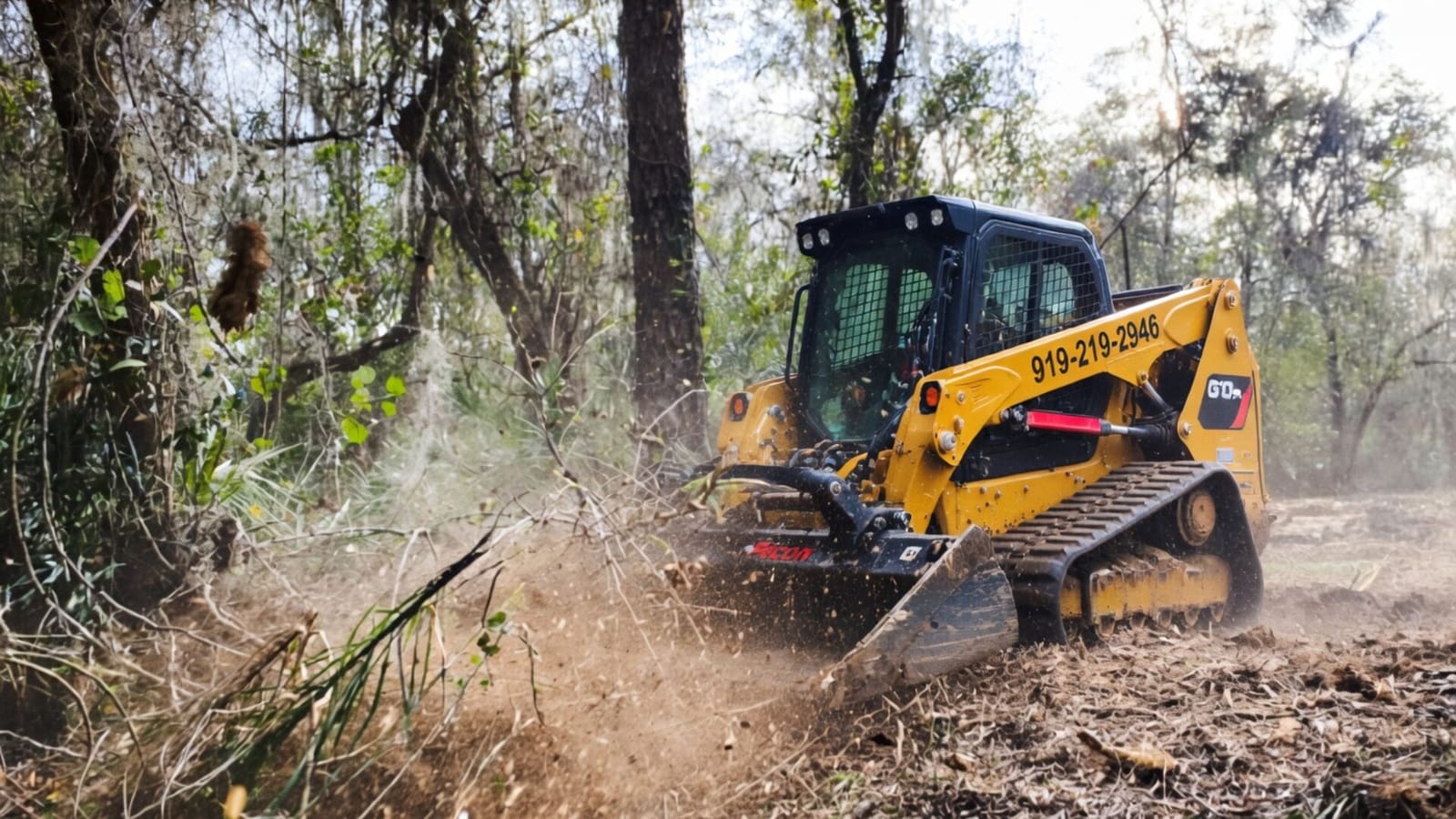
Clearing Steep Ground in the Upstate of South Carolina
Upstate slopes carry a thinner soil under far more rain than the rest of SC. Here is how that changes a clearing job around Greenville, and what to ask for.
 Guide
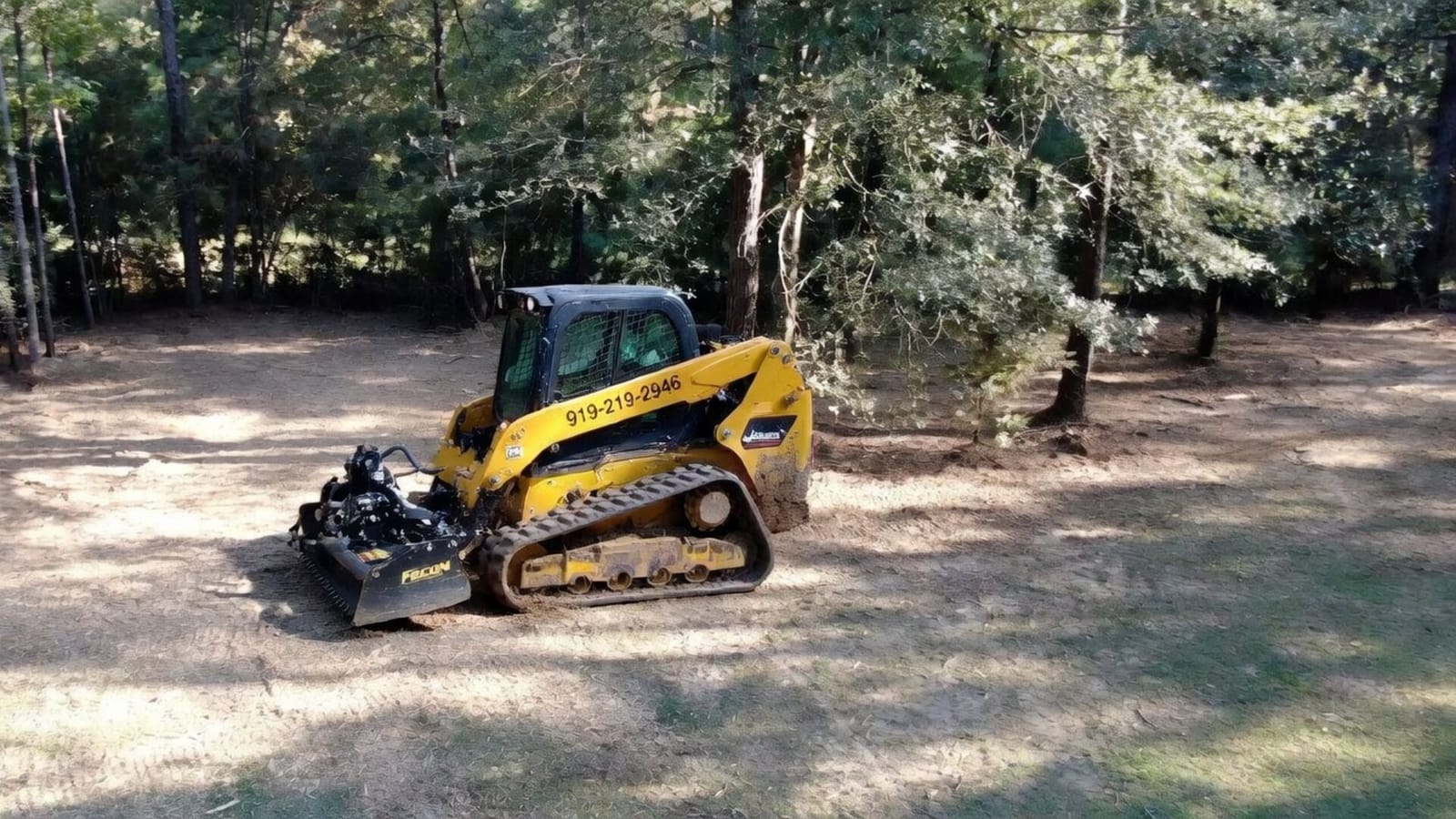
Land Clearing Permits in Greenville County, SC
Greenville County changes category at 5,000 square feet, not an acre, and asks you to prove a farm. Here are the thresholds, the city rules and the sources.
 Guide
Bradford Pear Removal in South Carolina: Bounty and Costs
Bradford pear removal in South Carolina: how the bounty exchange works, why wild callery pear thickets spread, and what clearing them costs per acre.
Let's Get Started on Your Land
Request a free quote. We'll contact you to discuss your property, access, and the clearing you need.
Get a Free QuoteOr call us directly: (919) 525-3950