
Maryville Land Clearing: Slopes, Sinkholes, Permits
Cut Brush Team · August 21, 2026 · 4 min read

Land around Maryville can move quickly from a level valley lot to steep foothill ground. Limestone karst and mapped sinkhole features add another reason to define drainage, equipment routes, and the intended finish before clearing starts.
Permitting is jurisdiction-specific. Maryville, Alcoa, unincorporated Blount County, and Tennessee’s statewide stormwater program do not use one interchangeable form or threshold.
What is Maryville’s grading-permit threshold?
Maryville’s municipal code requires land-disturbing activities to comply with its erosion and stormwater chapter. The code’s explicit grading-permit provision applies to qualifying new development or redevelopment disturbing more than one-tenth of an acre, subject to listed exemptions and other requirements.
That is more precise than saying every removal of vegetation automatically needs the same permit. The owner should confirm whether the proposed work is exempt, whether it is connected to development, and what the Engineering Department expects before disturbing soil.
Alcoa administers its own development and stormwater process. Property outside either city generally goes through Blount County. Verify the parcel’s jurisdiction from official mapping rather than relying on the mailing city.
When does Tennessee’s one-acre rule apply?
Tennessee’s construction stormwater permit generally applies when clearing, grading, or excavation disturbs one acre or more, including smaller areas that form part of a larger common development plan. State coverage can require a Notice of Intent and stormwater pollution prevention plan before local approval is released.
Measure the whole project: clearing limits, access, stockpiles, utilities, septic work, drives, and building areas. A half-acre clearing phase can still be part of a larger regulated plan.
Why do slope documents matter?
Blount County zoning uses slope analysis and topographic information for certain steep-lot development questions. A lot averaging more than 15 percent slope can require additional documentation and may face setback implications.
That rule is not an equipment rating. Machine safety depends on actual grade, soil moisture, rock, access, side slope, vegetation, and the specific carrier. A surveyor’s slope analysis helps describe the land, while the operator must separately decide what can be worked safely. Sections outside the machine’s safe envelope should be excluded from the clearing scope.
What changes when karst or a sinkhole is present?
Karst features can connect surface water to groundwater and can react badly to concentrated runoff, excavation, filling, or loading. Tennessee’s stormwater guidance calls for known or suspected sinkholes to be identified and protected from sediment-laden runoff. It also warns that mulch should not be placed in an open sinkhole throat where it could contribute to clogging or flooding.
A visible depression is a reason for caution, not a diagnosis. Cut Brush can note a suspect area and keep equipment away from it. A geotechnical professional, engineer, regulator, or other qualified specialist should evaluate an active, structural, or unclear feature. No clearing method can promise that sinkhole risk is eliminated.
Is forestry mulching appropriate on this terrain?
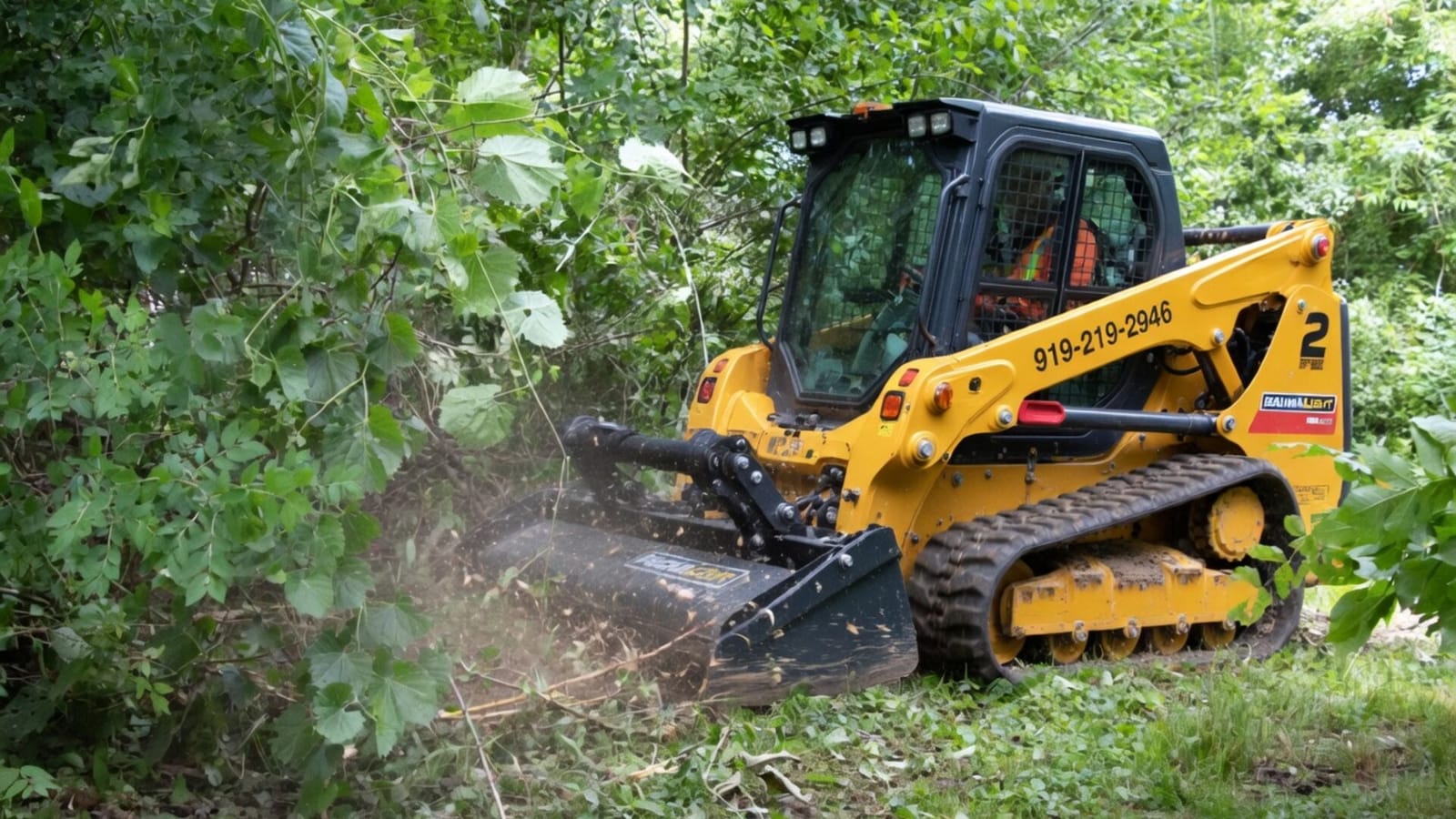
Forestry mulching in Maryville can retain roots and surface cover while avoiding wholesale grubbing. That may reduce bare-soil exposure when the goal is vegetation management rather than earthwork. It does not authorize work inside a protected feature, replace erosion controls, or make every slope machine-safe. Per-acre numbers for this approach are in our forestry mulching cost guide for the Knoxville area.
For build preparation, Maryville land clearing should be coordinated with the survey, site plan, driveway, utilities, septic design, and any grading that follows.
A useful pre-clearing checklist
- Confirm Maryville, Alcoa, or county jurisdiction.
- Mark the total planned disturbance, not only the first clearing pass.
- Bring available survey contours and slope analysis.
- Identify drainage paths, depressions, exposed rock, and wet areas.
- Separate vegetation work from later excavation and grading.
- Ask the governing office or project professional for the final permit determination.
The Maryville pricing guide explains the clearing variables. Once the workable and approved area is understood, request a Blount County quote.
Official starting points
- City of Maryville Engineering and Stormwater
- Tennessee Construction Stormwater Permit
- TDEC Erosion and Sediment Control Handbook
Use the current code, forms, and agency guidance for the parcel-specific decision.
Related Services
Learn more about the services mentioned in this article.


More from the Cut Brush Blog
Keep reading for more tips and guides on land clearing.
 Guide
Guide Autumn Olive Removal in East Tennessee: Reclaim Old Fields
Autumn olive removal in East Tennessee: spot the silver-leaf invader, why bush hogging backfires, and the fall window to kill it. Get a free estimate today.
Guide Bradford Pear Removal in Tennessee: Thickets and Costs
Bradford pear removal in Tennessee: is there a bounty or a ban, why wild callery pear thickets spread, and what clearing them costs per acre.
 Cost Guide
 Land Clearing Cost Per Acre in Tennessee (2026)
Land clearing cost per acre in Tennessee runs $1,500 to $4,500. See Chattanooga-area pricing by vegetation density, slope, and rock. Request a free quote today.
Let's Get Started on Your Land
Request a free quote. We'll contact you to discuss your property, access, and the clearing you need.
Get a Free QuoteOr call us directly: (919) 525-3950