
Brush Hogging Cost Per Acre in Arkansas (2026)
Cut Brush Team · October 9, 2026 · 8 min read

The hay field skipped a cutting, then two, and now blackberry canes, persimmon sprouts and little cedars stand waist-high in it. You want it back to grass before it turns to woods. Brush hogging in Arkansas runs $75 to $400 an acre with Cut Brush, depending on how long the field has gone since its last cut, with a $250 to $500 minimum per visit. We mow around Batesville, Bella Vista and Bryant.
At a glance:
- Our rates: $75 to $150 an acre for a field mowed within the past year, $125 to $250 for one or two seasons of growth, and $200 to $400 once it has gone three years or more.
- Minimum: $250 to $500 a visit, so a one-acre field usually pays the minimum.
- Past a mower: once saplings pass 2 to 3 inches it is not a brush hog job, and we price it from our $1,500 to $2,500 an acre clearing row.
- Dry weather: in August 2026 the University of Arkansas advised against brush hogging in dry conditions, because a blade striking debris or a failing machine can start a fire.
- Burn bans: the state’s open burning rule exempts fires for on-site land clearing, but county judges issue bans on top of it. A mowed field leaves nothing to burn.
- Nesting: the Arkansas Game and Fish Commission asks landowners to hold haying until July 15 or later where they can.
Cut Brush mows fields around Batesville in the Ozark foothills, Bella Vista in the northwest corner and Bryant south of Little Rock. We look at the field before we price it and tell you plainly whether a mower will finish the job.
What Is Brush Hogging?
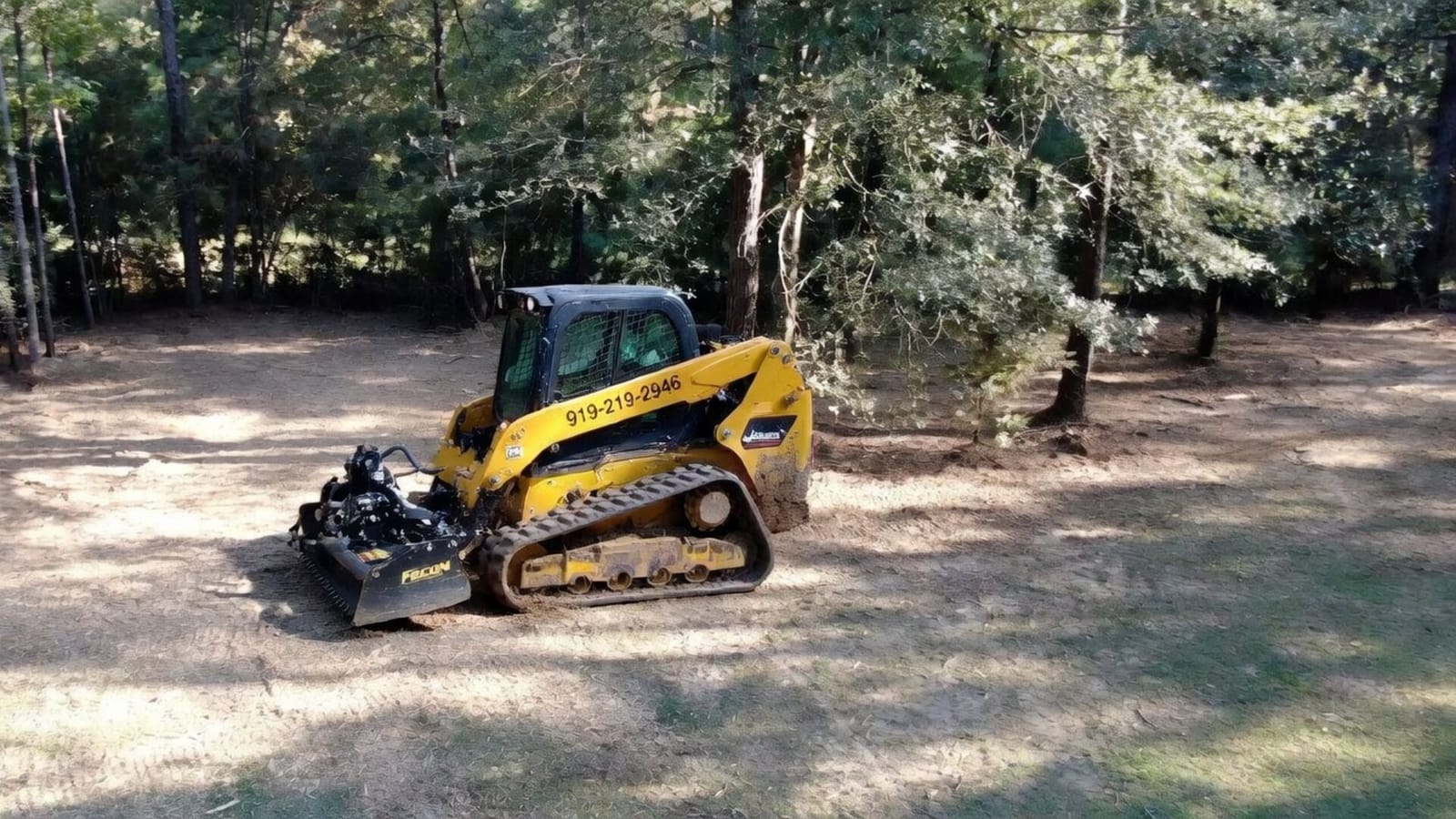
Brush hogging, or bush hogging, is a tractor pulling a heavy rotary cutter through growth a yard mower could never handle. It chops grass, weeds, briars and saplings up to about 2 inches thick and leaves the cut material lying on the field to break down. Nothing gets raked, piled or hauled off. It keeps open ground open. It does not take out trees, and it does not touch roots, so anything woody that survives the blade will try again next spring.
How Much Does Brush Hogging Cost in Arkansas?
We price an Arkansas field by how far it has gone, because that decides how fast the tractor can travel.
| Field condition | Our price per acre | What it looks like in Arkansas |
|---|---|---|
| Mowed within the past year | $75 – $150 | Hay or pasture grass with weeds, no woody stems |
| One or two seasons of growth | $125 – $250 | Waist-high grass, blackberry and dewberry canes, cedar seedlings |
| Three or more years overgrown | $200 – $400 | Thick brush, persimmon and honeylocust sprouts, saplings up to 2 inches |
| Going back to woods | Not a brush hog job | Saplings past 2 to 3 inches, cedar taller than you; priced as clearing |
Where these numbers come from. Our Arkansas pricing pages list clearing work, not mowing, so these rows are Cut Brush’s standard brush hogging rates, the same field-condition bands we publish for brush hogging. Every visit carries the $250 to $500 minimum, which pays for hauling the tractor. When a field has gone past mowing, we quote it from the $1,500 to $2,500 an acre row on the nearest pricing page (Batesville, Bella Vista or Bryant), or as forestry mulching at $1,500 to $4,000 an acre.
What Changes the Price of an Arkansas Field
Chert in Ozark pasture. The Nixa soil, first described in Marion County, sits on Ozark ridgetops and side slopes and is used mainly for forest and pasture. Its top layers carry 15 to 60 percent chert. On that ground the blades pick up rock and throw it, so we raise the deck and slow down. A cherty hill pasture above the White River costs more per acre than a stone-free creek bottom of the same size.
Briars you plan to spray. The University of Arkansas pasture weed guide, MP522, says to spray blackberry and dewberry in May or June, not to mow during the year you apply, and to plan a follow-up treatment the next year for escapes. Mowing a briar patch the same summer you spray it wastes both bills. Show us where the patches are and we will mow around them.
Persimmon and honeylocust. MP522 calls persimmon one of the harder brush species to control and points to a soil-applied herbicide, not a mower, as the most effective treatment. Honeylocust gets a leaf spray and a follow-up the next spring. A pasture where these have reached head height is a two-part job: we knock it down, then you treat what returns.
Cedar caught small. Young redcedar in grass is the easy case. A cedar cut below its lowest green branch does not come back, so a field mowed before the cedars get big stays a mowing job. Let them grow and the choices narrow: MP522 rates a Velpar spot treatment as effective only on cedar under 6 feet, and does not recommend its soil treatment past 12 feet.
Dry weather. In an August 20, 2026 release, the Division of Agriculture’s Shane Gadberry advised farmers to avoid brush hogging in dry conditions and to mount fire extinguishers on motorized equipment. On September 4, 2026 the Department of Agriculture asked operators to use caution running machinery near dry vegetation and to keep trailer chains from dragging. In a dry spell we may move the date, and we will tell you why.
Pro tip: Ask us to set the deck about 4 inches off the ground and to cut from the middle of the field outward. The Arkansas Game and Fish Commission says that height spares terrapins and small mammals, and working from the center lets wildlife move out to the edges instead of getting trapped.
Brush Hogging Costs Across Arkansas
Batesville and the Central Plateau. This is pasture and hayland with scattered cedar glades, and the White River Hills beside it are thin, rocky and steep. Chert and cedar set the price here. Our Batesville cedar guide covers fields where the cedar has already won.
Bella Vista and the Springfield Plateau. Pasture and hay ground are common alongside poultry and cattle farms, on cherty Boone limestone. Lots that have grown up to brush between houses are often understory work rather than mowing; the Arkansas underbrush removal cost guide prices that.
Bryant and Saline County. Pasture edges here turn to young pine, hardwood sprouts and briar, and they are often past mower size by the time anyone calls. We price those from the clearing row on the Bryant page.
The Arkansas River Valley. The less rugged uplands between the Ozarks and the Ouachitas were cleared long ago for pasture and hay, and poultry and livestock farms are still the main use. This is classic rotary cutter country, outside our three Arkansas areas.
The Delta. Flat ground with clayey, poorly drained soil. Wet clay ruts under a tractor, so a mowing date there follows the rain, not the calendar.
Mowing Season, Wildlife and Burn Bans in Arkansas
Nesting. The Game and Fish Commission’s haying advice is to wait until July 15 or later for ground-nesting birds, to leave an uncut strip 30 feet or wider around the outside of the field for cover, and to fit flushing bars on the tractor. A brush hog on an old field is the same machine in the same grass, so the same timing helps.
Burn bans. A rotary cutter leaves its cuttings on the ground, which is the point: there is nothing to pile. If you rake fence-row cuttings into a pile anyway, the state rule exempts fires for on-site land clearing, but a county judge’s burn ban still applies, and on September 4, 2026 more than 65 Arkansas counties had one. Check your county before you strike a match.
Frequently Asked Questions
How much does it cost to bush hog an acre in Arkansas?
With Cut Brush, $75 to $400 an acre, set by how long since the last cut. On one acre the $250 to $500 minimum usually sets the bill, because hauling the tractor costs the same for one acre as for ten.
When should I bush hog a pasture in Arkansas?
After July 15 if wildlife matters to you, which is the Game and Fish Commission’s haying date. Skip the year you spray blackberries, and wait out a drought, when the Division of Agriculture advises against it.
Will bush hogging get rid of cedar and blackberries?
Small cedar, yes, because a cedar cut below its lowest green branch does not resprout. Blackberries, no: the University of Arkansas plan is herbicide with a follow-up the next year, and no mowing in the spray year.
How do I know if my field is past a brush hog?
Measure the biggest saplings. Past 2 to 3 inches thick, or with cedar taller than you, the cutter bends and splinters stems instead of cutting them. We will say so at the walk-through and quote it as clearing; the Arkansas forestry mulching cost guide shows that band.
Is a bigger field cheaper per acre?
Usually, because the minimum and the haul spread over more ground. Neighbors with fields side by side can share one trip.
Get a Brush Hogging Quote in Arkansas
Pick your nearest area below and request a free quote, and our crew will contact you to go over the field and the way a tractor gets in. That call covers what is growing (grass, briars, persimmon, cedar), whether you plan to spray this year, whether hay or cattle come off the field, and the finish you want: one cut, a field kept open every year, or ground cleared past mowing.
Fields across the state line? See our Oklahoma and Tennessee brush hogging guides.
Sources
More from the Cut Brush Blog
Keep reading for more tips and guides on land clearing.
 Cost Guide
Land Clearing Cost Per Acre in Arkansas (2026 Guide)
Land clearing cost per acre in Arkansas runs $1,500 to $4,500. How Ozark chert, Delta clay, cedar and county burn bans move the number on your tract.
 Cost Guide
Forestry Mulching Cost in Batesville, AR (2026)
Forestry mulching around Batesville, AR runs $1,500 to $4,000 per acre. How cedar size, chert and rock, slope and the road in move a quote on Ozark ground.
Cost Guide Forestry Mulching Cost in Arkansas (2026 Guide)
Forestry mulching in Arkansas runs $1,500 to $4,000 an acre with Cut Brush around Bella Vista, Batesville and Bryant. See what chert, cedar and pine change.
Comparing states? See land clearing costs by state.
Let's Get Started on Your Land
Request a free quote. We'll contact you to discuss your property, access, and the clearing you need.
Get a Free QuoteOr call us directly: (919) 525-3950