
Land Clearing Cost Per Acre in Mississippi (2026 Guide)
Cut Brush Team · September 23, 2026 · 8 min read

Land clearing in Mississippi costs $1,500 to $4,500 an acre. Most mixed pine and hardwood acres cleared by forestry mulching land between $2,500 and $4,000.
At a glance:
- Overgrown pasture, fence rows, pine understory: $1,500 to $2,500 an acre
- Mulching mixed hardwood and pine regrowth: $2,500 to $4,000 an acre
- Heavy stands and wet bottomland cleared to an agreed finish: $3,500 to $4,500 an acre
- A house site (building spot, drive, utility path): $2,000 to $6,000 total
- Burning: without an air curtain burner, debris cannot be burned within 500 yards of an occupied home, more than a quarter mile.
- Permits: clearing one acre or more for construction needs stormwater paperwork before work starts.
- Cogongrass: it spreads on equipment, so machines should be cleaned between sites.
Request a free quote for land in Central Mississippi around Jackson, the Pine Belt around Hattiesburg, the Gulf Coast around Gautier, the Golden Triangle around Starkville, Northeast Mississippi around Corinth, the Tombigbee Valley around Amory, the Delta around Indianola or elsewhere in the state, and our crew will contact you to talk through your property and the clearing you need.
The Short Answer, by What Is Standing
| What is on the acre | Per-acre range | Where you see it |
|---|---|---|
| Overgrown pasture, fence rows, privet regrowth | $1,500 – $2,500 | Field edges and bottoms going back after years without mowing |
| Understory beneath a pine stand you are keeping | $1,500 – $2,500 | Loblolly, shortleaf or longleaf that has closed in underneath |
| Mixed hardwood and pine regrowth, larger stems, mulched | $2,500 – $4,000 | Cutover ground and parcel edges 10 to 20 years unmanaged |
| Heavy stands and wet bottomland cleared for a build | $3,500 – $4,500 | Creek and river bottoms, anything being cut for construction |
| House site, drive and utility corridor | $2,000 – $6,000 total | A house site carved out of a wooded lot |
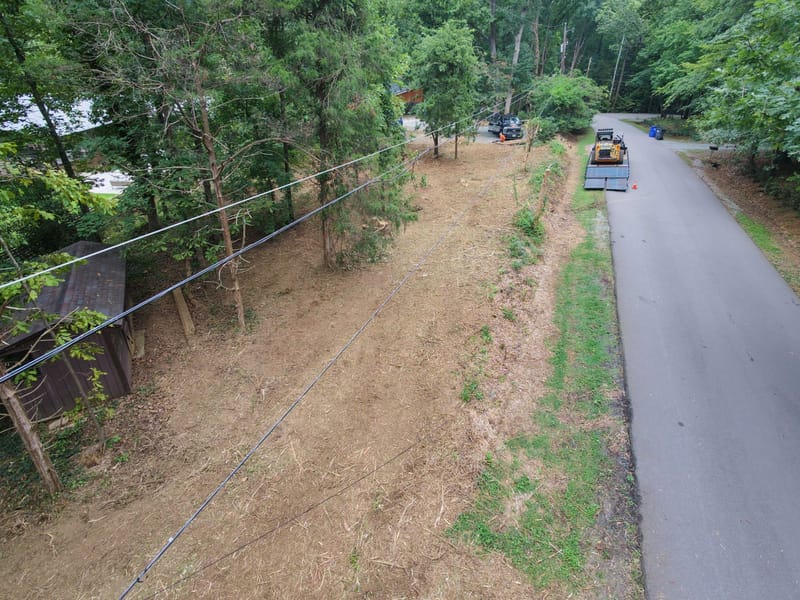
What the price includes. Forestry mulching grinds brush, small trees and stumps into mulch on site, with stumps flush with the ground and nothing hauled away. Full stump removal below grade and cut-and-haul for very large trees are discussed and priced in the quote. Grading and build pads are not part of our price: we clear to the ground so a builder can grade.
Where these numbers come from. These are the ranges on our Jackson and Hattiesburg pricing guides, the same bands we publish in our Alabama markets. A bush hog cuts light stems, not a 15-year thicket. Use the table for budgeting, not as a quote.
Small tracts carry a practical floor near $1,500. Getting a tracked machine onto a property costs the same whether it runs two hours or two days.
What Actually Moves the Number
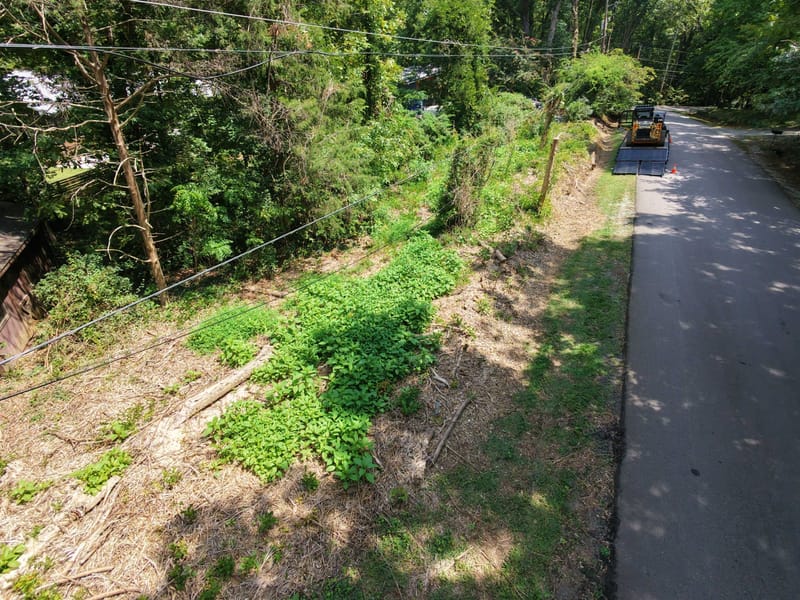
How long since anyone kept it open. On pasture and cutover ground, the calendar predicts cost better than acreage. Three or four seasons of growth goes down fast; fifteen years puts forearm-sized stems in front of the machine and the acre near the top of its band. Chinese privet and Chinese tallowtree resprout unless stumps or roots are treated, so a price that ignores follow-up is only half the job.
Whether the overstory is staying. Taking out a closed-in understory under a pine canopy you are keeping is efficient work; the machine is not fighting trunks. Clearing to open ground is a different scope and price. Name the finish before anyone prices it.
What happens to the debris. This is where Mississippi’s rules move real money. Without a forced-draft system, land clearing debris cannot be burned within 500 yards of an occupied dwelling; with one, the line is 50 yards. On most small tracts that rules out the open pile. A county burn ban means no outdoor burning of any kind, with fines of $100 to $500. Forestry mulching avoids all of it: no pile, no haul, no burn question. Clear-and-haul still wins where a site must be cut to grade. It simply costs more.
Cogongrass on the property. This can turn a clearing job into a multi-year problem. Cogongrass spreads on equipment, and eradication usually takes two to three years of spraying twice a year. Machines should be cleaned between sites, and herbicide work planned alongside the clearing. The Commission’s Cogongrass Control Program offers a free initial treatment to approved applicants, subject to funding, location and acreage limits. Our cogongrass guide is written for Florida; the plant is the same.
Access and wet ground. Gates, culverts and long approaches burn hours. Wet ground matters more: on saturated bottomland or flatwoods a tracked machine slows down and leaves ruts, so flexible timing is worth real money.
Where in Mississippi Is Your Land?
Central Mississippi around Jackson. Hinds, Madison, Rankin, Copiah and Simpson counties. See land clearing around Jackson and the Jackson pricing guide.
The Pine Belt around Hattiesburg. Forrest, Lamar, Jones, Perry, Covington and Marion counties. See land clearing around Hattiesburg and the Hattiesburg pricing guide.
The Gulf Coast around Gautier. Jackson County, plus D’Iberville, Biloxi and Lyman in Harrison County and Agricola in George County. Chinese tallow and low, wet ground move most prices here. See land clearing around Gautier and the Gautier pricing guide.
The Golden Triangle around Starkville. Oktibbeha, Clay, Lowndes, Webster, Noxubee and Winston counties. Eastern redcedar in old fields and pasture, and wet prairie clay that slows tracked machines after rain, move most prices here. See land clearing around Starkville and the Starkville pricing guide.
Northeast Mississippi around Corinth. Alcorn, Tishomingo, Prentiss, Tippah and Benton counties. Hill ground, slope and kudzu move the figure more than the acreage does, and a chip layer holds silty hill soil better than scraping it bare. See land clearing around Corinth and the Corinth pricing guide.
The Mississippi Delta around Indianola. Sunflower County, plus Leland and Greenville in Washington County, Cleveland in Bolivar County, Greenwood in Leflore County and Belzoni in Humphreys County. Privet in fence rows and field edges, wet floodplain ground and what to keep move most prices here. See land clearing around Indianola and the Indianola pricing guide.
The Tombigbee Valley around Amory. Monroe County, plus Shannon, Plantersville, Verona and Mooreville in Lee County, Okolona in Chickasaw County, Fulton and Mantachie in Itawamba County, and Sulligent and Vernon across the line in Lamar County, Alabama. Wild Callery pear in old fields and fence lines, and Tombigbee bottomland that stays wet through winter and early spring, move most prices here. See land clearing around Amory and the Amory pricing guide.
What changes the job across the rest of the state:
The Delta. Wet, heavy floodplain soils. Work here means field edges, ditch banks and wooded bottoms; timing, not stems, is the constraint, so budget toward the upper band on anything wet.
The Loess Hills. Deep silty uplands that hold a machine well when dry. Bare silt washes, so a mulched mat is worth more here.
The North Central Hills and Interior Flatwoods. Mixed pine and oak. Classic understory and cutover work, often in the middle of the table.
The Black Prairie. Shrink-swell clay and more pasture. Reclaiming fence rows from brush and privet prices low when dry; the same clay is slow going when wet.
The rest of the Gulf Coast and the Piney Woods outside the Pine Belt. Sandy, wet soils under longleaf, slash and live oak. Pine understory work is efficient; the flatwoods are the wet exception. Pearl River, Stone, George, Jackson, Harrison and Hancock counties have a separate RESTORE grant application for cogongrass.
Permits: What to Check Before Work Starts
Permits. Clearing one acre or more as part of construction falls under Mississippi’s construction stormwater permits. From 1 to under 5 acres, the owner or operator completes a Notice of Intent and a stormwater plan before work starts and keeps both on site. At 5 acres or more, work waits for written notice of coverage. Counties and cities can add their own rules.
Before you sign.
- Ask what happens to the debris, and if the answer is burning, where the nearest occupied home is.
- Ask how equipment is cleaned between jobs, and who completes the stormwater paperwork if you are over an acre.
- Get stump handling, erosion control and mobilization in writing. A quote missing those is not cheaper, it is unfinished.
Clearing Around Water Valley and the North Mississippi Hills
In the hill country of Yalobusha County, with Lafayette, Panola, Calhoun, Tallahatchie and Grenada counties around it, the cost questions are privet in fence rows and along creek banks, the pitch of the ground and soft river bottoms after a long rain. Small jobs start at a minimum charge of about $1,500, and the same four bands apply from Batesville to Grenada. See land clearing around Water Valley, the Water Valley pricing page and the Chinese privet removal guide for Mississippi.
Frequently Asked Questions
How much does it cost to clear 1 acre of wooded land in Mississippi?
Budget $2,500 to $4,000 for a typical mixed pine and hardwood acre cleared by mulching, and up to $4,500 where heavy timber, wet ground or stump removal stack up. A brushy acre can run near $1,500, which is also the practical floor for any small job.
Can I just burn the brush pile?
Often not. Open burning of land clearing debris has to stay 500 yards from any occupied home unless a forced-draft system is used, and a county burn ban stops it entirely. On most small tracts, mulching or hauling is the realistic choice.
Does cogongrass make clearing more expensive?
The clearing price may not change much. The real cost is the two to three years of herbicide treatment that usually follows.
Do I need a permit to clear land in Mississippi?
For clearing one acre or more as part of construction, yes, with paperwork due before work starts. Check with your county or city too.
Getting a Real Number
A real price comes from someone standing on the ground, looking at what is growing, what is staying and how wet the low end is.
Around Jackson, Hattiesburg, Starkville, Corinth or Amory, on the Gulf Coast around Gautier, on the Delta around Indianola, or anywhere else in Mississippi, request a free quote, and our crew will contact you to discuss the property, the access and the finish you want. If you would rather talk it through, call (919) 525-3950.
Sources
- Mississippi State University Extension, Forest Soils of Mississippi
- Mississippi State University Extension, cogongrass
- Mississippi Forestry Commission, cogongrass information for landowners, 2026
- Mississippi Department of Environmental Quality, open burning fact sheet
- Mississippi Department of Environmental Quality, construction stormwater permits
More from the Cut Brush Blog
Keep reading for more tips and guides on land clearing.
 Cost Guide
Forestry Mulching Cost in Jackson, MS (2026)
Forestry mulching around Jackson, MS runs $1,500 to $4,000 per acre. How privet, wet Yazoo clay and the 500-yard burn buffer shape a Central Mississippi quote.
 Cost Guide
Land Clearing and Grading Cost in Mississippi (2026 Guide)
We charge $1,500 to $4,500 an acre to clear a Mississippi homesite; grading is your dirt contractor's bill. How Yazoo clay, flood zones and MDEQ rules add up.
Cost Guide Forestry Mulching Cost in Mississippi (2026 Guide)
We charge $1,500 to $4,000 an acre to forestry mulch Mississippi land. How Pine Belt sand, Delta clay, tallow, kudzu and state cost share move your price.
Comparing states? See land clearing costs by state.
Let's Get Started on Your Land
Request a free quote. We'll contact you to discuss your property, access, and the clearing you need.
Get a Free QuoteOr call us directly: (919) 525-3950
 Quick answers from Cut Brush