
Brush Hogging Cost Per Acre in West Virginia (2026 Guide)
Cut Brush Team · October 9, 2026 · 7 min read

Nobody has run a mower over the back pasture in a few years, and now multiflora rose canes and autumn olive are taking the hill. Brush hogging a West Virginia field runs $75 to $400 an acre with Cut Brush, depending on how long it has gone uncut, with a $250 to $500 minimum per visit. Our crews work out of Martinsburg across Berkeley, Jefferson and Morgan counties, and the same rates are a fair budget for fields elsewhere in the state.
At a glance:
- Our rates: $75 to $150 an acre for a field cut within the past year, up to $400 for one left three years or more.
- Minimum: $250 to $500 a visit, so one small field is often priced at the minimum.
- Past a mower: once saplings pass 2 to 3 inches, the job moves to our brush clearing rate of $1,500 to $2,500 an acre.
- Nesting: the Division of Natural Resources asks that grassland not be cut until after July 15 where you can wait.
- State fire law: any engine able to throw sparks needs a working spark arrestor on land that can burn.
How Much Does Brush Hogging Cost in West Virginia?
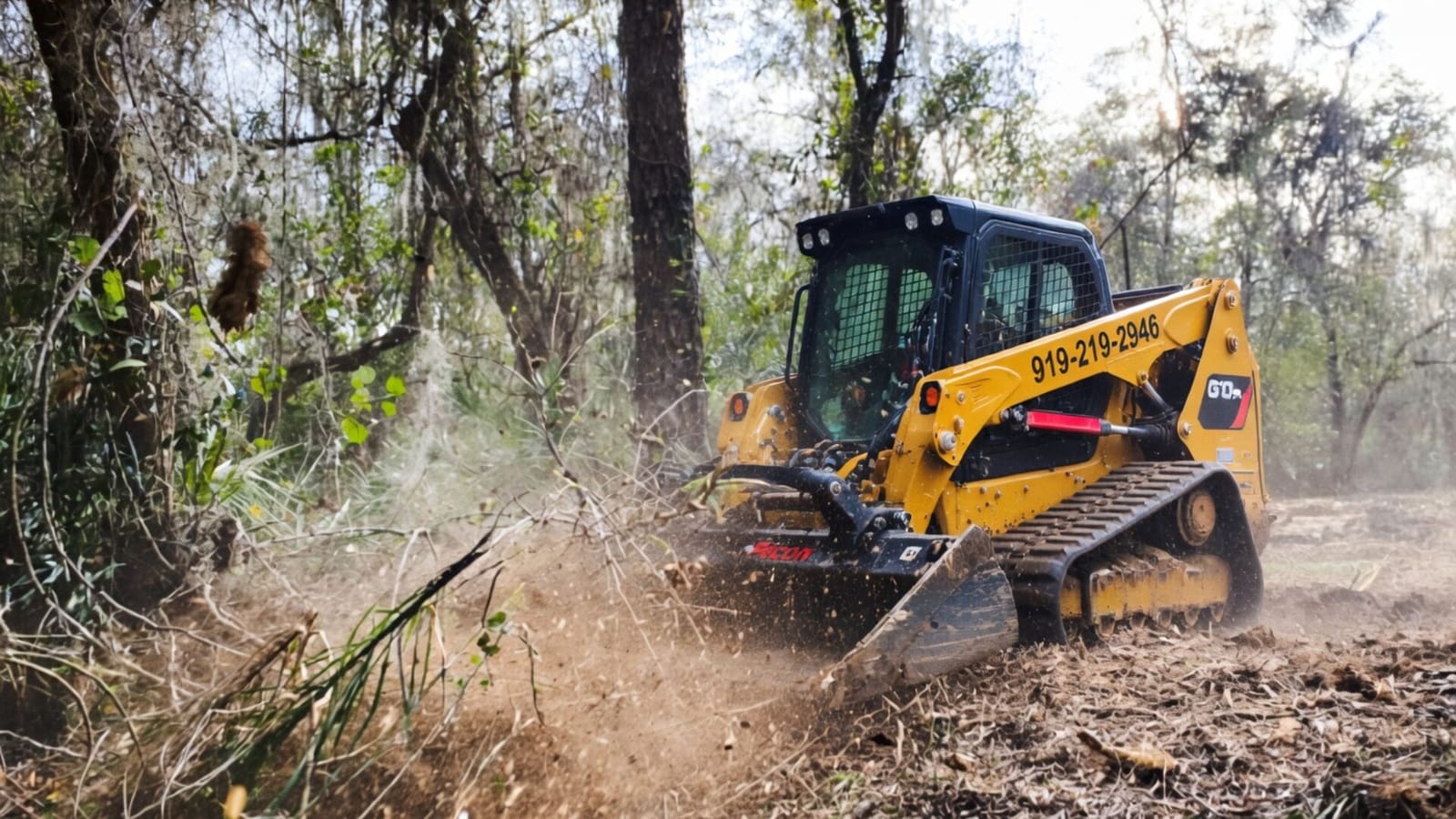
A rotary cutter behind a tractor knocks down grass, weeds, briars and woody stems up to about two inches thick, and leaves the cuttings lying on the field. What you pay depends almost entirely on how long the field has been left.
| How the field looks | Our price per acre | What we usually find |
|---|---|---|
| Cut within the past year | $75 – $150 | Grass and weeds to the knee, nothing that fights the blades |
| One or two seasons left | $125 – $250 | Rose canes, stiltgrass on the shady edges, olive seedlings coming up |
| Three or more years left | $200 – $400 | Autumn olive and cedar head high, stems up to about two inches |
| Saplings past 2 to 3 inches | Not a brush hog job | Priced as brush clearing at $1,500 – $2,500 an acre |
A minimum of $250 to $500 per visit covers loading, hauling and unloading the tractor.
Where these numbers come from. These are the field mowing rates our North Carolina crews publish, and they are what we charge for a mowing job here. Our Martinsburg pricing page lists clearing rather than mowing, and it takes over once a field is past the cutter: brush clearing at $1,500 to $2,500 an acre for multiflora rose, autumn olive, cedar and fence-line growth past what a bush hog survives, and forestry mulching at $1,500 to $4,000.
What Makes a West Virginia Field Cost More to Mow
Autumn olive, and when it gets cut. WVU Extension says the shrub builds dense thickets in West Virginia pastures and comes back from any live root. Its timing advice is worth following: in spring the plant pushes stored sugar up into new leaves, which makes bush hogging more effective then. Sprouts that follow should be sprayed, with July through September the best window for a foliar spray. A pasture full of it is a three to five year project, and mowing it at the wrong time of year just resets the clock.
Shale in the topsoil. Many pastures in the Valley and Ridge and on the Plateau sit on Berks or Gilpin soil. Berks carries 10 to 50 percent flat rock fragments in its surface layer, and about 60 percent of its acreage is cropland and pasture. Gilpin’s plow layer holds around 20 percent shale and siltstone channers. Blades throw that stone and dull quickly, so the operator raises the deck and slows down, and the hours climb.
Multiflora rose. The Division of Natural Resources says it was promoted in the early 1930s as a living fence for livestock and for erosion control. It is now on the state noxious weed list. One mowing sets it back; it does not remove it, which is why our multiflora rose removal guide treats the first cut as the start of the work.
Stiltgrass along wooded edges. WVU’s stiltgrass guidance says to mow it before it blooms in late summer. Its seed lives three to five years and travels on equipment and hay, so a cutter that goes through it in seed carries it to the next field. It pays to cut those edges early, before the seed heads form.
Slope. Gilpin hillsides run as steep as 70 percent. A tractor works across a steep pasture slowly, and some banks are not safe to mow at all. We say so at the walk-through.
Pro tip: If autumn olive is the problem, book the cut for late spring once the leaves are out, and plan a spray on the regrowth in August. That follows WVU’s timing and stops you paying to mow the same shrubs every year.
Brush Hogging Prices Across West Virginia
The Eastern Panhandle valley. Fields in Berkeley and Jefferson counties lie mostly on deep Hagerstown limestone soil, where most slopes are under 15 percent, though ledge pokes through in places. These are the quickest acres in the state to mow, and the home ground of our brush clearing crews for anything a mower cannot finish.
Morgan County and the Potomac Highlands. West of North Mountain, valley pastures sit on shale and the hillsides steepen fast. Shale in the soil and grade put many of these fields in the middle or upper rows of the table even when the growth is light.
The Appalachian Plateau. The western two-thirds of the state, where all its minable coal lies, is Gilpin channery hillside country. A small, steep field out here is likely to be priced at the visit minimum or above.
Reclaimed surface mines. The Division of Natural Resources counts reclaimed mine land as grassland habitat. These sites are often large and open and mow well where the ground is level; where autumn olive has moved in, they need the spring cut and summer spray above.
Mowing Dates and Rules for West Virginia Fields
Nesting season. The Division of Natural Resources songbird guidelines recommend keeping grassland open by grazing or mowing, avoiding haying in the breeding season, and not cutting until after July 15 where possible. For shrubby old fields they suggest cutting trees above 4 to 6 inches across and strip mowing every five to ten years. For field edges, every two to four years.
Spark arrestors and fire seasons. The state forest fire law requires an adequate spark arrestor on any engine or machine that can throw sparks while working land subject to fire, and a blade hitting sandstone in dry fall grass is exactly that risk. If cuttings are piled and burned, the Division of Forestry bans fires from 7 a.m. to 5 p.m. from March 1 to May 31 and from October 1 to December 31.
Farm tax status. West Virginia Code §11-1A-3 defines a farm as land used primarily for farming purposes, such as raising livestock or hay, and leaves out one acre around the house. Mowing alone is not named. If a field’s tax status rests on hay or grazing, ask the county assessor before letting it go back to brush.
Frequently Asked Questions
How much does it cost to bush hog an acre in West Virginia?
$75 to $400 an acre with us, by condition: $75 to $150 if it was cut within the past year, $125 to $250 after one or two seasons, and $200 to $400 after three or more. Steep or stony fields sit higher in their row.
What does it cost to mow one small field?
Usually the visit minimum, $250 to $500, because hauling the tractor costs the same for one acre as for ten. If a neighbor needs the same work, mowing both on one trip splits that cost.
When is the best time to bush hog in West Virginia?
It depends on the target. After July 15 for nesting birds; late spring, once leaves are out, for autumn olive; before late summer bloom for stiltgrass along shady edges.
Will bush hogging get rid of autumn olive or multiflora rose?
No. Both come back from the roots. Cutting at the right time and spraying the sprouts, over several seasons, is what works.
Will you mow my field?
In Berkeley, Jefferson and Morgan counties, yes, where a mower is the right tool. Once saplings have taken over, we quote it as brush clearing or mulching instead. Wooded edges are priced in the underbrush removal cost guide for West Virginia.
Get a Brush Hogging Quote in West Virginia
Pick the nearest area below and request a free quote. Our crew will contact you to talk through the roughest patch and the gate a tractor would come through, what is growing (grass, briars, autumn olive, saplings), whether hay or cattle come off the field, and how steep it gets. A field that has gone to young trees belongs in the West Virginia forestry mulching cost guide. Fields across the southwestern state line are in our Kentucky brush hogging guide.
Sources
Related Services
Learn more about the services mentioned in this article.

More from the Cut Brush Blog
Keep reading for more tips and guides on land clearing.
 Cost Guide
Underbrush Removal Cost in West Virginia (2026 Guide)
Underbrush removal in West Virginia runs $1,500 to $2,500 an acre with Cut Brush. See how stiltgrass, rhododendron, nesting dates and keeper trees move a price.
 Cost Guide
Forestry Mulching Cost in West Virginia (2026 Guide)
Forestry mulching in West Virginia runs $1,500 to $4,000 an acre with Cut Brush. See how shale, sandstone, tree-of-heaven and slope move the price of your job.
 Guide
Kudzu Removal in West Virginia: Plan and Cost per Acre
Kudzu removal in West Virginia: $1,500 to $2,500 an acre for understory clearing, with follow-up cuts over three or four seasons. Get a free quote.
Comparing states? See land clearing costs by state.
Let's Get Started on Your Land
Request a free quote. We'll contact you to discuss your property, access, and the clearing you need.
Get a Free QuoteOr call us directly: (919) 525-3950