
Underbrush Removal Cost in West Virginia (2026 Guide)
Cut Brush Team · October 9, 2026 · 8 min read

The oaks and walnuts are worth keeping, but you cannot walk twenty feet into the woods for the rose canes, autumn olive and vines between them. Underbrush removal in West Virginia runs $1,500 to $2,500 an acre with Cut Brush, the rate our crews charge in Berkeley, Jefferson and Morgan counties for clearing the floor and leaving the canopy. Elsewhere in the state, budget with the same figure.
At a glance:
- Our band: $1,500 to $2,500 an acre for shrubs and vines. When saplings and small trees come out as well, it moves to our mulching band of $1,500 to $4,000.
- Small jobs: a floor near $1,500 a project, because the trailer trip costs the same for half an acre as for two.
- Nesting window: the Division of Natural Resources advises working outside April 15 to August 1, since many songbirds nest on the ground under shrubs and woody debris.
- Managed Timberland: enrolled land has to be managed to its forester’s plan, so check the plan before a machine goes in.
- Fire seasons: spring and fall, no outdoor burning from 7 a.m. to 5 p.m. unless an inch or more of snow is down.
What Is Underbrush Removal?
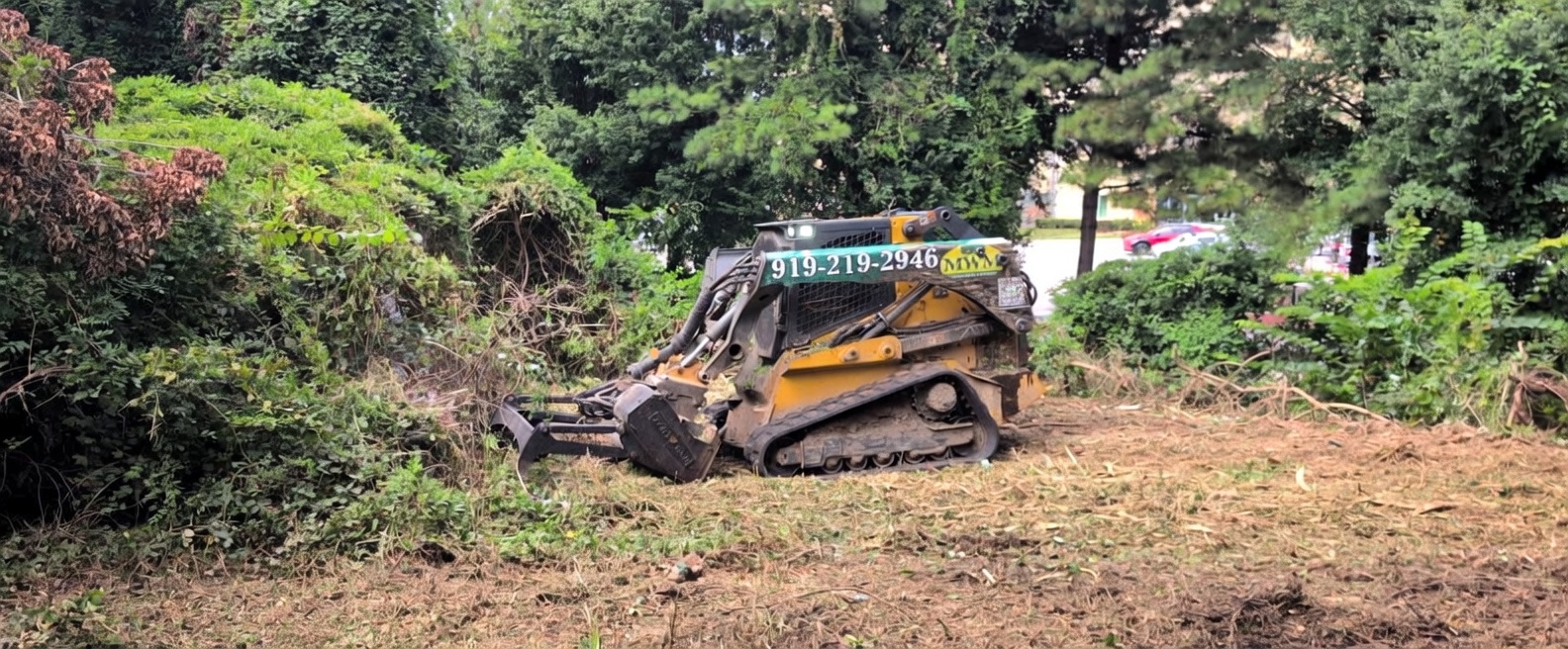
Underbrushing clears what grows beneath a canopy you are keeping. A compact mulcher works between the trunks and grinds shrubs, vines, briars and saplings into a chip mat on the forest floor. The big trees stay, the ground stays covered, and nothing is piled or burned. You get woods you can walk, see into and use. West Virginia is 78 percent forest by the Division of Natural Resources’ count, the third most wooded state in the country, so a great many tracts here need exactly this.
How Much Does Underbrush Removal Cost in West Virginia?
We price by what is growing under your trees and how hard it is to reach.
| What is under your trees | Our price per acre | What it looks like |
|---|---|---|
| Shrubs, briars and vines only | $1,500 – $2,500 | Multiflora rose and autumn olive filling the gaps under walnut and oak |
| Shrubs with saplings to thin out | $1,500 – $4,000, low end | Young cedar and tree-of-heaven whips mixed through the brush |
| Steep, stony or thick evergreen ground | $1,500 – $4,000, upper end | Rhododendron in a wet hollow, sandstone slopes near the Allegheny Front |
Where these numbers come from. These are the rates on our Martinsburg pricing page, which our Eastern Panhandle crews quote from. Its brush clearing row, $1,500 to $2,500 an acre, covers multiflora rose, autumn olive, cedar and fence-line overgrowth; its forestry mulching row, $1,500 to $4,000, applies once trees come out too, with slopes and tight access climbing the band. Taking the whole stand down is a different job, priced in the West Virginia forestry mulching cost guide and the land clearing cost per acre guide.
What Makes Clearing Under Trees Cost More in West Virginia
Stiltgrass waiting in the soil. WVU Extension describes Japanese stiltgrass taking over wooded floors across Appalachian forests, and the Division of Natural Resources puts it at the top of its list of understory threats. The seed lasts three to five years, sprouts from late March to mid-April in West Virginia, and rides on heavy equipment. The part that matters for your money: bare soil lets the leftover seed come up. That is why we leave the chip mat over the floor rather than scraping it clean. Ask any contractor how the ground will look when the machine leaves.
Shrubs that come back from the root. Autumn olive regrows from any live root, and WVU puts control of an established stand at three to five years. The Division of Natural Resources says a cut tree-of-heaven sends up multiple new stems and forms thickets that keep native trees from returning. With either one in the woods, the quote should carry a treatment line after the cutting pass.
Rhododendron at the wet spots. The Division of Natural Resources notes rhododendron can grow thick in wet areas and at the base of ledges under a closed canopy. The stems are tough and evergreen, and the ground under them is soft or rocky. One rhododendron hollow can take as long as the rest of the acre.
Trees you want to keep. The Division of Forestry’s tree care guidance asks owners to fence trees being saved, keep equipment from operating near or under them, avoid raising the soil in the protection zone and limit compaction. On a woodlot with twenty walnuts or oaks to keep, that means lighter, slower passes around each trunk, which moves the acre up the band.
Gaps in the canopy. The Division of Natural Resources warns that even small openings give invasive plants a foothold, and that their seed travels on machinery. Opening up a dark woods floor without a plan for what sprouts next is how stiltgrass and tree-of-heaven arrive.
Pro tip: Tie flagging tape on every tree you want kept, then photograph the wettest corner of the woods before we walk it. Keeper trees and soft ground are the two things that slow an understory job most, and showing both up front gets them priced instead of guessed.
Underbrush Clearing Across West Virginia
Berkeley and Jefferson counties. Old farm woodlots here sit on limestone soil and carry mixed hardwoods and black walnut, with autumn olive and multiflora rose closing the gaps. The ground is mostly gentle, so these are usually quick acres at the lower end of the band. This is home ground for our brush clearing crews.
Morgan County and the Potomac Highlands. West of North Mountain the woods turn to oak on shale ridges. The Division of Forestry lists Morgan, Berkeley, Jefferson and other eastern counties among those where spongy moth is concentrated, and oak-heavy stands suffer most. Clearing the understory does not stop the moth, but it makes dead or failing trees easy to spot and deal with.
The Allegheny edge. Around Elkins and Davis, stony sandstone soil, hemlock and rhododendron in the hollows make some of the slowest understory work in the state.
The Plateau and the river counties. Stiltgrass carpets many woods floors here. The Division of Natural Resources reports mile-a-minute vine mostly along the Ohio River and kudzu draped over southern West Virginia hillsides. Vines have to come down before keeper trees can even be marked.
Nesting, Timberland Plans and Fire Rules in West Virginia
Bird timing. The Division of Natural Resources songbird guidelines recommend woods work outside the April 15 to August 1 breeding season, leaving at least five dead snags or cavity trees per acre, and keeping 100-foot buffers along permanent streams and around seeps. These are recommendations, not law, but a fall or winter start often suits the ground anyway, since leaf-off shows the floor clearly.
Managed Timberland and Stewardship land. Managed Timberland is a state tax incentive. Enrolled land must keep at least 40 percent cover of well distributed, non-invasive trees, and once the contract is signed every management activity must follow the forester’s plan. The Forest Stewardship Program, for owners of at least 10 connected wooded acres, needs written Division of Forestry approval before field work. If your woods are in either, show us the plan before we price it.
Burning and fire safety. In both fire seasons, March 1 to May 31 and October 1 to December 31, outdoor fires are banned from 7 a.m. to 5 p.m. unless snow at least an inch deep covers the ground. Mulching in place avoids the question. If your house backs onto woods, Firewise WV asks owners in high fire danger areas to keep dead leaves, branches and other fuel cleared from around the home, and an understory pass along the woods edge behind the house helps with that.
Frequently Asked Questions
What does underbrush removal cost per acre in West Virginia?
With us, $1,500 to $2,500 an acre for shrubs and vines, or up to $4,000 where saplings come out too. A single small acre usually lands near the $1,500 floor.
Will stiltgrass take over after the brush is cleared?
It can if bare soil is left. Leaving the chip mat over the floor helps a great deal, and WVU recommends watching a cleared site for three to five years and pulling or treating stiltgrass before it blooms.
When is the best time to clear underbrush in West Virginia?
Outside the April 15 to August 1 nesting window, per the Division of Natural Resources. Late fall and winter also show the ground best.
Will clearing the underbrush hurt the trees I keep?
It can if a machine compacts the root zone. We mark keepers, keep the tracks off their protection zone where we can, and leave the mulch over the roots, following the Division of Forestry’s guidance.
Will tree-of-heaven come back after clearing?
Yes, unless it is treated, because it sprouts from the roots. Our tree of heaven removal guide covers the herbicide window.
Get an Underbrush Removal Quote in West Virginia
Pick the nearest area below and request a free quote. Our crew will contact you to talk through the woods, the drive or gate a trailer would use, the trees you want kept, whether the land is in Managed Timberland or Stewardship, and what you want the floor to look like when we leave. Open fields are a mowing job, priced in the West Virginia brush hogging cost guide. For woods over the state line, see our Kentucky and Ohio underbrush guides.
Sources
Related Services
Learn more about the services mentioned in this article.


More from the Cut Brush Blog
Keep reading for more tips and guides on land clearing.
 Cost Guide
Brush Hogging Cost Per Acre in West Virginia (2026 Guide)
Brush hogging a West Virginia field runs $75 to $400 an acre with Cut Brush, set by how overgrown it is. See what autumn olive, shale and July 15 do to a job.
 Cost Guide
Forestry Mulching Cost in West Virginia (2026 Guide)
Forestry mulching in West Virginia runs $1,500 to $4,000 an acre with Cut Brush. See how shale, sandstone, tree-of-heaven and slope move the price of your job.
 Guide
Kudzu Removal in West Virginia: Plan and Cost per Acre
Kudzu removal in West Virginia: $1,500 to $2,500 an acre for understory clearing, with follow-up cuts over three or four seasons. Get a free quote.
Comparing states? See land clearing costs by state.
Let's Get Started on Your Land
Request a free quote. We'll contact you to discuss your property, access, and the clearing you need.
Get a Free QuoteOr call us directly: (919) 525-3950