
Chinese Privet Removal in Tennessee: A Field Guide
Cut Brush Team · August 26, 2026 · 8 min read

There is a green wall coming up along your creek bottom or back fence, and every year it stands a few feet wider and a few feet taller. If you own land in the Tennessee Valley, that wall is almost certainly Chinese privet, and Chinese privet removal is a different job than ordinary brush cutting. Around Chattanooga, privet is the dominant understory invasive: creek bottoms in East Brainerd, fencerows in Ooltewah and Harrison, and neglected lots on both sides of the state line can turn into solid privet thickets in under a decade.
Cut it the wrong way and it comes back thicker, which is exactly what happens to most people who take a chainsaw to it. This guide covers how to identify privet in any season, why the plant took over this valley, why hand-cutting fails, the mulch-then-treat sequence that actually clears it, and what your understory looks like once it is gone.
How Do You Identify Chinese Privet?
Chinese privet is a semi-evergreen shrub with small oval leaves in opposite pairs, spikes of white flowers in late spring, and clusters of dark berries that hang on into winter. Mature stands grow as multi-stemmed clumps 10 to 15 feet tall, packed so tight you cannot walk between them.
The easiest ID check changes with the season:
| Season | What Privet Is Doing | What Gives It Away |
|---|---|---|
| Spring (Apr–May) | Blooming | Spikes of small white flowers with a heavy, sweet smell |
| Summer | Full leaf | Oval leaves about 1–2 inches long, paired opposite each other on the stem |
| Fall | Fruiting | Clusters of dark blue-black berries that birds strip through winter |
| Winter | Still green | The only leafy shrub layer in an otherwise bare woodlot |
The winter check is the one to remember. In a bare January woodlot anywhere in our Chattanooga and North Georgia service area, a green shrub layer at waist to head height is privet until proven otherwise.
Why Is Privet Everywhere in the Tennessee Valley?
Birds planted it, and the plant’s winter advantage did the rest. Privet escaped from ornamental hedges generations ago. Every winter, birds strip the berries and drop seeds along fence wire, creek corridors, and wood edges, which is why infestations trace lines across a property instead of spreading in circles.
Once a seedling takes, the semi-evergreen habit takes over. Privet keeps photosynthesizing while native trees stand bare, banking energy all winter and shading out spring wildflowers and tree seedlings before they start. Moist bottomland is its favorite ground, which is why the creek and drainage corridors around East Brainerd, Apison, and McDonald carry some of the thickest walls in the area.
This is not a niche problem plant. The Georgia Forestry Commission has ranked Chinese privet first on its “Dirty Dozen” invasive list since 2009, which speaks directly to the Ringgold, Fort Oglethorpe, and Chickamauga side of the metro, and the Tennessee side of the valley is infested every bit as heavily. Left alone, a colony closes ranks through root suckers until one shrub has become a wall.
Why Does Hand-Cutting Privet Fail?
Because privet resprouts from every cut stump and pushes new stems up from its roots, a hand-cut thicket usually stands back thicker within a year. Loppers and chainsaws harvest the tops; the root system underneath reads the cut as pruning and responds with multiple new shoots per stump, plus fresh root suckers around it.
Hand-pulling has a narrow window: seedlings under a couple of feet tall pop out of moist soil cleanly. Beyond that, stems snap off, roots stay, and the plant regrows. By the time stems reach 2 to 4 inches thick and the clumps interlock, hand tools are a losing tool for the job, and there are usually years of bird-dropped seed waiting in the soil beneath the thicket.
One more ID trap worth flagging: if the green taking your trees is a climbing vine rather than a standing shrub, you are fighting a different plant with a different playbook. Our kudzu removal guide for Chattanooga covers that one, and plenty of neglected parcels here host both at once.
What Is the Mulch-Then-Treat Sequence?
Grind the standing thicket to the ground with a mulching machine, treat the cut stems before they recover, then knock down resprouts on follow-up passes over the next season or two. Each step exists because of how the plant regrows.
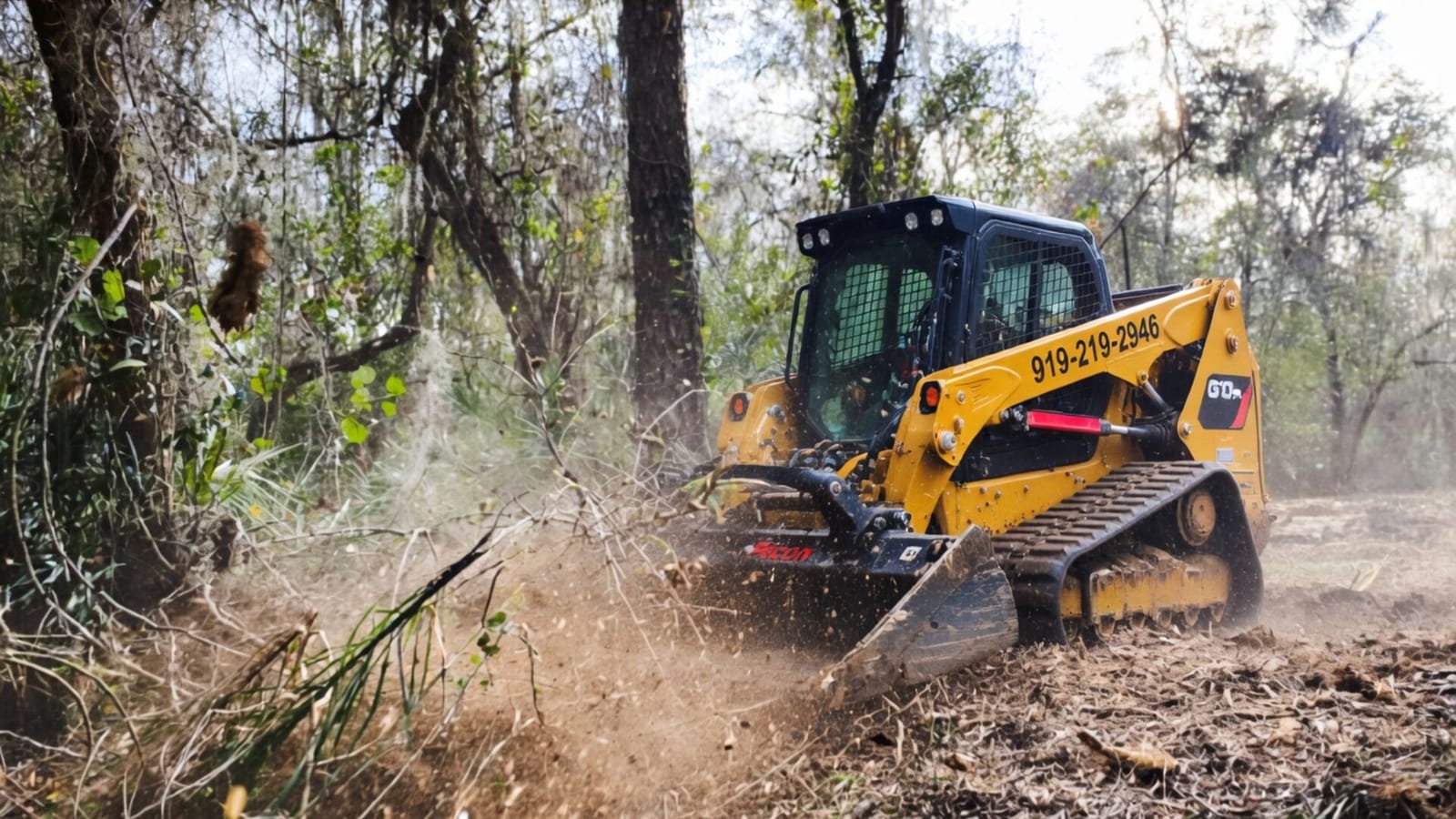
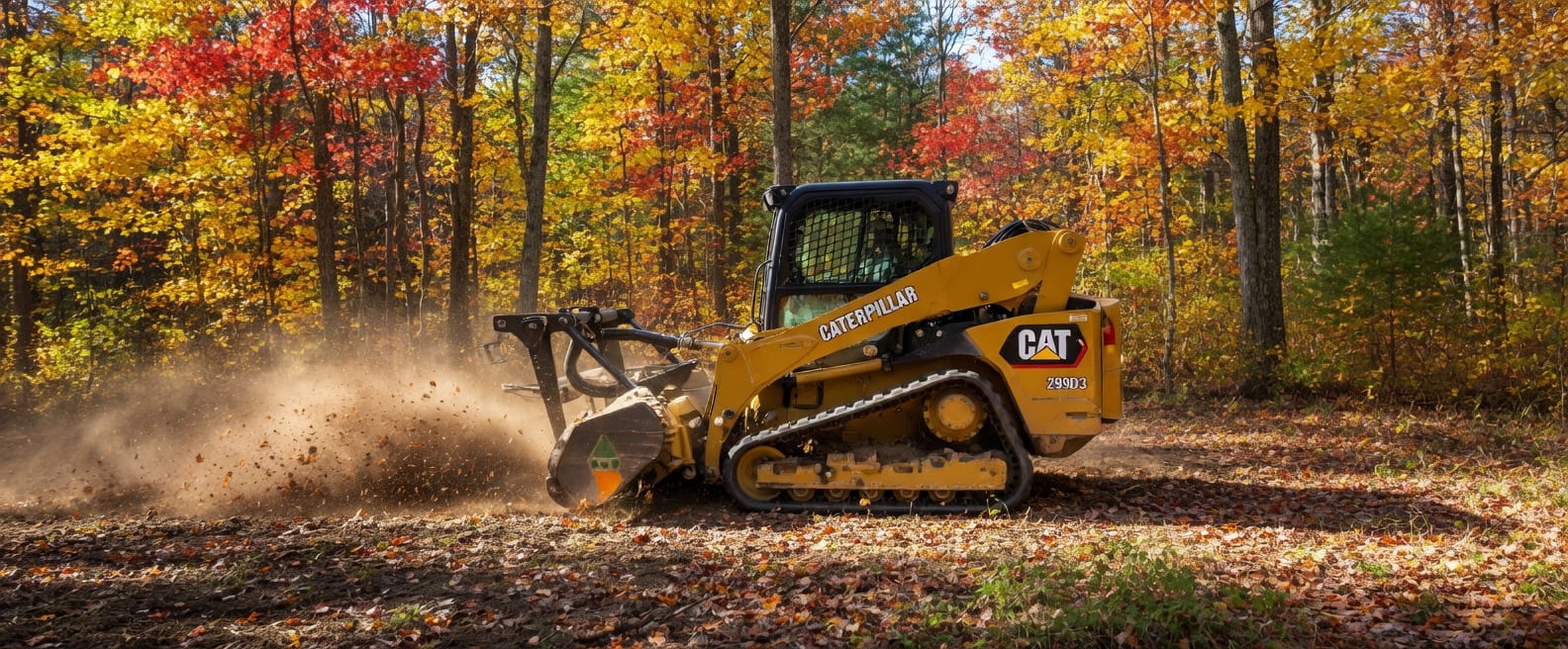
- Mulch the wall. A tracked mulcher turns a brush clearing job around Chattanooga that would take weeks by hand into a day of work, grinding stems into a mulch layer that stays on-site and suppresses the seed bank underneath.
- Treat the cut stems. Freshly cut privet is vulnerable at the stump. Treating it at that moment is what separates removal from pruning.
- Run follow-up passes. Some resprouts and seedlings will appear the next growing season. Knocking them down while they are small takes hours, not days.
- Walk it each winter. Privet’s green leaves make stragglers easy to spot against a bare woodlot, so an annual winter walk keeps the ground clear permanently.
Timing favors the cold months here, and that is unusual for clearing work. Because privet stays green through a Tennessee Valley winter, fall and winter jobs give the operator the clearest possible view of the target, firmer ground for forestry mulching equipment, and no nesting season to work around.
Pro tip: Drive your road frontage or walk your creek line in late December and photograph every green patch you see. Around Collegedale, Apison, and McDonald, that one-hour winter scout produces a nearly complete privet map of a property, and it is the difference between clearing the whole infestation and missing the satellite clumps that reseed it.
What Does the Understory Look Like Afterward?
A cleared privet understory changes a property more than almost any other single job. You can see a hundred feet into woods that were a green curtain. Fences reappear. Creeks you owned but never saw become part of the yard again. The mulch layer left behind holds the soil, keeps moisture in, and smothers much of the seed bank while native growth gets its first open ground in years.
Staying clear takes light maintenance, not another clearing. Birds keep delivering seed from untreated thickets nearby, so expect a handful of seedlings each year along fences and edges. They pull easily when small, and the winter-green tell makes them impossible to miss on an annual walk.
On cost: solid privet typically prices as brush clearing at $1,500 to $2,500 per acre in this market, with a practical project minimum near $1,500 driven by equipment mobilization. Our Tennessee land clearing cost guide shows where privet work sits against other vegetation types if you are budgeting a bigger project.
Frequently Asked Questions
Is Chinese privet invasive in Tennessee?
Yes. Privet is the dominant understory invasive across the Tennessee Valley, and the Georgia Forestry Commission has ranked it first on its “Dirty Dozen” list since 2009, which covers the Ringgold and Fort Oglethorpe side of our area. Creek bottoms and fencerows around East Brainerd and Harrison show it at full strength.
Will privet grow back after mulching?
Yes, if the job stops at mulching. Cut stumps resprout and roots push suckers, which is why the sequence pairs the mechanical knockdown with stump treatment and one or two seasons of light follow-up. Done in that order, the ground stays clear with nothing more than an annual check.
How much does Chinese privet removal cost?
Solid privet walls typically run $1,500 to $2,500 per acre as brush clearing, with a project minimum near $1,500. Stem thickness, access, and how far the thicket runs decide where a job lands. The full service-by-service ranges are on our Chattanooga pricing page.
Can I pull privet by hand?
Only seedlings under about two feet tall, and only when the soil is moist enough for the root to come out whole. Anything larger snaps off at the stem and resprouts. Hand-pulling is the right tool for annual maintenance after a clearing, not for the clearing itself.
When is the best time of year to remove privet?
Fall through winter. Privet stays green after leaf-drop, so it is easiest to find, the ground is typically firmer for equipment in the creek bottoms around Soddy-Daisy and Apison, and there is no nesting activity in the thicket. Summer work is possible; winter work is simply more precise.
What if the thicket crosses a property line?
Talk to the neighbor before the machine arrives. A thicket cleared on one side only gets reseeded from the surviving half within a few years, and two owners sharing one mobilization each pay less. Request a free quote and we can scope both sides in a single walk-through.
Chinese Privet Removal Across Greater Chattanooga
If a privet wall has taken your fence line in Ooltewah, a creek bottom in East Brainerd, a wood edge in Collegedale, or a neglected lot in Fort Oglethorpe, it will not negotiate and it will not stop on its own. Cut Brush handles Chinese privet removal across the Tennessee and Georgia sides of greater Chattanooga with the mulch-then-treat sequence: one mechanical knockdown, treated stems, and the follow-up that keeps the understory open.
Check the greater Chattanooga pricing page for current per-acre ranges, then request your free estimate. We respond within 24 hours, walk the thicket with you, and put the whole plan, knockdown through follow-up, in writing.
Related Services
Learn more about the services mentioned in this article.


More from the Cut Brush Blog
Keep reading for more tips and guides on land clearing.
 Guide
Guide Kudzu Removal in Chattanooga: Cost & Control Plan
Kudzu removal in Chattanooga takes more than cutting vines. See how kudzu spreads, real control costs, and the multi-visit plan that works. Get a free quote.
 Guide
Guide Chattanooga Land Clearing Permits: TN vs. GA
A Chattanooga-area guide to city land-disturbance review, Tennessee and Georgia one-acre rules, local issuing authorities, and burn restrictions.
Cost Guide Underbrush Removal Cost in Tennessee (2026 Guide)
Underbrush removal runs $1,500 to $2,500 an acre with Cut Brush in Tennessee. We clear privet, vines and laurel from under the trees you want to keep.
Let's Get Started on Your Land
Request a free quote. We'll contact you to discuss your property, access, and the clearing you need.
Get a Free QuoteOr call us directly: (919) 525-3950