
Underbrush Removal Cost in Tennessee (2026 Guide)
Cut Brush Team · October 9, 2026 · 8 min read

You used to see the creek from the porch. Now privet and greenbrier fill every gap between the oaks, and you want the woods back without losing a single good tree. Underbrush removal runs $1,500 to $2,500 an acre with Cut Brush, and that is what our crews charge around Maryville, Chattanooga, LaFollette, Nashville and Brownsville. The big trees stay; everything choking the floor under them comes out.
At a glance:
- Our price: $1,500 to $2,500 an acre in all five Tennessee areas, with a floor near $1,500 for one small job.
- What comes back: privet sprouts from roots and stumps, bush honeysuckle from any root left in the ground, greenbrier from rhizomes. Cedar cut low does not.
- Cost share: the state pays 75 percent of midstory and vine removal, up to $82.50 an acre, on ownerships with at least 10 acres of forestland.
- Burn permit: the Division of Forestry requires one from October 15 to May 15 to burn brush piles, and only natural material from your own land qualifies.
- Fire spacing: UT Extension’s wildfire guide says ground under larger trees beyond 30 feet of the house should be kept free of brush.
Pick the nearest of our five Tennessee areas at the foot of this page, and we will walk the woods with you, flag the keepers and price the floor.
How Much Does Underbrush Removal Cost in Tennessee?
Our price follows what is filling the space under your canopy, and whether any of the trees are coming out too.
| What is under your trees | Our price per acre | What you see when we leave |
|---|---|---|
| Privet, bush honeysuckle and multiflora rose under hardwoods | $1,500 – $2,500 | Clear sight lines between trunks, chip mat over the roots |
| Kudzu laid over privet and autumn olive at a wood edge | $1,500 – $2,500 | Vines down, keeper trees visible again |
| Young cedar and brush along a pasture edge or fence line | $1,500 – $2,500 | Edge opened back to the grass; the cedar stays gone |
| Small trees coming out along with the brush | $1,500 – $4,000 | Everything under a chosen size ground to mulch |
Where these numbers come from. The understory band is copied from all five of our Tennessee pricing pages, which name it after the local brush: brush clearing on the Maryville pricing page and the Chattanooga pricing page, autumn olive and kudzu clearing in LaFollette, cedar and understory clearing in Nashville, privet and bottomland clearing in Brownsville. The bottom row is our forestry mulching band; see the Tennessee forestry mulching cost guide. Wide-open floors under a few big trees price low. Laurel on a slope, or privet packed between closely spaced keepers, prices at the top.
What Is Underbrush Removal?
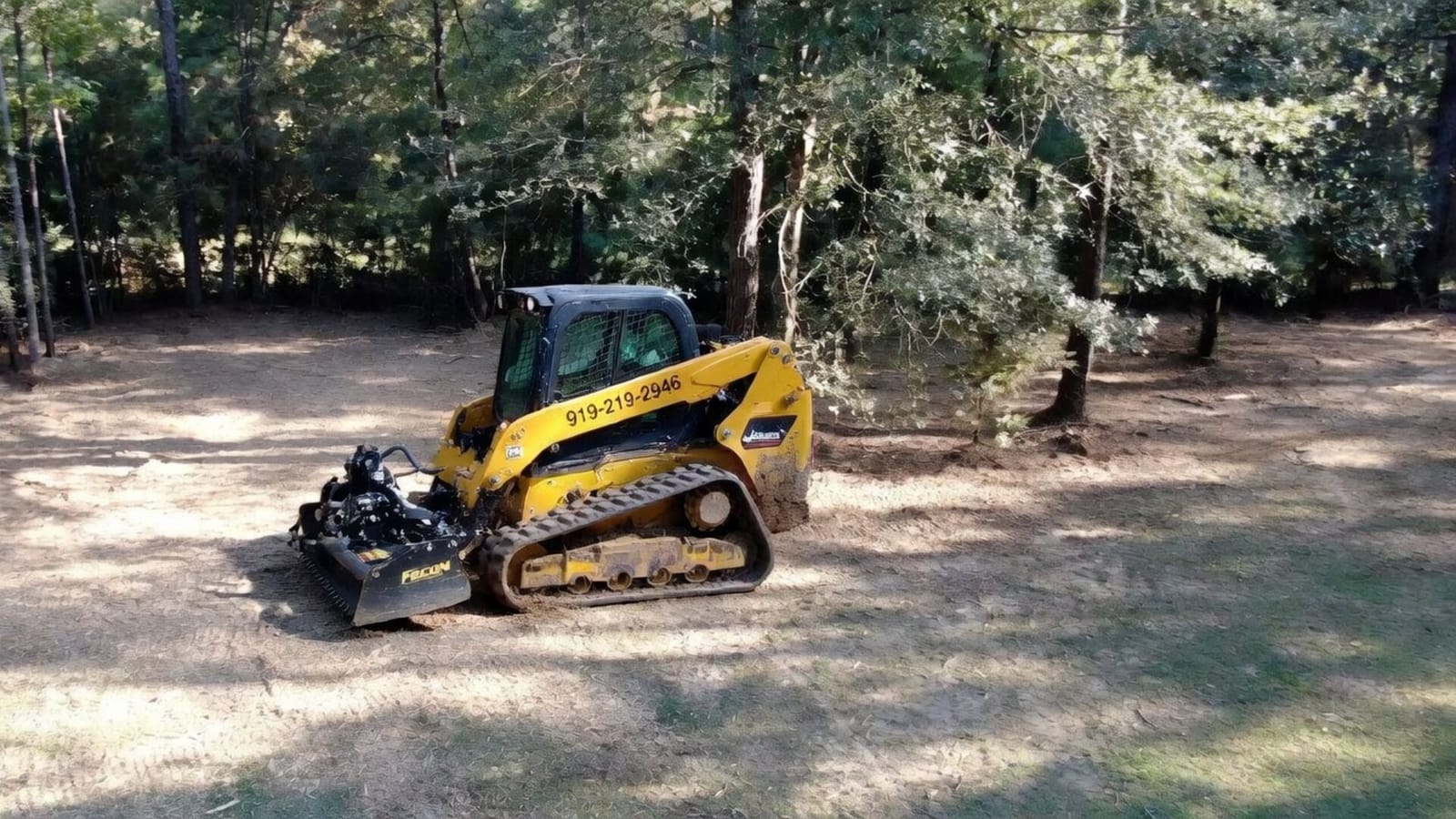
It is clearing the shrubs, vines and saplings beneath a canopy you are keeping. Our tracked mulcher grinds that growth in place and leaves it as a mat on the forest floor, so nothing is piled, burned or hauled. The operator works around each tree you flag, and the root zones stay covered.
If your ground is open field rather than woods, a rotary mower is cheaper; the Tennessee brush hogging cost guide has those rates.
What Changes the Price Under Tennessee Trees
Whether the shrubs come back. UT’s Forest Resources Center says Chinese privet “rapidly sprouts back from roots and stumps when cut back”, and the Tennessee Department of Agriculture lists both privets, three bush honeysuckles, multiflora rose and autumn olive as regulated pest plants. A privet floor is a first pass plus a follow-up, and we quote those as two lines. A fence line that is mostly young cedar is one pass, because the Forest Service notes cedar does not sprout after complete cutting.
Laurel and rhododendron on the ridges. In East Tennessee the thicket is often native. The Forest Service describes mountain laurel forming “laurel hells” on upper slopes and ridges with steep, rocky, acidic ground, and rosebay rhododendron closing to more than 80 percent cover in the southern Appalachians. Both sprout back from the base, and under a rhododendron thicket northern red oak seedling survival drops by 40 percent. On a foothill lot toward Townsend or Walland that is slope, rock and tough evergreen stems in one acre.
Greenbrier tying it together. Greenbrier rhizomes persist for years after the tops are killed, according to the same Forest Service species reviews. It rarely moves our first-pass price much, but it is why a cleared floor can green up again by next summer without a follow-up.
How many keeper trees, and how big. UT puts 85 percent of a tree’s roots within 18 inches of the surface and asks for one foot of protected space per inch of trunk diameter, because compaction can kill a tree over time. A 24-inch white oak gets a 24-foot circle where we work light. Twenty keeper oaks on an acre make a slow acre; a few scattered poplars make a fast one.
Pro tip: Before we come out, wrap a tape around each tree you want kept at chest height and divide by 3.14. That diameter in inches, read as feet, is the root circle UT recommends protecting. Flag it, and we spend the walk-through on the brush instead of measuring trees.
Underbrush Removal Costs Across Tennessee
The East Tennessee valley and foothills, around Maryville. Old pasture around Maryville and Alcoa has grown up in privet, multiflora rose and autumn olive under young hardwoods, which grinds quickly. Climb toward the Smokies and laurel, rhododendron and grade push the same acre higher.
Chattanooga and the valley floors. The understory here is often privet with kudzu draped over it. The kudzu has to come down before the operator can tell which trunks are keepers, so a kudzu-covered edge prices above a privet-only one. Our Chattanooga kudzu removal guide covers the follow-up.
The Cumberland Mountains around LaFollette. Reclaimed mine benches near Jacksboro and Jellico carry dense autumn olive, black locust and lespedeza over stony, packed fill. The shrubs grind fast, the footing slows the machine, and the stems sprout back. Our autumn olive removal guide explains the treatment that keeps them down.
The Central Basin around Nashville. Cedar fills pasture edges in Williamson, Rutherford and Wilson counties, often with privet and honeysuckle in its shade. The cedar stays gone; the shrubs beside it need the follow-up line, as our Chinese privet removal guide explains.
West Tennessee around Brownsville. Creek bottoms in Haywood County hold privet and vine under tall hardwoods. Bottom ground near the Hatchie can stay soft for weeks after rain, so a dry-month start often costs less than a wet one.
Burning, Fire Spacing and Tree Rules in Tennessee
UT’s wildfire spacing. Tennessee sees about 2,000 wildfires a year, according to UT Extension publication SP685. It works outward from the house: nothing flammable in the first 5 feet, low plantings from 5 to 15 feet, broken-up shrubs from 15 to 30 feet, and beyond 30 feet, ground under larger trees “kept free of brush, debris and flammable dead material.” It names rhododendron, laurel, holly, juniper and hemlock as plants with highly flammable leaves. A wooded homesite in Blount or Campbell County is often exactly the job SP685 describes.
Burning instead of grinding. A Division of Forestry burn permit is free but required from October 15 to May 15, covers only natural material from your own land, and some counties and towns add their own limits. Mulching in place sidesteps the calendar.
Metro Nashville grading. Metro Water Services wants a grading permit once work disturbs more than 10,000 square feet or 100 cubic yards, but its list of exemptions includes tree cutting at or above ground level, with a tree removal permit.
Chattanooga trees. The city’s 2025 tree ordinance asks developers for 36 inches of tree caliper per developed acre, and the city says it does not stop homeowners removing trees on private property.
Frequently Asked Questions
What does underbrush removal cost per acre in Tennessee?
$1,500 to $2,500 an acre in all five of our Tennessee areas. On a one-acre homesite our floor near $1,500 usually sets the price. Laurel on a slope, or privet under closely spaced keeper oaks, pushes it to the top.
Will privet and honeysuckle grow back after clearing?
Yes, unless the stems are treated. Privet resprouts from roots and stumps, and any bush honeysuckle root left in the ground can come back. Plan on a lighter follow-up visit the next growing season, priced on its own line.
Is there cost share for clearing invasive understory in Tennessee?
Sometimes. The state’s Forest Establishment and Improvement program pays 75 percent of midstory and vine removal, up to $82.50 an acre, on ownerships of at least 10 acres of forestland with 5 contiguous acres treated. Your Area Forester draws up the plan before one of the yearly sign-ups; check which one is open.
Will clearing underbrush hurt the trees I keep?
It can if a machine packs the root zone. UT places most roots in the top 18 inches, so we flag your keepers, work light inside one foot per inch of trunk, and leave the mulch mat over the roots.
Get an Underbrush Removal Quote in Tennessee
Choose the nearest area below and request a free quote. Our crew will contact you to go over the densest stretch of brush, the drive or gate a trailer would use, any trees you would not want touched, the species if you know them (laurel and privet price differently), and what you want the floor to look like afterward.
Woods across the line? See our Georgia and Alabama underbrush guides.
Sources
Related Services
Learn more about the services mentioned in this article.


More from the Cut Brush Blog
Keep reading for more tips and guides on land clearing.
 Cost Guide
Forestry Mulching Cost in Knoxville: 2026 Per-Acre Guide
Forestry mulching cost in Knoxville runs $1,500 to $4,000 per acre. See density pricing, hourly vs per-acre quotes, and slope factors. Get a free estimate.
 Guide
Autumn Olive Removal in East Tennessee: Reclaim Old Fields
Autumn olive removal in East Tennessee: spot the silver-leaf invader, why bush hogging backfires, and the fall window to kill it. Get a free estimate today.
 Cost Guide
Land Clearing Cost Per Acre in Tennessee (2026)
Land clearing cost per acre in Tennessee runs $1,500 to $4,500. See Chattanooga-area pricing by vegetation density, slope, and rock. Request a free quote today.
Comparing states? See land clearing costs by state.
Let's Get Started on Your Land
Request a free quote. We'll contact you to discuss your property, access, and the clearing you need.
Get a Free QuoteOr call us directly: (919) 525-3950