
Kudzu Removal in Chattanooga: Cost & Control Plan
Cut Brush Team · August 26, 2026 · 8 min read

One summer, a green fringe shows up at the bottom of your hill. Two summers later, the whole slope is under it, the fence is gone, and the trees along the edge are wearing vines to their crowns. Kudzu removal in Chattanooga is its own category of clearing work because this is classic kudzu country: the vine loves exactly what this metro has in abundance, which is steep sun-facing ridge cuts, rail corridors, and road embankments. Missionary Ridge, the Signal Mountain approaches, and roadsides from Rossville to Soddy-Daisy all show what a patch does with a few seasons of head start.
The bad news is that no single cutting fixes it. The good news is that kudzu is beatable with a plan built around how the plant actually works. This guide covers how kudzu really spreads, why one-time cutting never lasts, what a realistic multi-visit control plan looks like, what removal costs in this area, and how slope changes the job.
Why Is Chattanooga Such Good Kudzu Country?
Steep, disturbed, sun-facing ground is kudzu’s ideal habitat, and the Chattanooga area is covered in it. The Tennessee Division of Forestry lists kudzu among the state’s major invasive plants and notes it can grow more than a foot per day in peak season. Ridge cuts, old fills, rail rights-of-way, and abandoned hillside lots give it everything it wants: sun, disturbed soil, and nobody cutting it.
The city’s own history shows the scale of the problem. Starting in 2007, Chattanooga famously brought in hired goat herds, guard llamas included, to graze kudzu off Missionary Ridge. Goats work by eating the leaves over and over until the roots run out of stored energy, which is the same principle behind every control method that actually succeeds: drain the roots faster than the leaves can refill them.
Across our greater Chattanooga service area, the heaviest patches concentrate along rail corridors, highway cuts, and neglected slopes in East Ridge, Rossville, and the residential streets that climb the ridges. If your parcel touches any of those, the vine is already on the schedule; the only question is whose.
How Does Kudzu Actually Spread?
Kudzu spreads from root crowns, knots of woody tissue where a vine has rooted into the soil, not just from the runners you can see. Everywhere a vine node touches bare dirt, it can set a new crown, and each crown grows its own root system. A patch that looks like one plant is really hundreds of rooted points per acre, each capable of regrowing the whole mess.
Under the mature crowns sit taproots that store years of energy and can weigh as much as a person. That storage is why the plant shrugs off any single attack: cut every visible vine and you have removed its solar panels, not the plant itself.
The vertical spread is what kills trees. Vines climb 50 feet or more, and the combination of weight and total shade takes down healthy hardwoods within a few seasons. A tree line disappearing under green drapery is not decoration; it is a slow-motion removal of your timber.
Why Doesn’t a One-Time Cutting Last?
Because every root crown survives it. A mowed, bulldozed, or hand-cut patch looks finished for about three weeks of Tennessee summer, then runners push back out of the crowns and re-cover the ground on the same schedule as before. A single cutting is a cosmetic rental, not a removal.
Winter runs the same con. Frost browns the vines every December, and plenty of owners decide the patch died. Mark the edge of the mat in December and check it in May; the answer will be moving toward your house.
There is also a quiet way to make things worse: relocating fresh-cut vines. Green kudzu can root where nodes contact moist soil, so dragging vines to a debris pile in another corner of the property risks planting a second patch. Grinding the material in place removes that risk entirely.
What Does a Realistic Kudzu Control Plan Look Like?
Plan on one mechanical knockdown followed by scheduled regrowth passes over two to three growing seasons. Here is the sequence we quote, in order:
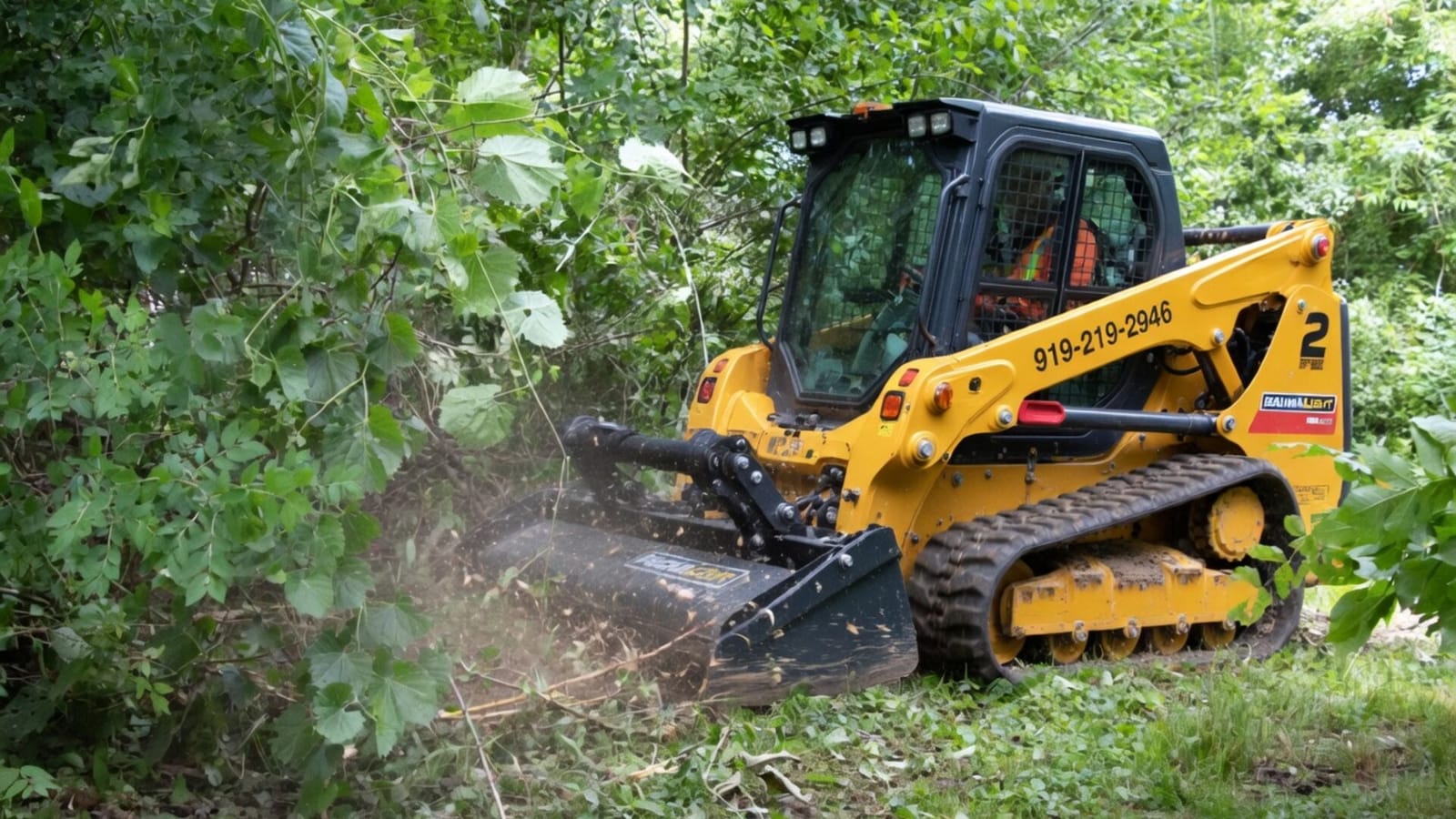
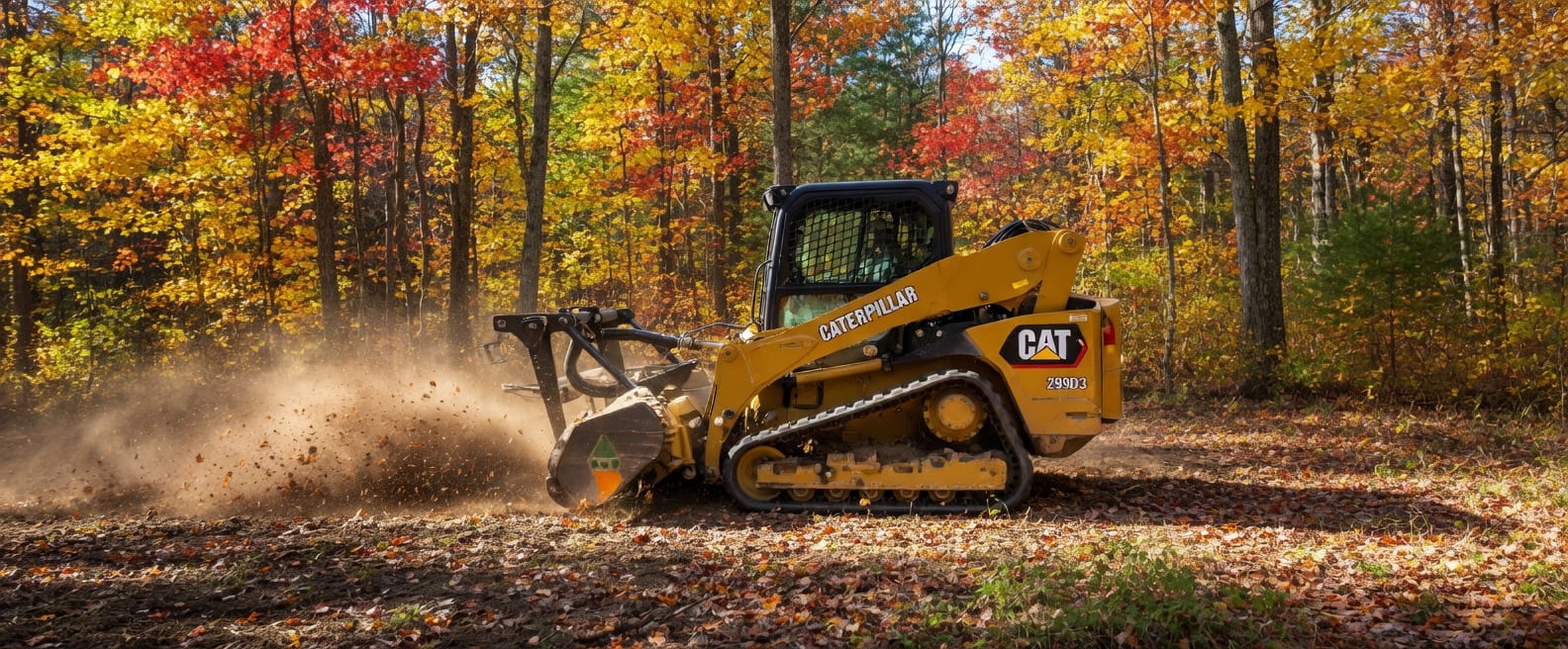
- Mulch the mat. A brush clearing pass with a forestry mulching machine grinds the vine mass, the smothered brush inside it, and the dead saplings underneath in one operation, leaving ground you can actually walk and inspect.
- Find the crowns. With the mat gone, crowns show up as woody knobs at the soil surface. On hillsides they cluster along old fence lines, terrace edges, and the toe of the slope.
- Hit every regrowth flush. Each pass cuts or treats new runners at the crown. Every cycle drains taproot reserves that the plant cannot fully replace.
- Land the hardest hit in late summer. August and September are when kudzu moves energy down into its roots for winter, so pressure applied then costs the plant the most.
Skipping a season hands back most of the progress, which is why we quote follow-ups as a schedule rather than an optional add-on. A contractor who offers a one-visit kudzu fix is selling a mowing job with better marketing.
How Much Does Kudzu Removal Cost?
In the Chattanooga area, the initial knockdown of a kudzu mat typically runs $1,500 to $2,500 per acre, with follow-up visits priced per trip at a fraction of that. Those figures match the brush-clearing band on our Chattanooga pricing page. Here is what moves a quote inside, or out of, that band:
| Cost Factor | What It Does to the Price |
|---|---|
| Mat age and depth | First-year runners price near the bottom; decade-old mats hiding brush and debris price in the upper half |
| Trees inside the mat | Vines that swallowed standing timber can shift the job to full land clearing at $1,500 – $4,500 per acre |
| Slope | Grade slows every pass; sections past safe machine limits are excluded at the walk-through, not priced in |
| Access | Bench roads, narrow gates, and soft toe-of-slope ground add setup time before cutting starts |
| Parcel size | Mobilization sets a practical minimum near $1,500 per project; per-acre cost drops as acreage rises |
| Follow-up schedule | Priced per visit; budget for passes across 2–3 growing seasons |
For how kudzu work compares against other vegetation types, our guide to land clearing cost per acre in Tennessee puts the whole per-acre picture in one place.
What About Kudzu on Steep Slopes?
Slope is the defining variable on most Chattanooga kudzu jobs, because the vine’s favorite ground is exactly the ground machines like least. Working a ridge face means running across the grade in benches, taking shorter passes, and being honest about limits: sections beyond safe operation get excluded from the scope openly at the walk-through.
Erosion deserves a plan too. Kudzu was originally planted across the South to hold worn-out slopes, so stripping a mat off a steep face and leaving bare dirt trades one problem for another. Mulching sidesteps most of that: the shredded material stays on the face as a blanket that holds soil through the regrowth-pass seasons, instead of washing into the creek with the first storm.
Kudzu also rarely holds a hillside alone. The shaded margins of most mats we see hide Chinese privet, which takes over the edges the vine cannot dominate. If the green wall at the bottom of your slope is standing shrubs rather than climbing vines, start with our Chinese privet removal guide instead; the two plants need different sequences.
Pro tip: If your parcel backs up to a rail corridor or a highway cut, treat that boundary as a permanent front line. The right-of-way patch will send runners onto your side every summer no matter what you clear, and a mulched buffer strip along the line, walked twice a season, costs far less than re-clearing the hillside every few years.
Frequently Asked Questions
Can kudzu be removed permanently in Chattanooga?
Yes, with sustained pressure over two to three growing seasons. The knockdown wins the ground back, and the regrowth passes drain the taproots until the crowns stop responding. Patches on this schedule reach zero; patches cut once a summer never do.
Did the goats on Missionary Ridge actually work?
The idea was sound. Chattanooga’s goat herds, brought in starting in 2007, controlled kudzu by repeated defoliation, which drains the roots the same way follow-up passes do. The trade-off is time: grazing takes seasons of constant pressure, while a mulching knockdown plus targeted crown work reaches the same endpoint faster on a private parcel.
How fast does kudzu grow in Tennessee?
More than a foot per day at peak season, per the Tennessee Division of Forestry. That speed is why a hillside in East Ridge or along the Signal Mountain approaches can go from fringe to fully covered in one or two summers.
Will kudzu come back after the first mulching pass?
Yes, and the plan counts on it. First-season regrowth from the surviving crowns is expected; the mulching pass exists to remove the mass and expose those crowns so the follow-up visits can finish them. Judging the method by the first flush of regrowth is like judging a foundation by the bare slab.
How much does it cost to clear a kudzu-covered hillside?
Start from the $1,500 to $2,500 per acre knockdown range and expect slope and access to set the final number. If the mat has swallowed standing timber, the job can price as land clearing around Chattanooga instead. Request a free quote and we will walk the slope and price both phases up front.
Does kudzu kill trees?
Yes. The vine’s weight bends and breaks limbs while its blanket of leaves cuts off sunlight, and mature trees die under it within a few seasons. Fencerow trees around Chickamauga and Flintstone show the full progression: green drapery one year, bare snags holding up vines the next.
Kudzu Removal in Chattanooga That Finishes the Job
If kudzu is climbing your slope in East Ridge, your back lot on Signal Mountain, a fence line in Rossville, or acreage out toward Harrison, waiting only makes the mat older and the taproots stronger. Cut Brush handles kudzu removal across greater Chattanooga with the plan the plant actually requires: a mulching knockdown, crown mapping, and a written schedule of regrowth passes with both phases priced up front.
Compare the ranges on the greater Chattanooga pricing page, then request your free estimate. We respond within 24 hours, walk the patch with you, and give you an honest answer about what it takes to get your hillside back.
Related Services
Learn more about the services mentioned in this article.


More from the Cut Brush Blog
Keep reading for more tips and guides on land clearing.
 Guide
Guide Chinese Privet Removal in Tennessee: A Field Guide
Chinese privet removal in Tennessee: how to spot it, why cutting fails, and the mulch-then-treat plan that clears Chattanooga lots. Get your free estimate.
 Guide
Guide Chattanooga Land Clearing Permits: TN vs. GA
A Chattanooga-area guide to city land-disturbance review, Tennessee and Georgia one-acre rules, local issuing authorities, and burn restrictions.
Guide Bradford Pear Removal in Tennessee: Thickets and Costs
Bradford pear removal in Tennessee: is there a bounty or a ban, why wild callery pear thickets spread, and what clearing them costs per acre.
Let's Get Started on Your Land
Request a free quote. We'll contact you to discuss your property, access, and the clearing you need.
Get a Free QuoteOr call us directly: (919) 525-3950