
Forestry Mulching Cost in Nebraska (2026 Guide)
Cut Brush Team · November 9, 2026 · 9 min read
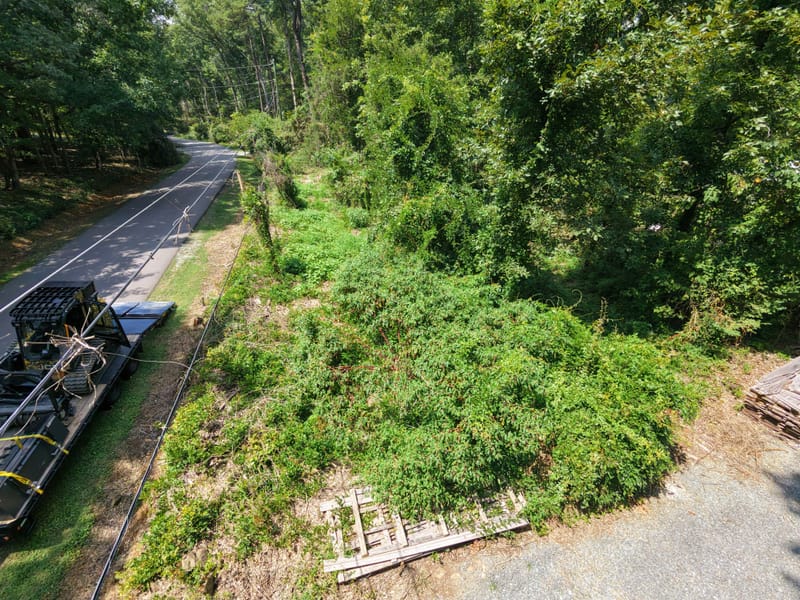
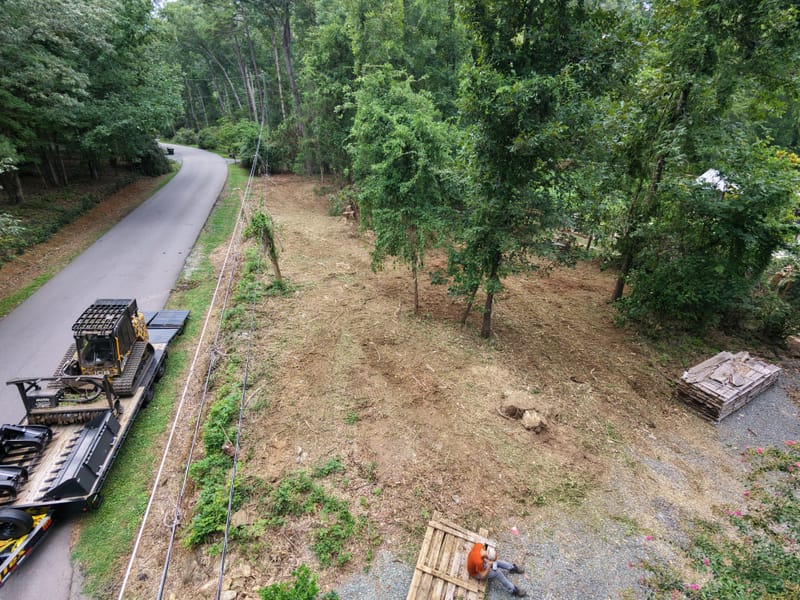
Forestry mulching in Nebraska costs $1,500 to $4,000 an acre with Cut Brush, and cutting back young cedar and brush before a stand closes costs $1,500 to $2,500 an acre. In Nebraska the trees are usually eastern redcedar in a pasture, draw or fence row. The next question is whether to grind them in place or pile and burn them, and here the second route runs through a fire chief and sometimes a state air permit.
At a glance:
- Mulching band: $1,500 to $4,000 an acre; spaced-out cedar in grass sits near the bottom, a closed stand on a bluff side near the top.
- Young cedar and brush clearing: $1,500 to $2,500 an acre for trees mostly under head height, fence rows and shelterbelt edges.
- Smallest job: a minimum charge of about $1,500, where small jobs start rather than a fee added on top.
- Burning piles: state law bans fires for clearing land unless the local fire chief waives it; a pile burned after clearing land for construction also needs a state open fire permit.
- Regrowth: cedar cut below its lowest branches does not sprout from the stump; new seedlings arrive in bird droppings.
Our Nebraska market is Plattsmouth & Cass County, covering Cass, Sarpy, Douglas and Otoe counties, and ground elsewhere in the state is still worth a quote request.
How Much Does Forestry Mulching Cost in Nebraska?
| What is standing on your land | Our price per acre | What it looks like |
|---|---|---|
| Young cedar, fence rows, shelterbelt edges | $1,500 – $2,500 | Trees mostly below head height, grass still growing between them |
| Cedar spaced out through grazed pasture | From about $1,500 | A machine can drive from tree to tree on open ground |
| Closed cedar on a bluff side or in a draw | Up to $4,000 | Crowns touching, nothing growing underneath, often on a steep side |
| Trunks too big for the mulching head, river timber | $1,500 – $4,500 | Land clearing, with cut-and-haul of the largest trees priced in the quote |
Where these numbers come from. They are the bands on our Plattsmouth pricing page, where our Nebraska prices are published. The mulching price covers one finish: cedar, brush and stumps ground to chips on site, stumps flush with the ground, nothing hauled. Digging stumps below grade is priced separately, and grading is your dirt contractor’s job. For clearing prices by tree height and the state cost-share programs, see our Nebraska land clearing cost guide.
What Changes the Price of a Nebraska Mulching Job
How far the pasture has gone. On southeast Nebraska tallgrass, open grass takes about 40 years to turn into a closed cedar woodland, and the steepest loss of grazing comes somewhere between year 15 and year 30. That middle stretch is where an acre climbs from the bottom of our band toward the top, so the cheapest acre to mulch is the one done before the crowns meet.
Whether a mulcher is the right machine. Cedar under 2 feet tall in grass dies to mowing, haying or a burn, and a mower costs a fraction of a mulcher. Grass with saplings under 2 to 3 inches thick is a brush hog job, priced in our Nebraska brush hogging cost guide. Past 10 feet tall, cutting is the cheapest way to kill a cedar, and that is where a mulching head earns its rate.
The loess grade on the Missouri bluffs. Between Plattsmouth and Nebraska City the cedar sits on loess hills whose side slopes run as steep as 40 percent. A tracked machine works across a bluff side, backs out and resets, and the steepest pockets can be out of reach entirely; those are left out of the quote, and you hear that before work starts.
Which cedars stay. A farmstead windbreak, shade by the house or a draw left as wildlife cover means the machine steers around keepers. A group of them costs little; dozens scattered through the stand add real time. A female cedar carries berries from about its sixth or seventh year, so every female keeper reseeds the ground you just paid to open.
Pro tip: Before you weigh a cut-and-burn bid against a mulching quote, call your local fire department and ask whether it issues burn permits for clearing piles, and what conditions it adds. Each Nebraska department sets its own, so the lower bid may be waiting on a permitted day.
Will Cedar Come Back After It Is Mulched?
Not from the stump. Eastern redcedar is a non-sprouter, and a tree ground off below its lowest branches is dead. That is why mulching cedar in Nebraska is usually one paid pass rather than a fight every spring.
What does come back is seed. Birds and small mammals eat the berries from fruiting cedars and drop the seed across your grass, so new seedlings show up over the next few years. Two habits keep them from becoming the next stand. Haying a field once every couple of years takes seedlings out before they outgrow a hay crew. A prescribed burn, maybe every four to eight years, clears new invaders while they are small, which is when fire works best on cedar. If you want us back for a seedling pass instead, it sits on its own line in the quote to take or skip.
Under the bluff woods and along the Platte and Missouri floodplains, the brush may be Amur honeysuckle, which thrives on forest edges, woodlots and floodplains. It leafs out before almost anything else in spring, which makes it easy to spot across eastern Nebraska. The standard treatment for it pairs a ground-level cut with herbicide on the cut stem, which tells you cutting alone is not the end of it. We do not apply herbicide. Clearing honeysuckle under trees you are keeping is priced in our Nebraska underbrush removal cost guide.
Mulch It or Burn It: Nebraska’s Fire Rules
Neb. Rev. Stat. 81-520.01 sets “a statewide open burning ban on all bonfires, outdoor rubbish fires, and fires for the purpose of clearing land.” There are two ways around it, and both run through your local fire chief:
- A permit for your burn. The chief can waive the ban by issuing you an open burning permit. It names the landowner, the burn location, the date with start and end times, the material, the person responsible, the rough acreage, and whether it is a prescribed burn or a controlled burn. A brush pile is a controlled burn under the law. The department can add its own requirements and charge up to $10 per permit.
- A waiver for the whole district. When conditions suit the chief, the ban can be waived across the department’s area. You still notify the chief before you light.
A second permit applies when the land is being cleared for construction or right-of-way. Burning those trees and that brush needs a general open fire permit from the Department of Water, Energy, and Environment as well as the fire chief’s permit. It carries no fee, lasts up to six months, is usually issued or denied in less than two weeks, and may come after a site inspection. A farm or ranch burning trees cut from its own operation does not need that state approval, though the fire chief’s permit still applies. Only trees, brush and untreated wood qualify; treated or painted lumber does not.
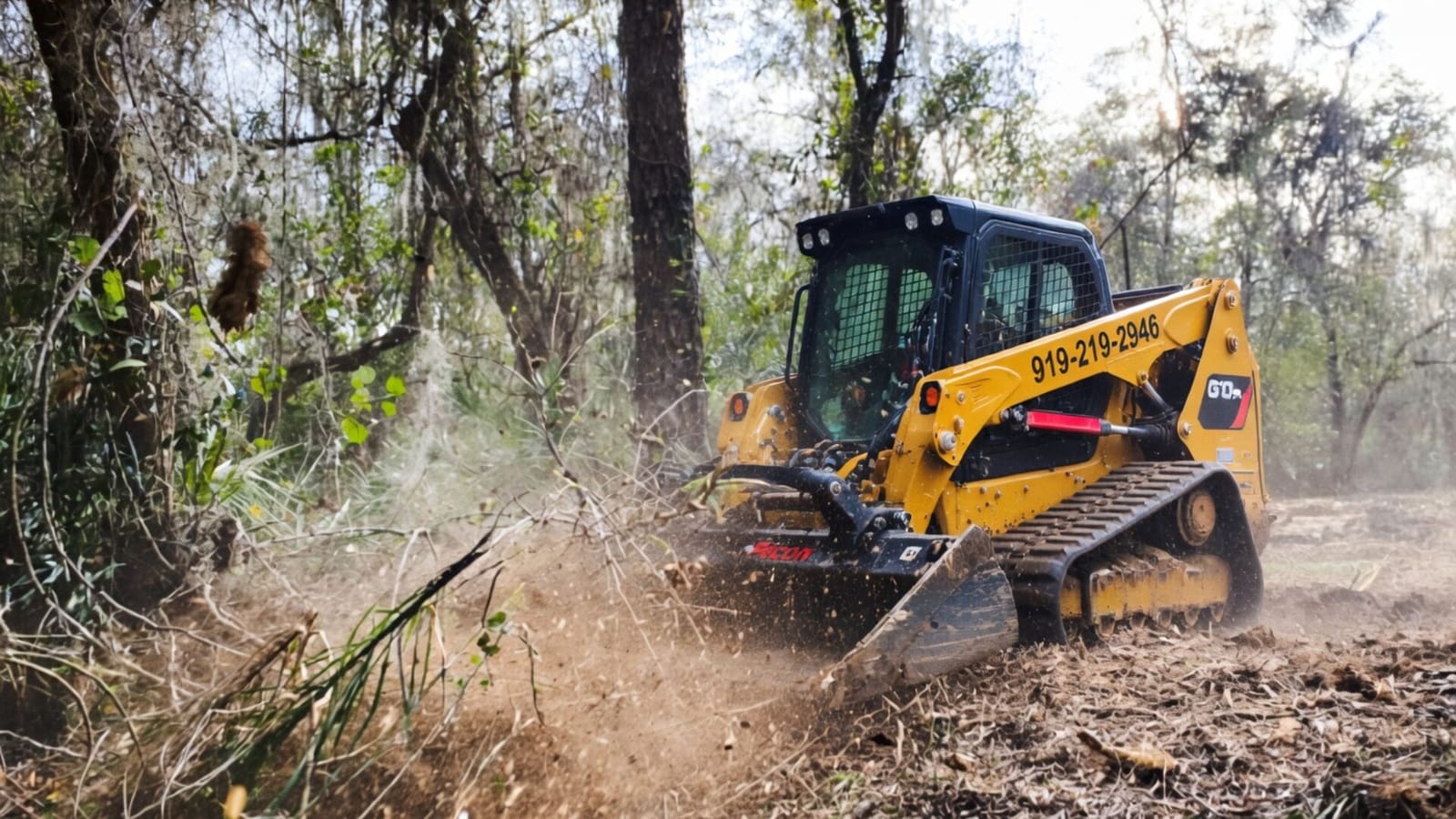
Mulching sidesteps all of it: the cedar ends up as a chip mat on the soil, with no pile, no burn permit and no ash patch to reseed. On an acreage being opened for a house near Gretna or Bennington, mulching skips a two-permit wait. Our Nebraska land clearing and grading cost guide shows who does each phase of a build site.
Forestry Mulching Across Nebraska
The Missouri River bluffs, Cass and Otoe counties. Plattsmouth, Louisville, Nebraska City and Syracuse sit in the bluff and draw country where cedar first held on, out of reach of prairie fire. Expect grade, not tree count, to set the price here. Our Plattsmouth forestry mulching cost guide compares grinding in place with cut, pile and burn on this ground.
Acreages in Sarpy and Douglas counties. Around Gretna, Springfield, Papillion and Bennington, mulching jobs are acreage edges, tree rows and the brushy back of a lot. Keepers near the house and the construction burn permit shape these quotes more than slope does. The Plattsmouth & Cass County page lists every town we cover.
Southeast Nebraska tallgrass. Toward Beatrice and the Gage County pastures, cedar is moving into the same tallgrass prairie that converts to woodland in about 40 years. Nebraska Extension has run cedar control workshops at its Gage County office in Beatrice, with NRCS and Game and Parks, covering project costs and cost share. Here the price turns on catching a pasture in its middle years.
Farther west. For the Loess Canyons, the Sandhills and the Pine Ridge, see the Nebraska land clearing cost guide; to keep cedar from returning, our eastern redcedar removal guide.
Frequently Asked Questions
Do trees grow back after forestry mulching in Nebraska?
Cedar does not, if it is ground off below its lowest branches; it cannot sprout from the stump. New seedlings arrive from bird-carried seed, so hay or mow the ground every couple of years. Honeysuckle in the river woods is different: plan on follow-up treatment after it is cut.
Can I just burn the cedar instead of mulching it?
Only with your local fire chief’s permit or a district-wide waiver, since state law bans fires for clearing land. If the land is being cleared for construction, add a state open fire permit, usually issued or denied in under two weeks. Mulching leaves nothing to burn.
Can forestry mulching cost less than $1,500 an acre in Nebraska?
Not with a mulcher; our band starts there and so does our minimum charge. An acre priced in the hundreds of dollars is mowing work: our brush hogging band is $75 to $400 an acre, for grass and saplings under 2 to 3 inches thick. Once cedar is taller and thicker than that, it moves to mulching.
How long does it take to forestry mulch an acre of cedar?
Grade and trunk size decide it more than acreage: an open hilltop with spaced-out trees goes quickly, a steep draw packed with mature cedar slowly. We price the acre and the finish, so a slow bluff side is our time, not a surprise on your bill.
Get a Forestry Mulching Quote in Nebraska
Request a free quote and our crew will contact you to discuss the property, the access and the clearing you need, including which cedars stay and whether you want a seedling pass later. Pick the nearest area below to start, or check the bands on our Plattsmouth pricing page first.
Sources
- Nebraska Legislature, Neb. Rev. Stat. 81-520.01, statewide open burning ban
- Nebraska Department of Water, Energy, and Environment, Open Burning guidance
More from the Cut Brush Blog
Keep reading for more tips and guides on land clearing.
 Cost Guide
Land Clearing Cost Per Acre in Nebraska (2026 Guide)
Land clearing in Nebraska: $1,500 to $4,500 an acre. See what cedar height and burning rules add around Plattsmouth. Request a free quote for your land today.
 Cost Guide
Forestry Mulching Cost in Plattsmouth, NE (2026)
Forestry mulching in Plattsmouth, NE costs $1,500 to $4,000 an acre. Grind cedar in place or cut and burn? Burn ban and bluff grade explained. Get a free quote.
 Cost Guide
Underbrush Removal Cost in Nebraska (2026 Guide)
Underbrush removal in Nebraska costs $1,500 to $2,500 an acre on our Plattsmouth bands. See what honeysuckle, bluff slopes and the oaks you keep do to it.
Comparing states? See land clearing costs by state.
Let's Get Started on Your Land
Request a free quote. We'll contact you to discuss your property, access, and the clearing you need.
Get a Free QuoteOr call us directly: (919) 525-3950
 Quick answers from Cut Brush