
Forestry Mulching Cost in New Hampshire (2026 Guide)
Cut Brush Team · November 9, 2026 · 9 min read
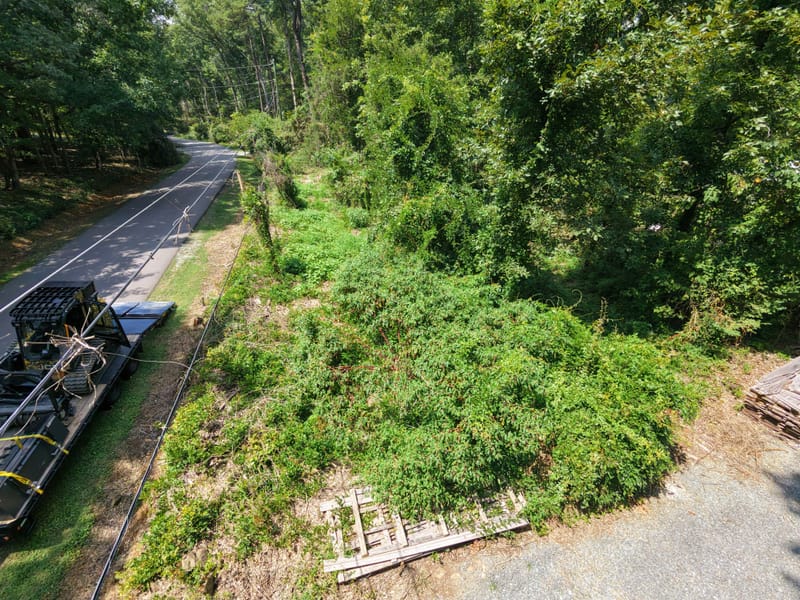
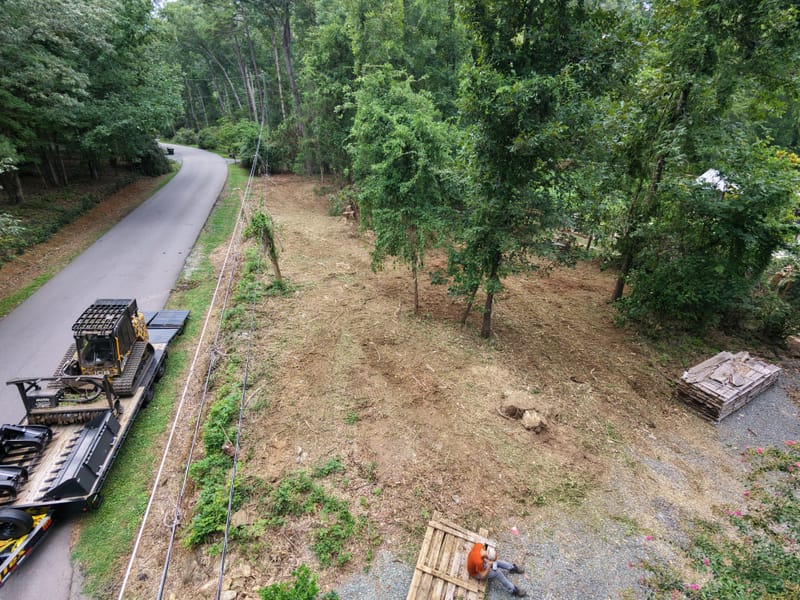
Our crews mulch New Hampshire brush and young woods for $1,500 to $4,000 an acre, and clearing barberry or buckthorn from under trees you keep runs $1,500 to $2,500 an acre. Nothing is hauled and nothing waits on a burn day. On New Hampshire land, the cost that catches owners out is often the town’s land use change tax on current use acres, covered below.
At a glance:
- Forestry mulching: $1,500 to $4,000 an acre; small jobs start at a $1,500 minimum charge
- Barberry, buckthorn and brush under keeper trees: $1,500 to $2,500 an acre, also the rate for a follow-up pass
- Current use land: enrolled acres changed to a non-qualifying use owe the town a tax of 10 percent of full value
- Stumps: pulling them is earth moving, which needs a permit past 100,000 square feet (50,000 near protected water); mulched stumps stay put
- Spring roads: towns can post weight limits on local roads while the frost comes out
- Burning: no pile, so no fire permit from the town warden
Our crews work New Hampshire from two markets: Dover and the Seacoast, covering Strafford and Rockingham counties, and New Ipswich and southern New Hampshire, covering Hillsborough, Rockingham and Cheshire counties. Land elsewhere in the state is priced the same way, with travel in the quote.
How Much Does Forestry Mulching Cost in New Hampshire?
| What is standing on the land | Our price per acre | What it looks like in New Hampshire |
|---|---|---|
| Barberry, buckthorn or brush under pine, oak and maple you keep | $1,500 – $2,500 | A shaded woodlot floor gone thorny, the canopy staying put |
| Old hill pasture grown up in gray birch, white pine saplings and bittersweet | $1,500 – $4,000, low in the band | Stone walls still visible, stems mostly thinner than your wrist |
| Closed young hardwood and white pine on stony ground | $1,500 – $4,000, high in the band | No light reaching the floor, boulders hidden in the leaf litter |
| House site, drive and utility path opened in woods | $1,500 – $4,500 per acre equivalent | Stumps flush, ready for the builder’s excavator |
Where these numbers come from. These are the bands on our Dover pricing page and New Ipswich pricing page, and both markets publish the same figures. The understory row is Buckthorn & Understory Clearing on the Seacoast and Barberry & Understory Clearing in the southern hills. A job too small to reach $1,500 at the acre rate is billed at that minimum; nothing is added to larger jobs.
What Moves the Number in New Hampshire
Ledge and stony till. Much of upland New Hampshire is very stony glacial till, gravel and cobbles through every foot of it, and ledge sits close under the leaf litter on the hills. The head slows over hidden rock and rides above ledge. Our New Hampshire land clearing cost guide names the soils region by region.
Mud season road postings. RSA 231:191 lets a town post weight limits on Class IV, V and VI roads while the frost comes out. Peterborough’s spring posting held its roads to six tons until the frost was out. A landowner served by a posted road can be granted an exemption, with bonding and road repair as conditions. A March job on a dirt road waits for the posting to lift or starts with a call to the highway department.
Buckthorn density in wet woods. Glossy buckthorn thrives in shaded understories and forested wetlands, so the low, wet woods of the Seacoast can hold a wall of stems under pines you want kept. Working around keeper trees in that density is slow, and soft ground narrows the working days.
The first 50 feet from the water. On frontage along a lake or pond over 10 acres, tidal water or a fourth-order river, the waterfront buffer keeps stumps and their roots in the ground unless DES approves removal, and natural ground cover stays apart from a footpath and access ways. Selected stems come out while the ground cover stays, and that picking costs more per acre than a straight pass.
What Mulching Leaves Behind, and What Grows Back
After one pass the ground is covered in chips, every stump is ground flush and the roots are still in the soil. That suits a trail, a view or an old field you plan to disc, seed and mow, not a building pad. Where the plan is a foundation, stump removal below grade is priced in your quote, and grading belongs to your excavating contractor; our New Hampshire land clearing and grading cost guide shows who does each phase. A field of grass and saplings under 2 to 3 inches is a mower’s job instead, priced in our New Hampshire brush hogging cost guide.
The next season, the shrubs on New Hampshire’s prohibited invasive list are the ones that answer back. Japanese barberry resprouts from the roots a mulcher leaves in the ground. Glossy buckthorn meets a cut with a flush of sprouts; the plan that works here is to cut the regrowth soon after leaf-out, twice more that season, and expect more in a second year. Bittersweet, multiflora rose and the bush honeysuckles are on the same list.
We price each follow-up visit on its own line at the understory rate, so you see the second year before you sign for the first; our New Hampshire underbrush removal cost guide covers that work. Treating cut stems with herbicide is a licensed applicator’s job, not ours. The glossy buckthorn and Japanese barberry removal guides lay out the visits.
Pro tip: Book the first buckthorn follow-up for a few weeks after leaf-out, not for October. Early cuts stop the plant rebuilding the root reserves the next flush draws on, so three cuts through spring and summer beat one in the fall.
Forestry Mulching Across New Hampshire
Seacoast: Strafford and Rockingham counties. Around Dover, Durham, Rochester, Somersworth and Exeter, the woods sit low and wet, which is buckthorn ground. Every tidal shore of Great Bay carries the 250-foot protected shoreland, so a waterfront lot prices toward the top of the band. See our Dover forestry mulching cost guide for the city’s buffers.
Southern hills: Hillsborough and Cheshire counties. New Ipswich, Greenville, Mason, Temple, Peterborough, Rindge and Jaffrey are barberry and stone wall country, with steep pitches on the hills and town roads that can be posted in spring, as Peterborough’s were. Our New Ipswich forestry mulching cost guide turns an hourly bid into a per-acre number for this ground.
Merrimack Valley: Nashua to Manchester. Behind house lots in Milford, Amherst, Hudson, Londonderry and Derry, watch for yard plants gone wild: burning bush, Norway maple saplings and multiflora rose, all three on the prohibited list. On jobs this size the $1,500 minimum often sets the price.
Lakes Region and the North Country. Around Laconia, Meredith, Wolfeboro and north to Plymouth, lake frontage puts much of the work inside the 50-foot buffer, and on a shoreland lot the Alteration of Terrain line drops to 50,000 square feet.
Current Use Tax, Permits and Burning Before You Clear
The land use change tax. Forest land of 10 acres or more can be enrolled in current use and taxed on that value. When enrolled land changes to a use that no longer qualifies, the owner owes a land use change tax of 10 percent of its full value, not its current use value. Only the acres physically changed are taxed. The change counts once construction starts changing the ground, such as a road to a house site or utility lines, or once topsoil or gravel is dug out. Roads for farming, forestry, recreation or watershed purposes do not count, and moving land from one qualifying category to another is not taxed. The tax also comes due when enrolled land no longer meets its size minimum. The town bills it, payment is due within 30 days, and once enrolled land is sold the new owner is responsible.
Set that beside the mulching bill: if the town put the full value of a house-site acre at $40,000, the tax on that acre would be $4,000, as much as the top of our mulching band. That is arithmetic on an assumed value, not a typical bill. Whether a mulched acre still qualifies, and in which category, is the assessor’s call, so ask the town before the machine arrives.
Alteration of Terrain. Stump removal counts as earth moving under the DES Alteration of Terrain rules. More than 100,000 square feet, about 2.3 acres, needs a permit, or 50,000 square feet, a little over an acre, if any of it lies in the protected shoreland. The count takes in disturbance on the property for 10 years either side of the work. If a house is coming next, the builder’s earthwork goes into that count.
Burning. A mulching job makes no pile to burn. If you burn limbs from other work, any outdoor fire needs a written permit from the town forest fire warden unless the ground is covered with snow.
Frequently Asked Questions
How much does forestry mulching cost per acre in NH?
$1,500 to $4,000 an acre around Dover and New Ipswich, and the same band elsewhere with travel in the quote. Barberry or buckthorn under trees you keep runs $1,500 to $2,500.
Why do New Hampshire mulching prices disagree so much?
Some are hourly, and an hour on stony till thick with buckthorn covers far less ground than an hour in an old field. Ask an hourly bidder for the hours they expect on your land, multiply by the rate, add the trailer charge and divide by the acres. Then set that beside our $1,500 to $4,000; a per-acre quote puts the slow hours on us.
If you mulch to ground level, will it grow back next year?
Grass will, and so will barberry and glossy buckthorn, which sprout from the roots a mulcher leaves. Plan a follow-up cut soon after leaf-out the next spring.
Can I seed a pasture after forestry mulching?
On old field growth, yes: stumps ground flush leave ground you can disc, seed and mow. Where bigger trees came down, ask for stump removal below grade in the quote, since a flush stump keeps its roots. If the land is in current use, ask the assessor whether a hayfield or pasture keeps it in a qualifying category.
Do I need a burn permit for forestry mulching in New Hampshire?
No. The material stays on the ground as chips. Burning brush from other work needs a written permit from your town forest fire warden unless the ground is snow covered.
Get a Forestry Mulching Quote in New Hampshire
Request a free quote and our crew will contact you to discuss the property, access and the clearing you need. Pick the nearest area below, Dover or New Ipswich. A word with your town assessor about current use before we talk saves a surprise later.
Sources
- UNH Cooperative Extension, Overview of Current Use Assessment, RSA 79-A
- NHDES rules, Env-Wq 1500, Alteration of Terrain
More from the Cut Brush Blog
Keep reading for more tips and guides on land clearing.
 Cost Guide
Forestry Mulching Cost in New Ipswich, NH (2026)
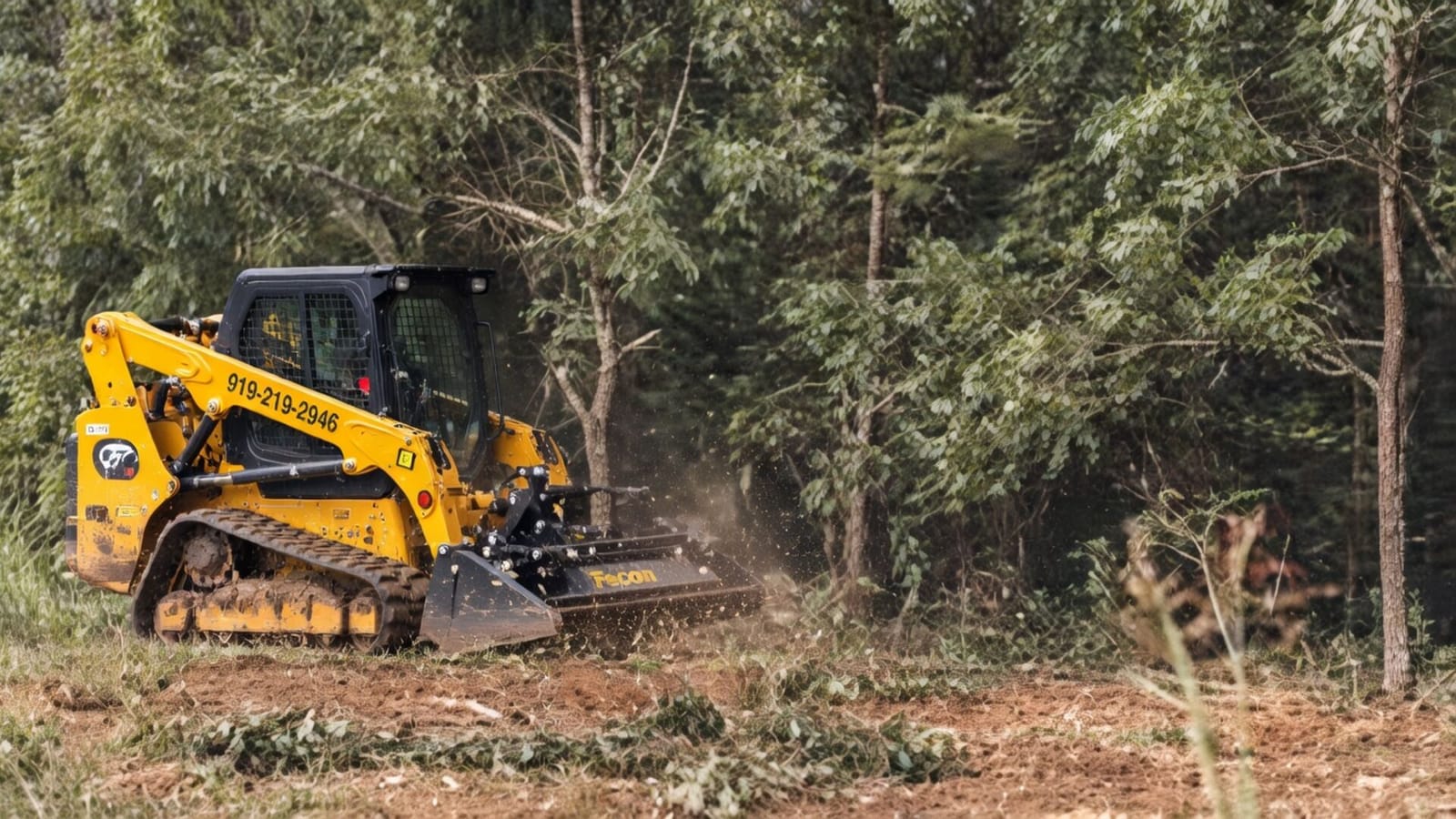
Forestry mulching in New Ipswich, NH costs $1,500 to $4,000 an acre. Turn a day rate into a per-acre price; slope and stone move it. Get a free quote.
 Cost Guide
Underbrush Removal Cost in New Hampshire (2026 Guide)
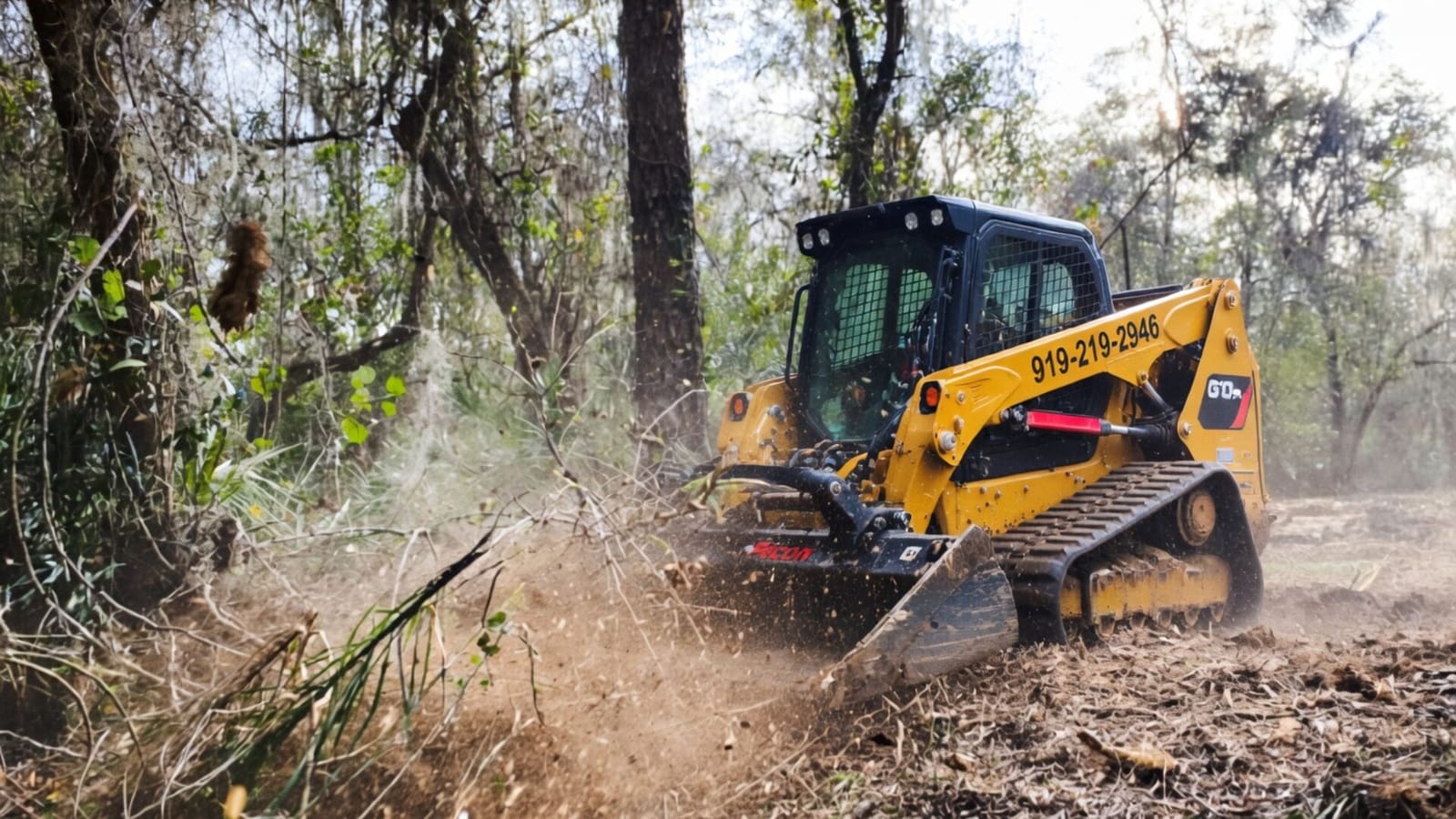
$1,500 to $2,500 an acre to clear underbrush from under the trees you keep in New Hampshire. How buckthorn, barberry, stone walls and lake buffers move it.
Cost Guide Land Clearing Cost Per Acre in New Hampshire (2026 Guide)
$1,500 to $4,500 an acre to clear New Hampshire land, the rates our crew charges around Dover. How ledge, stony till and the shoreland point system move it.
Comparing states? See land clearing costs by state.
Let's Get Started on Your Land
Request a free quote. We'll contact you to discuss your property, access, and the clearing you need.
Get a Free QuoteOr call us directly: (919) 525-3950
 Quick answers from Cut Brush