
Underbrush Removal Cost in New Hampshire (2026 Guide)
Cut Brush Team · November 9, 2026 · 9 min read
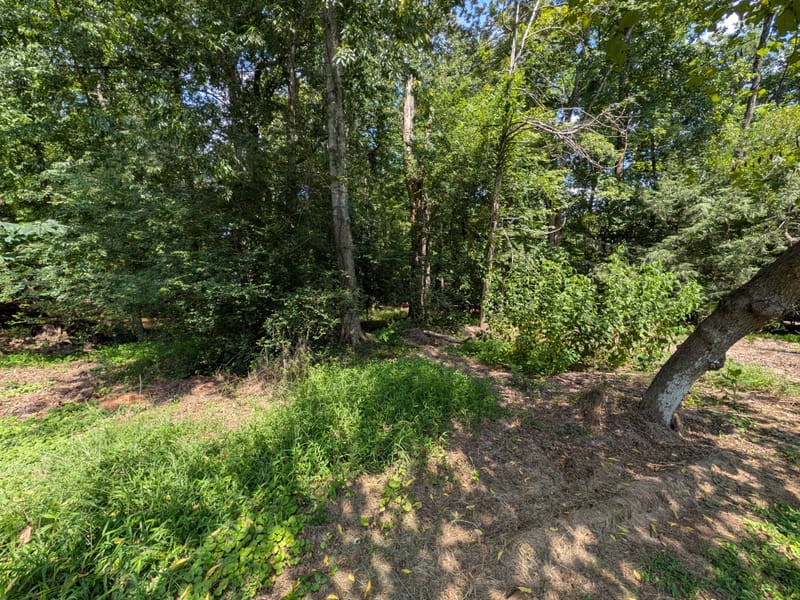
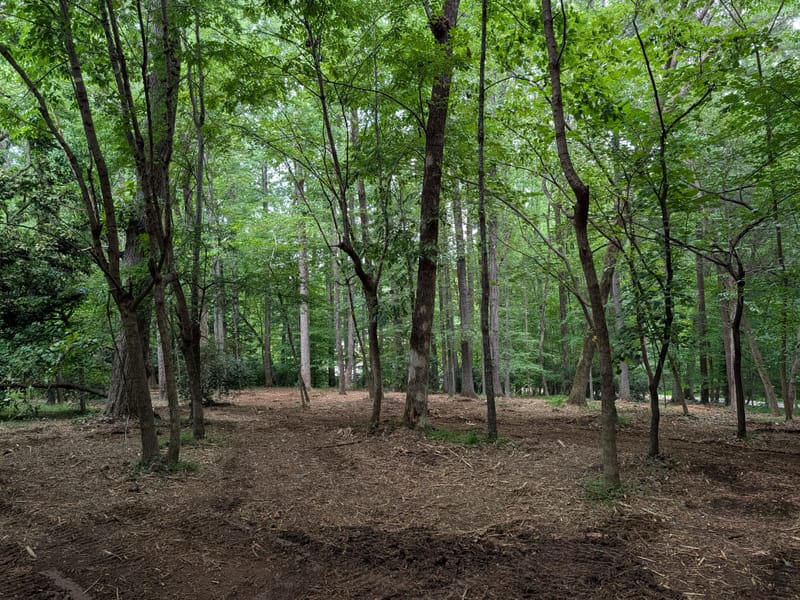
The white pine and oak you bought the lot for are still standing, but you cannot walk between them for glossy buckthorn, Japanese barberry and bittersweet. Our crew takes that growth out from under the trees you keep for $1,500 to $2,500 an acre in New Hampshire, the understory band on both our Dover and New Ipswich pricing pages. A thicket with saplings mixed through it prices as forestry mulching instead, up to $4,000 an acre.
At a glance:
- Brush under trees you keep: $1,500 to $2,500 an acre, with a minimum charge near $1,500 where small jobs start
- Sprouts the next season: buckthorn and barberry come back from the roots, so follow-up cuts are their own lines on the quote
- Within 50 feet of a lake over 10 acres, a large river or tidal water: stumps and roots stay in the ground, and only a licensed applicator may put herbicide down
- Cut invasive brush: may be carried off for disposal, but never replanted, sold or given away alive
- Burning the pile: a written permit from the town forest fire warden unless the ground is under snow, and only wood 5 inches across or less counts as brush
Our crew works New Hampshire from the Seacoast around Dover and from New Ipswich, which covers southern Hillsborough, Rockingham and Cheshire counties.
How Much Does Underbrush Removal Cost in New Hampshire?
Underbrush removal clears the shrubs, vines and saplings beneath a canopy that stays. A forestry mulcher grinds them where they stand and leaves the chips on the forest floor.
| What is under your trees | Our price per acre | What it looks like in New Hampshire |
|---|---|---|
| Scattered shrubs you can still walk through | $1,500 – $2,500, low in the band | Barberry clumps under oak and maple near Rindge or Mason |
| A sealed shrub layer under trees you keep | $1,500 – $2,500, high in the band | Glossy buckthorn shoulder to shoulder under white pine near Durham |
| A stone wall line or field margin | $1,500 – $2,500, by the area it covers | Bittersweet climbing through barberry along an old pasture wall |
| A thicket with saplings grown through it | $1,500 – $4,000 (forestry mulching) | Young pine and hardwood come up through buckthorn on an abandoned field |
| Return visits for sprouts | Priced per visit | The root sprouts that show the summer after the first pass |
Where these numbers come from. Both of our New Hampshire markets publish the same understory band under a local name: Buckthorn & Understory Clearing on our Dover pricing page, Barberry & Understory Clearing on our New Ipswich pricing page. The names follow the shrub that fills the woods in each place. The minimum near $1,500 is where a small job starts, not a fee on top: trailering a tracked carrier to one backyard thicket takes the same drive and setup as a long day. Stumps finish flush and nothing is hauled away.
If the trees are coming out too, our New Hampshire forestry mulching cost guide prices that job, and an open field with no canopy belongs in the brush hogging guide.
What Changes the Price of a New Hampshire Underbrush Job
Which shrub you have. Glossy buckthorn grows up to 20 feet tall and 15 feet wide, so a stand of it puts far more wood in front of the mulching head than barberry, which mostly stays 2 to 5 feet tall. Barberry slows us differently, packing thorny masses tight against the trunks you keep.
Stone walls through the woods. A mulching head works up to a wall and stops. The strip against the stones, and the bittersweet woven into them, is trimmer and saw work, slower going than open woods, so a wall line is priced by the area it covers.
Stone under the leaf litter. Around New Ipswich the hayfields were cleared of trees and stones long ago, but the woods were not. Stones sit just below the leaves in Becket till, and the head has to ride over them, which is where an acre climbs toward the top of its band.
Slope in the hill towns. New Ipswich climbs toward summits above 1,800 feet, and past a 15 percent grade the town puts land in its Steep Slopes Overlay District. A tracked carrier works a pitch like that across and down at a walking pace, so a sloping acre of barberry takes longer than a flat one.
Wet clay on the Seacoast. The marine clay in the low woods around Dover, Durham and Newmarket drains poorly and stays soft for much of the year, and a tracked machine ruts it. Those acres go fastest in late summer, early fall or on frozen ground, so a flexible start date can be worth more than the spread in the band.
Will Buckthorn and Barberry Grow Back After Clearing?
Yes, from the roots. Cutting a mature glossy buckthorn without taking its root system does not kill it; it sets off a flush of root sprouts that leave the stand harder to control than before. Japanese barberry sprouts again from whatever roots stay in the ground. A mulcher cuts every stem at the surface and leaves the roots, so one pass opens the woods but does not finish the job.
What that means for your budget:
- The first pass is the big number. That is the $1,500 to $2,500 an acre above.
- Sprout visits are smaller and listed on their own. Both our New Hampshire pricing pages show them as separate lines, so you see the whole plan before you agree to any of it.
- Herbicide is a separate trade. Glyphosate or triclopyr on freshly cut buckthorn stems limits resprouting, and that is a licensed applicator’s work, scheduled around our cutting.
Our glossy buckthorn removal guide sets out the cutting schedule for a Seacoast stand, and the Japanese barberry removal guide covers the hill towns.
Pro tip: Walk the woods in early spring, before the oaks and maples leaf out. Barberry is one of the first shrubs to turn green, so the whole patch shows against bare trunks. Flag the keeper trees on the same walk.
Underbrush Removal Across New Hampshire
The Seacoast: Strafford and Rockingham counties. Around Dover, Durham, Newmarket and Exeter glossy buckthorn often fills the understory under white pine, oak and maple, on clay that decides when a machine can go in. The Great Bay Estuary and its tidal rivers are public waters, so a lot on them brings the waterfront rules below.
New Ipswich and the southern hills: Hillsborough and Cheshire counties. In New Ipswich, Mason, Greenville, Rindge and Jaffrey, barberry and bittersweet often fill the woods along the walls and under the oaks. Stone, slope and wet hollows set the price here more than the brush does. New Ipswich keeps a natural woodland strip 25 feet wide along wetlands over 10,000 square feet and surface water, and inside it cutting follows a point score, so trees are thinned, not cleared.
The Merrimack Valley: Nashua, Hudson, Merrimack and Manchester. On the smaller house lots of the valley, a strip of understory between the lawn and the woods that adds up to a quarter of an acre still starts at the minimum near $1,500.
Lakes and ponds anywhere in the state. Every lake or pond over 10 acres carries a protected shoreland 250 feet deep. On those lots the 50 feet nearest the water decide the job, not the brush.
Waterfront Lots, Brush Disposal and Burning in New Hampshire
Within 50 feet of the water. Under RSA 483-B:9, the waterfront buffer of a lake or pond over 10 acres, tidal water or a fourth-order river keeps its natural ground cover, apart from a footpath and growth over 3 feet cut for a view. Stumps and roots stay in the ground unless NH DES approves otherwise, and only a licensed applicator may apply herbicide there. Listed invasive plants do not count as ground cover, but a 25-foot segment holding fewer than 25 points of trees and saplings cannot lose any vegetation. Picking stems one at a time is slow, so a waterfront acre lands high in the band. Our New Hampshire land clearing cost guide explains the point score; confirm the plan with DES before the machine arrives.
From 50 to 150 feet back. At least a quarter of that woodland buffer stays natural woodland, left unaltered. Dead or unsafe trees and shrubs that threaten a building or a person may come out regardless.
Hauling cut buckthorn or barberry. Both are on New Hampshire’s prohibited invasive species list under rule Agr 3800, along with bittersweet, multiflora rose, burning bush and the bush honeysuckles. Nobody may move, sell, give away or transplant a living piece of them, but carrying them off for disposal is allowed, and disposal has to leave them dead and unable to grow. Grinding in place meets that without a trailer, which is one reason our price includes no hauling.
Burning the pile. Any outdoor fire needs a written permit from your town’s forest fire warden unless the ground is covered with snow. Only tops, limbs and saplings 5 inches across or less count as brush, and a landowner may burn brush that grew on the same property. Burning also leaves invasive brush nonliving, the end the disposal rule asks for.
Frequently Asked Questions
How much does it cost to clear underbrush on one acre in New Hampshire?
Plan on $1,500 to $2,500 for brush under trees you keep, at either of our markets. A thicket with saplings through it prices as forestry mulching, $1,500 to $4,000. Return visits for sprouts are separate lines.
Why does half an acre cost about the same as a whole acre?
Getting a tracked carrier to the woods costs the same for a half acre as for two, so small jobs start at the minimum charge near $1,500. Above that, the job is priced by the acre inside the band.
Does clearing barberry cut down on ticks?
It removes the cover they rely on. Dense barberry holds humid air that helps ticks survive, and white-footed mice, the hosts that feed young Lyme-carrying ticks, shelter in it. Lyme disease runs higher where barberry is heavy, so keeping the sprouts down matters as much as the first pass.
Can I clear brush near Great Bay or a lake on my lot?
Often, with limits. Within 50 feet of the water, ground cover, stumps and roots stay, and each 25-foot segment keeps at least 25 points of trees and saplings. From 50 to 150 feet, a quarter of the area stays natural woodland.
Get an Underbrush Removal Quote in New Hampshire
Request a free quote and our crew will contact you to discuss the property, the access and the clearing you need under your trees. Pick the nearest area below: the Seacoast around Dover, or New Ipswich and southern New Hampshire. If your plans run past the understory to a house site, our New Hampshire land clearing and grading cost guide shows who does each phase.
Sources
- New Hampshire statutes, RSA 483-B:9, minimum shoreland protection standards
- UNH Cooperative Extension, Invasive in the Spotlight: Glossy Buckthorn
More from the Cut Brush Blog
Keep reading for more tips and guides on land clearing.
 Cost Guide
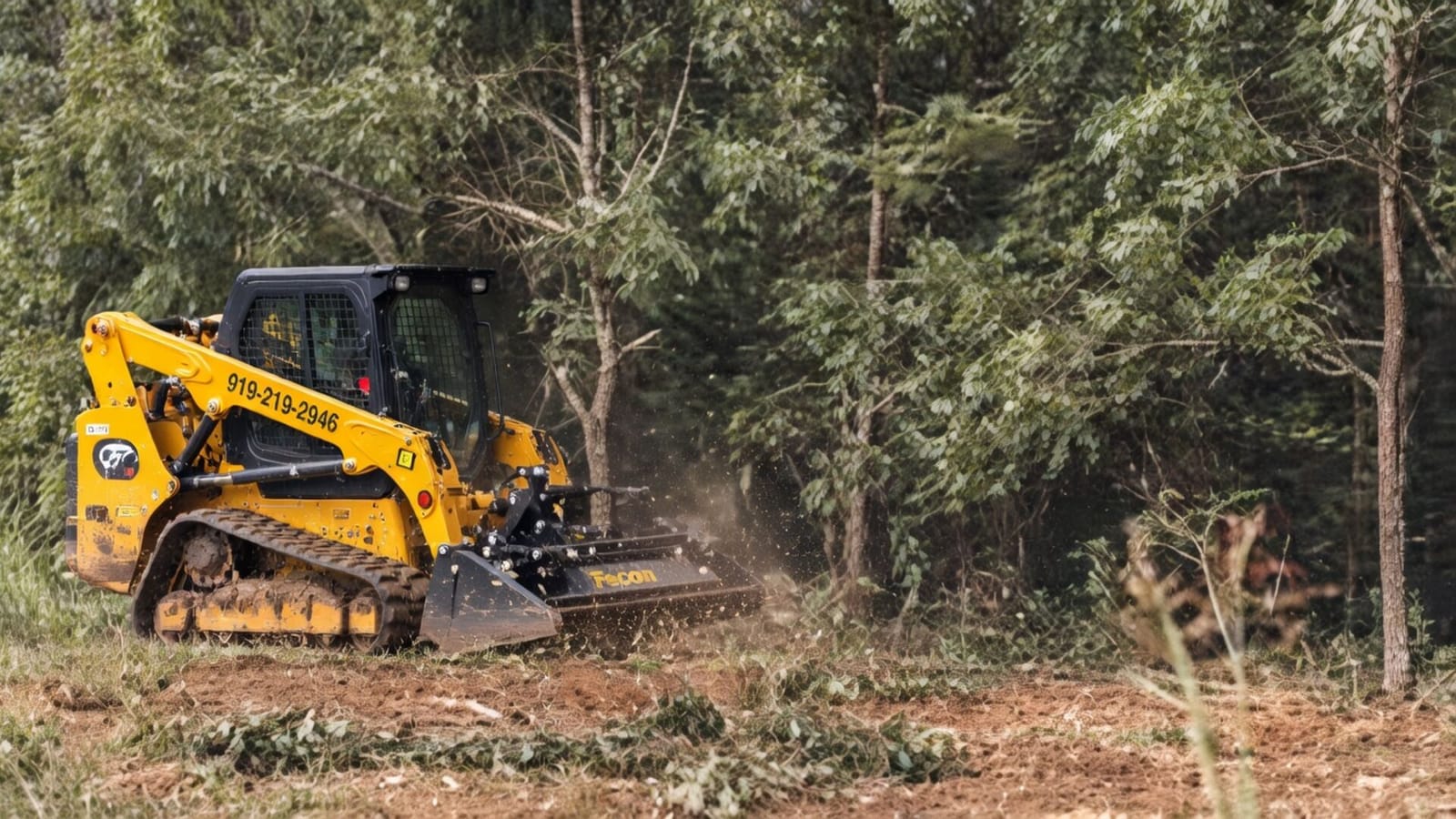
Forestry Mulching Cost in New Hampshire (2026 Guide)
Forestry mulching in New Hampshire costs $1,500 to $4,000 an acre. What buckthorn regrowth, posted spring roads and the current use tax add to your bill.
Cost Guide Forestry Mulching Cost in New Ipswich, NH (2026)
Forestry mulching in New Ipswich, NH costs $1,500 to $4,000 an acre. Turn a day rate into a per-acre price; slope and stone move it. Get a free quote.
 Cost Guide
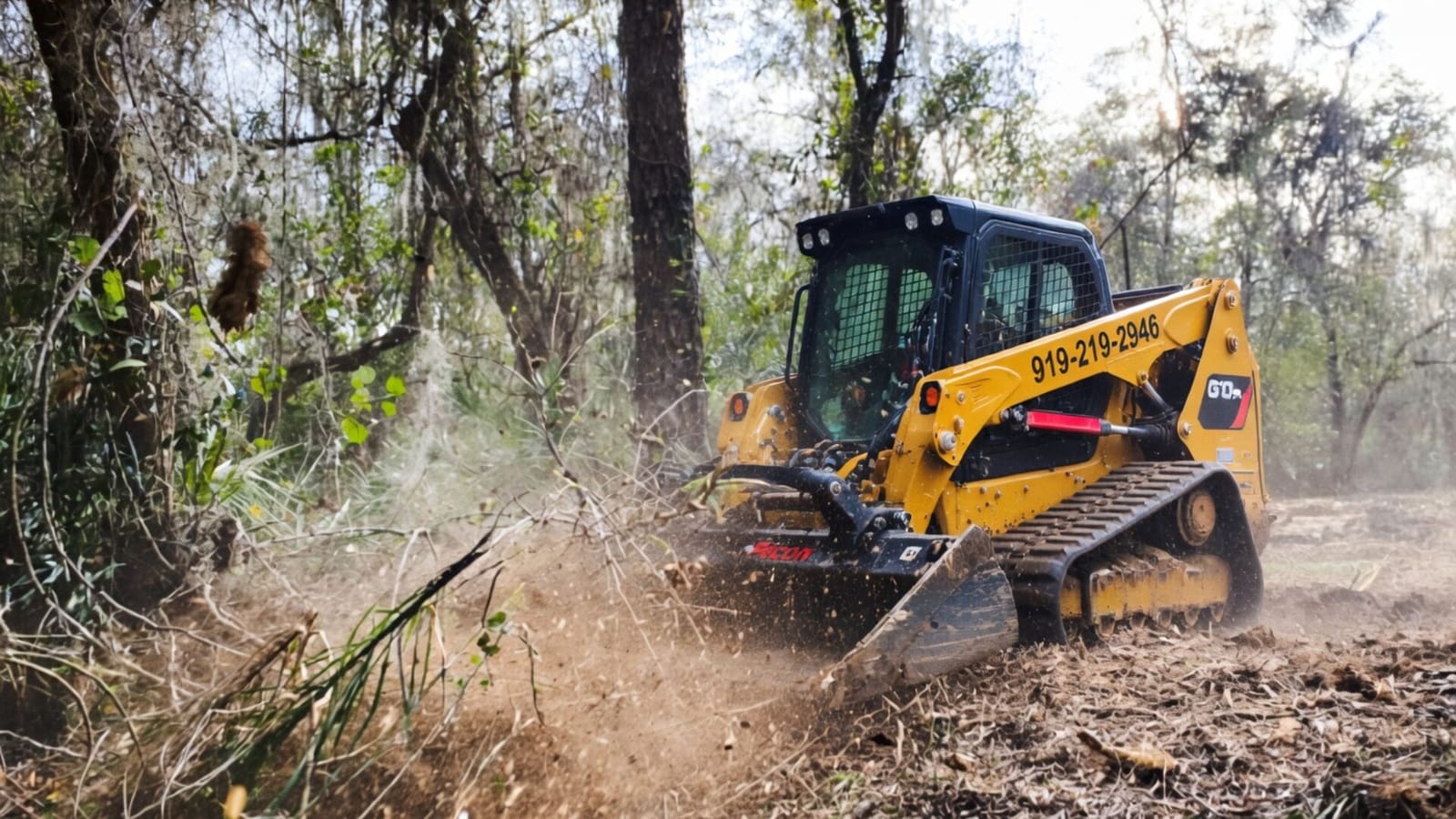
Land Clearing Cost Per Acre in New Hampshire (2026 Guide)
$1,500 to $4,500 an acre to clear New Hampshire land, the rates our crew charges around Dover. How ledge, stony till and the shoreland point system move it.
Comparing states? See land clearing costs by state.
Let's Get Started on Your Land
Request a free quote. We'll contact you to discuss your property, access, and the clearing you need.
Get a Free QuoteOr call us directly: (919) 525-3950
 Quick answers from Cut Brush