
Land Clearing and Grading Cost in New Hampshire (2026 Guide)
Cut Brush Team · November 9, 2026 · 9 min read

We clear a New Hampshire house lot for $1,500 to $4,500 an acre, and the grading after it is a separate bill from your excavating contractor. On a wooded lot in Barrington, Bedford or Rindge, that means one price to take the trees and stumps off the house site, drive and leach field, and a second to strip the loam, dig through ledge and shape the ground.
At a glance:
- Clearing the footprint (our part): $1,500 to $4,500 an acre, with a minimum charge of about $1,500 for small jobs
- Grading (your excavator’s part): priced by them, once they can see bare ground
- State terrain permit: needed once earth moving on the property passes 100,000 square feet over ten years, or 50,000 if any of it lies within 250 feet of protected water
- Winter on a permitted site: from October 15 through May 1, no more than one acre of bare soil open at a time
- Stumps: a New Hampshire burn pile takes brush up to 5 inches across and no stumps, so plan where pulled stumps go; outside the footprint we grind them flush
Cut Brush serves two New Hampshire markets: Dover and the Seacoast, covering Strafford and Rockingham counties, and New Ipswich and Southern New Hampshire. We take the lot down to the ground and hand it to your excavator. We do not grade, build pads, install septic systems or file permits.
How Much Does It Cost to Clear and Grade a Lot in New Hampshire?
A New Hampshire house lot is two jobs in a fixed order.
| Phase | Who does it | Price | What it looks like in New Hampshire |
|---|---|---|---|
| 1. Clear the house site, drive and leach field | Cut Brush | $1,500 – $4,500 per acre equivalent | White pine, oak and maple felled and mulched, stumps ground flush |
| 2. Mulch the woods you keep around it | Cut Brush | $1,500 – $4,000 an acre | Buckthorn and saplings ground in place, roots left holding the slope |
| 3. Pull stumps below grade under the foundation and drive | Cut Brush | Priced in our written quote | Root balls out of the cellar hole, with the cobbles they lift |
| 4. Strip and pile the loam, rough grade, cut and fill | Your excavating contractor | Excavator’s price | Ledge, boulders and old stone walls set the hours |
| 5. Cellar hole, septic system and drive gravel | Your excavating contractor | Excavator’s price | The deepest digging, where shallow bedrock costs most |
| 6. Terrain permit, silt fence, seed and hay mulch | Owner or builder files; excavator installs | State fee set by the area disturbed, when a permit applies | Stabilizing bare ground on the state’s winter schedule |
Where these numbers come from. Our three prices are the land clearing, forestry mulching and lot and homesite prep rows on our Dover pricing page, and the New Ipswich pricing page publishes the same bands. A quarter-acre leach field takes the same trailer trip as five acres of woods, so small jobs start at the minimum charge of about $1,500. The grading rows carry no figure from us because we never grade. Our New Hampshire land clearing cost per acre guide breaks the clearing band down by what is growing.
Pro tip: Have the house corners, leach field and well staked before we arrive. Stumps then come out below grade only inside the stakes and are ground flush everywhere else, so you pay for grubbing on a fraction of the lot.
Where Our Clearing Ends and the Excavator Starts
Lot budgets go wrong at the handoff. Settle these four things in writing between the two quotes.
- Stumps. A landowner’s burn pile in New Hampshire is limited to brush and leaves, and brush stops at 5 inches across, so stumps cannot go on it. Inside the footprint we pull them below grade, priced in our quote, and you decide with the excavator whether they are ground or trucked off; outside it we grind them flush, which costs least.
- Loam. Your excavator strips the topsoil off the house site and piles it to spread back at final grade. That pile counts toward the state’s disturbed area, so keep it on ground you were already opening.
- Ledge. The excavator meets it in the cellar hole, the septic trench and the drive cut, so ask whether their number covers rock or prices it as extra.
- Hourly quotes. We price clearing per acre. An hourly dirt quote is fair only with an estimate of hours and a list of what it includes, such as leveling, stump removal and spreading the loam back.
The usual order: stakes, our clearing and stump work, silt fence, loam stripped, rough grade, foundation, septic, final grade and seed. For the woods outside the footprint, see our New Hampshire forestry mulching cost guide and underbrush removal in New Hampshire.
What Moves the Grading Bill in New Hampshire
The excavator’s price moves with what lies under the trees.
Ledge a foot or two down. Hollis soils, first described in the Nashua area, hit hard bedrock 10 to 20 inches below the surface on rock-cored hills. A full basement goes far deeper, so on Hollis ground the cellar hole becomes rock work. Have a test pit dug before the house corners are set, so the foundation goes where the rock sits deepest.
Marine clay that stays wet. Scitico soils on the Seacoast terraces are poorly drained, with water at or near the surface much of the year and a substratum that barely lets it through. It will not cut cleanly or compact while wet, so plan the house to sit up on fill and leave the schedule room for wet weeks.
The month the excavator starts. On a project under the state terrain permit, the rules tighten on October 15. Until May 1, no more than one acre of soil may sit exposed unless an engineer’s winter plan is approved. Ground under 15 percent slope that is not 85 percent grown in by October 15 gets seed plus 3 to 4 tons of anchored hay or straw an acre, or 2 inches of erosion control mix; steeper ground gets an anchored blanket or 4 inches of mix. Clearing in summer and grading before mid-October avoids all of it.
How much ground the job opens. A 1,000-foot drive cut 25 feet wide opens 25,000 square feet before the house site is touched, and all of it counts toward the permit line. A tight footprint is the cheapest way to stay under it.
Clearing and Grading Across New Hampshire
Seacoast: Dover, Durham and Newmarket. Within 50 feet of a Dover wetland, cutting vegetation with the roots left in is allowed when the ground is frozen or dry enough not to rut. Grubbing stumps, regrading and laying a hard surface there all need a Planning Board conditional use permit. Land within 100 feet of tidal water, a river or a natural pond, and slopes over 20 percent covering more than 2,000 square feet, need the same permit before the land is reshaped. Mulching with the roots left in, on frozen or dry ground, keeps the wetland edge out of that process; see our Dover forestry mulching cost guide.
Southern hills: New Ipswich and the Monadnock towns. New Ipswich zones every slope over 15 percent, measured across any 100-foot run, as a Steep Slopes Overlay District. Nothing is built on ground steeper than 25 percent, every request there carries a sediment and erosion control plan, and driveways follow the town’s subdivision rules. Have the slope survey staked before clearing starts; see forestry mulching costs around New Ipswich.
Merrimack Valley: Nashua, Manchester and Concord. Hinckley sand and gravel on the outwash terraces, kames and eskers grades with the fewest delays. It is excessively drained and can run up to 75 percent gravel, so an excavator loses few days to rain. The Hollis ledge hills between the terraces are why two lots in one town can grade at very different prices.
Lakes Region and every shoreland lot. Around Winnipesaukee, Squam and the bigger ponds, a lot within 250 feet of the water hits the terrain permit at 50,000 square feet, and digging or filling there also needs a shoreland permit with an impact fee of 20 cents a square foot. Small work under 1,500 square feet of impact, adding no more than 900 square feet of hard surface, can go in by notification.
Permits for Clearing and Grading in New Hampshire
What counts. The Alteration of Terrain count covers everything disturbed on the same property or plan of development in the ten years before and after the work: drives, wells and septic, stockpiles, staging and borrow areas, and the foundation and lot grading. Plans go in at least 30 days before work starts, and normal farming is exempt.
What it costs. RSA 485-A:17 sets the fee by the area disturbed and where it lies. On shoreland property, 50,000 to under 150,000 square feet is a flat $5,000. A standard application of 150,000 to under 200,000 square feet is $6,250, plus $2,500 for each further 100,000 square feet, and other projects pay $250 plus 4 cents a square foot. Have your engineer confirm which line your plans fall under before you budget it. Off the shoreland, a project under 150,000 square feet can apply by notification and hear back within 14 days of a complete application.
Starting early. Work begun before the permit is unpermitted and needs an after-the-fact application. We clear land; the owner, builder or engineer files.
Frequently Asked Questions
How much does it cost to clear and grade a house lot in NH?
Our clearing runs $1,500 to $4,500 an acre for the house site, drive and leach field, with stump removal below grade priced in the quote. Grading is your excavator’s price, moved most by ledge, wet clay and the season.
Do I need a permit to grade my lot in New Hampshire?
The state permit applies once earth moving on the property passes 100,000 square feet over ten years, or 50,000 within 250 feet of protected water. One acre is 43,560 square feet, so a single house site sits well under the line until a long drive, a big leach field or earlier work on the property adds to it. Your town’s planning office runs local rules such as Dover’s wetland buffer.
Can you grade a lot in New Hampshire in winter?
On a permitted site, from October 15 through May 1 only one acre of bare soil may be open at a time, and finished grade gets covered within a day. Clear in summer and grade before mid-October where you can.
Does Cut Brush do the grading?
No. We clear, mulch and pull stumps where the plan needs them, then hand the lot to your excavating contractor for the loam, cut and fill, foundation, septic and drive.
Get a Clearing Quote Before the Excavator Starts
Request a free quote and our crew will contact you to discuss the property, the access and the clearing you need. Pick the nearest area below. With our written clearing price in hand, your excavator prices the grading on bare ground.
Sources
- New Hampshire Code of Administrative Rules, Env-Wq 1500, Alteration of Terrain
- New Hampshire statutes, RSA 485-A:17, terrain alteration
More from the Cut Brush Blog
Keep reading for more tips and guides on land clearing.
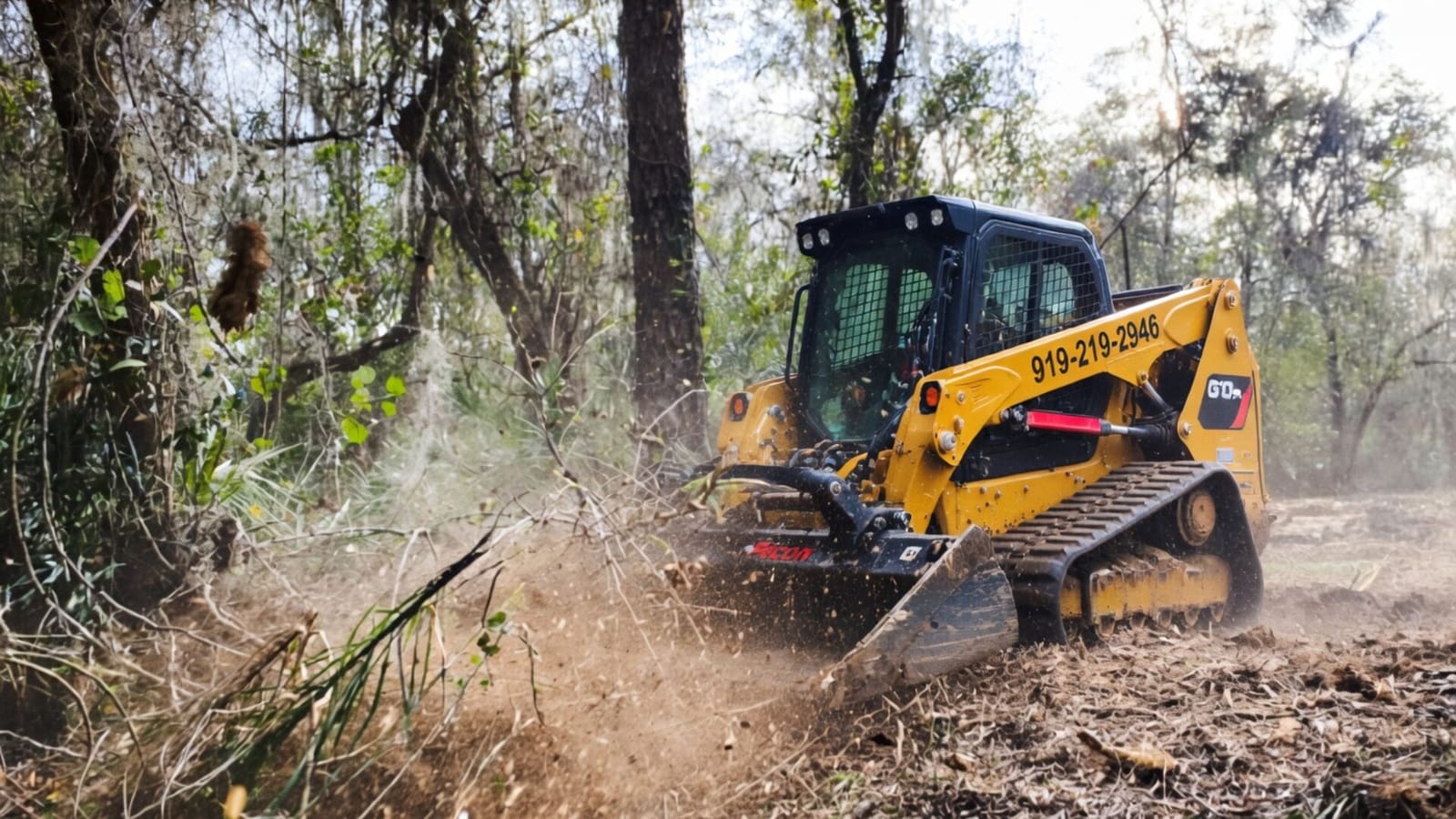 Cost Guide
Land Clearing Cost Per Acre in New Hampshire (2026 Guide)
$1,500 to $4,500 an acre to clear New Hampshire land, the rates our crew charges around Dover. How ledge, stony till and the shoreland point system move it.
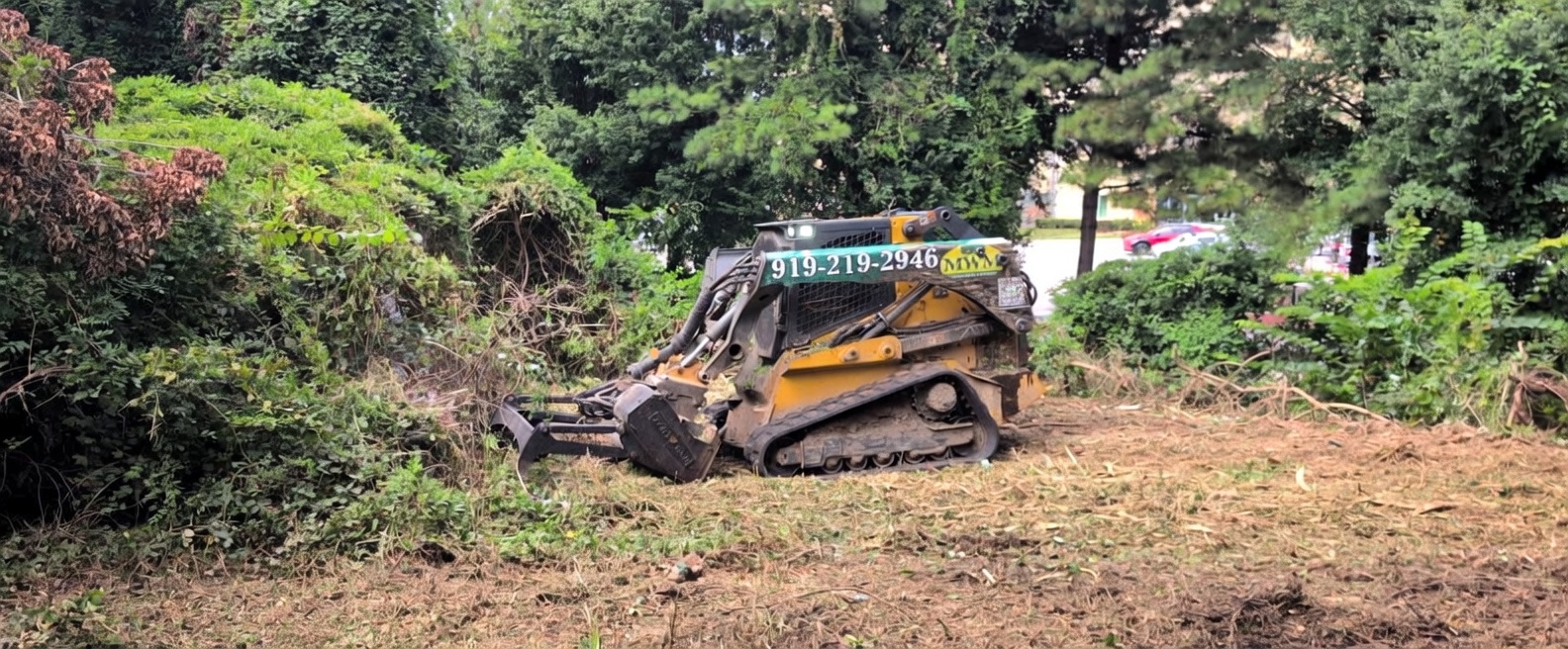 Cost Guide
Brush Hogging Cost Per Acre in New Hampshire (2026 Guide)
$75 to $400 an acre to brush hog a New Hampshire field, set by how long it has grown. When to mow around nesting birds, and what you can cut near water.
Cost Guide Underbrush Removal Cost in New Hampshire (2026 Guide)
$1,500 to $2,500 an acre to clear underbrush from under the trees you keep in New Hampshire. How buckthorn, barberry, stone walls and lake buffers move it.
Comparing states? See land clearing costs by state.
Let's Get Started on Your Land
Request a free quote. We'll contact you to discuss your property, access, and the clearing you need.
Get a Free QuoteOr call us directly: (919) 525-3950
 Quick answers from Cut Brush