What to Know Before Clearing Land Around Seymour, Indiana
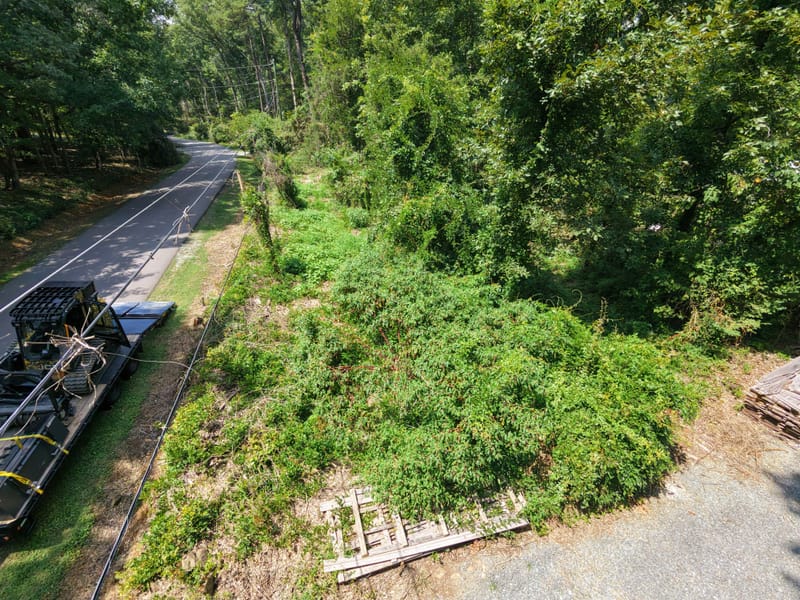
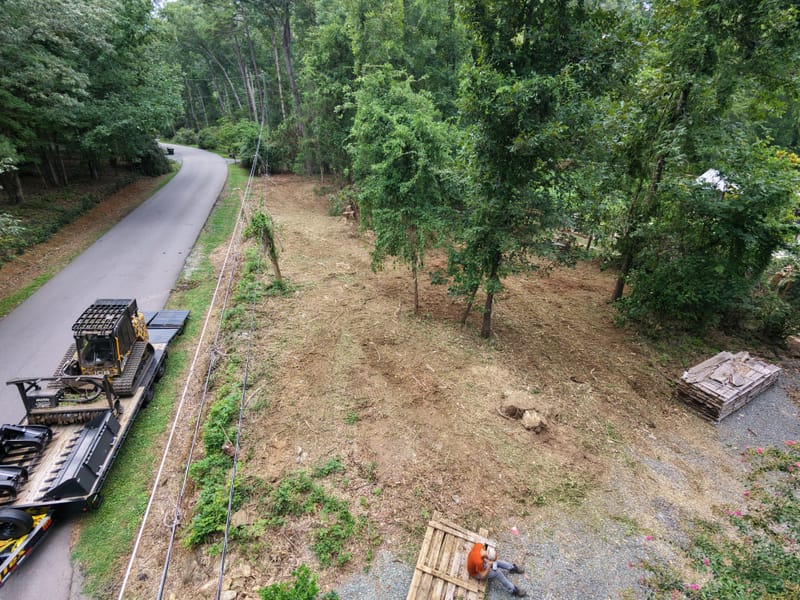
Fence rows and field edges. Rose takes the ground a mower never reaches: under the wire, in the field corners and along the woodlot. A thicket that started on one side
of the wire can reach the other, so the clearing line should take in the whole row and not only
the worst stretch.
Wet ground into spring. Much of the cropland across southeastern Indiana is flat
loess over old glacial till, and in a normal year a perched water table sits within about 18 inches
of the surface into spring. A tracked machine works softer ground than a wheeled one, but late summer
to the first hard frost is the dependable window, and a row that holds water in March is usually
booked for fall.
Offices and permits. Seymour's planning and zoning office, at City Hall on North
Chestnut Street, handles building permits and zoning inside the city. Jackson County Planning and
Zoning, at 111 S. Main Street in Brownstown, covers the rest of the county, and the Jackson County
Surveyor is the office to ask before work beside a county drain. Disturbing one acre or more of soil,
or a smaller site that is part of a larger plan of development, brings in the state's construction
stormwater general permit from IDEM. Requirements vary by parcel, scope and jurisdiction, and the
governing authority makes the determination.