
Land Clearing Cost Per Acre in WV: $1,500 to $4,500
Cut Brush Team · August 26, 2026 · 9 min read
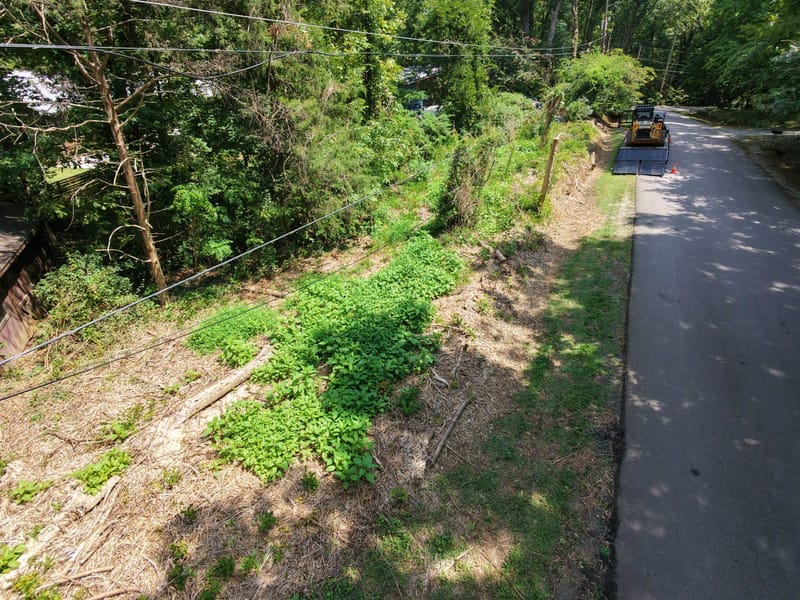
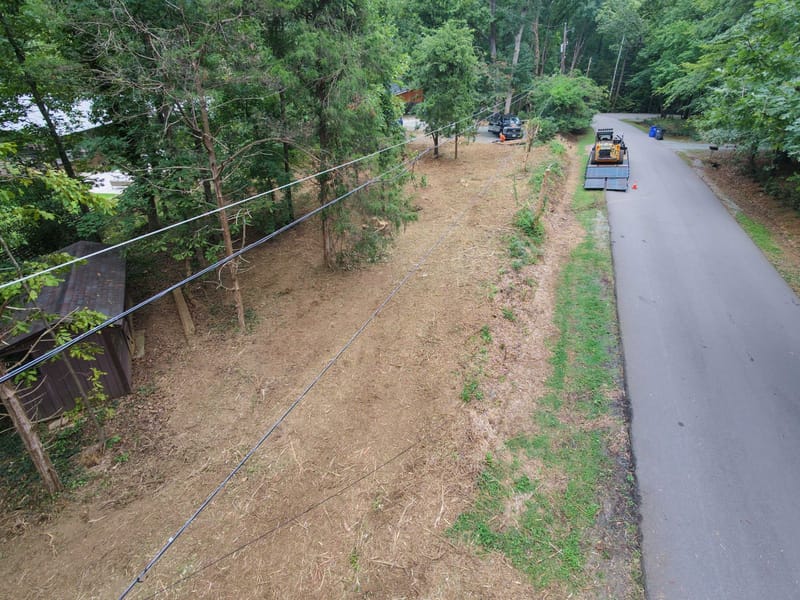
A Panhandle acre rarely prices like a flat, dry, rock-free one, because that ground is rare between North Mountain and the Shenandoah. Land clearing cost per acre in West Virginia’s Eastern Panhandle runs $1,500 to $4,500 for most projects, and where your parcel falls in that band depends on what is standing on it, what is underneath it, and how a machine gets to it.
The pressure to know is real. Berkeley County is the fastest-growing county in West Virginia, and wooded parcels across our Eastern Panhandle service area are being priced for homes, pasture, and business ground right now, from Falling Waters down to Inwood.
This guide gives you a per-acre table by vegetation density, the Panhandle-specific factors that move a quote, and an honest comparison of forestry mulching against traditional clear-and-haul, using the same numbers we publish on our Martinsburg pricing page.
How Much Does It Cost to Clear an Acre in West Virginia?
Most Eastern Panhandle projects run $1,500 to $4,500 per acre, with brush-only work topping out near $2,500, mulching near $4,000, and full land clearing on heavy ground reaching $4,500. Equipment trailering also sets a practical floor around $1,500 per project, no matter how small the parcel.
Here is how the range breaks down by what is actually growing:
| What is on the acre | Per-acre range | Typical Panhandle example |
|---|---|---|
| Overgrown pasture edges, multiflora rose, autumn olive | $1,500 – $2,500 | Fence rows and field corners near Hedgesville |
| Cedar and sapling thicket on an abandoned field | $1,500 – $2,800 | Old pasture going to red cedar near Gerrardstown |
| Mixed hardwoods, stems mostly under 12 inches | $2,500 – $4,000 | Wooded parcel off WV 9 toward Kearneysville |
| Heavy mixed timber, slopes, or tight access | $3,000 – $4,500 | Hillside ground on the flanks of North Mountain |
| Complete residential building lot | $2,000 – $6,000 total | Quarter-acre wooded homesite around Martinsburg |
What the price includes. Forestry mulching grinds brush, small trees and stumps into mulch on site, with stumps flush with the ground and nothing hauled away. Full stump removal below grade and cut-and-haul for very large trees are discussed and priced in the quote. Grading and build pads are not part of our price: we clear to the ground so a builder can grade.
Stem size drives those bands more than acreage does. A brush acre is a few machine hours; a timber acre is a different animal, and land clearing quotes are really machine-hour estimates wearing a per-acre disguise.
If invasive brush is the main occupant, species matters too, because some of it regrows after a plain cut. See our guides to multiflora rose removal and tree of heaven removal in West Virginia before paying for a knockdown the plants will undo by next June.
What Pushes a Panhandle Quote Up the Band?
Karst, wet clay and slope, because Berkeley, Jefferson and Morgan counties have little flat, dry, rock-free ground. Three local realities move a quote.
Limestone karst. Jefferson County has a higher share of karst than any county in West Virginia, and carbonate rock surfaces in ribbons through Panhandle fields. On karst, a careful operator flags dish-shaped depressions, routes around suspect ground, and leaves drainage the way it was found. Those slower passes are the difference between a clearing job and a sinkhole story.
Clay that holds water. The Hagerstown soils over this limestone run 35 to 60 percent clay in the subsoil, so the ground stays soft long after rain. Machine work on saturated clay cuts ruts and wastes hours, which is why schedules here flex around the weather.
Slope and succession. North Mountain splits Berkeley County, and grades climb fast off the valley floor. Meanwhile, abandoned limestone fields fill with eastern red cedar, the first tree into old pasture in this region, and a cedar thicket is denser work than light brush.
Pro tip: If your parcel sits on limestone, walk it after a hard rain and flag any dish-shaped low spot where water disappears, before the estimate visit. Pointing those out up front lets the operator plan machine routes on the spot, and a planned route prices tighter than a cautious one.
Forestry Mulching vs Clear and Haul: Where the Money Goes
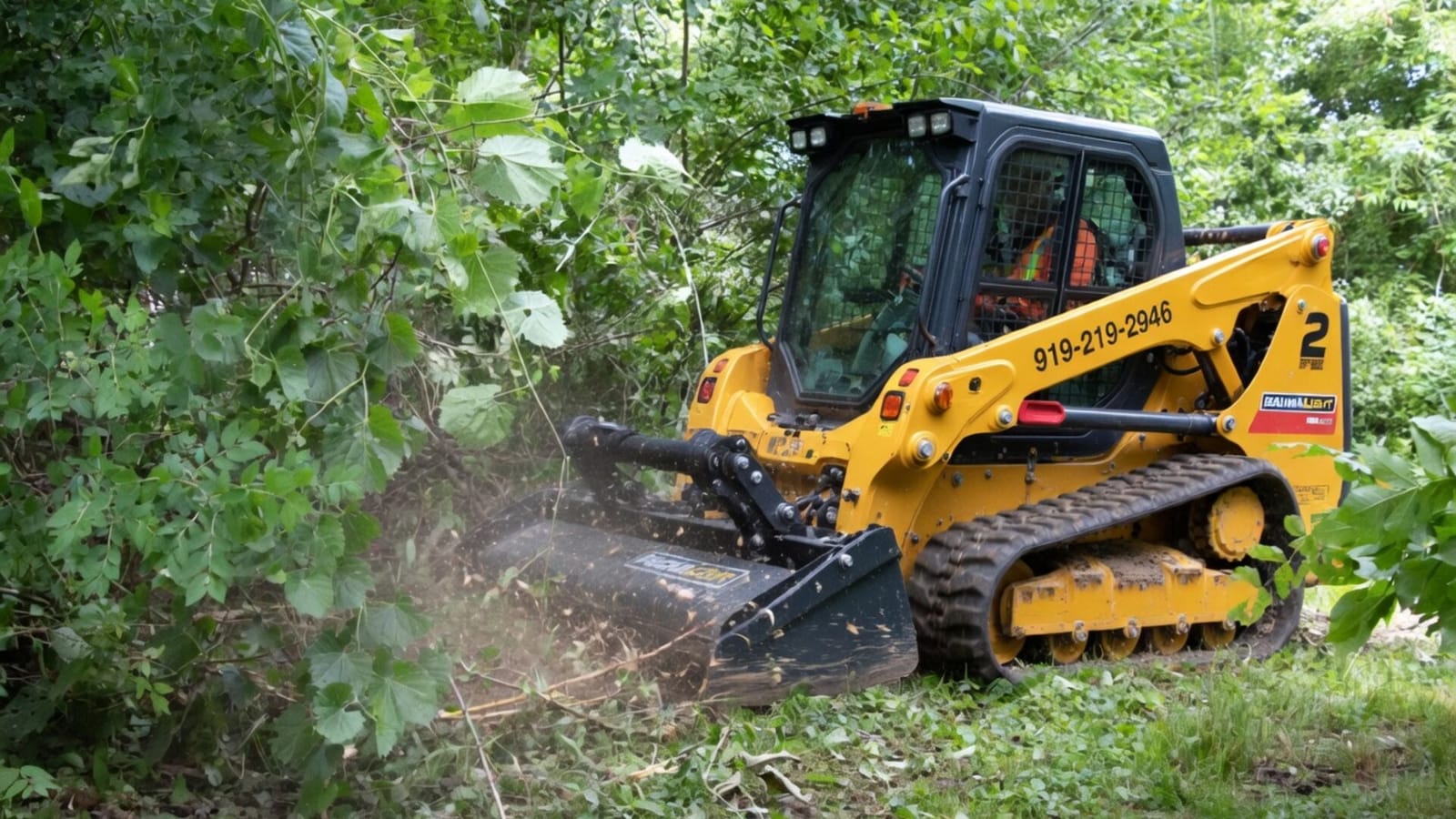
The method decision moves more dollars than any single site factor. Forestry mulching grinds standing vegetation into a mulch mat with one tracked machine; traditional clearing cuts, piles, and removes it with several.
| Cost factor | Forestry mulching | Traditional clear and haul |
|---|---|---|
| Machines on site | One tracked mulcher | Saw crew, dozer or excavator, loader, trucks |
| Debris | Ground into mulch, stays on site | Piled, then burned or hauled away |
| Trucking and dump fees | None | Priced by the load and the miles |
| Burn-season limits | Not a factor | Daytime burning banned Mar 1 – May 31 and Oct 1 – Dec 31 |
| Stumps | Cut flush, roots left holding soil | Grubbing available at extra cost |
| Bare soil and erosion control | Minimal; the mat covers the ground | Likely, especially at permit thresholds |
| Typical per-acre here | $1,500 – $4,000 | Upper end of $1,500 – $4,500, before haul-off |
The burn row deserves a second look in this state. West Virginia’s spring and fall fire seasons shut down daytime open burning for six months of the year, so a clear-and-haul job that planned on burning piles can stall, or quietly convert into paid trucking. Mulching never generates the pile.
Traditional clearing still wins when the end state is a build-ready pad with stumps out and grades cut. For a house site that usually means clearing plus grubbing priced as one project, which is why complete lots total $2,000 to $6,000 rather than tracking a per-acre figure.
What Moves a Quote in Berkeley, Jefferson, and Morgan Counties?
Five things: what is standing, how steep it is, what is underneath, how machines get in, and the finish you want left behind. Every Panhandle quote is those five answers converted into machine hours.
- Brush density and stem size. Heavier stems mean more passes and slower cutting. This is the biggest single lever in any quote.
- Slope. Steeper ground slows every pass and limits which machines can work it safely, especially on the grades west of Hedgesville.
- Rock and karst. Exposed limestone dulls and breaks cutting teeth, and suspect depressions get routed around rather than crossed.
- Access. A wide farm gate off the hardtop is cheap. A narrow residential entry, a soft approach, or a long push to the work area all add time.
- Stumps and finish. A walkable mulch mat, a seed-ready pasture, and a build-ready pad are three different jobs at three different prices. Decide the finish before collecting quotes, not after.
Permits, Burn Rules, and the Line Items People Forget
Permits belong to the property owner, and in this region they arrive in tiers. Berkeley County reviews land disturbance beyond 5,000 square feet, the state stormwater permit engages at one acre, and applications in Berkeley and Jefferson counties carry a Chesapeake Bay addendum. Our Martinsburg permit thresholds guide walks through the tiers and the karst wrinkle in detail.
Other line items worth pinning down in any quote: mobilization (built into our project minimum), erosion control if soil will be exposed, and stump handling, which is scoped per job rather than per acre. A quote missing those answers in writing is not a cheaper quote, it is an unfinished one.
Huntington, Madison and Southern West Virginia
Huntington and the Tri-State. Around Huntington, Cabell County and the river towns of the Tri-State, the same per-acre bands apply, but the ground is different from the Panhandle: steep plateau hillsides above the Ohio River and creek bottoms, and old fields filling with escaped Callery pear. Hillside lots usually cost most to mulch, and a mapped flood zone on bottom ground can limit grading and stump removal. Our Huntington land clearing page covers the towns from Teays Valley to Ironton, Ohio and Ashland, Kentucky, and the Huntington pricing page lists the four bands for that market.
Madison, Boone County and the Kanawha Valley. South of Charleston, the same four bands apply on very different ground: narrow coalfield hollows with little flat land, benches and fills left by surface mining, and kudzu that occasionally covers five acres or more along southern stream banks and roadsides. Side slopes cost most to clear, so where the clearing line stops matters more than the rate. Our Madison land clearing page covers the towns from Logan and Oceana up to Charleston, St. Albans and Nitro, and the Madison pricing page lists the four bands for that market.
Frequently Asked Questions
How much does it cost to clear 1 acre of wooded land in West Virginia?
Plan on $2,500 to $4,000 for a typical mixed-hardwood acre cleared by mulching, and up to $4,500 where heavy timber, slope, or tight access stack up. A brushy acre without real timber can run as little as $1,500. The parcel decides; a walk-through turns the band into a number.
Is forestry mulching cheaper than hauling debris away?
Usually, and often by a wide margin, because one machine does the cutting and the disposal in the same pass. Clear-and-haul adds trucking, dump fees, and extra machines, and West Virginia’s fire seasons complicate the burn-pile shortcut for half the year. Mulching also leaves the ground covered instead of bare, which trims erosion-control spending.
What is the minimum cost for clearing a small lot?
About $1,500, because trailering machines costs the same whether they cut for two hours or eight. Most complete residential lot clearing projects around Martinsburg and Falling Waters total $2,000 to $6,000 depending on the trees, the stumps, and the finish the build requires.
Do permits change what I pay?
They shape scope and schedule more than they add to a clearing invoice, and the permits themselves belong to the owner. County review can trigger at 5,000 square feet of disturbance and the state permit at one acre, so confirm where your project lands before scheduling work; the permit guide for Martinsburg-area clearing is the place to start.
Does karst limestone make clearing more expensive?
It can add machine time. Suspect depressions get flagged and routed around, exposed rock slows the cutting head, and drainage stays the way it was found. On heavily karsted ground around Charles Town or Shepherdstown that caution is not optional, and it costs far less than a machine parked in a new sinkhole.
How do I get a real number instead of a range?
Book a free on-site walk-through. Aerial photos hide stem size, rock, wet ground, and depressions, which is why a quote worth signing comes from walking the parcel, in writing. Request a free quote and the visit costs you nothing.
Pin Down Your Land Clearing Cost Per Acre in West Virginia
Land clearing in West Virginia costs $1,500 to $4,500 an acre, and an on-site visit turns that band into a firm written quote. Cut Brush quotes parcels across the Eastern Panhandle, from Martinsburg and Inwood to Falling Waters, Charles Town, and Berkeley Springs.
Get your free estimate and we will respond within 24 hours. Then compare what you hear from anyone, including us, against the published ranges on our Eastern Panhandle pricing page; if a quote will not survive that comparison in writing, keep your deposit in your pocket.
Related Services
Learn more about the services mentioned in this article.


More from the Cut Brush Blog
Keep reading for more tips and guides on land clearing.
 Cost Guide
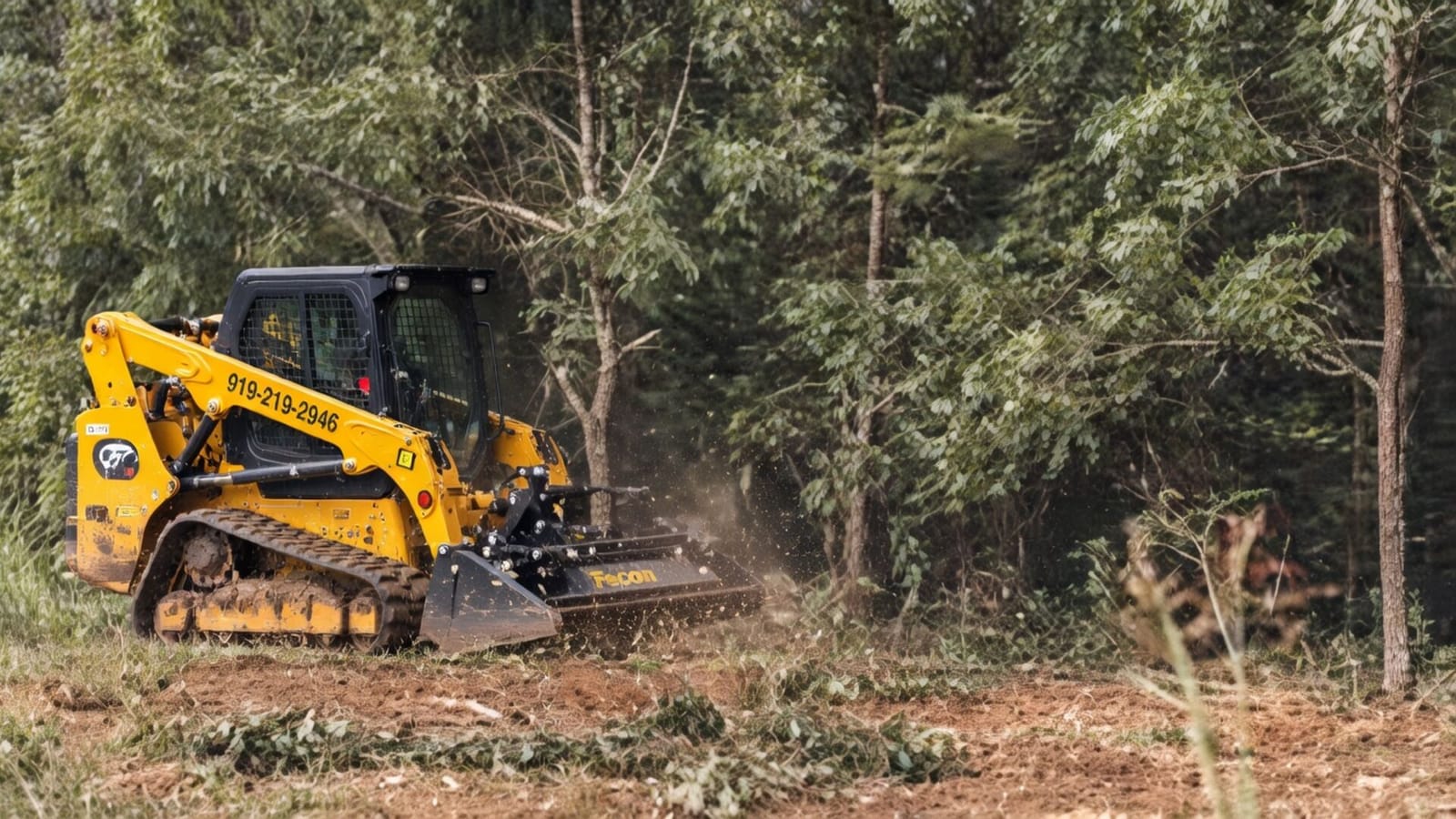
 Forestry Mulching Cost in West Virginia (2026 Guide)
Forestry mulching in West Virginia runs $1,500 to $4,000 an acre with Cut Brush. See how shale, sandstone, tree-of-heaven and slope move the price of your job.
 Cost Guide
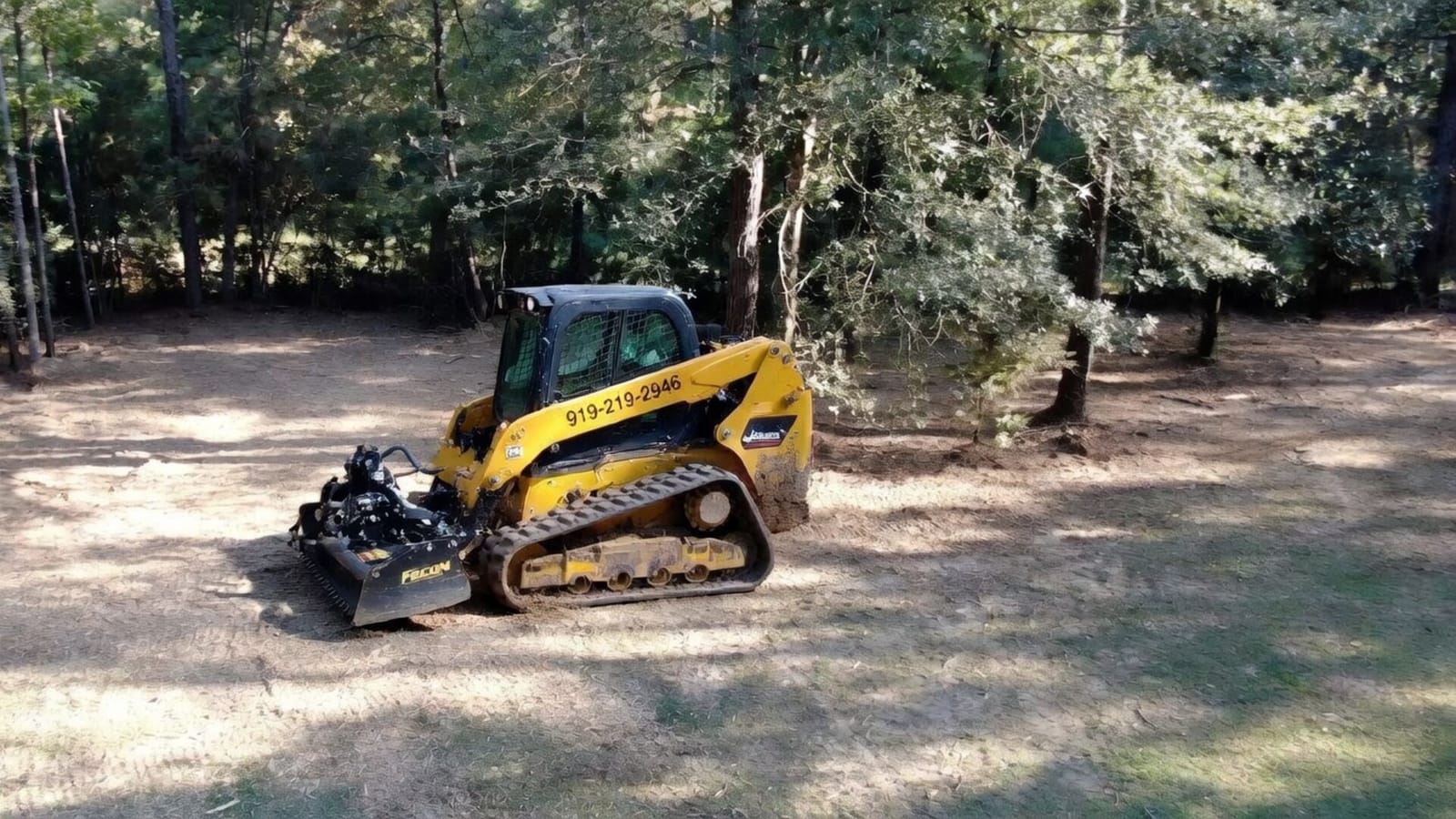
 Land Clearing and Grading Cost in West Virginia (2026 Guide)
Clearing a West Virginia building site runs $1,500 to $4,500 an acre with Cut Brush before grading. See how rock depth, karst and DEP permits move the budget.
 Guide
Guide Kudzu Removal in West Virginia: Plan and Cost per Acre
Kudzu removal in West Virginia: $1,500 to $2,500 an acre for understory clearing, with follow-up cuts over three or four seasons. Get a free quote.
Comparing states? See land clearing costs by state.
Let's Get Started on Your Land
Request a free quote. We'll contact you to discuss your property, access, and the clearing you need.
Get a Free QuoteOr call us directly: (919) 525-3950