
Best Time of Year to Clear Land in NC
Cut Brush Team · May 12, 2026 · 9 min read

You bought a wooded lot in Wake County, walked the property line in July, and got eaten alive by ticks and chiggers in under ten minutes. Or you booked a clearing crew in April, got two days of work in, then watched the next thunderstorm turn your red clay into a skating rink that pushed the project out three weeks.
Timing matters more than most landowners realize. The best time of year to clear land in NC is late fall through early spring, when the ground is firm, the brush has died back, and the ticks, snakes, and yellow jackets have gone dormant. The wrong season can add days to a job, raise your cost, and leave deeper ruts in your soil.
Here is how each season actually plays out across Central North Carolina, what it means for your budget and schedule, and when our crews book up fastest.
When Is the Best Time of Year to Clear Land in NC?
The best time of year to clear land in NC is November through March. Winter clearing gives you firm ground, dormant vegetation, near-zero tick and snake activity, and better visibility through leafless underbrush. Crews move faster, ruts heal cleaner, and projects finish on schedule.
That said, every season has trade-offs. Here is the quick comparison Central NC landowners need before they book a crew.
| Season | Ground Conditions | Vegetation | Pest Activity | Crew Availability | Best For |
|---|---|---|---|---|---|
| Winter (Dec–Feb) | Firm, often frozen overnight | Dormant, leafless | Very low | Tightest – books 4–6 weeks out | Heavy clearing, large lots, view work |
| Early Spring (Mar–Apr) | Wet, muddy after rain | Greening up, sap rising | Ticks waking | Moderate | Smaller lots, fence lines |
| Late Spring (May–Jun) | Variable, heavy storms | Full leaf-out, fast regrowth | Ticks, snakes active | Open | Brush hogging, maintenance |
| Summer (Jul–Aug) | Soft after thunderstorms | Dense, hides terrain | Peak ticks, copperheads, hornets | Most open | Emergencies only |
| Fall (Sep–Nov) | Drying out, firming up | Dying back | Dropping fast | Filling quickly | Almost as good as winter |
Why Winter Is the Best Season for NC Land Clearing
Winter wins on five separate fronts in Central North Carolina, and they compound. None of them are minor.
Firm ground. Wake County red clay turns to grease after a half-inch of rain. From December through February, overnight lows in the 20s and 30s firm the surface enough that a 12-ton mulching head does not sink. That means fewer ruts to repair and faster machine travel across the site.
Dormant vegetation. Leaves are down, sap is in the roots, and the brush is brittle. Our forestry mulching heads chew through dormant hardwoods 20–30% faster than the same trees in full leaf-out. Less material volume per acre means less time on the clock.
No ticks, no snakes, no hornets. Copperheads in Wake, Johnston, and Franklin counties retreat to dens below 50°F. Lone star ticks and chiggers are gone. Yellow jacket nests are inactive. That makes a real difference on dense, overgrown lots where the crew is walking unknown ground.
Better sightlines. With the canopy down, our operators can actually see the property corners, fence lines, and any junk pile or old well casing the previous owner forgot to mention. Surprises cost money. Winter eliminates most of them.
Bird nesting is over. Under the federal Migratory Bird Treaty Act, active nests cannot be disturbed. From roughly March through August, that constraint can force us to spot-skip patches of brush. December through February, the constraint is gone.
Pro tip: Book winter clearing in September or October. Our December–February calendar typically fills 4–6 weeks ahead in Raleigh, Cary, and Wake Forest. Landowners who call in November for a December start often get pushed to January.
Spring Land Clearing: What to Know About Mud and Wildlife
Spring is workable, but it is the season where the most projects get delayed.
The problem is rainfall. March, April, and May average 3–4 inches of rain each across Central NC, and those storms come in concentrated bursts. A clearing job scheduled for Tuesday gets pushed to Friday because Wednesday’s two-inch downpour turned your driveway approach into a bog.
Equipment can still operate, but rutting is the real cost. On wet clay, a tracked mulcher can leave 4–6 inch ruts that you will pay to grade out later, or that will channel storm runoff into your neighbor’s yard.
The other spring issue is wildlife. Ticks become active above 45°F. Migratory birds start nesting in March. If you have a property with a known songbird population or a creek buffer, our crew may need to flag and skip active nest zones until July.
That said, light brush clearing on smaller residential lots in Wake Forest or Holly Springs is still very workable in March and April, since the equipment footprint is smaller and we can choose dry-day windows more flexibly.
Need a quick ballpark before you decide whether to book a spring date or wait? Our land clearing crew in Raleigh, NC can give you a rough number and a realistic start date in 24 hours.
Can You Clear Land in Summer in North Carolina?
Yes, you can clear land in summer in NC, but it is the most expensive and slowest season for three specific reasons.
Heat slows the crew. Operator cabs on tracked machines hit 110°F+ in July sun. We rotate operators, cut earlier shifts, and lose 1–2 productive hours per day. That gets billed.
Dense growth doubles the material. A summer hardwood with full leaf canopy has roughly twice the biomass of the same tree in February. Mulching takes longer per stem, and the resulting mulch layer is thicker.
Pest exposure is real. Lone star ticks, copperheads, and ground hornets are all at peak activity in July and August across Wake, Johnston, and Harnett counties. If your lot has tall grass or brush piles, we charge a small premium for the extra PPE and slower walk-throughs.
Summer is the right call in three cases: an HOA citation with a hard deadline, a closing date you cannot move, or a tick and snake habitat reduction job where the whole point is to clear during peak season so the property is safe by next spring. Otherwise, wait.
Fall Land Clearing: The Underrated Sweet Spot
Mid-September through November is almost as good as winter, and crew availability is often better.
By late September, Central NC has usually broken the worst of summer humidity. Tick activity drops below summer peaks by mid-October. The first hard frost (typically late October in Raleigh, early November further south in Clayton and Smithfield) kills off most ground hornet activity and sends snakes back to dens.
Vegetation is still leafed out through October, so material volume is higher than winter. But the ground is firming up after summer’s storms, and rain frequency drops sharply in October and November. We see the best ratio of “easy access” to “open calendar” in this window.
If you are clearing a fence line or knocking down an overgrown pasture in Clayton or Johnston County, October is often the sweet spot. The crew can move fast, you avoid the December rush, and the regrowth window before spring is short enough that the property still looks freshly cleared come April.
How Wake County Weather Patterns Shape Your Schedule
Central NC sits in a humid subtropical climate zone, which means mild winters, hot humid summers, and afternoon thunderstorms that can turn a workable site into mud in under an hour. Three local conditions are worth planning around if your property is in Wake, Johnston, Franklin, Harnett, Nash, or Durham counties.
Red clay drainage. Central NC soil holds water for 2–4 days after a heavy rain. Even if the sun is out, the ground may not be workable. We watch the 7-day forecast and call you the day before to confirm.
Hurricane season carryover. September and October can bring tropical remnants that dump 4–6 inches in 24 hours. A storm that hits during your scheduled week can shift the start by 7–10 days. Build a buffer if you have a hard deadline.
Winter ice events. Wake County averages 1–2 ice storms per winter that shut down work for 2–4 days each. Rare, but worth knowing if you are pushing a project into mid-January.
For a deeper look at how cost shifts by site conditions, see our land clearing cost per acre in NC guide.
Want to lock in a winter slot? December through February books up 4–6 weeks ahead across Wake, Johnston, Franklin, and Durham counties. The earlier you call, the better the date – and the better the per-acre rate. Request a free estimate and we’ll get you on the calendar before winter demand spikes.
Frequently Asked Questions
What month is cheapest to clear land in NC?
January and February are typically the cheapest months to clear land in NC. Vegetation is dormant, ground is firm, and the crew works faster, so an acre that takes a full day in July often finishes in 5–6 hours in winter. That said, demand is high in winter, so you need to book early to lock in that pricing.
Can you clear land when the ground is frozen in North Carolina?
Yes, and frozen ground is ideal. Central NC rarely sees deep freezes, but the overnight crust that forms in December and January gives tracked equipment excellent footing with minimal rutting. Towns like Wake Forest and Youngsville, slightly inland, tend to hold morning frost longer than Raleigh or Cary, which extends the productive workday.
Is it bad to clear land in the summer?
It is not unsafe, but it is the slowest and most expensive season. Heat, dense leaf canopy, and peak tick and snake activity all work against efficiency. If you have a flexible timeline, waiting until October or November will usually save you 10–20% per acre. For urgent jobs, request a free estimate and we will get you scheduled.
How far in advance should I book land clearing in Wake County?
For winter clearing in Wake County, book 4–6 weeks ahead. December through February calendars fill quickly in Raleigh, Cary, Apex, and Holly Springs. Spring and fall typically need 2–3 weeks lead time. Summer is often available within a week, but you will pay for the slower conditions.
Does the time of year affect the price of forestry mulching?
Yes. Forestry mulching costs less in winter because dormant, leafless trees process faster per stem. The same 2-acre lot that runs $4,500 in July might come in around $3,800 in January. See our forestry mulching cost in NC guide for current seasonal ranges.
What about clearing land during fire season in NC?
North Carolina’s elevated fire risk window runs roughly mid-February through April, when dry, windy days follow winter leaf drop. We do not burn debris, so our forestry mulching work is unaffected. If you are using a contractor who burns piles, ask about open burn permits and county-level burn bans before scheduling.
Plan the Best Time of Year to Clear Land on Your NC Property
Picking the right season can be the difference between a clean, on-schedule project and one that drags through three weeks of mud. For most landowners in Raleigh, Cary, Wake Forest, Holly Springs, and Clayton, winter is the answer. Fall is a close second. Spring works if you can be flexible on dates. Summer is for emergencies and tick-habitat work.
Cut Brush runs single-pass forestry mulching crews across Wake, Johnston, Franklin, Harnett, Nash, and Durham counties year-round. We know the soil, the weather windows, and the local permitting rules, and we will tell you straight whether your project is better scheduled now or three months out.
Request a free estimate – we respond within 24 hours with a fair price and a realistic start date for the best time of year to clear your land in NC.
Related Services
Learn more about the services mentioned in this article.

Brush Clearing
Remove overgrown brush, shrubs, and small trees to reclaim your land.

Forestry Mulching
Single-step land clearing that mulches trees and brush in place.

Land Clearing
Full land clearing for residential and commercial development projects.

Tick & Snake Habitat Reduction
Clear dense brush and leaf litter to reduce tick, copperhead, and rodent habitat.
Serving These Areas
We provide land clearing services in these towns and surrounding areas.
More from the Cut Brush Blog
Keep reading for more tips and guides on land clearing.
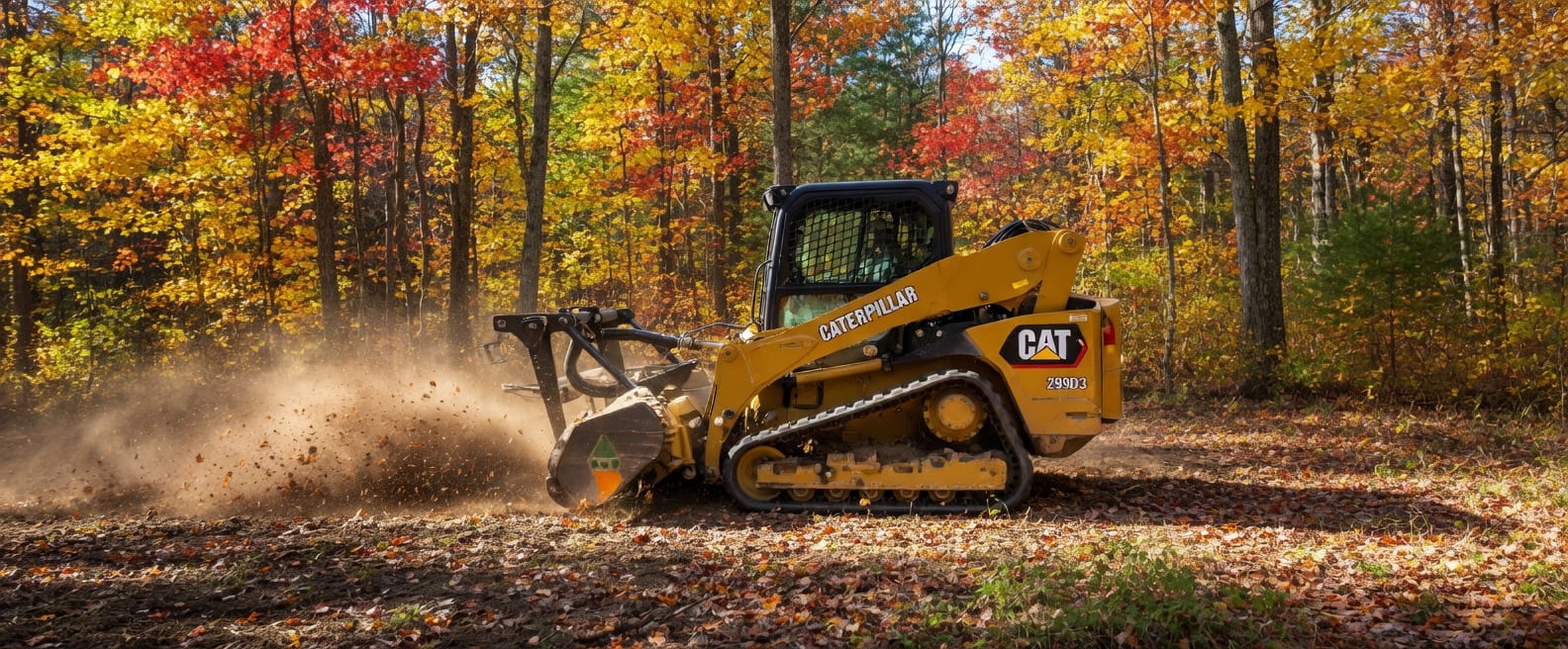 County Guide
 Land Clearing in Wake County, NC (2026 Guide)
Land clearing in Wake County, NC: cost per acre, mulching vs hauling, the 1-acre and recorded subdivision permit rules, and how long a lot takes to clear.
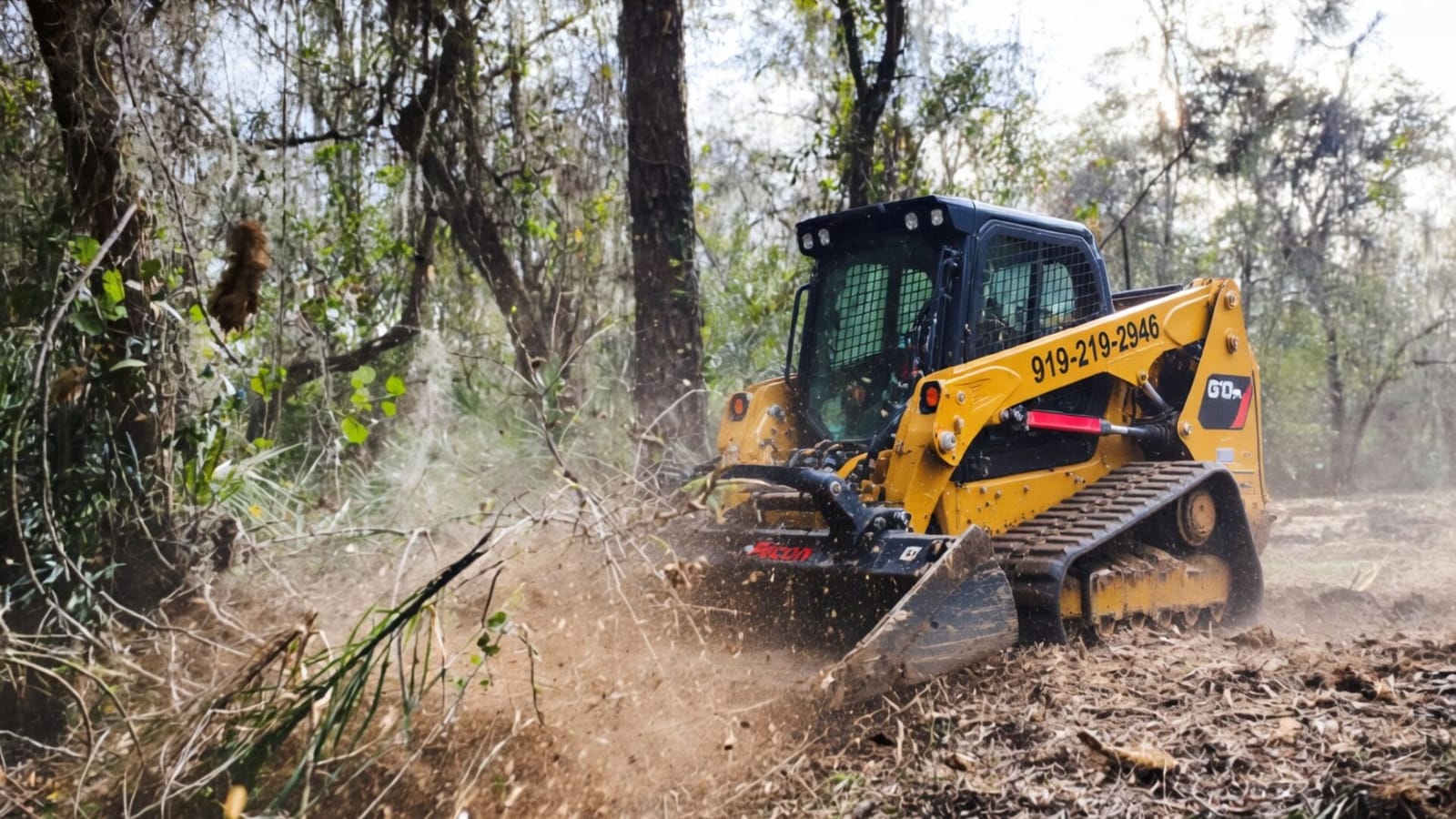 Guide
Guide Land Clearing for New Construction in NC: 2026 Guide
Land clearing for new construction in NC: build sequencing, costs, permits, and what builders need before footing. Get a free Central NC estimate today.
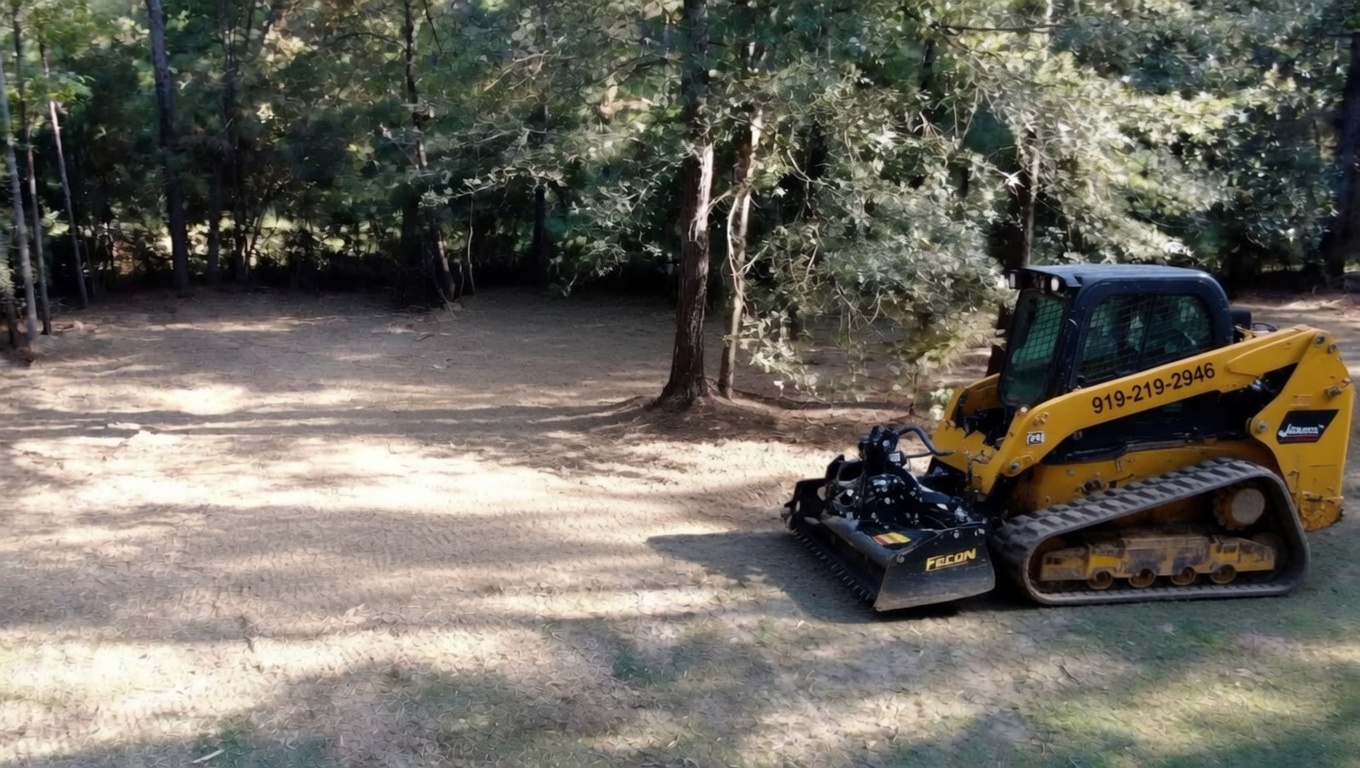 Guide
Guide Do I Need a Permit to Clear Land in Wake County NC?
It depends where the land is. Wake County requires a permit over 1 acre, or any size in a subdivision. Raleigh, Cary and four more towns run their own rules.
Let's Get Started on Your Land
Request a free quote. We'll contact you to discuss your property, access, and the clearing you need.
Get a Free QuoteOr call us directly: (919) 525-3950