
Do I Need a Permit to Clear Land in Wake County NC?
Cut Brush Team · May 8, 2026 · 8 min read
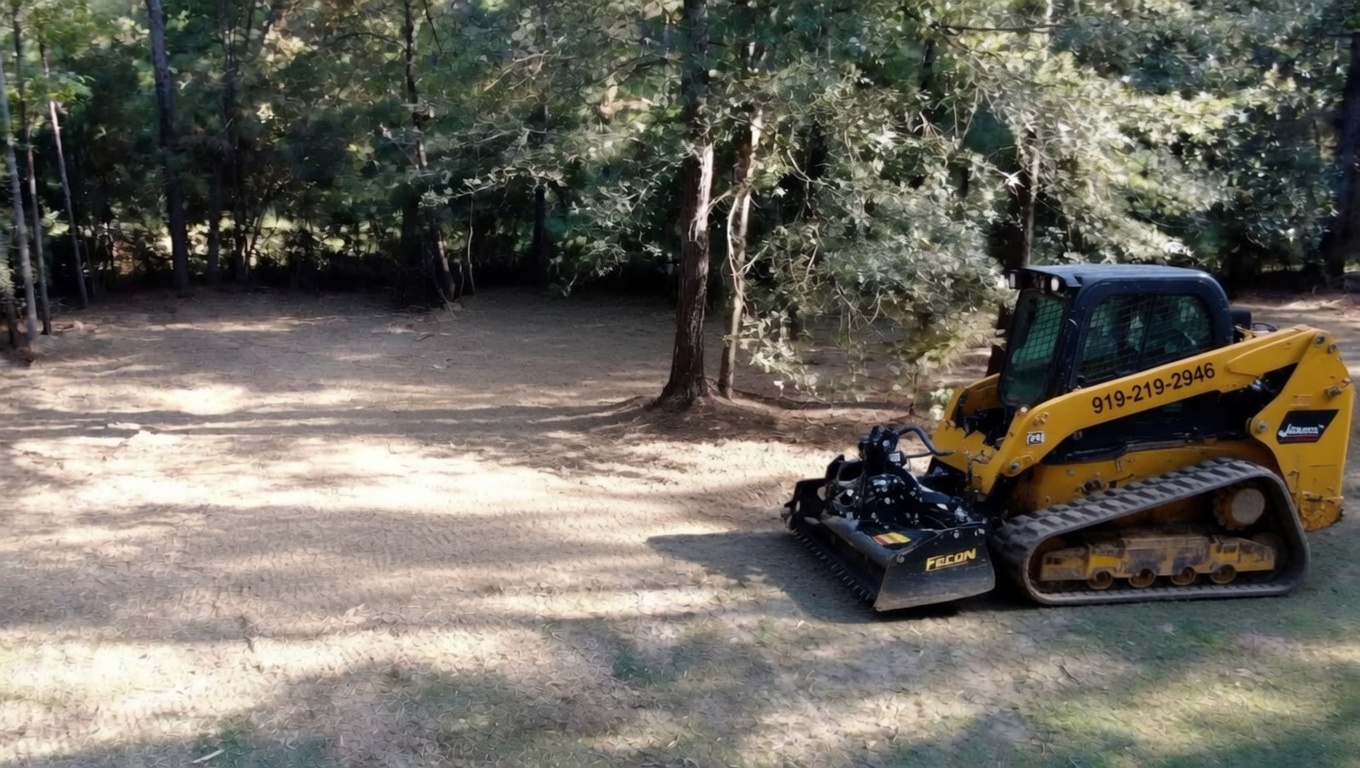
It depends where your land is. In unincorporated Wake County and in Garner, Knightdale, Morrisville, Rolesville, Wendell and Zebulon, the county requires a land disturbance permit when you disturb more than 1 acre, or any amount inside a subdivision. Raleigh, Cary, Apex, Holly Springs, Fuquay-Varina and Wake Forest run their own programs, and some start far lower: Raleigh at 12,000 square feet, Wake Forest at half an acre.
Below every trigger, erosion controls still apply. Each rule here links to its source, and the office with jurisdiction makes the final call. We clear the land; we do not file permits. You or your builder file, and our crew schedules the work around the approval.
Who decides for my land?
The first question is not how much you clear but whose map your parcel sits on. Wake County administers erosion control for every unincorporated area plus six towns under interlocal agreements. The state’s list of local programs (updated April 2024) gives Raleigh (city limits and its ETJ), Cary, Apex, Holly Springs, Fuquay-Varina and Wake Forest programs of their own.
| Where the land is | Who reviews it | Plan or permit needed when | Fee we can confirm |
|---|---|---|---|
| Unincorporated Wake, Garner, Knightdale, Morrisville, Rolesville, Wendell, Zebulon | Wake County Watershed Management, 919-856-7436 | More than 1 acre, or any size in a subdivision | Single lot plan review: lesser of $100 per lot or $250 per acre |
| Raleigh, city limits and ETJ | City of Raleigh | More than 12,000 square feet uncovered | Ask the city |
| Wake Forest | Town of Wake Forest | 0.5 acre (21,780 square feet) or more, single homes included | $65 per single-family lot |
| Holly Springs | Town of Holly Springs | More than 20,000 square feet (state review of the town’s program, August 2022) | Ask the town |
| Fuquay-Varina | Town of Fuquay-Varina | A residential lot with 1 acre or more disturbed | Ask the town |
| Cary | Town of Cary | Runs its own program; ask its development services office | Ask the town |
| Apex | Town of Apex | Runs its own program; ask its development services office | Ask the town |
Two of those numbers catch people. In Raleigh, a plan must be filed and approved once more than 12,000 square feet will be uncovered, about 0.28 acre, so a homeowner who trusts the county’s “1 acre” can clear a third of an acre and be out of compliance. Wake Forest’s half-acre permit also needs proof of state stormwater coverage and a financial security of 125 percent.
For Cary and Apex we could not confirm a current threshold from a dated town source, so we give none. Call the town before you plan the job around any number you read online.
Is it really 1 acre in unincorporated Wake?
Outside a subdivision, the county’s trigger is disturbance greater than 1 acre, not 1 acre or more. Inside a subdivision, which the county calls a common plan of development, you need the permit even if you disturb a fraction of an acre.
“Common plan” reaches further than most owners expect. Any sign, public notice, advertisement, sales pitch or drawing that says construction may happen on the plot can make it part of one, and so can physical markers: boundary signs, lot stakes, surveyor markings. A rural parcel split and staked for sale can fall under it.
Under the acre, the job is not rule-free:
- Stone entrance and silt fence. Lots under 1 acre must install a stone construction entrance and silt fence as needed to keep sediment out of stream buffers, neighboring lots and roads.
- Controls at any size. Statewide, erosion and sediment controls are required regardless of how small the disturbance is.
- Water on the lot. If a stream or other water feature sits within the lot, the county asks for a 50-foot undisturbed buffer or a stream and buffer determination letter from NCDEQ. Our guides to Neuse buffer rules and clearing in the Falls Lake watershed cover what you can touch near water.
What will the permit cost me, and how long does it take?
These are the county’s fees, effective 1 July 2025. We do not file the permit and add nothing to them.
- Single-family lot: plan review is the lesser of $100 per lot or $250 per acre.
- Commercial and subdivision work: $250 per acre for plan review, plus $250 per acre for the land disturbance permit, paid before the pre-construction meeting. Subdivision plan review in unincorporated Wake is $275. Renewals ($125 per acre for one year, $250 per acre for two) apply to commercial and subdivision permits only.
- Re-inspection: $250.
The county process runs in this order:
- Submit the plan through the county’s online portal.
- Plan review takes 30 days, and the county may finish sooner when its workload allows.
- Get coverage under the state’s NCG01 construction stormwater permit by filing an eNOI with NCDEQ. The county will not issue the permit until you have it.
- Hold the pre-construction meeting, then clear and build under the approved plan.
- Close out once the site reaches 80 percent cover with no large bare areas.
Do I need a separate state permit?
The erosion plan goes through the county or town, not the state. The NCG01 stormwater coverage in step 3 is a separate, required filing with NCDEQ, and Wake Forest asks for proof of it as well. State law sets the backstop for everywhere in Wake: under G.S. 113A-57, no one may disturb more than one acre unless a plan was filed and approved by the agency with jurisdiction at least 30 days before work starts.
Do the tree rules change this?
In Raleigh they can. Section 9.1.10 of the city’s development code applies to any tree disturbing activity on sites of 2 acres or more with no recorded tree conservation area. On those sites the code requires perimeter tree buffers (it sets widths of 32, 50 and 65 feet) and bars removing trees 10 inches in diameter at breast height or larger, apart from up to five trees of 10–22 inches in a five-year period with a city permit. The penalty starts at $1,000 for the first tree, adds amounts per inch or per square foot, and is capped at one third of the site’s tax value. “Minor tree removal” is exempt, but what counts as minor is a question for the city.
In Holly Springs, a timbering plan approval or a timbering exemption is needed before any timbering starts.
What if I clear without one?
Under G.S. 113A-64, the civil penalty runs up to $5,000 per violation, and each day a violation continues counts as a separate one. If you have no prior penalty and fix the damage within 180 days, the total is capped at $25,000. A knowing or willful violation is a Class 2 misdemeanor with a fine of up to $5,000.
Is farming or forestry exempt?
Some of it. G.S. 113A-52.01 exempts agriculture (including mulch and ornamental plant production), work under a Mining Act permit, emergencies and wetland restoration. Timber production and harvest on forestland is exempt only when it follows the Forest Practice Guidelines Related to Water Quality, and the NC Forest Service holds every forestry activity to all nine of those performance standards to stay exempt. Clearing for a house site or a yard is not timber production.
A separate law, G.S. 160D-921, limits town rules on forestry done under a plan from a registered forester, and lets a local government hold building approvals for up to three years after a harvest. Cutting timber now and building next year can stall the house.
Can I burn what I clear?
Burning land-clearing debris takes a free NC Forest Service permit, and the pile must sit at least 500 feet from any dwelling unless the occupants consent. Our guide to land clearing debris covers burning and hauling. Forestry mulching grinds brush where it stands, so there is no pile to burn.
What we check before we clear in Wake County
Before we put a machine on a Wake County lot, we ask where the parcel sits: town limits, Raleigh’s ETJ, or unincorporated county. We ask whether it is in a subdivision or has been staked or advertised, whether a creek or pond is on it, and whether a plan is approved or still in review. Mulching does not change which trigger applies, so if the scope is close to a threshold, ask the office whether it counts before the work is scheduled. For costs and methods across the county, see our Wake County land clearing guide. For other counties, see our NC county permit thresholds and the Johnston County permit guide.
Frequently Asked Questions
Do I need a permit to clear my own land in Wake County?
Owning the land does not exempt you. In unincorporated Wake, Garner, Knightdale, Morrisville, Rolesville, Wendell and Zebulon, you need a county permit above 1 acre, or at any size in a subdivision. Inside Raleigh, Cary, Apex, Holly Springs, Fuquay-Varina or Wake Forest, the town’s rules apply instead.
Do I need a permit to clear under 1 acre?
In unincorporated Wake, not unless the lot is in a subdivision, but the stone entrance and silt fence still apply. In Raleigh, a plan is needed above 12,000 square feet; in Wake Forest, at half an acre.
Will Cut Brush pull the permit?
No. We clear the land; you or your builder file the permit and the state stormwater coverage. Grading after clearing is the work of your grading contractor.
Who do I call in Cary or Apex?
The town’s development services office. Both run their own erosion programs, separate from the county.
Get a Free Land Clearing Quote in Wake County
Once you know which office covers your land, request a free quote and our crew will contact you to talk through the property, access and the clearing you need. You can also call (919) 525-3950.
Related Services
Learn more about the services mentioned in this article.

Forestry Mulching
Single-step land clearing that mulches trees and brush in place.

Land Clearing
Full land clearing for residential and commercial development projects.
Commercial Land Clearing
Large-scale land clearing for commercial and industrial development.

HOA Compliance & Vacant-Lot Clearing
Got a citation deadline? Same-week lot clearing with photo documentation for your HOA.
Serving These Areas
We provide land clearing services in these towns and surrounding areas.
More from the Cut Brush Blog
Keep reading for more tips and guides on land clearing.
 Guide
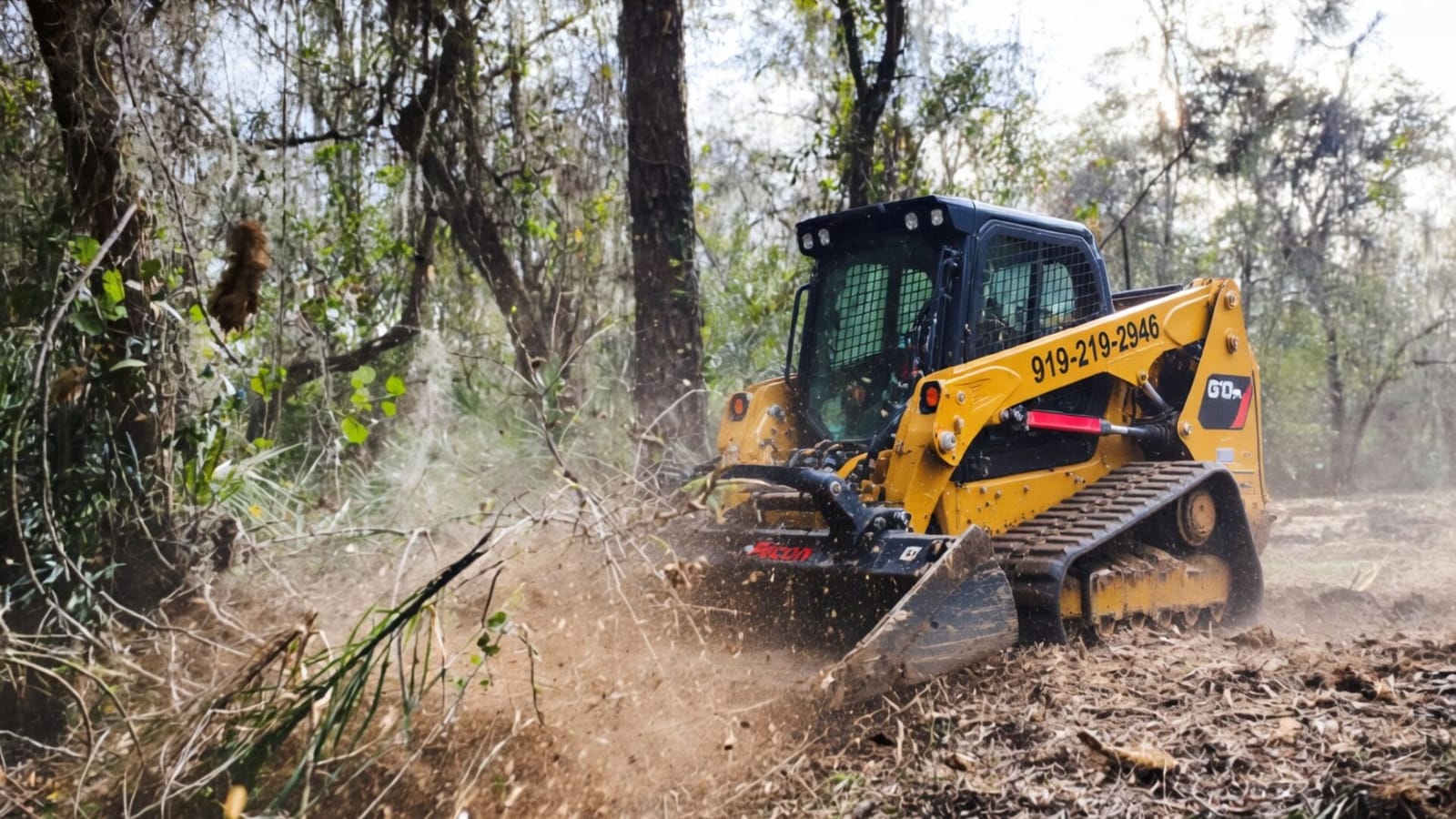
Guide Land Clearing for New Construction in NC: 2026 Guide
Land clearing for new construction in NC: build sequencing, costs, permits, and what builders need before footing. Get a free Central NC estimate today.
 Guide
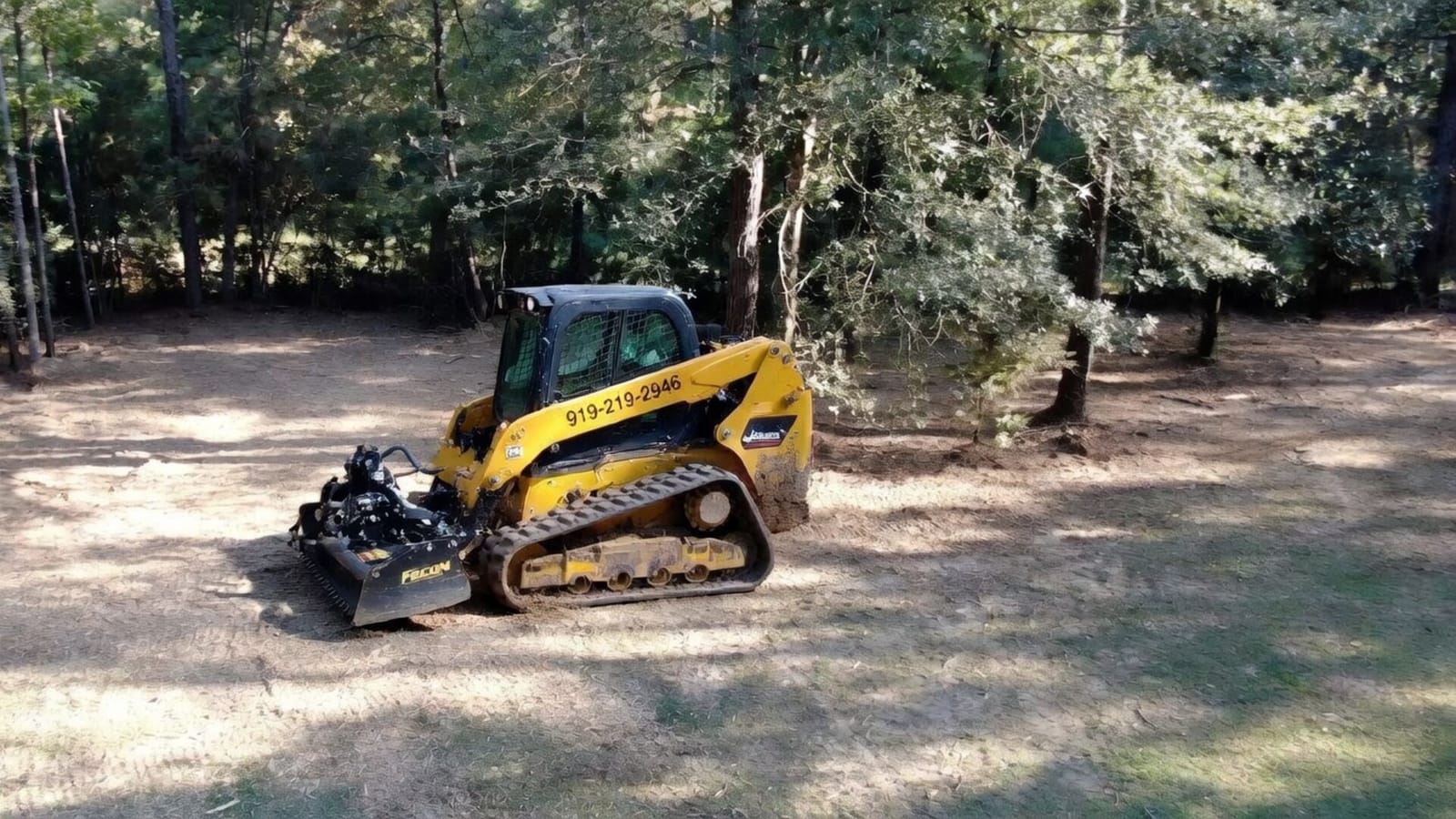
Guide Land Clearing Permits in NC: County Thresholds Explained
Do you need a land clearing permit in NC? See county-by-county disturbance thresholds, watershed buffer rules, and how to stay compliant. Get a free estimate.
 Guide
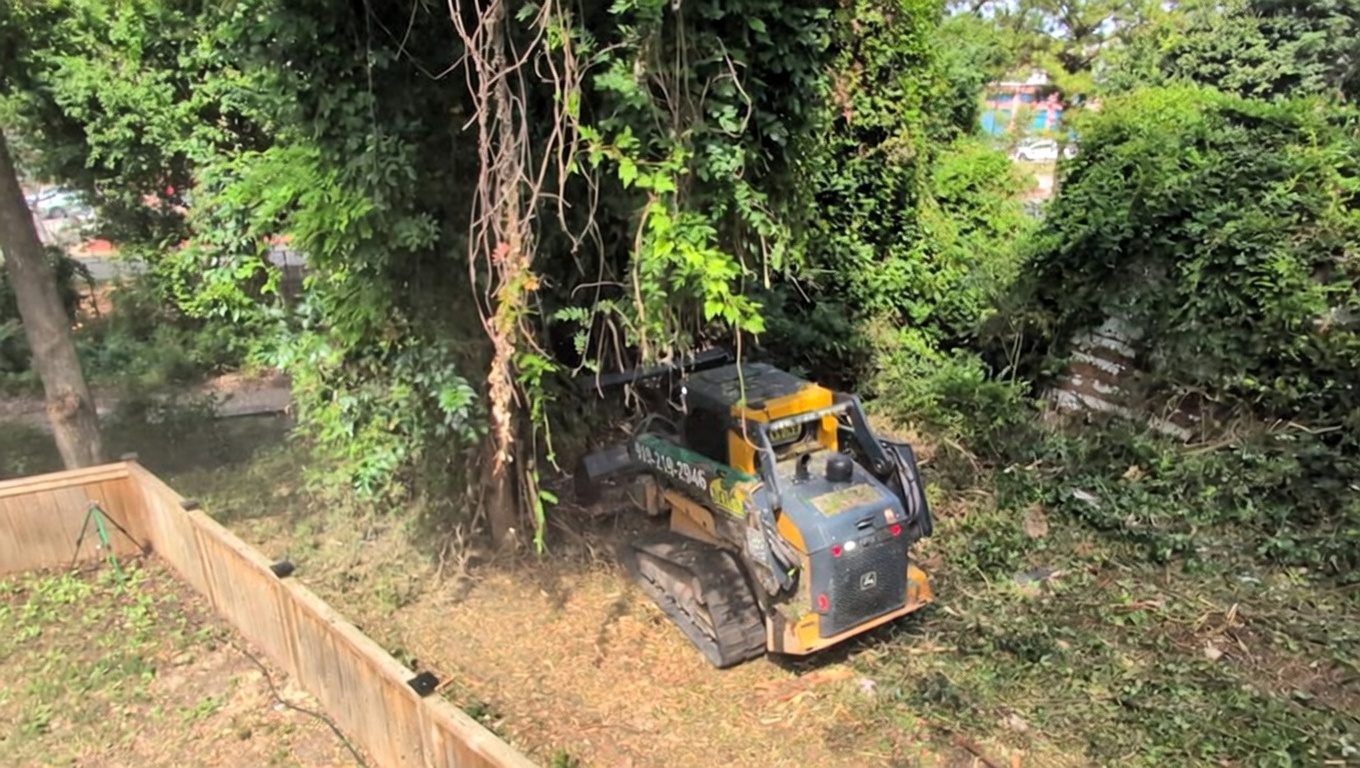
Guide Best Time of Year to Clear Land in NC
When is the best time of year to clear land in NC? Compare winter, spring, summer, and fall for cost, mud, ticks, and wildlife. Get a free estimate today.
Let's Get Started on Your Land
Request a free quote. We'll contact you to discuss your property, access, and the clearing you need.
Get a Free QuoteOr call us directly: (919) 525-3950