Forestry Mulching vs Grubbing & Hauling in NC
Cut Brush Team · June 29, 2026 · 9 min read
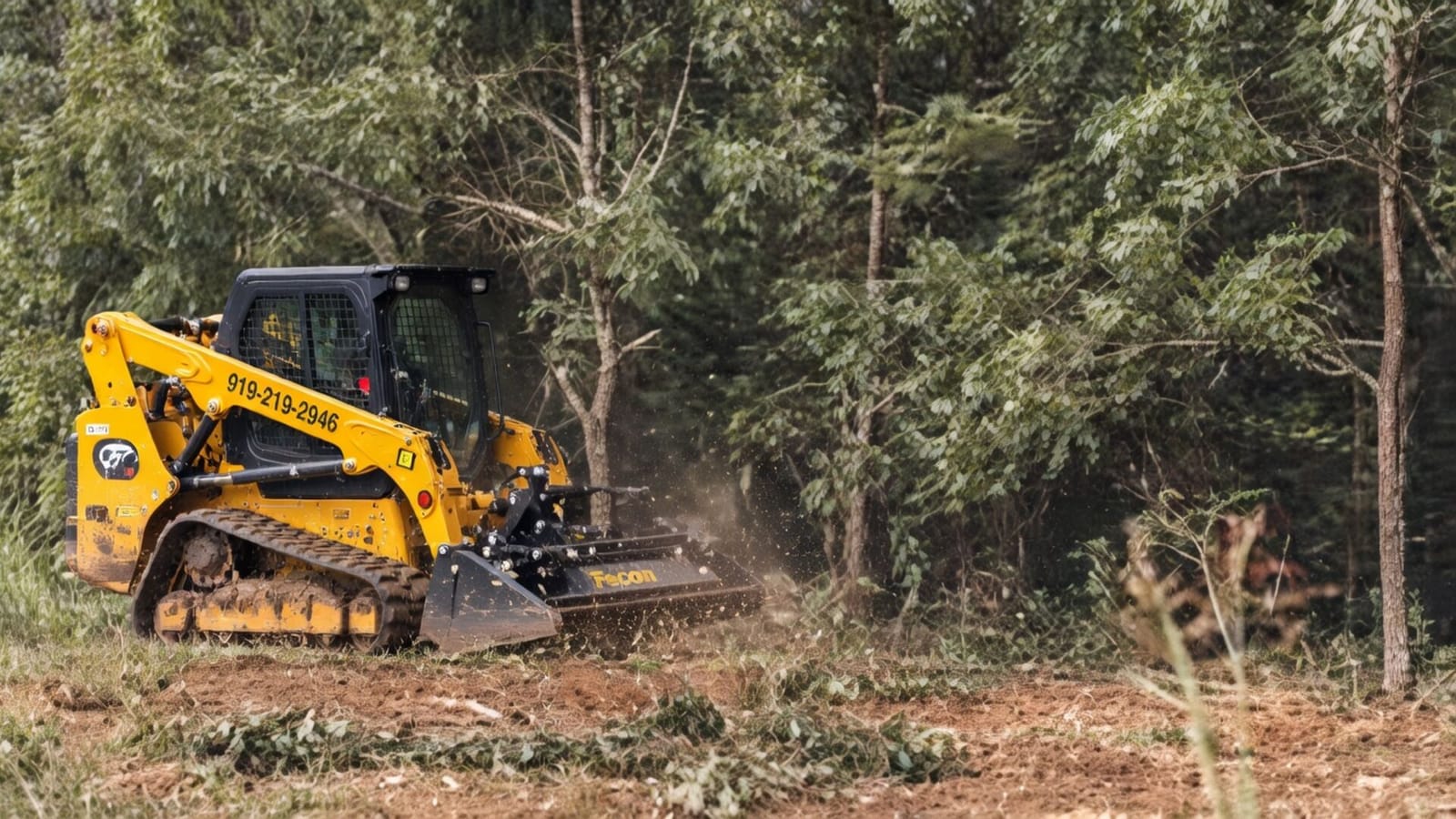
Two contractors walk the same wooded acre outside Clayton. One quotes $2,800 and says he’ll mulch everything in place. The other quotes $6,500 and says the only right way is to grub it: dig out every stump and root ball, load the debris into dump trucks, and haul it all away. Same trees, same acre, wildly different price and result. If you’re weighing forestry mulching vs grubbing for a property in Central North Carolina, that gap is not a typo. The two methods do fundamentally different things to your land, and picking the wrong one either wastes thousands of dollars or leaves you with a site your builder rejects.
This guide puts both land clearing methods compared side by side: what grubbing and hauling actually involves, what each costs per acre in Central NC, what each does to your soil, and the short list of situations where grubbing genuinely earns its higher price.
What Is Grubbing and Hauling in Land Clearing?
Grubbing and hauling is a multi-pass clearing method where an excavator digs trees, stumps, and root balls completely out of the ground, then loaders and dump trucks carry all of that debris off-site to a landfill or burn yard. Nothing organic stays behind. When the last truck leaves, the lot is bare dirt, pocked with holes where the root balls used to be.
A typical grub-and-haul job runs in stages. The excavator knocks down or cuts the trees, then comes back with a root rake or grubbing bucket to pry out every stump and shake the red clay off the roots. The debris gets staged into piles, loaded out, and hauled away, often three to five truckloads per wooded acre. Finally the crew backfills the stump holes and rough-grades the surface.
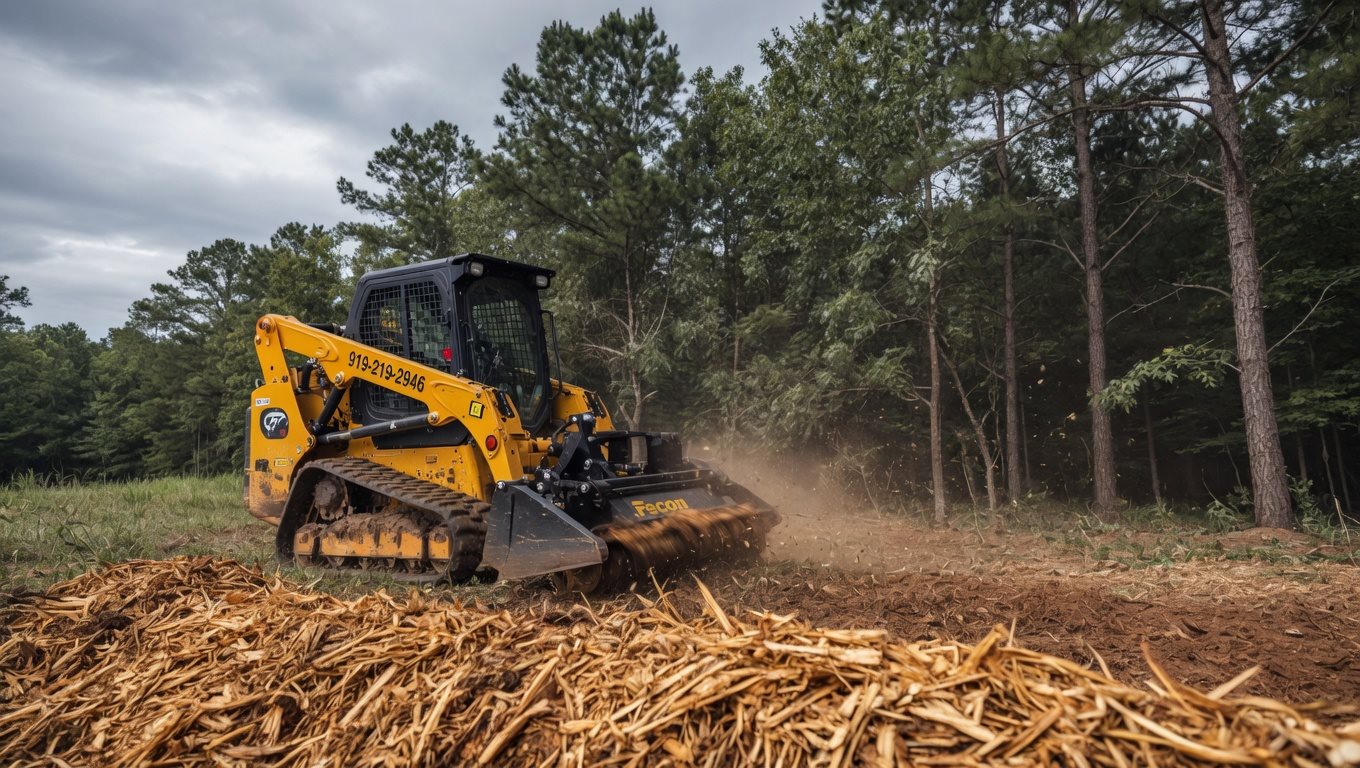
Forestry mulching takes the opposite approach. One tracked machine grinds standing trees, brush, and stumps into mulch right where they stand, in a single pass, and the mulch stays on the ground as a protective layer. No trucks, no piles, no holes.
One distinction worth making up front: this is not the same comparison as mulching against a dozer pushing trees into burn piles. We covered that in forestry mulching vs bulldozer clearing. Grubbing goes a full step further than dozer work, removing the roots below grade and trucking every scrap off the property. It’s the most thorough clearing method there is, and also the most expensive.
Forestry Mulching vs Grubbing: The Side-by-Side Numbers
If you’ve been comparing forestry mulching vs traditional land clearing quotes, the table below shows exactly where the two methods separate. These ranges reflect typical Central North Carolina residential and small commercial jobs.
| Factor | Forestry Mulching | Grubbing & Hauling |
|---|---|---|
| Typical cost per acre | $1,000 – $3,500 | $4,000 – $8,000+ |
| Machines on site | 1 | 2 – 4 (excavator, loader, dump trucks) |
| Time per acre | 4 – 10 hours | 2 – 5 days |
| Passes over the lot | One | Dig, pile, load, haul, backfill, grade |
| Debris | Stays on site as a 2 – 4 inch mulch layer | Trucked to a C&D landfill or burn yard |
| Trucking and disposal fees | None | Often $1,000 – $3,000+ per acre |
| Roots and stumps | Ground flush; roots stay in the soil | Removed completely below grade |
| Soil after the job | Undisturbed and covered | Bare clay, stump holes, needs compaction |
| Erosion risk on NC red clay | Low | High – silt fence and seeding required |
| Best for | Vegetation removal, pasture, recreation | Building pads, roads, engineered fill |
The pattern is simple. Mulching is one machine doing one job; grubbing is a small convoy doing five jobs. Every extra machine, pass, and truckload shows up on your invoice.
Pro tip: Get your grading or site plan before you collect clearing quotes. Most Central NC builders only require root-free soil under the foundation pad, the driveway, and the septic field. Grub that footprint, mulch the rest of the lot, and you can often cut your total clearing budget nearly in half.
How Much Does Grub and Haul Cost in NC?
Grub and haul cost typically lands between $4,000 and $8,000+ per acre in Central North Carolina, compared to $1,000 to $3,500 per acre for forestry mulching on the same ground. Dense hardwoods, long haul distances, and tight site access push grubbing past the top of that range.
The money goes three places. First, machine time: an excavator, a loader, and trucks working two to five days per acre instead of one mulcher working a single day. Second, disposal: a wooded Central NC acre can produce 30 to 60+ cubic yards of debris, and root balls come up heavy with clay, so trucking plus tipping fees at Triangle-area construction-debris landfills routinely add $1,000 to $3,000 per acre. Third, the cleanup most owners don’t see coming: backfilling stump holes, compaction, silt fence, and seed and straw to stabilize the bare soil.
That last bucket matters more in North Carolina than most landowners expect. Disturb an acre or more and the state’s Sedimentation Pollution Control Act requires an approved erosion and sediment control plan before work starts. A grubbed site is 100 percent exposed soil, so erosion control is neither optional nor cheap. When we quote a full land clearing project that includes grubbing, those stabilization line items are in the price from day one. If a competitor’s grub-and-haul number looks suspiciously low, check whether they left them out.
When Do You Actually Need Grubbing and Hauling?
You need grubbing when the ground has to be 100 percent root-free below grade: building footprints, driveways and roadbeds, septic systems, and anywhere engineered fill will be placed. Buried wood decomposes over time, the soil above it settles, and settled soil under a slab or footing means cracks. No grading contractor in Central North Carolina will compact fill over root balls, and no inspector would pass it.
The legitimate grub-and-haul scenarios look like this:
- House and garage footprints. The pad under a foundation must be clean, compacted soil. Mulch and roots have to come out of that footprint.
- Driveways, parking, and roadbeds. Same logic: organic material under pavement settles into dips and potholes.
- Septic drainfields. Trenches and fill sections need root-free soil to drain properly and pass inspection.
- Commercial pads and subdivisions. Large graded sites in fast-growing corridors like the US 70 side of Johnston County get mass-grubbed because the entire surface is being engineered. That’s standard scope on our commercial land clearing projects.
Notice what’s not on the list: the other 80 percent of a typical residential lot. The backyard you want opened up, the wooded buffer, the future pasture, the trail loop. None of that needs to be root-free, which is why paying grub-and-haul rates across a whole property is usually burning money. If you’re clearing ahead of a build, our guide to land clearing for new construction in NC breaks down which parts of a site need which treatment.
When Is Forestry Mulching the Better Choice?
Forestry mulching is the better choice whenever the goal is removing vegetation rather than preparing soil to carry a structure. For most Central NC landowners, that covers the bulk of the property, and often all of it.
Mulching wins on:
- Overgrown acreage and pasture reclaim. Sweetgum thickets, volunteer loblolly pine, privet, and briars grind into mulch in one pass, and you can seed right behind the machine.
- Recreation land. Food plots, shooting lanes, walking trails, and creek access don’t care about roots left in the ground.
- View and buffer work. Selective mulching around keeper hardwoods on lots from Raleigh out to Clayton, without tearing up the ground beneath them.
- Erosion-sensitive ground. The mulch layer holds Central NC red clay in place on slopes and near streams, where a grubbed site would shed sediment with the first thunderstorm.
- Budget-driven clearing. At a fraction of grub-and-haul pricing, mulching can clear two to three acres for what grubbing a single acre costs.
The mulch layer itself is a working asset, not waste. It suppresses regrowth for 12 to 18 months, feeds the soil as it breaks down, and keeps the lot from turning into a mud pit every time it rains. In the mulching vs haul-off decision, leaving the material on site is a feature, not a compromise.
Frequently Asked Questions
Is grubbing and hauling more expensive than forestry mulching?
Yes, significantly. Grub and haul typically runs $4,000 to $8,000+ per acre in Central North Carolina, while forestry mulching runs $1,000 to $3,500 for the same acre. The difference comes from extra machines, multiple days of labor, trucking, landfill tipping fees, and the backfill and erosion-control work a grubbed site requires.
Can you build a house on mulched land, or do you need grubbing first?
You need the building footprint grubbed and graded to bare, compacted soil, but only the footprint. The standard approach on Central NC home sites is to mulch the whole lot first, then grub just the pad, driveway, and septic area. That hybrid keeps the budget down without cutting any corner your builder or inspector will care about.
What happens to the stump holes after grubbing?
The holes get backfilled and compacted, and how well that’s done matters. Loose backfill settles over the next few rainy seasons and leaves depressions scattered across the lot. A good crew compacts the backfill in lifts and rough-grades the surface so water drains instead of ponding in old stump holes.
Does grub and haul clearing cause erosion problems on NC red clay?
It can if the site isn’t stabilized quickly, because grubbing leaves 100 percent bare soil. Central NC red clay sheds water fast, and around watershed areas like Jordan Lake near Pittsboro, buffer and sediment rules make exposed-soil clearing a real liability. Silt fence, seed, and straw are mandatory parts of a responsible grub-and-haul job, while a mulched site is stabilized the moment the machine shuts off.
How do I know which clearing method my project needs?
Start with what the land has to do afterward: structures and pavement need grubbing, almost everything else doesn’t. Send us photos and a rough acreage, or request a free estimate and we’ll walk the property with you, flag what actually needs to be root-free, and price each scope separately. Most quotes go out within 24 hours.
Forestry Mulching vs Grubbing: Get a Straight Answer for Your Lot
The forestry mulching vs grubbing decision comes down to one question: does the soil need to carry a structure, or just grow something? Grub the footprints that have to be root-free, mulch everything else, and skip the dump-truck parade across the parts of your land that never needed it.
Cut Brush clears land in Raleigh, Clayton, Smithfield, Pittsboro, and the rest of Central North Carolina, and we’ll tell you honestly where grubbing is worth the money on your site. Call us at (919) 219-2946 or get a free quote and we’ll respond within 24 hours.
Related Services
Learn more about the services mentioned in this article.


Serving These Areas
We provide land clearing services in these towns and surrounding areas.
More from the Cut Brush Blog
Keep reading for more tips and guides on land clearing.
 Comparison
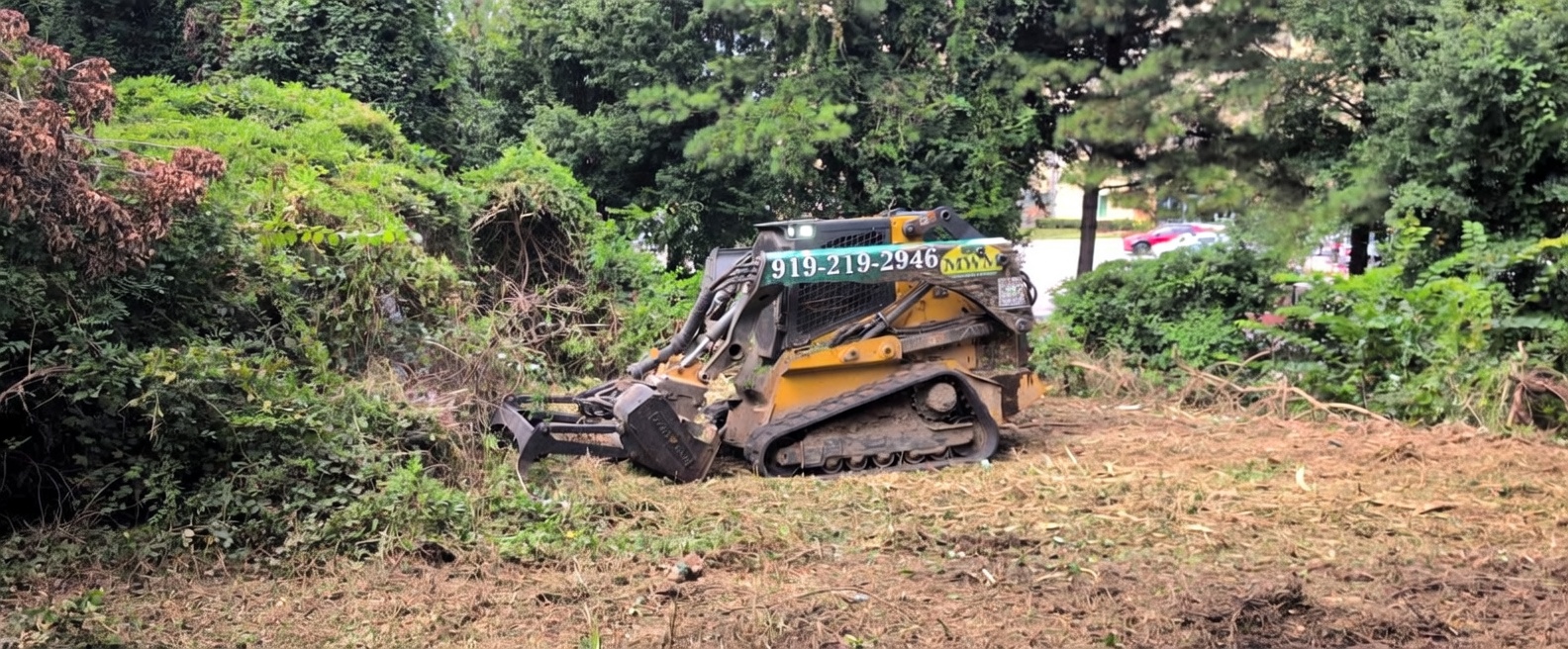
 Bush Hogging vs Forestry Mulching: Which Do You Need?
Bush hogging vs forestry mulching: which handles your overgrown field? Compare costs, vegetation limits, and regrowth for Central NC land. Get a free quote.
 Comparison
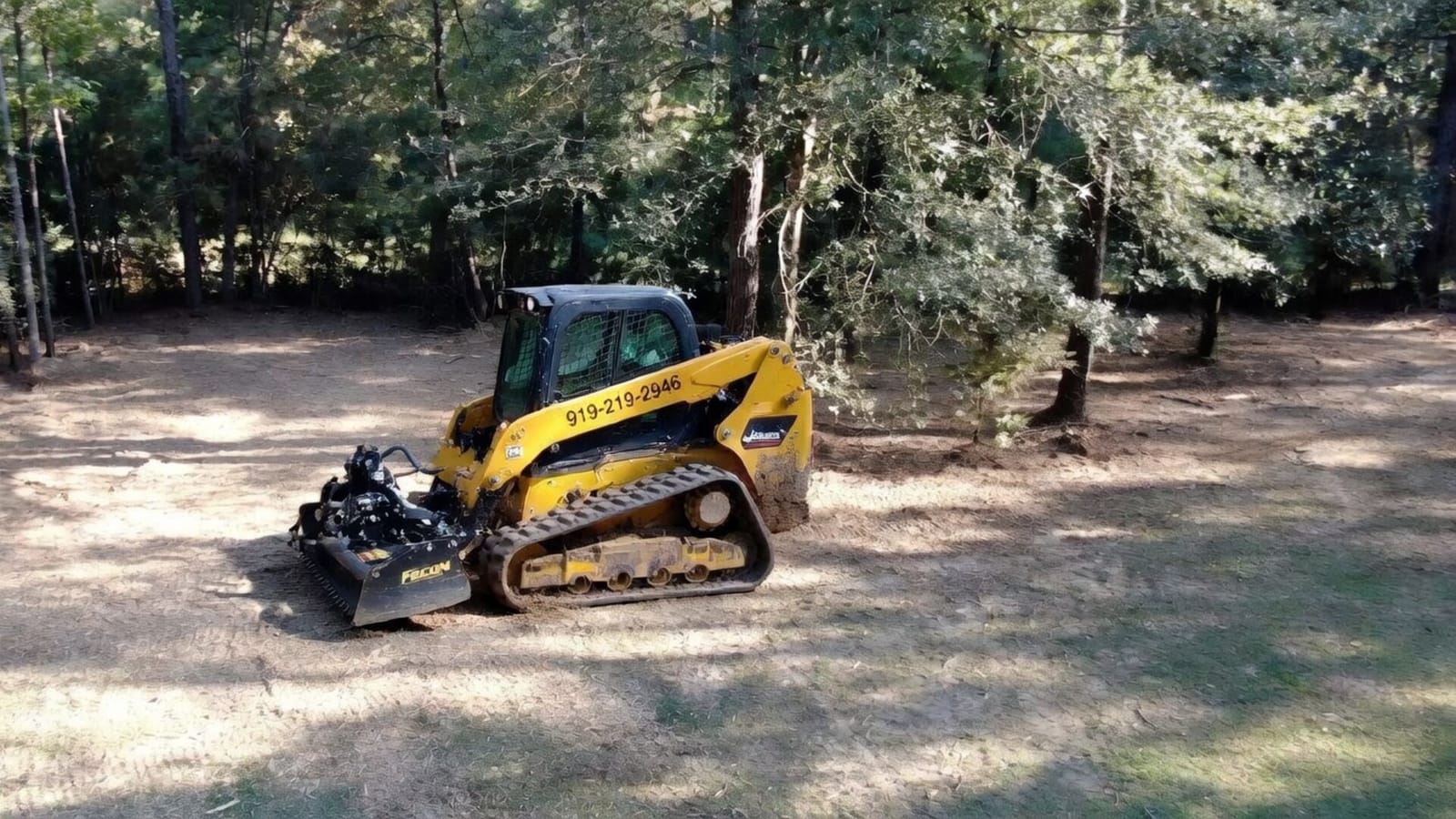
 DIY Land Clearing vs Hiring a Pro in NC
DIY land clearing vs hiring a pro in NC: compare rental costs, time, and safety risks to a flat pro price by job type. Get a free Central NC estimate today.
 Comparison
 Forestry Mulching vs Bulldozer Land Clearing in NC
Forestry mulching vs bulldozer land clearing in NC: compare cost, time, debris, and soil disturbance side by side. Get a free Central NC estimate today.
Ready to Get Started on Your Land?
Get a free, no-obligation estimate for property in Central North Carolina.
Get Your Free QuoteOr call us directly: (919) 219-2946