Can You Build on Mulched Land? What NC Owners Should Know
Cut Brush Team · June 28, 2026 · 8 min read
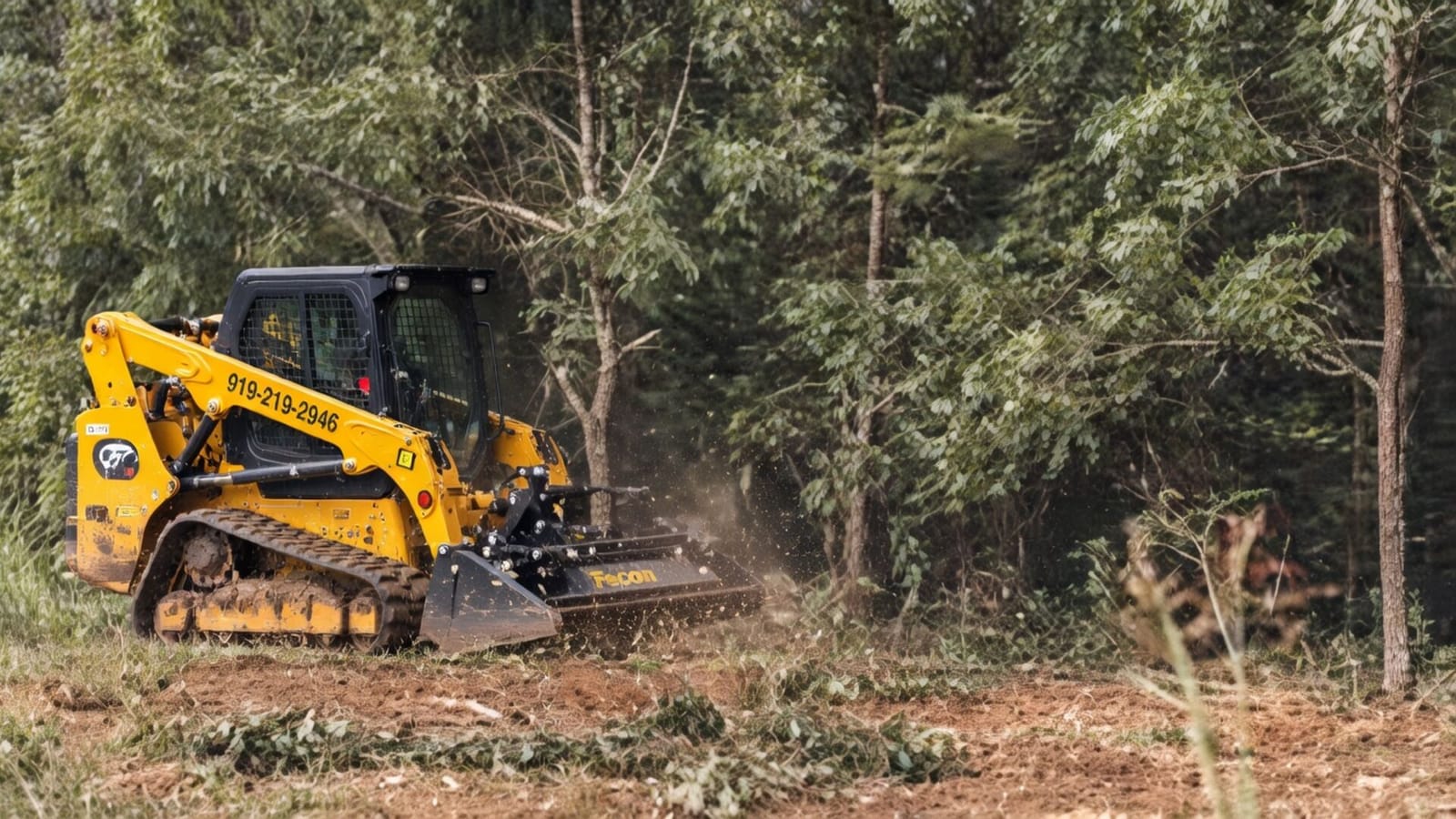
You watched a mulching machine turn two acres of sweetgum, briars, and scrub pine into a clean, walkable lot, and now you are standing on the spot where the house should go. So, can you build on mulched land? Here is the straight answer: mulched land is ready right now for trails, pasture, food plots, and fencing, but a house foundation needs the mulch removed and the pad graded to bare, compacted soil before anyone pours concrete.
That distinction trips up plenty of landowners in Central North Carolina. Forestry mulching is the clearing step. Grading is the site-prep step. They are separate jobs done by different machines, and usually on different weeks of your build schedule.
This guide covers what a mulched lot is ready for the day the machine leaves, why a foundation needs more than mulching, why mulching first still saves money on build lots, and the five steps between fresh mulch and a build-ready pad.
Can You Build on Mulched Land? The Short Answer
You can build on mulched land once the building footprint has been grubbed, stripped of mulch, and graded to compacted soil; mulching clears the lot, but it does not create a foundation-ready pad on its own. For almost every other use, the lot is usable the day the mulcher drives back onto the trailer.
The confusion comes from the word “cleared.” After mulching, the standing brush and trees are gone, ground into a 2–4 inch layer of wood chips spread across the soil. Stumps are ground to grade or just below, and the root systems stay in the ground holding the soil together.
That is exactly the finish you want for recreational and agricultural land. It is also exactly what a grading contractor has to remove from the footprint before a footing or slab goes in. Building on forestry mulched land is a sequencing question, not a yes-or-no question.
What Is Mulched Land Ready for Right Away?
Mulched land is immediately ready for trails, pasture, food plots, fence installation, and general recreation, because none of those uses need bare, compacted subsoil. For these projects the mulch layer is a feature: it suppresses regrowth, holds moisture, and breaks down into topsoil over one to two growing seasons.
Here is how common plans stack up:
| Planned use | Ready on mulch as-is? | What is still needed |
|---|---|---|
| Walking or ATV trails | Yes | Nothing; the mulch is the finished surface |
| Pasture or food plot | Yes | Lime and seed as the mulch breaks down |
| Fence line | Yes | Posts drive straight through the chip layer |
| Gravel driveway | Partially | Strip mulch from the roadbed, compact the subgrade |
| Shed on skids | Partially | A level spot; no footings means no grading |
| Garage, barn, or slab building | No | Grub roots, strip mulch, grade and compact the pad |
| House foundation | No | Full site prep: grubbing, grading, compaction, erosion control |
If your plans live in the top half of that table, you are done when the mulcher leaves. If they live in the bottom half, mulching was step one.
Why Can’t You Pour a Foundation Over Mulch?
Because mulch is organic material that decomposes, and the North Carolina building code requires footings to bear on undisturbed soil or properly compacted fill with the organics removed. Concrete poured over wood chips settles as the chips rot, and a settling foundation cracks.
Three things have to come out of the footprint before it is buildable:
- The chip layer. Those 2–4 inches of mulch compress and decay. Under a slab, that means voids and movement.
- Roots and ground stumps. Mulchers grind stumps to grade, but the root mass below stays put. Under a yard that is fine; under a footing it rots into soft pockets. Crews dig it out, a step called grubbing. We compare the two approaches in forestry mulching vs grubbing and hauling.
- Topsoil and organics. Inspectors check the footing trench before the pour, and a trench with organic material in the bottom fails. That is true in Wake, Durham, and Johnston counties alike.
There is good news underneath all of it: Piedmont red clay compacts into an excellent bearing subgrade once the organics are off. So is mulched land buildable? Under the footprint, yes, after the organics come out and the clay is compacted.
Pro tip: Tell your clearing crew you plan to build before the machine starts. We can flag the building envelope, mulch it tight to the ground, and windrow the chips outside the footprint, which saves your grading contractor hours of stripping work later.
Why Mulch First If You Still Have to Grade?
Because mulching is the cheapest way to clear the whole lot, and you only pay grading prices on the part you actually build on. Grubbing, grading, and hauling are priced for moving dirt and debris; running that process across an entire wooded lot is overkill, and the budget shows it.
Take a typical 3-acre build lot in Wake Forest with a half-acre building envelope. Mulch all three acres for access, views, and the future yard, then grub and grade only the half acre that holds the house, driveway, and septic field. You get a finished-looking property for a fraction of full-site grading.
The mulch blanket also works for you during construction. Because mulching leaves roots in place and soil undisturbed, the surrounding acreage keeps shedding water without washing out while the pad area is torn open. That is why builders use forestry mulching for construction lots across the Triangle: mulch the lot, grade the envelope.
Mulch vs grading for building is not an either-or choice. It is a sequence, and getting the order right is what keeps the site-prep budget sane.
From Mulched Lot to Build-Ready Pad: 5 Steps
Here is the path most Central North Carolina build lots follow after mulching:
- Flag the building envelope. Your surveyor or builder stakes the foundation, driveway, and utility runs so everyone knows which area gets full prep.
- Grub the footprint. An excavator pulls stumps and root mass from under the future foundation and slab areas only.
- Strip the mulch off the pad. The chips get pushed outside the envelope for erosion control or trail surfacing instead of being hauled away.
- Grade and compact. The grading contractor cuts to subgrade, compacts the clay, and sets the pad elevation your builder specified.
- Install erosion control. Silt fence goes around the disturbed area, and if you disturb one acre or more, North Carolina’s Sedimentation Pollution Control Act requires an approved erosion and sediment control plan before that work starts.
A full-service land clearing crew handles the first three steps and leaves the site staged for the grader. For the complete raw-lot-to-footing sequence, including permits and scheduling, see our guide to land clearing for new construction in NC.
Frequently Asked Questions
How long after forestry mulching can you build?
There is no required waiting period. Grading can start the day after the mulcher leaves, because the chips in the footprint get stripped during pad prep anyway. The real schedule drivers are permits and the grading contractor’s calendar; most Central NC lots go from mulched to graded pad within 1–2 weeks once paperwork is in hand.
Does mulch have to be removed before grading?
Only inside the building envelope. Outside the footprint, the chip layer is an asset: it controls erosion through construction, smothers regrowth, and feeds the soil for your future lawn or pasture. Most owners keep it and let it break down in place.
Can you put a driveway on mulched land?
Not gravel laid directly over chips. Strip the mulch from the roadbed and compact the subgrade first, or the gravel will rut and pump through the first wet North Carolina winter. Informal farm paths and ATV routes, on the other hand, run fine on the mulch itself.
Can you build a barn or shop on mulched land?
Any structure with footings or a slab needs the same prep as a house: grub, strip, grade, compact. A shed on skids can sit on a leveled mulched spot with no grading at all. For larger agricultural and business pads, our commercial land clearing service clears and stages sites for exactly this kind of build-out.
Does Cut Brush do the grading too?
We handle the clearing side: mulching, brush removal, grubbing prep, and staging the lot for your grading contractor, and we can point you toward graders we trust. We clear build lots across Durham, Raleigh, and Wake Forest every month. Send a few photos and your parcel address through our contact form and we will tell you exactly what your site needs.
Get Your Mulched Lot Build-Ready in Central North Carolina
So, can you build on mulched land? Yes, once the footprint is grubbed, stripped, and graded, and the rest of the lot is usually better off staying mulched. The trick is sequencing the work so you only pay heavy site-prep prices where the building actually sits.
Cut Brush clears and stages build lots across Raleigh, Durham, Wake Forest, and Youngsville, and we will give you a straight answer on what your specific site needs before anything gets scheduled. Estimates are free and we respond within 24 hours. Request a free estimate or call (919) 219-2946 and tell us what you are planning to build.
Related Services
Learn more about the services mentioned in this article.


Serving These Areas
We provide land clearing services in these towns and surrounding areas.
More from the Cut Brush Blog
Keep reading for more tips and guides on land clearing.
 Guide
Guide Invasive Plants in Central NC: A Landowner's Guide
Every major invasive plant in Central North Carolina in one guide: ID each one fast, learn what to fight first, and see removal costs. Get a free estimate.
Guide Clearing Wet Land in NC: Soggy Ground vs Wetland Rules
Clearing wet land in NC: how to tell soggy ground from a protected wetland, best season to work creek bottoms, equipment, and costs. Get a free quote today.
Guide Clearing Sloped Land in NC: Methods, Costs, and Safety
Clearing sloped land in Central NC takes the right machine and an erosion plan. See slope limits, costs, and mulching vs dozers. Get a free estimate today.
Ready to Get Started on Your Land?
Get a free, no-obligation estimate for property in Central North Carolina.
Get Your Free QuoteOr call us directly: (919) 219-2946