What to Do With Land Clearing Debris in NC: 5 Options
Cut Brush Team · July 12, 2026 · 10 min read
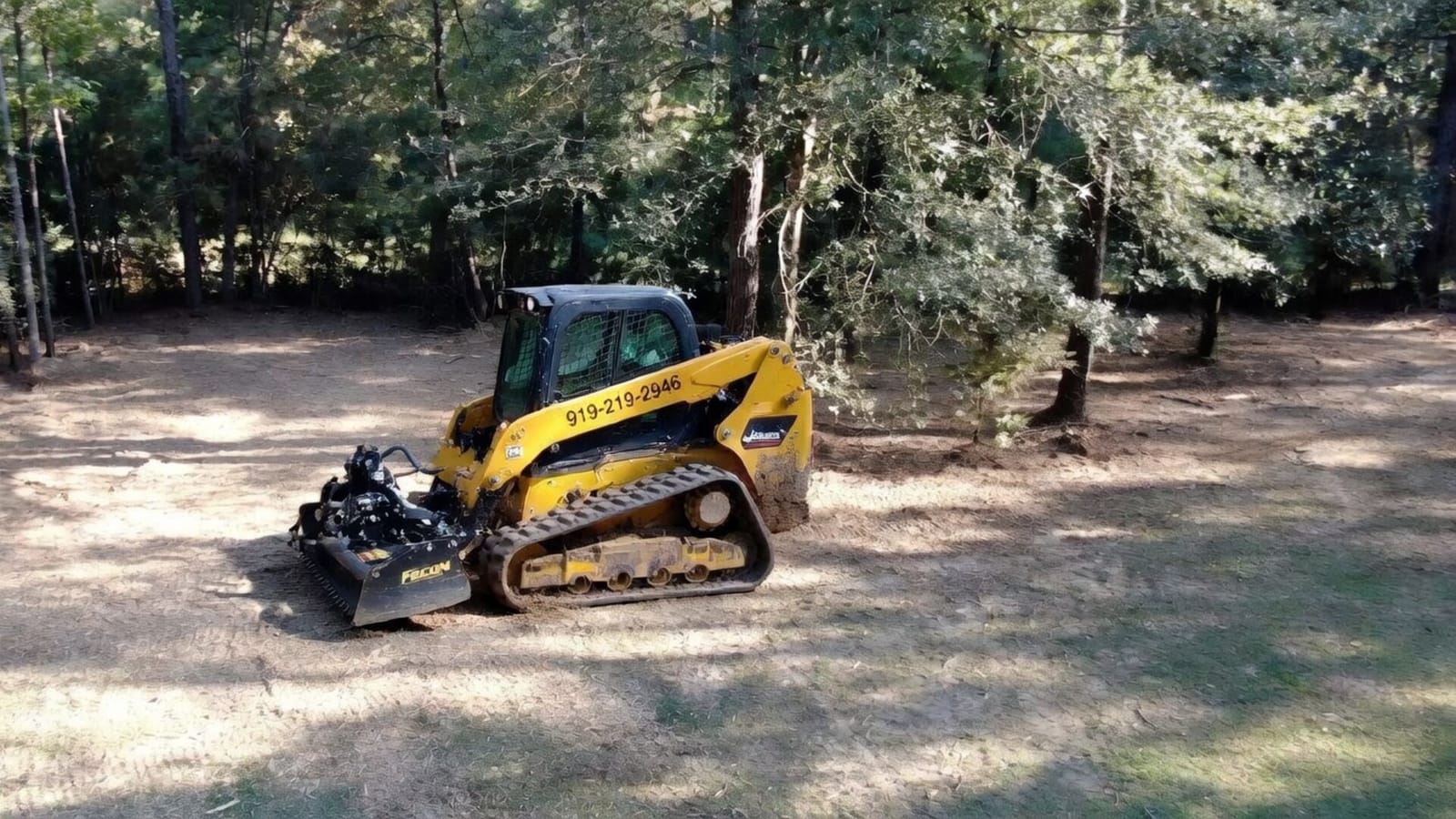
Cutting the trees and brush down is the easy part. Figuring out what to do with land clearing debris is where most Central North Carolina landowners get stuck, because a single wooded acre produces 30 to 60+ cubic yards of trunks, limbs, and brush once it hits the ground. Leave it in a heap and you’ve traded an overgrown lot for a debris mountain that kills the grass under it and shelters copperheads all summer.
The debris plan also drives the price. Two clearing quotes on the same lot in Clayton or Garner can differ by thousands of dollars, and the gap is almost never the cutting. It’s what happens to the material afterward.
You have five realistic options in Central North Carolina: mulch it in place, burn it on site, haul it to a yard waste or LCID facility, rent a dumpster, or stack it for wildlife. This guide walks through each one, what it costs, what the rules are, and which properties each option actually fits.
Option 1: Mulch It in Place (the Central NC Default)
Mulching in place means the debris problem never exists, because forestry mulching grinds trees and brush into wood chips right where they stand. There are no piles to move, no trucks to load, and no permit to pull. The chips stay on the ground as a 2–4 inch layer that suppresses regrowth and holds our red clay in place through Piedmont thunderstorms.
This is the default answer for most residential lots we clear, from quarter-acre backyards in Raleigh to 10-acre tracts out toward Zebulon. Disposal cost: zero. The mulch is part of the service, not a line item, which is a big reason mulching runs $1,000–$3,500 per acre while grub-and-haul clearing starts around $4,000.
The trade-off is that the material stays on your land. If the site needs bare, root-free dirt for a foundation or septic field, mulch-in-place isn’t the final step. We break down that decision in detail in our comparison of forestry mulching vs grubbing and hauling, so this guide won’t rehash it. Short version: mulch what will stay green, haul what will carry concrete.
Option 2: Can You Burn Land Clearing Debris in NC?
Yes, you can burn land clearing debris in much of rural Central North Carolina, but only vegetation that grew on that property, only with a permit, and only outside town limits in most cases. North Carolina regulates open burning through two agencies at once, and both sets of rules apply to your pile.
The NC Forest Service side: any open burning more than 100 feet from an occupied dwelling requires a burn permit. Permits are free and issued online in minutes at the NC Forest Service burn permit portal. Permits stop being issued during burn bans, and bans are not rare: a statewide ban ran from late March until early May 2026 during that dry spring.
The NC Division of Air Quality side sets the conditions for land clearing burns:
- Burn only vegetation grown on the site: no lumber, trash, tires, or hauled-in debris
- Keep piles at least 500 feet from any occupied home or building not on your property, unless the occupants sign written waivers
- Stay at least 250 feet from public roads when the wind blows toward the road
- Burn only between 8 a.m. and 6 p.m., and only on Code Green or Code Yellow air quality days
- Don’t burn at all where your town offers curbside yard waste pickup
That last rule is why burning is effectively off the table inside Raleigh and Garner. Both towns run curbside yard waste collection, and Raleigh’s code flatly prohibits burning limbs and brush without special permission from the Fire Code Official. The pattern holds across Wake County municipalities generally: in town, the answer is no.
Step outside the town limits and the picture flips. On rural acreage in Johnston County beyond the Clayton line, or Franklin County land outside Youngsville, burning is legal, common, and cheap: the permit is free and a well-managed pile burn might cost $300–$1,500 per acre if a contractor stages and tends it for you.
Pro tip: Call your county fire marshal the morning you plan to burn, even with a permit in hand. County-level bans and Code Orange air days can shut down burning overnight, and the fine for burning during a ban lands on the property owner, not the contractor.
Option 3: Haul It to a Yard Waste or LCID Facility
Hauling means loading the debris into dump trucks and paying a facility to take it, and it’s the most expensive option on this list. The destination is usually an LCID landfill (Land Clearing and Inert Debris), a state-permitted site that accepts stumps, logs, limbs, and brush but no household trash or construction waste.
Here’s the math that surprises people. A wooded Central NC acre fills 3–5 dump truck loads. Tipping fees at Triangle-area LCID and yard waste facilities run roughly $30–$50 per ton, and green wood is heavy, so trucking plus disposal typically adds $1,000–$3,000 per acre on top of the cutting itself. That’s the invisible half of a big land clearing quote.
When is it worth it? When the material genuinely has to leave: building pads, septic fields, driveways, and small in-town lots where there’s no room to burn, mulch, or stack. For a pickup-truck-sized load, homeowners inside Raleigh can also use the city yard waste center for a modest per-load fee, which beats any commercial option at that scale.
If you’re getting quotes, make contractors state the debris plan in writing. A low bid that says nothing about haul-off usually means the piles stay behind. Our land clearing pricing guide shows what full-service numbers should look like so you can spot a quote that quietly skipped disposal.
Option 4: Rent a Roll-Off Dumpster for Small Jobs
A roll-off dumpster works for small, DIY-scale debris, and falls apart fast beyond that. A 30-yard container in the Triangle runs about $450–$700 per haul, and that sounds reasonable until you hit the weight limit.
Most rentals cap you at 2–4 tons. Freshly cut oak and sweetgum are so dense that a 30-yard box maxes out on weight when it’s barely half full of logs, and overage fees of $60–$100 per extra ton stack up quickly. Stumps with clay-caked root balls are even worse.
The dumpster sweet spot looks like this:
- Brush, briars, and saplings from a quarter acre or less: light material, one box
- Fence line and property edge cleanup you’re doing by hand over a weekend
- Mixed cleanup jobs where old fencing or junk is tangled in with the vegetation, since LCID sites won’t take the non-plant material
For anything bigger, one of the other four options wins on cost. If your project is really overgrowth rather than standing timber, our brush clearing crew can usually mulch the whole problem for less than a multi-dumpster DIY weekend, and our guide to clearing an overgrown lot in NC walks through when DIY makes sense.
Option 5: Pile It for Wildlife Habitat
A brush pile is the zero-cost option, and on the right property it’s genuinely the best one. Stacked correctly, land clearing debris becomes shelter for rabbits, quail, songbirds, and the small game that hunting properties across Franklin and Johnston counties are managed for.
Doing it right takes about ten minutes of planning:
- Build piles roughly 10–15 feet across and 4–6 feet tall, with larger logs crisscrossed at the base and finer brush layered on top
- Place them along field edges and wood lines, not in the middle of open ground
- Keep them at least 50 feet from the house, because the same pile that shelters rabbits also shelters mice and the snakes that hunt them
- Expect them to settle and rot down over 5–10 years in our humid climate, feeding the soil as they go
This option fits large rural tracts: recreational land near Youngsville, hunting acreage east of Zebulon, hobby farms outside the Clayton limits. It does not fit a half-acre subdivision lot, and most HOAs around Raleigh and Garner explicitly prohibit standing debris piles. Check your covenants before you stack.
What Does Land Clearing Debris Disposal Cost per Option?
Debris disposal costs anywhere from nothing to $3,000+ per acre in Central North Carolina, depending entirely on which option your property allows. Here’s the side-by-side:
| Debris option | Typical Central NC cost | Best for | Rules and permits |
|---|---|---|---|
| Mulch in place | $0 extra (included in mulching) | Most residential and recreational land | None |
| Burn on site | $0–$1,500/acre (free permit; cost is labor) | Rural acreage outside town limits | NC Forest Service permit + DAQ setbacks; banned in most town limits |
| Haul to LCID/yard waste facility | $1,000–$3,000/acre | Build sites that need bare dirt | Facility tipping fees, $30–$50/ton |
| Roll-off dumpster | $450–$700 per 30-yd haul | DIY brush jobs under 1/4 acre | 2–4 ton weight limits |
| Wildlife brush pile | Free | Large rural tracts, hunting land | HOA covenants; keep piles away from structures |
Two takeaways from that table. First, the cheapest options (mulching, wildlife piles) keep the material on your land, and the expensive ones pay to move it. Second, your address decides as much as your budget: an in-town Garner lot realistically has two options, while a farm outside Youngsville has all five.
Frequently Asked Questions
Do I need a permit to burn brush on my property in NC?
Yes, if the fire is more than 100 feet from an occupied dwelling, you need a free NC Forest Service burn permit, available online in minutes. Land clearing burns also have to meet Division of Air Quality setbacks: 500 feet from occupied structures off your property and 250 feet from roads when wind blows toward them. Burning permits are separate from clearing permits; for the clearing side, see our guide to land clearing permits in Wake County.
Can I burn land clearing debris inside Raleigh or Garner?
No, as a practical matter. State rules prohibit open burning of yard debris anywhere curbside pickup is offered, and both towns provide it. Raleigh additionally requires special permission from the Fire Code Official for any debris burning. In-town lots almost always end up with mulch-in-place or haul-off instead.
How much does it cost to have land clearing debris hauled away?
Plan on $1,000–$3,000 per acre for loading, trucking, and tipping fees at a Triangle-area LCID or yard waste facility. A wooded acre produces 3–5 dump truck loads, and green hardwood is billed by the ton. Our land clearing pricing guide shows how disposal fits into a full project budget.
What do land clearing companies do with the debris?
Most Central NC clearing companies either mulch it in place or haul it, and the method should be spelled out in your quote. We default to forestry mulching because it eliminates disposal cost entirely, and we bring in haul-off only for footprints that need bare dirt. If a quote doesn’t name a debris plan, ask before you sign.
Is it OK to just leave debris piles in the woods?
On large rural acreage, yes, if you shape them into proper wildlife brush piles along field edges and keep them well away from buildings. On smaller lots around Clayton or inside any HOA, loose debris piles invite complaints, rodents, and covenant violations. If the pile would be visible from the house or the street, pick another option.
Does the mulch layer left after clearing cause termite problems?
No, not when it’s handled normally. Termites live in moist soil, not in surface chips, and a 2–4 inch mulch layer spread across a lot doesn’t create the deep, wet wood-to-structure contact they need. The standard precaution is simple: keep mulch pulled back about 12–18 inches from your foundation, same as landscaping mulch.
What to Do With Land Clearing Debris: Decide Before the First Tree Drops
The right answer to what to do with land clearing debris is decided by your property, not your preference: in-town lots in Raleigh and Garner point to mulching or haul-off, rural land outside Clayton and Youngsville opens up burning and wildlife piles, and the budget swing between options can hit $3,000 an acre. Lock the debris plan in before the machines show up, and the rest of the project gets simpler and cheaper.
Cut Brush clears land across Central North Carolina, and every quote we send names the debris plan and its cost up front. Call us at (919) 219-2946 or request a free quote with a few photos and your rough acreage. We’ll recommend the cheapest debris option your property legally allows, and we respond within 24 hours.
Related Services
Learn more about the services mentioned in this article.


Serving These Areas
We provide land clearing services in these towns and surrounding areas.
More from the Cut Brush Blog
Keep reading for more tips and guides on land clearing.
 Guide
Guide Invasive Plants in Central NC: A Landowner's Guide
Every major invasive plant in Central North Carolina in one guide: ID each one fast, learn what to fight first, and see removal costs. Get a free estimate.
 Guide
Guide Clearing Wet Land in NC: Soggy Ground vs Wetland Rules
Clearing wet land in NC: how to tell soggy ground from a protected wetland, best season to work creek bottoms, equipment, and costs. Get a free quote today.
Guide Clearing Sloped Land in NC: Methods, Costs, and Safety
Clearing sloped land in Central NC takes the right machine and an erosion plan. See slope limits, costs, and mulching vs dozers. Get a free estimate today.
Ready to Get Started on Your Land?
Get a free, no-obligation estimate for property in Central North Carolina.
Get Your Free QuoteOr call us directly: (919) 219-2946