
How to Clear an Overgrown Lot in NC (Step by Step)
Cut Brush Team · July 1, 2026 · 8 min read

The lot was clear once. Now it’s a wall of privet, briars, and pine saplings, and you can’t see thirty feet into it. Maybe you inherited the property, bought a neglected lot, or just let a few summers get away from you. Either way, figuring out how to clear an overgrown lot comes down to the same six steps, whether the property sits in Raleigh, Durham, or out past Garner.
Here’s the good news: an overgrown lot looks worse than it is. Central North Carolina growth is fast but predictable, and once you know what’s actually out there, the path from jungle to usable land is straightforward. This guide walks through every step: assessing the lot, checking the rules, picking the right clearing method, dealing with invasives, and keeping the land clear afterward.
How Do You Clear an Overgrown Lot?
To clear an overgrown lot, you assess what’s growing, check permit and HOA rules, match the clearing method to the vegetation, remove invasive plants at the root, and then seed or maintain the cleared ground. Skipping a step is how lots end up half-cleared, or covered in privet again 18 months later.
Here are the six steps to clear land the right way:
- Walk the lot. Find your property lines, identify what’s growing, and call NC 811.
- Check the rules. Permits, HOA covenants, and watershed buffers come before any cutting.
- Pick the method. Brush hogging for light growth, forestry mulching for woody growth.
- Kill invasives at the root. Privet, kudzu, and honeysuckle resprout if you only cut them.
- Plan for the cleared ground. Bare NC red clay erodes fast; seed it or mulch it.
- Maintain it. One or two mow passes a year keeps the lot from reverting.
The rest of this guide breaks down each step with the details that matter in Central North Carolina.
Step 1: Walk the Lot Before You Touch a Machine
Start with a slow walk of the entire property, ideally in winter or early spring when you can actually see through the growth. You’re looking for four things: property corners, what’s growing, what’s hiding, and how wet the ground is.
Find your lines first. Overgrown lots in older Raleigh and Durham neighborhoods often have fences and survey pins buried under decades of growth. Clearing two feet onto a neighbor’s parcel is an expensive mistake.
Identify the vegetation. Tall fescue and briars are a mowing job. Chinese privet thickets, sweetgum saplings, and pines up to 8 inches around are a mulching job. If you’re wondering how to clear a wooded lot full of mature hardwoods, that’s selective work: most of those trees are worth keeping.
Look for what’s hiding. Neglected lots collect old fencing wire, dumped appliances, tires, and concrete. Any of these can damage clearing equipment, so flag them before work starts.
Pro tip: Call NC 811 at least three full working days before any work that disturbs soil. It’s free, and overgrown lots across Central North Carolina hide more than brush: we regularly uncover well heads, septic lids, and buried utility lines that haven’t seen daylight in a decade.
Step 2: Check Permits and HOA Rules First
Most small-lot clearing in North Carolina needs no permit, but you have to confirm that before cutting, not after. The statewide baseline under NC’s Sedimentation Pollution Control Act requires an approved erosion-control plan for any land disturbance of 1 acre or more.
Local rules can be tighter. Durham County requires a permit for disturbance over 12,000 square feet, roughly a quarter acre. Properties in the Falls Lake and Jordan Lake watersheds carry 50-foot stream buffers, and clearing inside town limits can trigger separate tree or zoning ordinances. Our guide to land clearing permits in NC by county breaks down every threshold in the region.
Don’t forget the HOA. If the lot sits in a planned community, the architectural committee usually wants a written request before any clearing, even of a vacant lot you own. Two weeks of paperwork beats a fine and a forced replanting.
What’s the Best Way to Clear an Overgrown Lot?
The best way to clear an overgrown lot depends on how thick the growth is: brush hogging handles grass and light brush, forestry mulching handles dense woody growth and small trees, and full clearing with grubbing is only needed when you’re building on the spot. Matching the method to the vegetation is the single biggest factor in what overgrown lot cleanup costs in NC.
| What’s growing | Best method | Typical cost |
|---|---|---|
| Tall grass, weeds, briars | Brush hogging (mowing) | $75 – $400 per acre |
| Vines and saplings under 3 in. | Brush clearing / light mulching | $500 – $1,500 per acre |
| Dense brush, trees up to 8 in. | Forestry mulching | $1,500 – $2,500 per acre |
| Building site, stumps and roots out | Clearing + grubbing | $3,000 – $6,000 per acre |
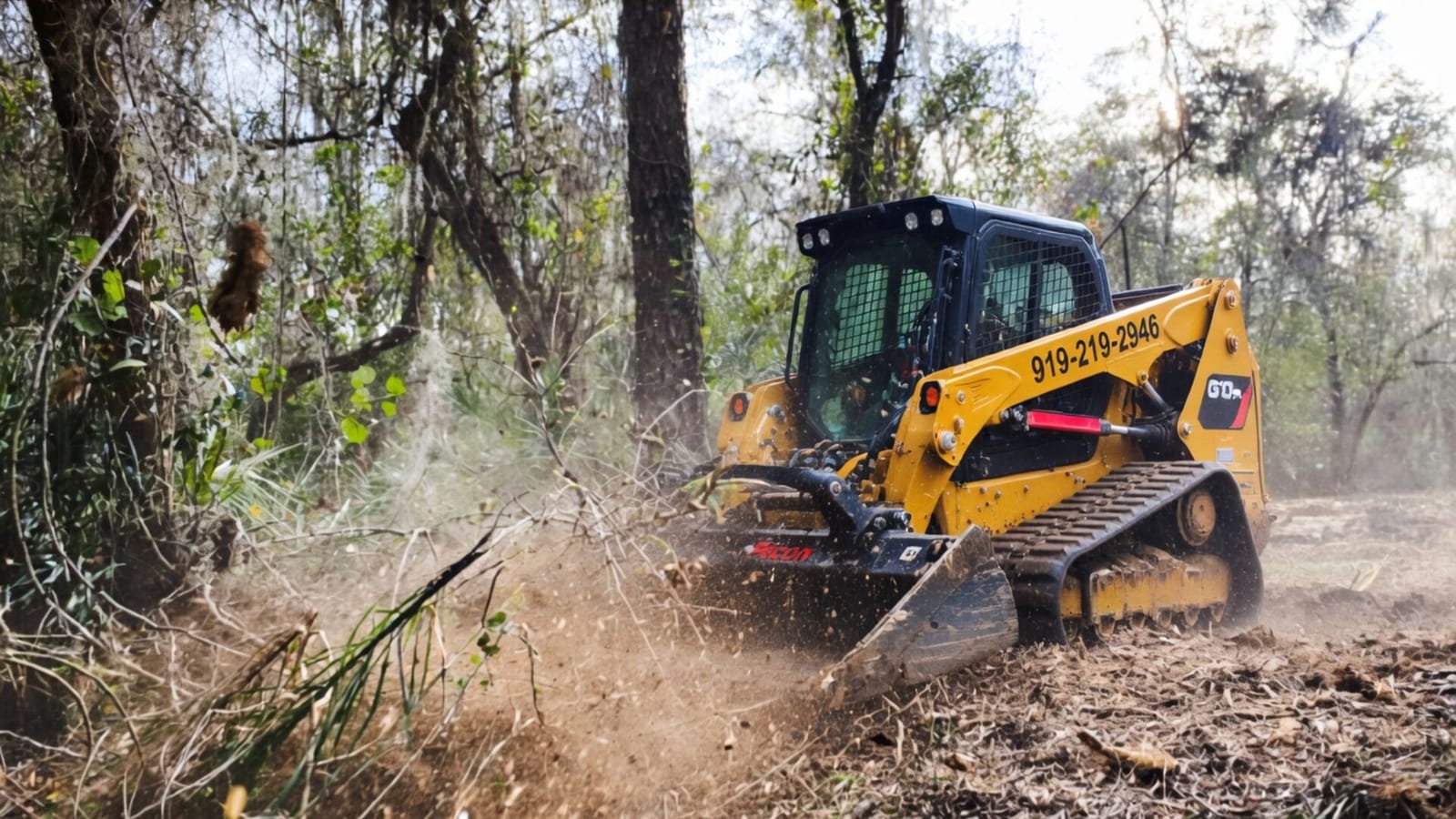
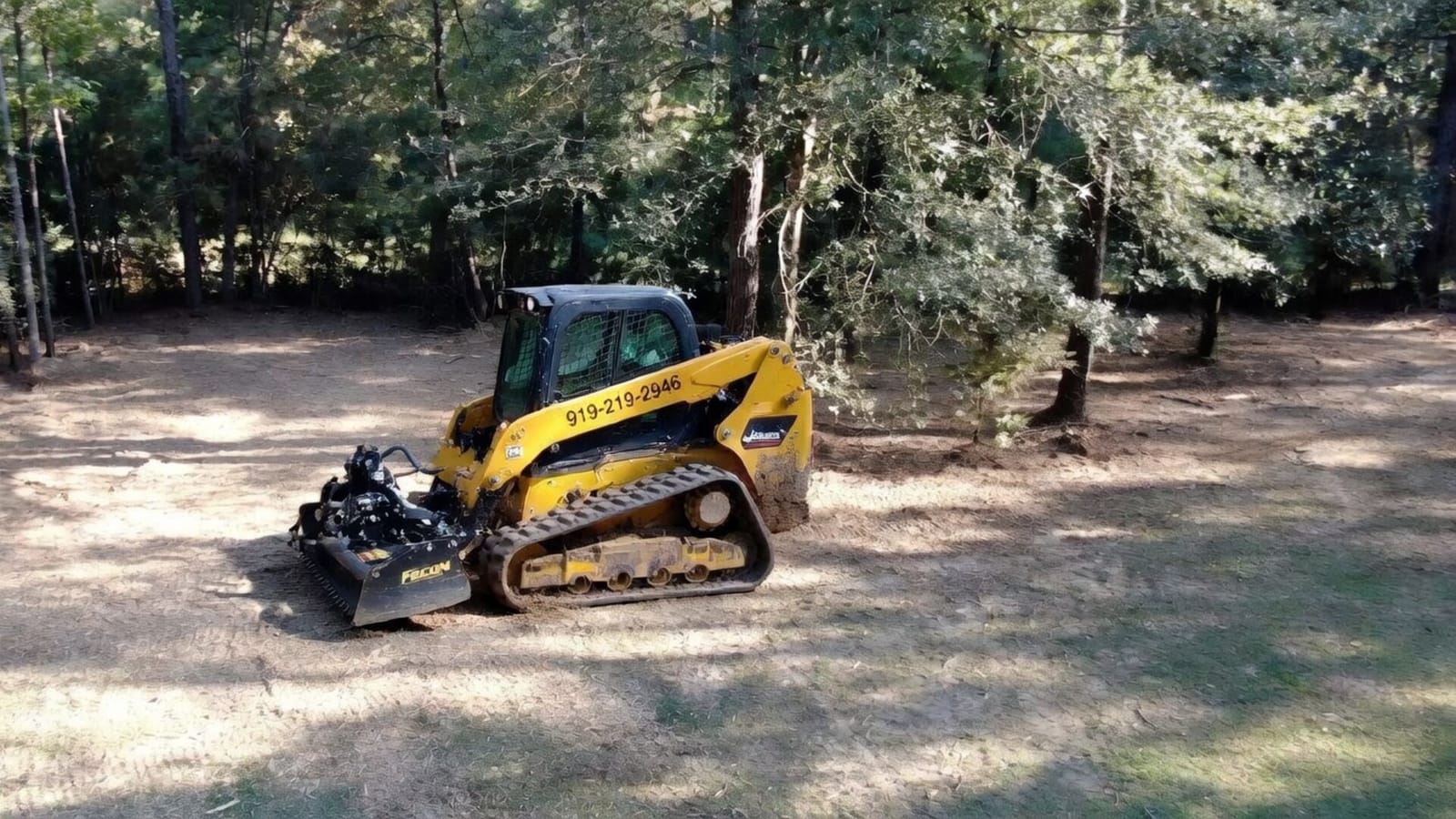
For most truly overgrown lots in Central North Carolina, forestry mulching is the sweet spot. One machine grinds the brush, saplings, and small trees into mulch on-site in a single pass: no burn piles, no haul-off trucks, and the mulch layer protects the soil. If you’re weighing budgets, our full land clearing cost per acre guide covers 2026 pricing in detail.
Hand tools still have a place. A chainsaw and a string trimmer can handle clearing an overgrown yard of a quarter acre or less, if the growth is mostly soft. Past that, machine work gets the job done in hours instead of weekends.
Step 4: Kill the Invasives at the Root, Not the Stem
Cutting an invasive plant without addressing the root system guarantees it comes back. The three you’ll meet on almost every overgrown lot in the Triangle are Chinese privet, Japanese honeysuckle, and, on the worst lots, kudzu. All three resprout aggressively from cut stumps and root crowns.
The sequence that works: mulch or cut the standing growth, then treat or re-cut the resprouts over the following seasons. Privet stumps need cut-stump treatment within minutes of cutting. Kudzu crowns need repeated knock-downs over at least two growing seasons.
This is where a lot of DIY clearing falls apart, and it’s exactly what our invasive species removal service is built around. A lot that’s mulched and then followed up stays clear. A lot that’s only cut once turns back into a privet wall by the second summer.
What Should You Do After the Lot Is Cleared?
Seed it or cover it, fast. Bare NC red clay sheds water instead of absorbing it, and a cleared lot left naked through a Piedmont thunderstorm season will rut and erode. If the lot was mulched, the mulch layer already has you covered: it holds the soil and breaks down into organic matter over 6 to 18 months.
If you cleared to bare dirt, sow tall fescue in September or October, or a quick summer cover like millet if you cleared in spring. A soil test through the local extension office costs almost nothing and tells you how much lime the clay needs, which around here is usually plenty.
Then put the lot on a maintenance schedule. One or two mowing passes a year is the difference between a clear lot and starting this whole process over in five years. Light annual regrowth costs a fraction of what you just paid; we keep dozens of properties from Raleigh to Clayton on simple once-a-year plans.
When should you call a pro instead of renting equipment? If the growth is taller than your head, the stems are thicker than your wrist, the lot is bigger than a half acre, or the ground slopes toward a creek, hire it out. Rental mulchers run $500 to $1,000+ per day before the learning curve, and watershed buffer violations are far more expensive than a clearing invoice.
Frequently Asked Questions
How much does it cost to clear an overgrown lot in NC?
Most overgrown residential lots in Central North Carolina cost $500 to $2,500 per acre to clear, depending on how woody the growth is. Light brush sits at the low end; dense privet and pine saplings push toward the top. The fastest way to get a real number is to request a free estimate; our crew will contact you to discuss the lot.
Can I clear an overgrown lot myself?
Yes, if the growth is light and the lot is small. A chainsaw, string trimmer, and a few weekends can handle a quarter acre of soft growth. Dense woody brush, anything over a half acre, or sloped ground near a stream is machine work, and usually cheaper to hire out than to rent for.
Do I need a permit to clear an overgrown lot?
Usually not for lots under 1 acre, but check your county first. North Carolina requires an erosion-control plan at 1 acre of disturbance, Durham County requires a permit above 12,000 square feet, and watershed buffers near Falls Lake and Jordan Lake apply at any size. HOA approval is a separate box to check.
How long does it take to clear an overgrown lot?
Most overgrown lots under an acre clear in a single day with a forestry mulcher. Dense growth, wet ground, or hidden debris can stretch it to two. Hand-clearing the same lot typically takes several full weekends.
Should I brush hog or mulch an overgrown lot?
Brush hog it if the growth is grass, weeds, and briars you could push through on foot; mulch it if it’s woody. Lots around Durham and Garner that have sat for 5+ years almost always need brush clearing or mulching first, then brush hogging becomes the cheap annual maintenance pass afterward.
Ready to Clear Your Overgrown Lot?
Now you know how to clear an overgrown lot: walk it, check the rules, match the method to the growth, kill the invasives, and protect the cleared ground. The only step left is deciding who runs the machine.
Cut Brush clears overgrown lots across Central North Carolina, from Raleigh and Durham to Garner, Clayton, and Knightdale. We’ll walk the property with you, flag anything that needs a permit, and give you a straight price before any work starts.
Get your free estimate or call (919) 525-3950. We respond within 24 hours, and most lots are cleared within a day or two of starting.
Related Services
Learn more about the services mentioned in this article.


Serving These Areas
We provide land clearing services in these towns and surrounding areas.
More from the Cut Brush Blog
Keep reading for more tips and guides on land clearing.
 Cost Guide
 Underbrush Removal Cost in NC: Clear Brush, Keep Trees
Clearing underbrush under trees you keep starts around $1,200 a project in Central NC; bigger wooded tracts are mulched from around $1,500 an acre.
Guide Falls Lake Watershed Land Clearing: 1-Acre Rule by County
Since 6 October 2025, a house or duplex under 1 acre in the Falls Lake watershed needs no Falls stormwater plan. Buffers, erosion and Durham rules still apply.
 Guide
Guide What to Do With Land Clearing Debris in NC: Rules and Costs
Mulch it, burn it or haul it. NC allows a land clearing fire 500 feet from neighbors' homes with no ban on; a Wake County debris yard posts $30 a pickup load.
Let's Get Started on Your Land
Request a free quote. We'll contact you to discuss your property, access, and the clearing you need.
Get a Free QuoteOr call us directly: (919) 525-3950