Clearing Land on the Lake Gaston Shoreline (NC Rules)
Cut Brush Team · September 17, 2026 · 8 min read
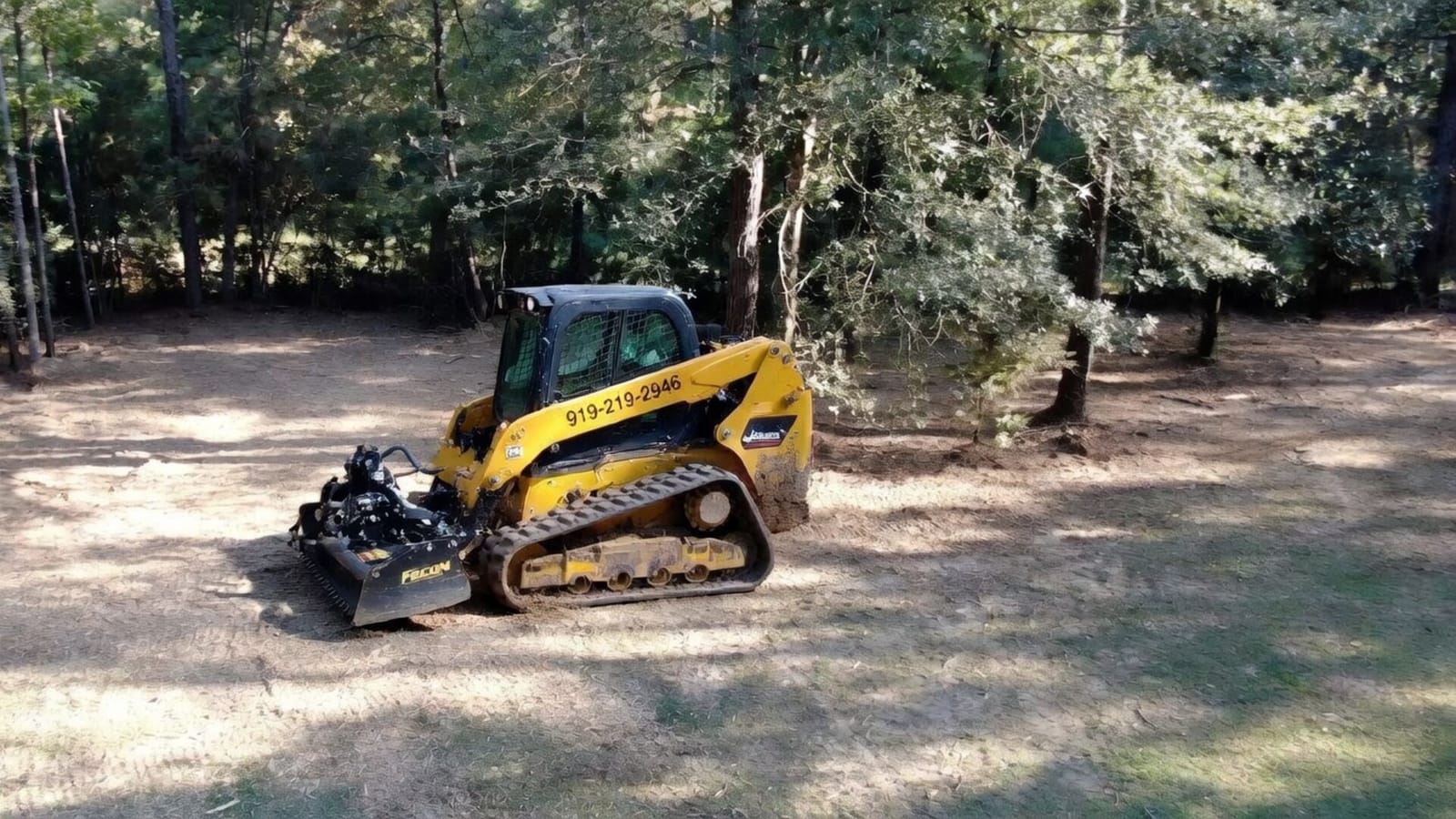
If you own on Lake Gaston, you own less than your survey suggests. Dominion Energy owns a strip of land running up from the water, and on that strip the county permit rules that govern clearing everywhere else in North Carolina decide nothing at all. Clearing land on the Lake Gaston shoreline is governed by Dominion’s Shoreline Management Plan, and the plan is far more specific than most owners expect. This guide covers what you may cut, what you may not, which tools are allowed, and what it costs when someone gets it wrong.
Where does my property actually end?
Dominion’s ownership runs up from the maximum normal water level, which is a fixed elevation of 200 feet above mean sea level on Lake Gaston. That is a surveyed elevation, not the water line you see on the day you walk it.
The lake moves. Normal fluctuation runs between 199.0 and 200.0 feet, and between 1 March and 15 June it can run as high as 201.0 feet. So a June walk hides ground that a February walk shows you. If you are trying to understand your own boundary, go and look at low water in late winter.
Warren County’s own planning department points Lake Gaston shoreline construction permitting at Dominion rather than handling it in house. That is worth sitting with for a second: the county is telling you the shoreline is not its decision.
The four shoreline classes, which decide everything
Dominion sorts the shoreline into four classifications, and yours determines what is possible:
- General Development Areas – the most permissive, and where most subdivided lake frontage sits.
- Limited Use Areas – trimming only, no removal.
- Sensitive Areas – no aesthetic cutting at all.
- Special Management Areas – mapped separately by Dominion, with the tightest access rules.
Nothing about this is visible from the water and none of it is printed on your deed. Finding out which class you are in is the first move, before you price any work or call anybody.
What can I cut in a General Development Area?
This is the rule most Lake Gaston owners actually need, and it is unusually precise.
In a General Development Area, the band that may be partially cleared is between 2½ feet and 20 feet above the ground. Dominion calls this the Cleared Area. Tree limbs inside that band may come out. What stays is the ground cover and low shrubs below it, which hold the bank and feed wildlife, and the tree canopy above it.
It is a vertical window, not a clear cut. And that turns out to be lucky, because the layer that closes off a lake view is exactly that middle band. The mature canopy is not usually what is blocking the water; the ten years of seedlings, saplings and vine growth underneath it is.
One standing condition applies to any permitted clearing: tree density and canopy cover comparable to what existed before the work must be maintained.
Can I clear underbrush and briars?
In General Development Areas, yes, with pre-approval. Dominion provides for the removal of undesirable underbrush such as briars and poison ivy, but the approval has to come before anything is cut.
Two limits worth knowing. Mast producing vegetation over 1 foot in diameter, measured 2 feet above the ground, needs specific pre-approval on top of that. Mast producing means it makes the acorns and nuts wildlife eat. And no underbrush may be cleared in Special Management Areas at all.
Anything removed outside the Cleared Area has to be replaced with plants from Dominion’s approved plant list.
Can I take down a tree on the shoreline?
Generally no, and this is where most owners are surprised.
Nowhere on Dominion’s property may a tree be removed without Dominion’s consent, in any classification. Consent is generally given only where the tree is dead, damaged, diseased, or presents a genuine safety or property hazard. “It is blocking my view” is not on that list.
If a permitted access path has to remove a tree greater than 6 inches in diameter measured 5 feet up from the base, the replacement rate is three 15-gallon trees from Dominion’s approved planting list for every one taken.
What about Limited Use and Sensitive Areas?
Much less.
In a Limited Use Area, trimming may be allowed inside a 100-foot-wide zone where Dominion’s property is less than 150 feet deep, and even then nothing may be trimmed within 6 feet of the water line. No shrub or tree may be removed for aesthetic purposes at all.
In a Sensitive Area, no vegetation may be trimmed or removed for aesthetic purposes, full stop. For lake access clearing, Sensitive Areas permit no vegetation removal of any kind.
Can a forestry mulcher work on the shoreline?
Mostly no, and any contractor who tells you otherwise has not read the plan.
Use of heavy equipment on Dominion’s property is strongly discouraged. It is considered only where safety is the issue, and it will not be considered at all in a Sensitive or Limited Use Area. Where tracked equipment is approved in a General Development Area, matting must be laid anywhere the tracks will run, access is through a single point inside the 12-foot construction opening, and you owe Dominion an additional drawing showing where the matting goes.
The default tools on that strip are chain saws and brush saws. Three more restrictions apply there: the natural leaf bed may not be disturbed, debris may not be burned on Dominion’s property, and no herbicide may be applied. Anything beyond hand-held tools needs a Dominion representative to approve it first.
The honest version: a lake job is two jobs. Above the line, on land you own, forestry mulching is the right method and none of this applies. Below the line it is hand work, flagged and approved in advance. Anyone quoting one price to “clear it down to the water” is quoting something they cannot legally do.
How the approval actually works
Dominion asks for three copies of a drawing showing your clearing plan. For vegetation work, that means a drawing or aerial photo showing the area to be trimmed, the trees proposed for removal, and any landscaping to be installed with a species list.
Then everything you intend to remove gets flagged with high-visibility surveyor’s tape and left standing. Dominion inspects and photographs the site before removal, and photographs it again at final inspection to confirm only the approved vegetation came out.
What happens if I clear without permission?
It is expensive, and it is structured to be.
The minimum administrative fee for a Shoreline Management Plan violation is $1,000. Administrative costs can include staff time, attorney’s fees, expert witnesses and consultants on top of that.
Separately, damages for unauthorized vegetation removal are assessed on the ornamental value or the timber value of what was taken, whichever is greater. Dominion may also withhold licence approval for structures on the affected land until it is satisfied the impacts have been mitigated, which in practice means your dock application stops moving.
None of this is fixed by replanting after the fact.
What if the previous owner already cleared past the line?
Raise it early rather than at closing. On the neighbouring Kerr Lake, which is Army Corps rather than Dominion, unauthorized clearing can be recorded against the property deed at the county courthouse, and most lenders will not close a loan while that condition exists. The principle is the same on any regulated shoreline: an old clearing job becomes the next sale’s problem.
A call to Dominion, or a walk with a contractor who reads the plan, is a much cheaper first move than finding out during a title search.
What does shoreline-area clearing cost?
Work on your own side of the boundary prices like any other clearing job in North Carolina. Our land clearing cost per acre in NC guide covers the bands, and density, tree size and access set the number as they always do.
The lake-specific variables are access and equipment. A lot with a single narrow approach, or one where matting is required, costs more than an open upland acre. The only way to know is to walk it.
The short version
- Dominion owns up from 200 feet above mean sea level, not from the water line you can see.
- Your shoreline classification decides everything, and it is not on your survey.
- In a General Development Area you may clear the band between 2½ and 20 feet, keeping ground cover and canopy.
- No tree comes off Dominion’s property without consent, and consent is largely limited to dead, damaged, diseased or hazardous trees.
- Underbrush removal needs approval before cutting, and none is allowed in Special Management Areas.
- Heavy equipment is strongly discouraged and ruled out in Sensitive and Limited Use areas.
- Getting it wrong starts at a $1,000 minimum fee plus damages at ornamental or timber value.
Requirements vary by parcel, scope and jurisdiction. Cut Brush can flag the common considerations and help you identify the right office, and the governing authority or an appropriately qualified professional makes the final determination.
If your Lake Gaston lot has closed in and you want to know what is genuinely cuttable before you pay anyone, our lakefront and shoreline clearing service starts with the boundary rather than the quote. For the county side of the question, see our Warren County land clearing guide. Request a free estimate and we will walk it with you.
Related Services
Learn more about the services mentioned in this article.

Forestry Mulching
Single-step land clearing that mulches trees and brush in place.

Invasive Species Removal
Identify and remove invasive plants that threaten native ecosystems.

Selective View Clearing
Open the view, keep the trees. We mark mature hardwoods to spare before any cut.
Lakefront & Shoreline Clearing
Your deed stops before the water. We find the line first, then clear your side of it.
Serving These Areas
We provide land clearing services in these towns and surrounding areas.
More from the Cut Brush Blog
Keep reading for more tips and guides on land clearing.
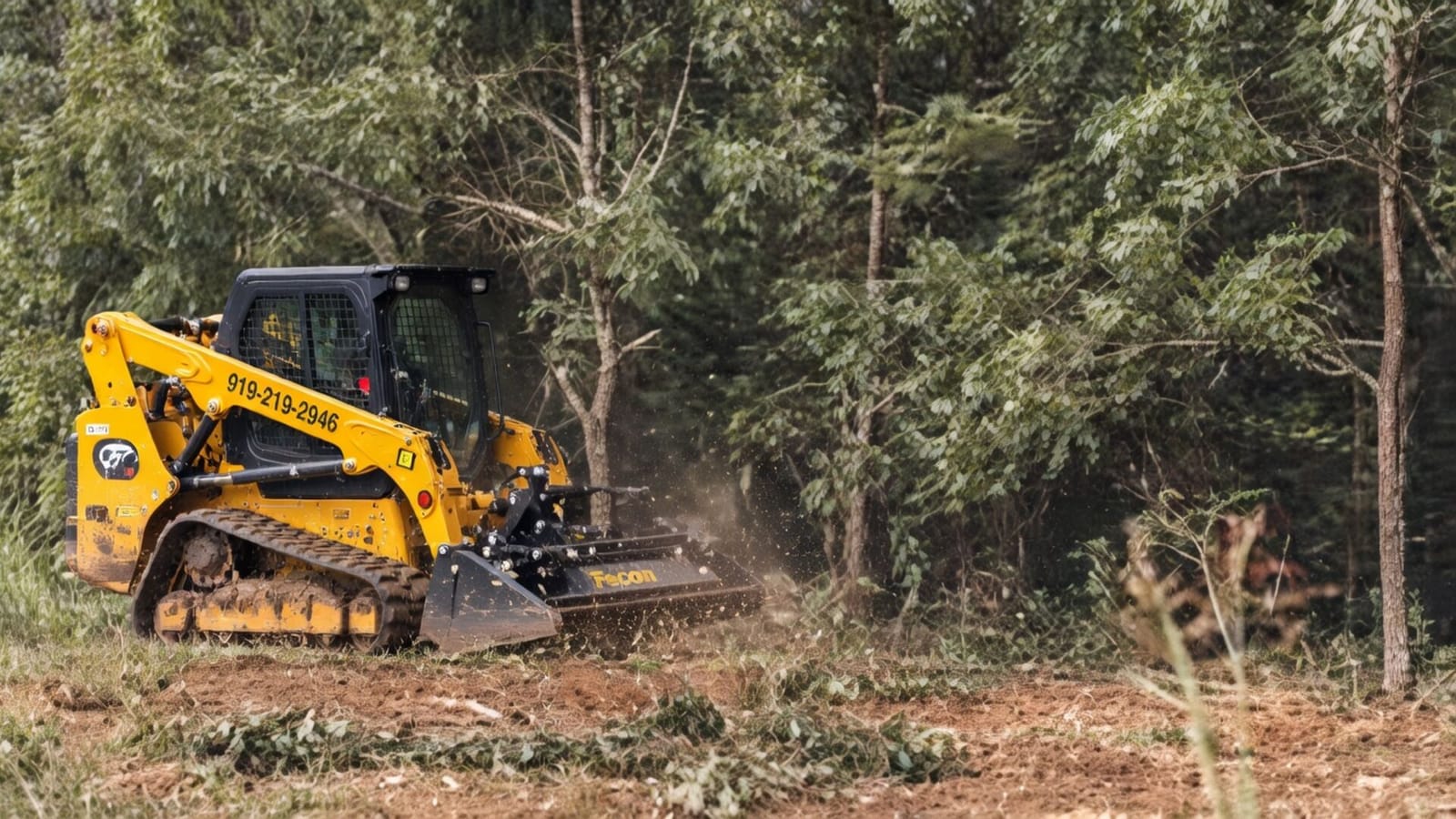 County Guide
 Land Clearing in Warren County, NC (2026 Guide)
Land clearing in Warren County, NC: the state one acre threshold, why the lake shoreline is not the county's call, costs, and methods for Warrenton, Norlina and Littleton.
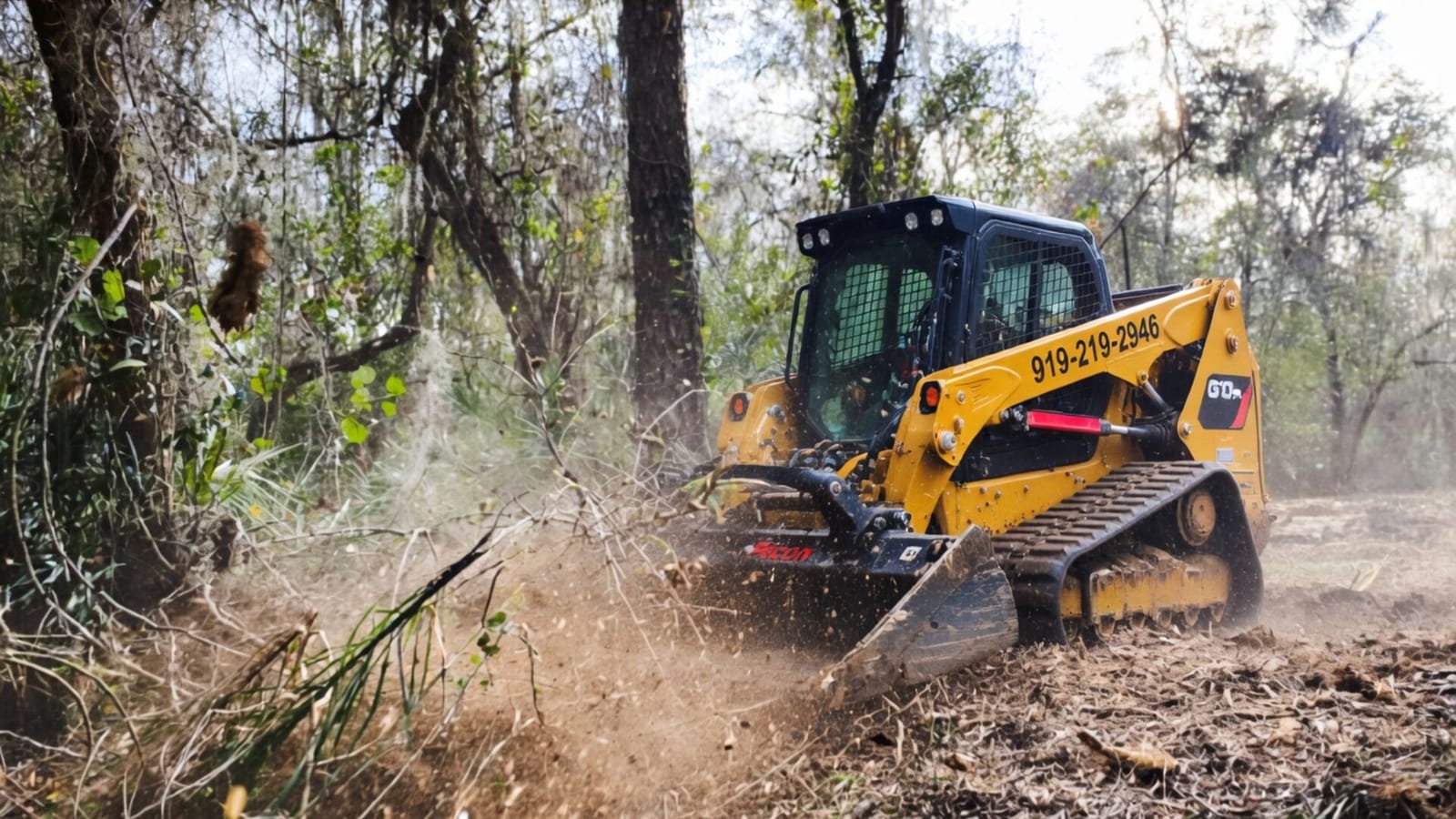 Guide
Guide Clearing Land in the Falls Lake Watershed (NC Rules)
Clearing land in the Falls Lake watershed in NC: riparian buffers, permit thresholds by county, and methods that keep you compliant. Get a free estimate today.
Guide Clearing Land for Horses in NC: From Woods to Pasture
Clearing land for horses in NC: acreage per horse, toxic trees to remove, stump grinding, and seeding timelines for new pasture. Get a free estimate today.
Ready to Get Started on Your Land?
Get a free, no-obligation estimate for property in Central North Carolina.
Get Your Free QuoteOr call us directly: (919) 525-3950