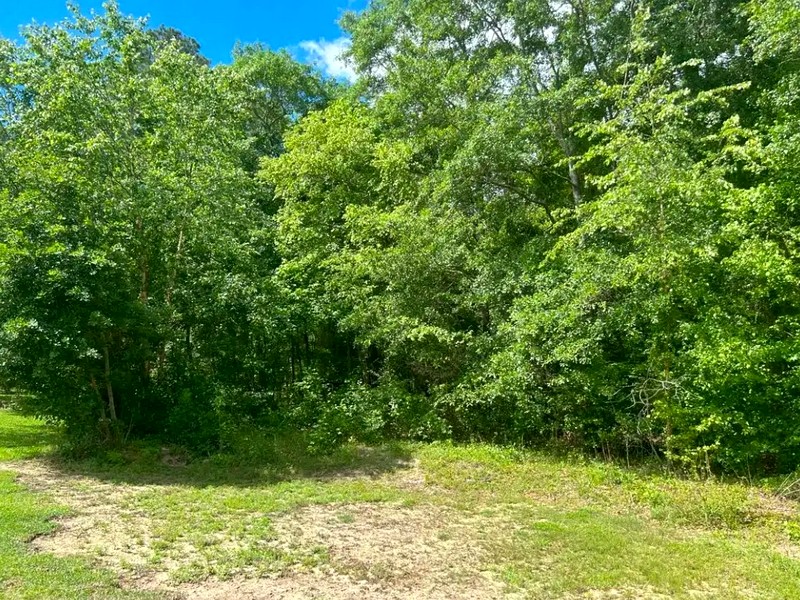
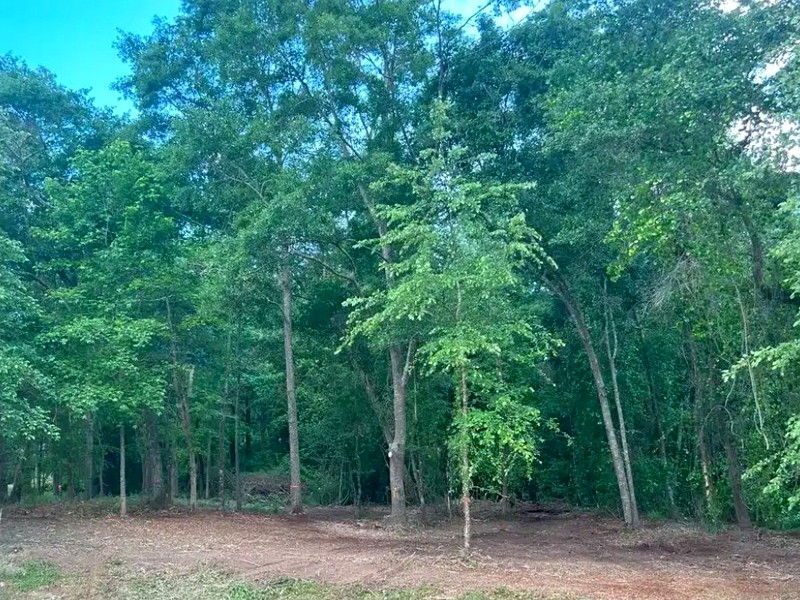
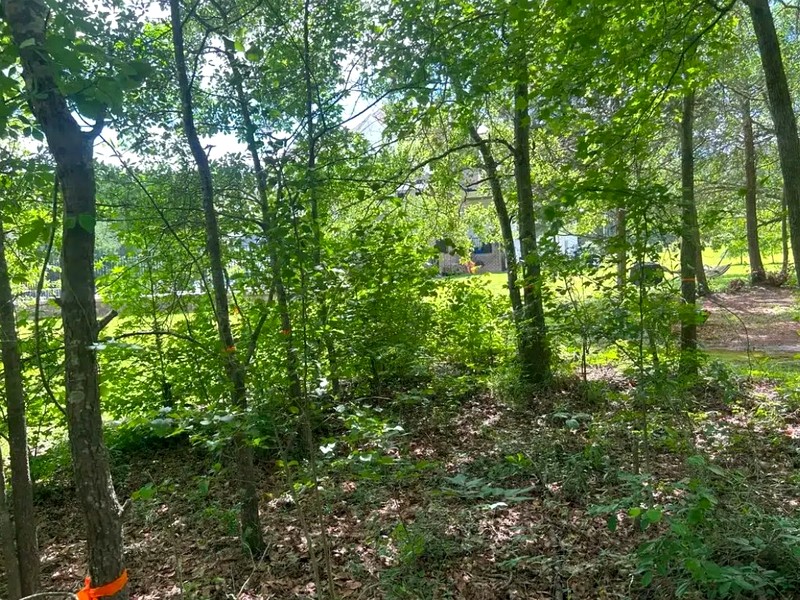
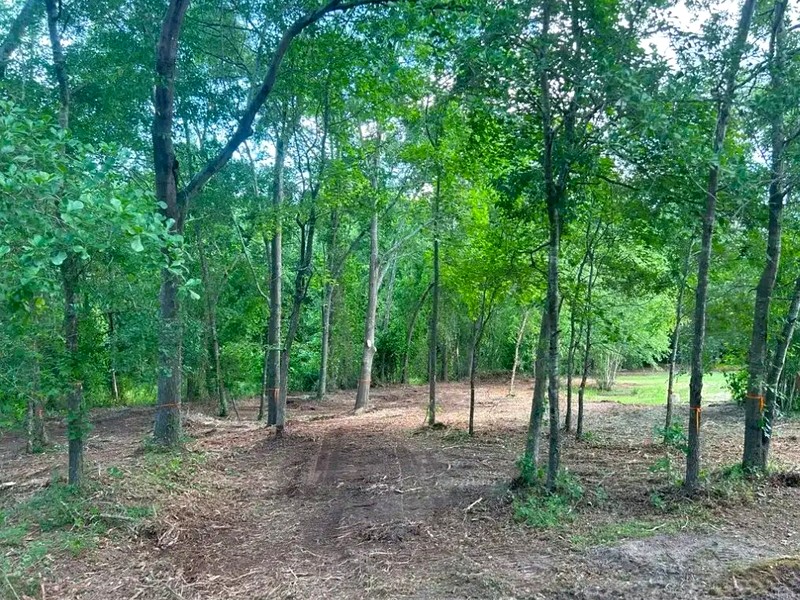
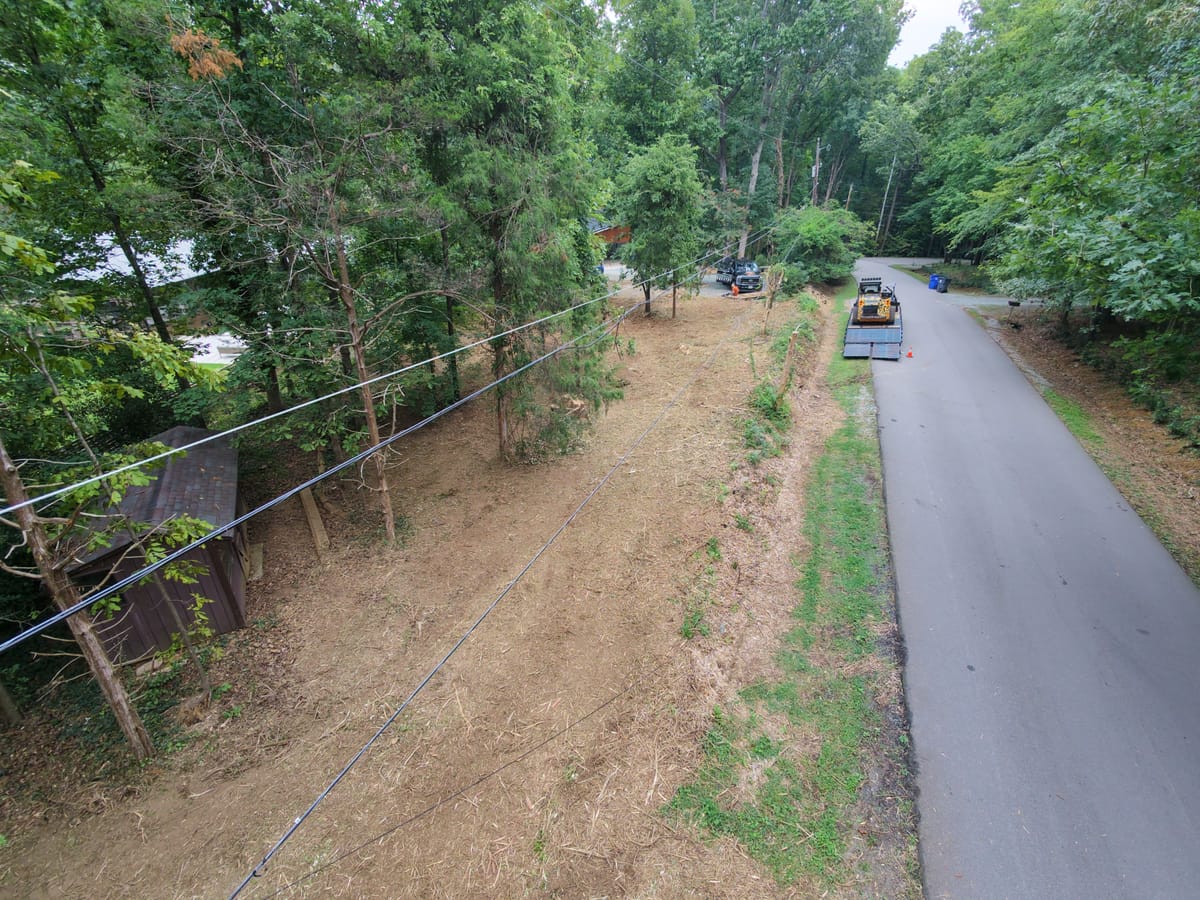
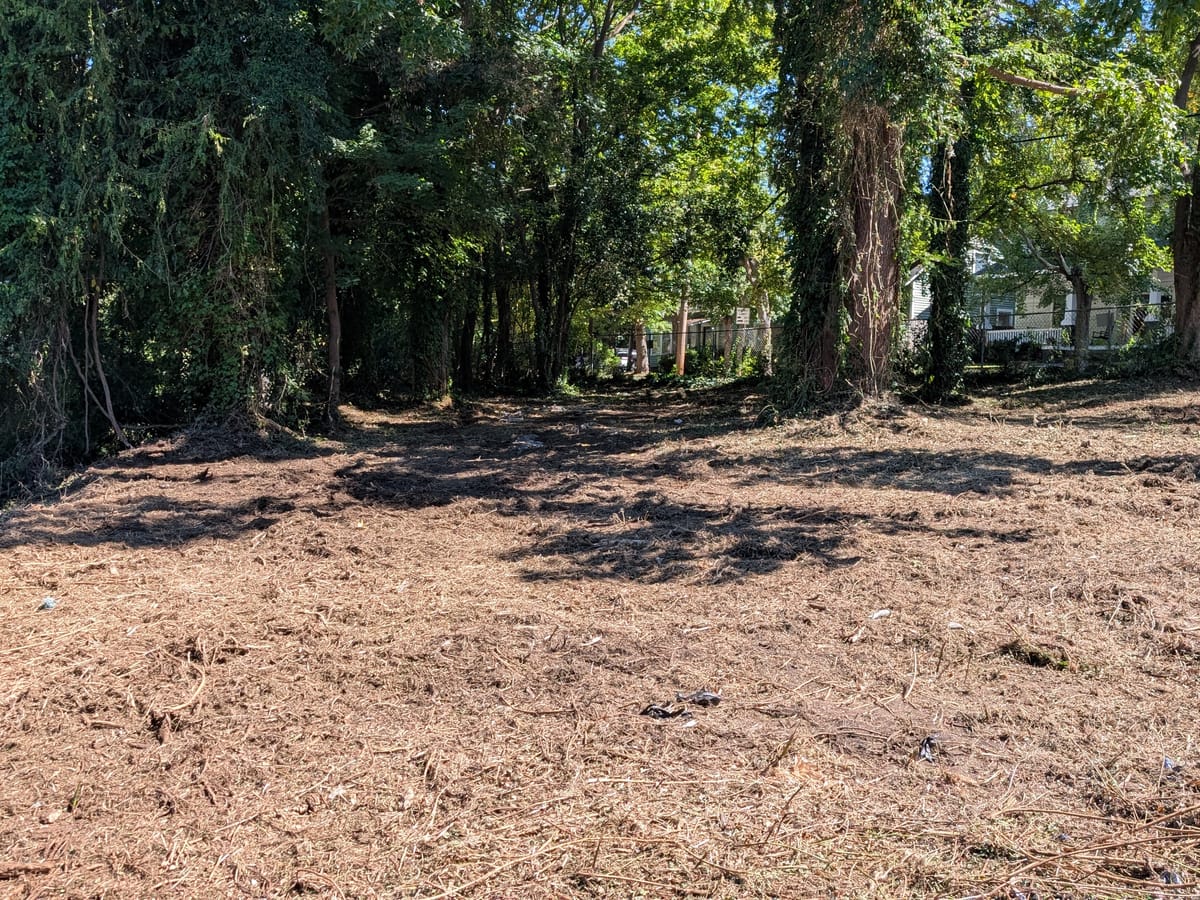
Lot clearing and brush removal in Fayetteville, NC depend on which side of the Cape Fear River the lot is on: sandy Sandhills ridges to the west, flatter and wetter Coastal Plain ground to the east. A wooded lot off Cliffdale Road that has filled in with scrub oak and greenbrier, a back yard in Haymount that swallowed the fence, and a vacant lot left behind after a Fort Bragg move all need a different plan. You may also have learned that you cannot simply pile the brush and burn it inside the city. Cut Brush grinds trees and undergrowth into mulch right where they stand, so there is nothing to haul, nothing to burn, and nothing left to rot in a corner of the yard.
Land Clearing in Fayetteville NC: Two Kinds of Ground in One City
West of downtown, much of the soil is deep, loose sand. Well-drained sand often firms up sooner after a storm than the clay to the north, though low spots and heavier soils vary from lot to lot, so we check the ground on each parcel before scheduling. The catch is that bare sand moves. Strip it clean with a dozer and the next downpour carries it into the street, the storm drain, or your neighbor's yard.
East of the Cape Fear, toward Eastover and the river bottoms, the ground turns loamier and wetter, with sweetgum, red maple, and water oak crowding the low spots. Cross Creek and its branches cut right through the older parts of the city, and the land along them stays damp most of the year. We plan each Fayetteville job around which side of the river it is on, because the right approach on a Lake Rim sand ridge is the wrong one in a creek bottom.
The Fayetteville Lots We Clear Most
Lots that sat empty between assignments
Fayetteville counted just over 208,000 residents in the 2020 census, and families rotate in and out with every Fort Bragg assignment cycle. A rental or vacant lot that sat through one owner's tour of duty can be head-high in sweetgum saplings and blackberry cane by the time the next buyer walks it. These jobs are usually about getting the lot back to something a buyer, a surveyor or a new tenant can walk: saplings and cane cut down and ground in place, the lot lines opened, and the mulch left to keep the sand from blowing or washing.
Back lots in Haymount and Westover
The older neighborhoods have the biggest trees and the worst vines. Privet and Chinese wisteria climb into the canopy behind houses in Haymount and Westover, and English ivy runs up the trunks. Brush removal here is selective: the vines and understory come out, the old oaks and longleaf stay, and nothing is scraped down to bare ground.
Wooded homesites on the west side
Around Lake Rim, Kings Grant and the Cliffdale Road corridor, newer houses back up to wooded strips of loblolly, longleaf and turkey oak, and the remaining open parcels are sand ridges grown up in scrub oak. Clearing a homesite there means opening the house pad and driveway path while keeping the longleaf worth keeping. On this ground the mulch layer matters more than anywhere else we work, because it is what stops the sand from moving after the next storm.
Creek bottoms east of the river
Along Cross Creek, toward Eastover and in the low ground off the Cape Fear, parcels grow up in sweetgum, red maple and water oak over wet soil. We schedule these for a dry stretch, keep the machine off the softest ground, and expect them to land at the upper end of the price range.
What Lot Clearing and Brush Removal Cost in Fayetteville
Fayetteville jobs are priced the same way as the rest of our North Carolina work. Land clearing and forestry mulching start around $1,500 an acre, and most residential clearing lands between $1,500 and $4,500 an acre. A back yard brush removal job starts around $1,200 a project, fence line clearing around $500, and brush hogging a grown-up field on the edge of the county from about $75 an acre.
Within that range, the side of the river decides a lot. Understory between pines on a dry west side sand ridge sits near the bottom. A Haymount back lot full of wisteria and ivy under big oaks takes longer per square foot because of the selective work. A wet creek bottom east of the river sits near the top. Our pricing page lists every service, and the Cumberland County land clearing guide has the cost table for the whole county.
The City's Clear-Cutting Permit and Tree Rules
Fayetteville is stricter about trees than most owners expect. The city's development code requires a Clear-Cutting Permit before clear-cutting or significant land-disturbing work that would affect healthy trees on land that does not yet have an approved site plan, subdivision plan, or building permit. The permit is reviewed by city staff, and it asks you to keep a natural buffer along your property lines unless you plan to file a site plan within six months.
Specimen trees get extra protection. A tree 30 inches in caliper or larger counts as a specimen tree: removing one means having it surveyed and making a written case, and if the city approves it, a fee per caliper inch is paid into the city's tree fund ($50 an inch on the current city fee schedule). Land in agricultural, horticultural or forestry present-use value is exempt if a vegetated perimeter buffer is kept, as are dead, dying and severely diseased trees. When more than one acre is disturbed, North Carolina also requires an approved erosion control plan, reviewed by NC DEQ because neither Cumberland County nor the city runs its own erosion control program, and construction on an acre or more, or on a smaller lot within a larger development plan, falls under a separate state stormwater permit. Our Cumberland County land clearing guide walks through every step.
How a Fayetteville Clearing Job Goes
First, the request. Send us the street and a line about what is growing there and what the lot is for. Owners who have already moved away can do all of this from wherever they are now.
Then a call. We go over the ground, which trees you want kept, how a machine gets in, and whether the city's Clear-Cutting Permit or a specimen tree applies, and settle on a flat price.
The work. A typical residential lot takes one to three days. Vines and understory are ground in place and the chips stay on the sand or loam as cover.
The finish. We check the cleared lot against what was agreed, so it is ready to sell, build on or seed.
Lot Clearing Services We Bring to Fayetteville
Selective work suits many lots inside the city. With forestry mulching, our operator can take out the scrub oak, sweetgum, and vine tangle while leaving the longleaf and the big shade oaks you want to keep. The work follows the approved scope and any applicable tree requirements, including a Clear-Cutting Permit where one is needed. The mulch layer it leaves on top of the sand helps hold the soil, which lowers the risk of washout compared with bare ground, though slope, drainage and heavy rain still matter on each parcel.
For backyards and lot edges, our brush clearing service handles privet, greenbrier, and blackberry thickets without scraping the topsoil. Owners with wisteria or kudzu climbing into their pines should look at invasive species removal, and anyone with a lot on the drier west side can ask about defensible space clearing to open up the fuel between the house and the woods.
Our own crew covers Fayetteville as part of our home North Carolina service area. We respond within 24 hours, most projects are scheduled within one to two weeks, and every quote is a flat price. Request your free quote for lot clearing or brush removal in Fayetteville NC.