
Brush Hogging Cost Per Acre in NC (2026)
Cut Brush Team · June 25, 2026 · 7 min read

That field behind your house was mowed pasture a few years ago. Now it’s chest-high broomsedge, blackberry canes, and the first wave of sweetgum seedlings, and you’re trying to figure out what it costs to knock it all back down. Here’s the short version: brush hogging cost per acre in NC typically runs $75 to $400, making it one of the cheapest ways to reclaim an overgrown field in Central North Carolina.
The catch is that quotes still land all over that range, and some fields have grown past the point where a brush hog is even the right tool. This guide breaks down real 2026 brush hogging prices by field condition, explains per-acre versus hourly rates, and shows you exactly where mowing ends and land clearing begins.
How Much Does Brush Hogging Cost Per Acre in NC?
Brush hogging costs $75 to $400 per acre in North Carolina in 2026, with most fields landing between $100 and $250. The price tracks one thing above all else: how long it’s been since the field was last mowed.
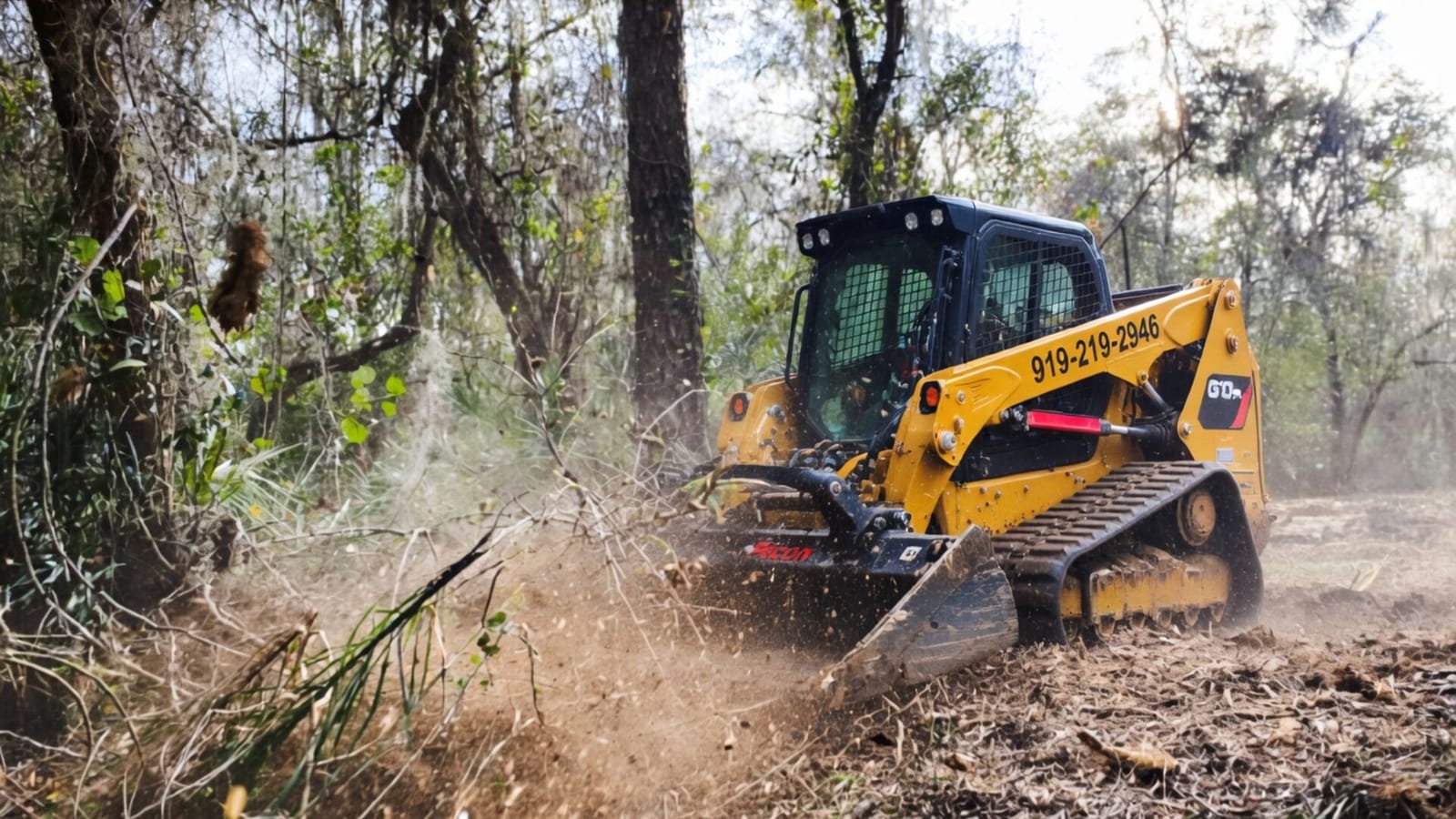
Whether your contractor calls it brush hogging, bush hogging, or rotary cutting, it’s the same service – a tractor or skid steer pulling a heavy-duty rotary mower through growth that would destroy a regular lawn mower. Here’s what we see on actual fields across Central North Carolina:
| Field Condition | Cost Per Acre | What It Looks Like |
|---|---|---|
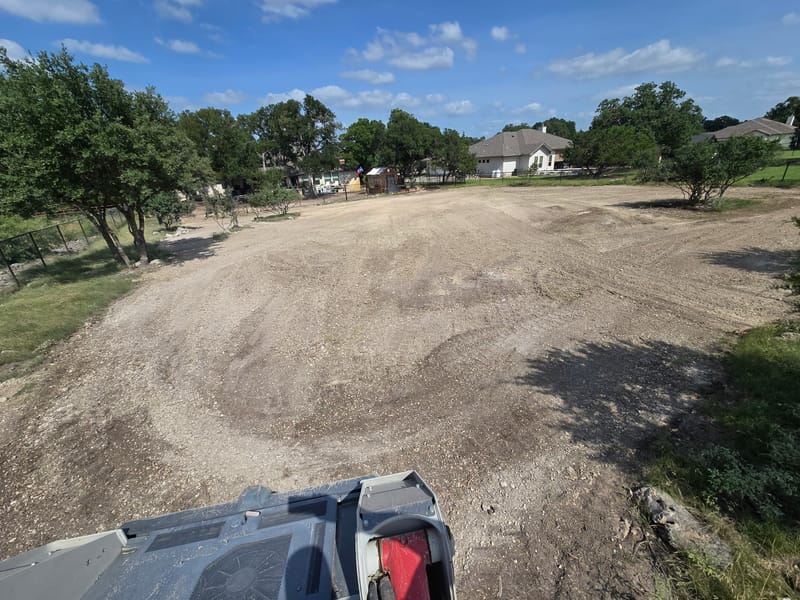
| Mowed within the past year | $75 – $150 | Tall fescue, light weeds, no woody growth |
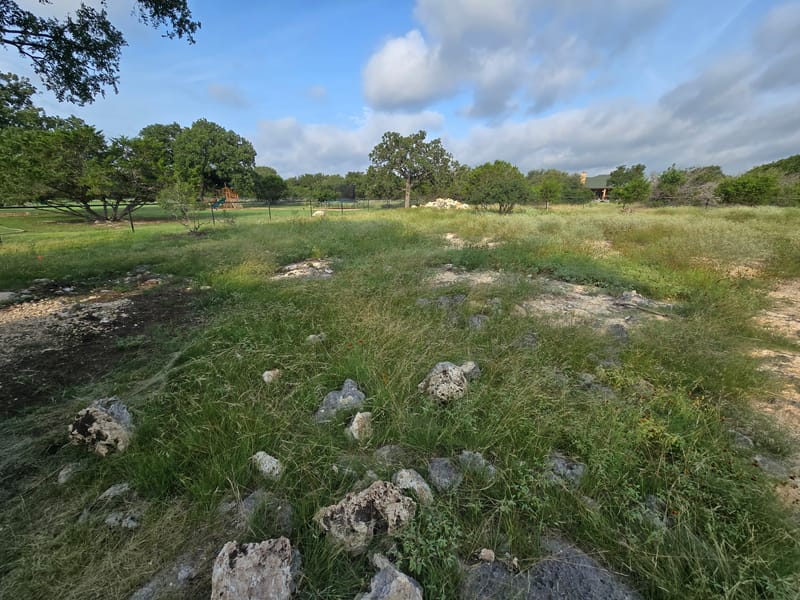
| 1–2 seasons of growth | $125 – $250 | Chest-high broomsedge, blackberry, scattered pine seedlings |
| 3+ years overgrown | $200 – $400 | Dense brush and saplings up to 2 inches thick |
| Reverting to woods | Not a brush hog job | Saplings over 2–3 inches, privet thickets, young pines |
Most contractors also carry a minimum charge of $250 to $500 to cover loading, hauling, and unloading the equipment. On a single small field, the minimum may simply be your price.
Want a real number for your field instead of a range? Request a free quote and we’ll respond within 24 hours.
What Affects Brush Hogging Prices in Central North Carolina?
Growth height and density move the price more than anything else – a field is cheap to mow when the cutter can move at full speed and expensive when it has to crawl. Here’s how the other factors stack up.
Growth Height and Density
A field mowed every year cuts fast in a single pass. Two or three seasons of blackberry, broomsedge, and sweetgum seedlings force the operator to slow down, raise and lower the deck, and sometimes make a second pass. That extra time is what pushes a $100 acre toward $250.
Terrain, Slope, and Wet Ground
Flat, dry ground mows quickest. Creek-bottom fields and low spots in our Piedmont red clay hold water well into early summer, and soft ground means slower passes or a rescheduled job. Slopes around pond dams and roadside ditches take extra care and add time.
Obstacles and Hidden Hazards
Old fence wire, dumped debris, stumps, and fire ant mounds hide easily in tall growth. Hitting buried wire with a rotary cutter can stop a job cold, so operators slow way down in fields with unknown history. If you know where the hazards are, flag them – it directly lowers your brush mowing cost.
Acreage and Access
Per-acre rates drop as acreage climbs because the mobilization cost spreads across more ground. A 10-acre field in Clayton often prices 20–30% less per acre than a 2-acre lot, and open gate access beats squeezing equipment past a house every time.
Per-Acre vs Hourly Pricing: Which Should You Choose?
Many North Carolina operators quote brush hogging by the hour instead of by the acre, typically $60 to $150 per hour depending on the machine. Neither model is automatically better – it depends on your field.
Per-acre pricing favors you on clean, open fields. If the contractor can see what they’re cutting and move fast, a flat per-acre rate locks in your cost and rewards their efficiency.
Hourly pricing is fair on rough, first-time reclaims. When nobody knows what’s hiding in five years of growth, an hourly bush hog price means you’re not paying a padded flat rate that covers worst-case surprises. Ask for an estimated hour range up front so the bill can’t run away from you.
Pro tip: The cheapest brush hogging job is the one you schedule before the field gets ugly. A field mowed once a year stays in the $75–$150 tier. Skip three seasons and the same field can cost two to three times as much, and skip five and you may be paying land clearing prices instead.
Brush Hogging vs Forestry Mulching: Where Is the Line?
A rotary cutter handles grass, weeds, briars, and saplings up to about 2 inches in diameter. Past that, stems stop cutting cleanly and start bending, splintering, and beating up the equipment. Once a field crosses into 2–3 inch saplings and woody thickets, you need forestry mulching, which grinds trees and brush into mulch in a single pass.
| Brush Hogging | Forestry Mulching | |
|---|---|---|
| Typical cost per acre | $75 – $400 | $1,000 – $3,500 |
| Handles | Grass, brush, saplings to ~2” | Brush and trees up to 6–8” |
| What’s left behind | Cut stalks on the field | Ground-level mulch layer |
| Best for | Maintaining open fields | Reclaiming land going back to woods |
The price gap looks big, but it reflects completely different jobs: mowing growth versus removing it. If a contractor walks your field and recommends mulching instead of mowing, that’s usually honesty, not upselling. Our forestry mulching cost guide breaks down what to expect when your field has crossed that line.
How to Keep Your Field Mowing Costs Down
Get on a schedule. Once or twice a year keeps any Central North Carolina field in the cheapest pricing tier forever. A recurring property maintenance plan costs less per visit than calling someone out to fight a jungle every third summer.
Walk the field first. Flag stumps, wire, washouts, and debris before the crew arrives. A field the operator can mow with confidence is a field that gets mowed fast.
Bundle with neighbors. In rural Johnston, Harnett, and Franklin counties, adjacent landowners often need the same work. Two fields mowed on one trip means one mobilization fee split two ways.
Combine jobs in one visit. If you also need fence lines cleaned up or a trail knocked back, have it done while the equipment is already on site instead of paying a second trip charge.
Frequently Asked Questions
How much does it cost to brush hog 1 acre in NC?
Expect $250 to $500 for a single acre, because most contractors’ minimum charge applies to small jobs. The mowing itself might only be worth $75–$250, but loading and hauling the equipment costs the same whether the field is 1 acre or 10. For small lots in Garner or Zebulon, ask whether the quote is the minimum or a true per-acre rate.
How much does brush hogging cost per hour in North Carolina?
Hourly brush hogging runs $60 to $150 per hour across Central North Carolina. A compact tractor with a 5-foot cutter sits at the low end, while a skid steer with a heavy-duty rotary cutter for rough fields lands at the high end. A typical 1-acre pass on moderate growth takes about an hour.
How often should I brush hog a field?
Once or twice a year keeps a North Carolina field open and cheap to maintain. Our growing season is long, and sweetgum and loblolly pine seedlings establish fast in untended fields around Smithfield and across Johnston County. Mowing in late summer or fall catches woody seedlings before they harden off and lets ground-nesting birds finish their season first.
Can a brush hog cut small trees?
A brush hog cuts saplings up to about 2 inches in diameter cleanly. Between 2 and 3 inches it can muscle through with damage to the stand and wear on the machine, and past 3 inches you’re in forestry mulcher territory. If your field has waves of young pines taller than you, get it quoted as mulching, not mowing.
Is brush hogging cheaper than land clearing?
Yes, dramatically. Brush hogging runs $75–$400 per acre because it mows vegetation and leaves it where it falls, while full land clearing runs $1,500–$4,500+ per acre because it removes trees, brush, and often stumps. See our land clearing cost per acre guide if your property has moved beyond what a mower can handle.
Get a Brush Hogging Quote in Central North Carolina
Brush hogging cost per acre in NC comes down to one honest question: how far gone is the field? Cut Brush mows overgrown fields, pastures, and large lots across Central North Carolina, including Clayton, Smithfield, Garner, and Zebulon, and we’ll tell you straight whether your property needs a $250 mow or a real reclamation.
Ready for a number? Request a free estimate and we’ll respond within 24 hours, or call us at (919) 525-3950 and tell us about your field.
Related Services
Learn more about the services mentioned in this article.


Serving These Areas
We provide land clearing services in these towns and surrounding areas.
More from the Cut Brush Blog
Keep reading for more tips and guides on land clearing.
 Comparison
 Bush Hogging vs Forestry Mulching: Measure the Stems
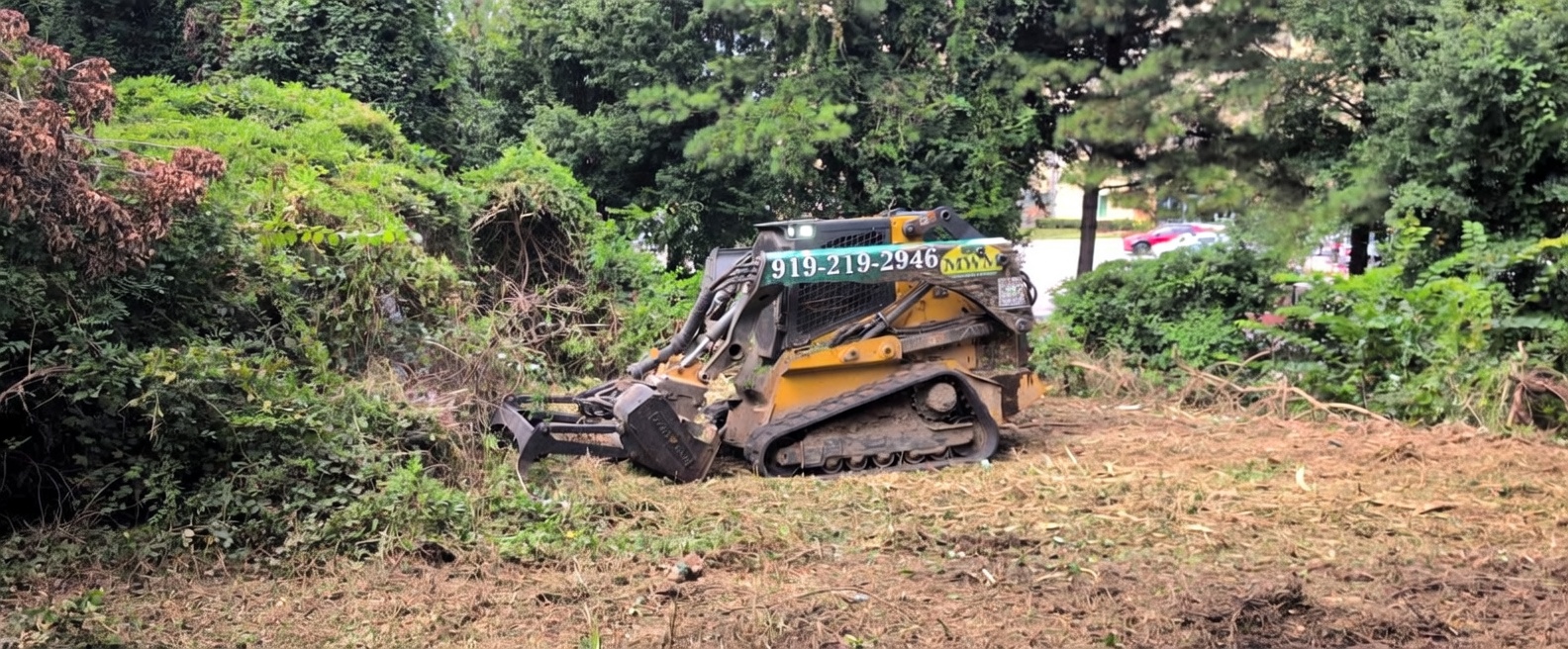
Stems under 2 to 3 inches are bush hog work; thicker saplings need a forestry mulcher. Neither kills the roots, so plan a follow-up mow for the resprouts.
 Cost Guide
 Forestry Mulching Cost Per Acre in NC (2026 Prices)
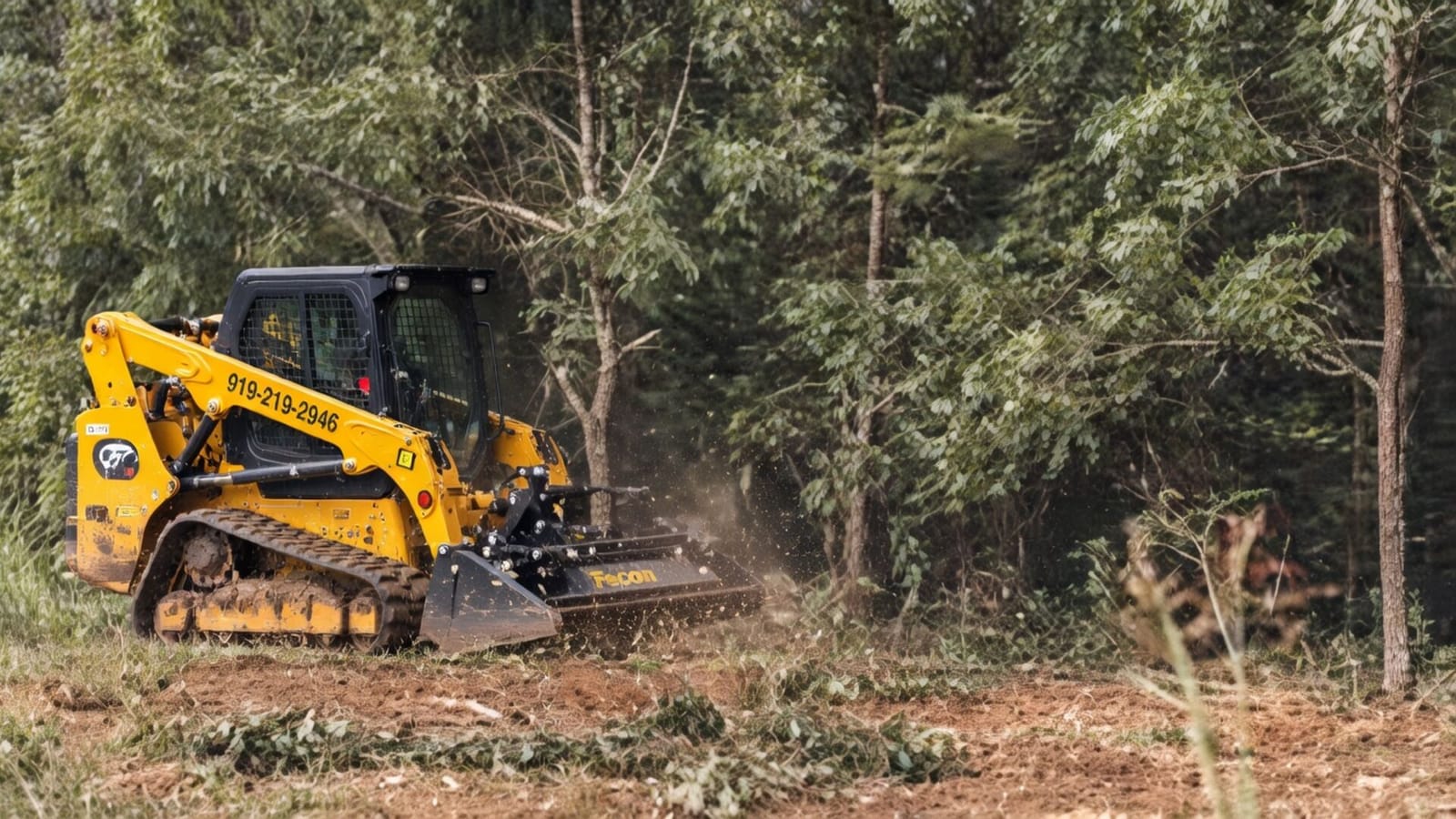
Forestry mulching cost per acre in NC by brush density, the hourly rate, and how lot size moves the price, from local Central NC jobs. Call 919-525-3950.
 Cost Guide
 Underbrush Removal Cost in NC: Clear Brush, Keep Trees
Clearing underbrush under trees you keep starts around $1,200 a project in Central NC; bigger wooded tracts are mulched from around $1,500 an acre.
Comparing states? See land clearing costs by state.
Let's Get Started on Your Land
Request a free quote. We'll contact you to discuss your property, access, and the clearing you need.
Get a Free QuoteOr call us directly: (919) 525-3950