
Underbrush Removal Cost in NC: Clear Brush, Keep Trees
Cut Brush Team · July 2, 2026 · 7 min read

Clearing the underbrush beneath trees you keep starts around $1,200 a project with Cut Brush in Central North Carolina, and brush clearing jobs run $1,200 to $3,500. On larger wooded acreage we price the same work as forestry mulching, from around $1,500 an acre. There is no separate per-acre understory rate: a wooded backyard is a brush clearing project, a bigger tract is mulching by the acre, and we tell you which after we walk it.
This post is about the understory only: the privet, briars, vines and saplings under oaks and pines that stay standing. If you want everything ground down, trees included, our forestry mulching cost guide prices that job.
How We Price Underbrush Work
| What you want done | How we price it | Cut Brush starting point |
|---|---|---|
| Brush, vines and saplings cleared under trees you keep, on a lot or backyard | Brush clearing, by the project | Around $1,200; $1,200 to $3,500 a project |
| The same understory work across larger wooded acreage | Forestry mulching, by the acre | Around $1,500 an acre |
| Everything cleared, trees included | Land clearing, by the acre | Around $1,500 an acre; most residential clearing $1,500 to $4,500 an acre |
| An open field with no trees to work around | Brush hogging, by the acre | $75 to $400 an acre |
These are starting points from our pricing page, not quotes. Your own number comes from walking the property.
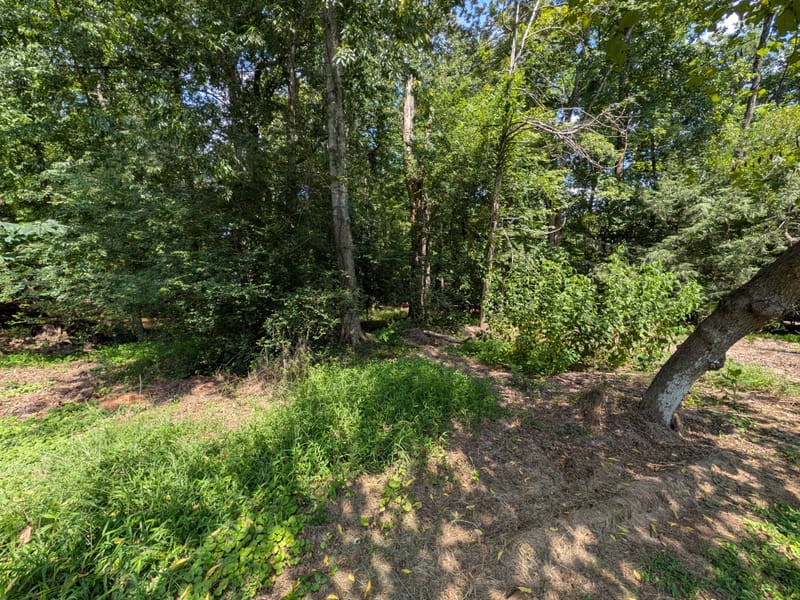
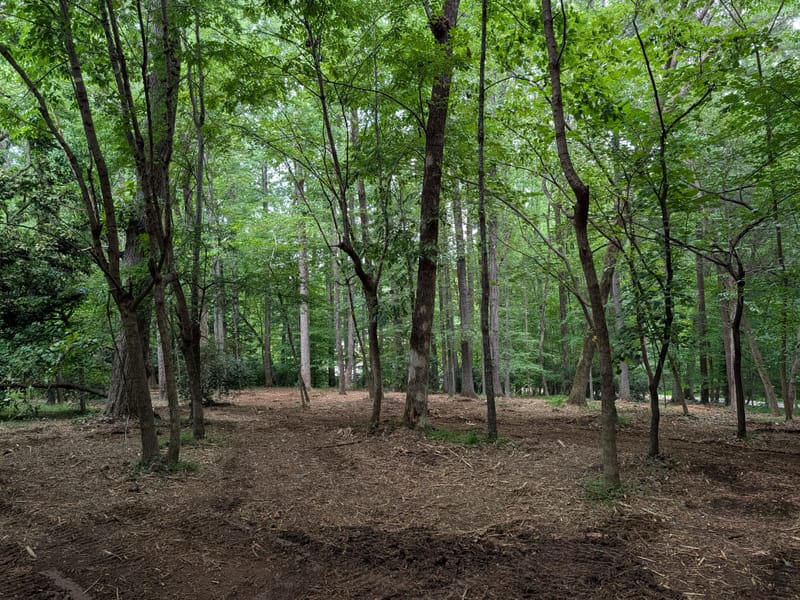
Should I Compare Quotes by the Project, the Acre, the Hour or the Day?
Compare what each quote buys, not the unit it is written in. Understory work gets quoted every way: a project price, a per-acre rate, an hourly rate, a day rate. A low hourly rate tells you nothing until you know how much ground the machine covers in an hour under your trees, and that depends on the brush and on how tight the trunks stand.
We quote a project price for a lot or backyard and a per-acre price for larger wooded acreage, so the risk of a slow day sits with us, not with you. Whatever unit you are handed, ask that the quote spell out:
- The area. Which part of the woods, and where it stops.
- What stays. Which trees are kept, and whether they are flagged before work starts.
- What gets cut. Brush and vines only, or saplings too, and up to what size.
- What is left behind. We grind the material where it stands, so it stays on site as mulch. A quote that includes hauling or burning is a different job.
- Stumps. Mulching grinds them flush with the ground; grinding them out below grade is a separate line. We offer stump grinding in North Carolina.
- Regrowth. Whether a return visit is part of the plan for privet and other resprouters.
Two quotes that answer all six can be compared fairly. If one leaves half of them blank, the lower number is probably buying less.
Do I Need a Permit to Clear Underbrush Near a Creek or on a Big Lot?
Under North Carolina law, a land-disturbing activity of more than one acre on a tract needs an approved erosion and sedimentation control plan, filed 30 or more days before work starts (G.S. 113A-57). The statute defines land-disturbing activity by a change in the natural cover, so do not assume mulching falls outside it: on a big wooded tract, ask before the machine arrives.
Who you ask depends on where the land sits. Wake County runs erosion control for unincorporated Wake and six towns: Garner, Knightdale, Morrisville, Wendell, Rolesville and Zebulon. It is not countywide. Inside Raleigh, Cary, Wake Forest or another town, call the town. On a house site in Wake’s program, the acre includes tree removal, and clearing near any water feature starts with a call for an inspection of the tree protection and silt fence. Clayton is in Johnston County, outside Wake’s program; our Johnston County permit guide covers it.
Creeks change the answer more than acreage does. Wake’s riparian buffer rules keep the zone closest to the streambank undisturbed. In either buffer zone, nuisance plants such as poison ivy and non-native invasives such as privet may be removed. That exemption covers invasives and nuisance plants, not every shrub along the bank, so confirm the buffer line with the county or town before we work near water.
We do not file permits, but we will tell you which office to call. Our Wake County permit guide and the Neuse River buffer guide go further on both.
Will Privet Come Right Back After the Mulcher?
Some of it will, unless it gets follow-up. Chinese privet is an evergreen shrub up to 15 feet tall that grows in bottomlands, low woods and along streams, which is why it crowds so many creekside lots. Every privet treatment needs a follow-up the next year for basal sprouts and root suckers. Cutting or pulling larger privet on its own is not generally effective and can spread it by stirring up the soil.
What that means for your budget:
- The first clearing is the big cost. It opens the woods and takes the woody stems down.
- Regrowth is cheaper to handle young. A property maintenance visit starts around $400, far less than a first-time clearing.
- Herbicide is a separate trade. Treating privet resprouts is a licensed applicator’s work. We can cut the regrowth back; the chemical side belongs to them.
- Hand-cut privet should not be piled. Its debris can root back into the soil.
Privet is also one of the few plants still green in a North Carolina winter, which makes a stand easy to spot from the back porch in January. Our Chinese privet removal guide covers the full plan for keeping it gone.
What Sets the Price on Your Wooded Lot?
Density. Finger-thick honeysuckle and briars grind fast. A head-high privet thicket with wrist-thick saplings means more wood per square foot and more passes.
Tree spacing. This is what makes understory work slower than open mulching. Widely spaced oaks let the operator work in long passes. A tight stand of pine and sweetgum means slow, careful work around every trunk you want kept. Flagging your keep-trees before we visit makes the quote and the job go faster.
Terrain and wet ground. Creek bottoms and low spots slow a tracked machine, and red clay ruts when it is soft. Slopes and drainage swales take extra care.
Access and acreage. Getting the machine to the woods is a fixed cost, so it weighs more on a small backyard than on several acres. A gate or opening too narrow for a tracked loader means smaller equipment and more time.
Does Clearing Underbrush Get Rid of Ticks and Snakes?
It thins out the cover they use near the house, but it does not remove them. Scrubby woods with thick undergrowth are tick habitat, and a mulched border between the lawn and the woods helps. Deer carry ticks in regardless. Copperheads favor woodland edges, rocky south-facing slopes and ivy thickets, and in winter they shelter in stump holes and rock fissures below the frost line, so a winter job is not a snake-free job.
If ticks and snakes near the house are the main reason you are calling, our tick and snake habitat reduction service is built around the strip between the yard and the woods.
Frequently Asked Questions
Can you clear underbrush without damaging the trees?
Yes, that is the job. The operator works the mulching head around each tree you want kept and stays off the trunks. Flagged trees make it faster and remove the guesswork.
What happens to the brush after it is cleared?
It stays on site. The machine grinds brush, vines and saplings into mulch on the forest floor, so there are no burn piles or haul-off loads in the price.
When is the best time to clear underbrush?
Late fall through winter suits most wooded lots. With the leaves down, the operator can see every keep-tree, and privet stands out as the green layer under bare hardwoods. Wet spells slow any season, so we schedule around soft ground.
Is underbrush removal cheaper than clearing the whole lot?
Usually, because the trees stay and nothing is hauled. Full land clearing starts around $1,500 an acre, with most residential clearing between $1,500 and $4,500 an acre, while a backyard understory job is a brush clearing project from around $1,200.
Get an Underbrush Clearing Quote in Central North Carolina
Request a free quote and our crew will contact you to talk through the property, the access and the clearing you need under your trees. You can also call us at (919) 525-3950.
Related Services
Learn more about the services mentioned in this article.


Serving These Areas
We provide land clearing services in these towns and surrounding areas.
More from the Cut Brush Blog
Keep reading for more tips and guides on land clearing.
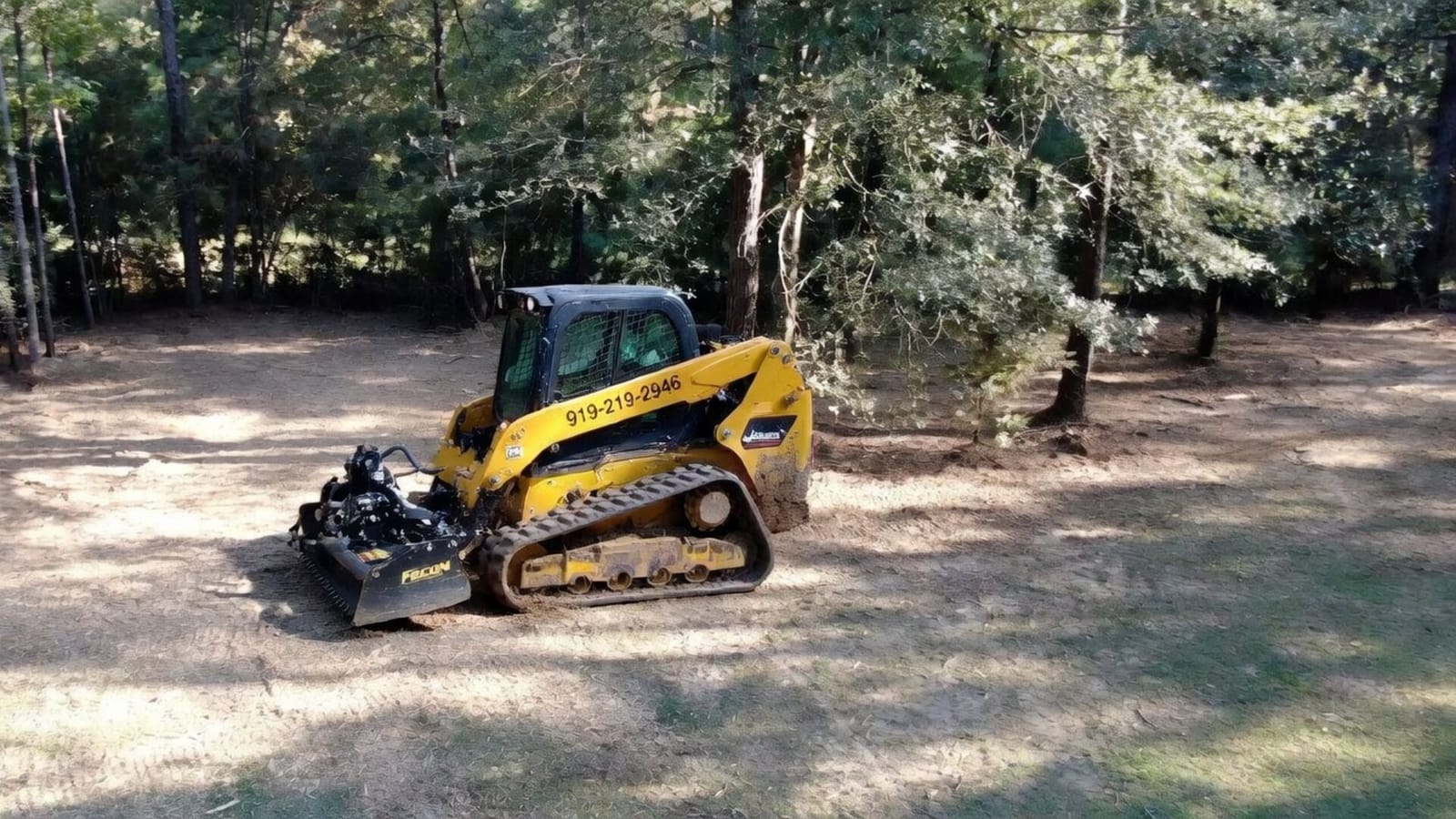 Cost Guide
Cost to Clear a Wooded Lot in NC (2026 Guide)
The cost to clear a wooded lot in NC runs $1,500 to $12,000+ depending on tree density and stumps. See 2026 pricing for lots under 2 acres. Call 919-525-3950.
Cost Guide Land Clearing Cost Per Acre in NC (2026)
Land clearing cost per acre in NC ranges from $500 to $6,000+. See 2026 pricing by vegetation type, method, and lot size. Call 919-525-3950.
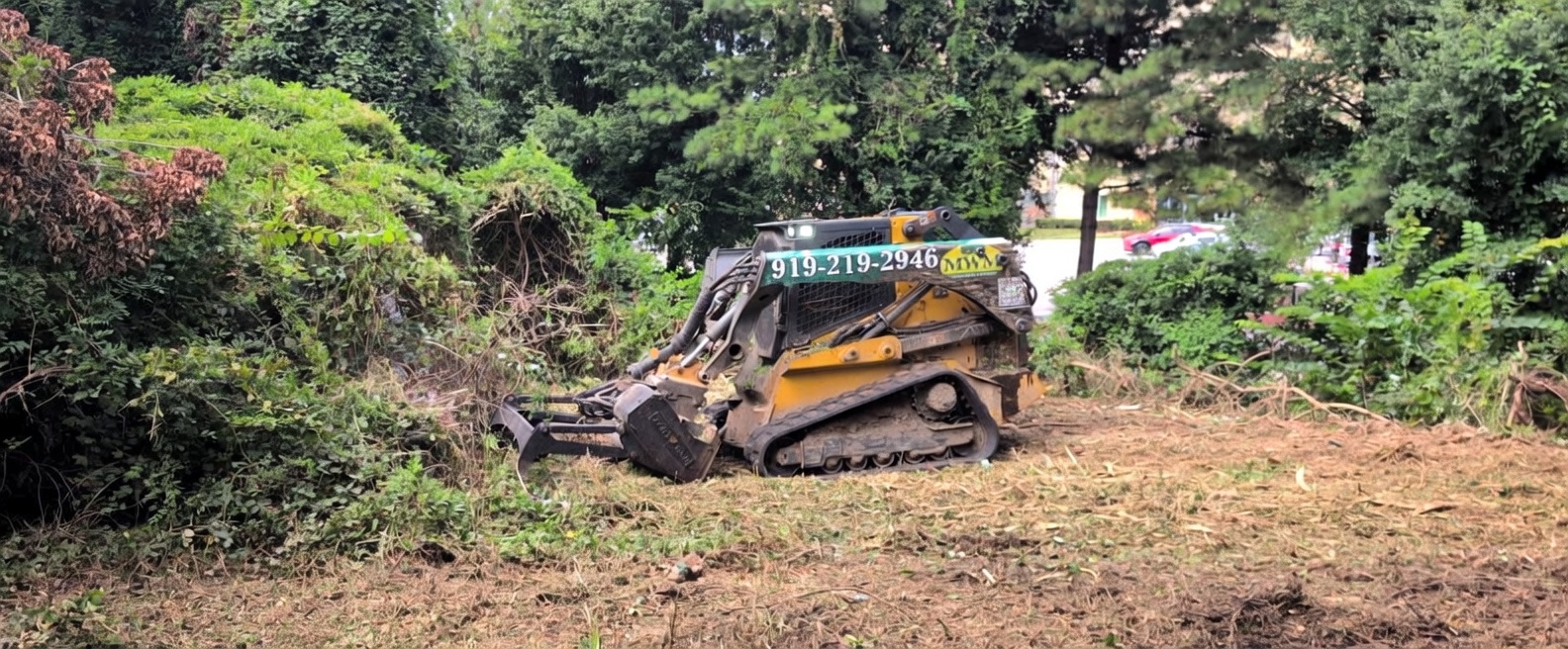 Cost Guide
Brush Hogging Cost Per Acre in NC (2026)
Brush hogging cost per acre in NC runs $75–$400 for most fields. See 2026 pricing by field condition, hourly rates, and ways to save. Call 919-525-3950.
Comparing states? See land clearing costs by state.
Let's Get Started on Your Land
Request a free quote. We'll contact you to discuss your property, access, and the clearing you need.
Get a Free QuoteOr call us directly: (919) 525-3950