
Clearing Land for a Driveway in NC: Cost & Steps
Cut Brush Team · July 11, 2026 · 10 min read

You bought a few acres with the homesite set back in the trees, well off the road, and now you need a way to get to it. Before a foundation, a well, or a single load of framing lumber shows up, you have to cut a driveway corridor through the woods. Clearing land for a driveway is its own project with its own rules, and it trips up a lot of first-time rural buyers around Willow Spring, Angier, Zebulon, and Pittsboro. Cut the corridor too narrow and delivery trucks scrape both mirrors. Skip the culvert at the road and the county fails your driveway connection. Ignore the sight lines and NCDOT won’t sign off at all.
This guide walks through how wide to clear, what a corridor costs per 100 feet, straight runs versus curves, the culvert at the road, NCDOT driveway permit basics, sight-line clearing at the entrance, and when to lay your gravel base.
How Wide Should You Clear for a Driveway?
Clear a corridor 20 to 30 feet wide even though the finished drive is only 12 to 16 feet. The driving surface itself needs 12 feet for one lane or 14 to 16 feet if you want two vehicles to pass or a fire truck to reach the house. Everything wider than that is cleared for good reasons, not waste.
You clear wider than the drive for three reasons:
- Sun and drying. A drive tunneled through tight trees stays wet and slick for days after rain. Red clay under a shaded canopy never firms up. Opening the corridor lets sun hit the surface so it dries and stays drivable.
- Drainage. You need room on both sides for a shoulder and a ditch to carry water off the road, not down it. A drive with nowhere to shed water rills out and washes to ruts.
- Access clearance. Most NC counties want a clear path for emergency vehicles, commonly around 20 feet wide and 13.5 feet of overhead clearance. Framing trucks, concrete mixers, and well rigs all need that room too.
Pro tip: Clear the corridor a little wider than you think on the sunny south and west sides. That extra light does the most to dry the surface and keeps limbs from closing back over the drive within two or three growing seasons.
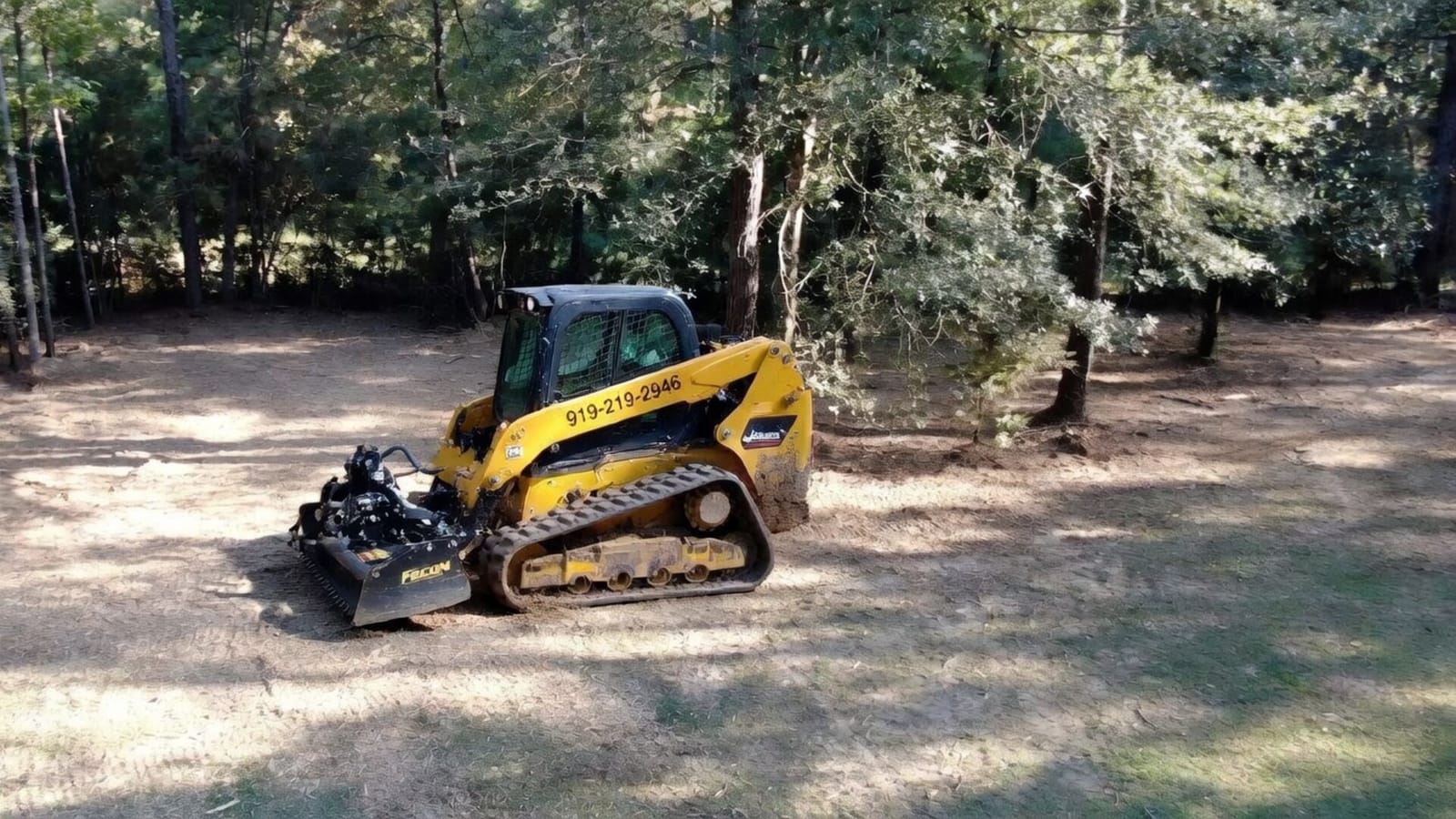
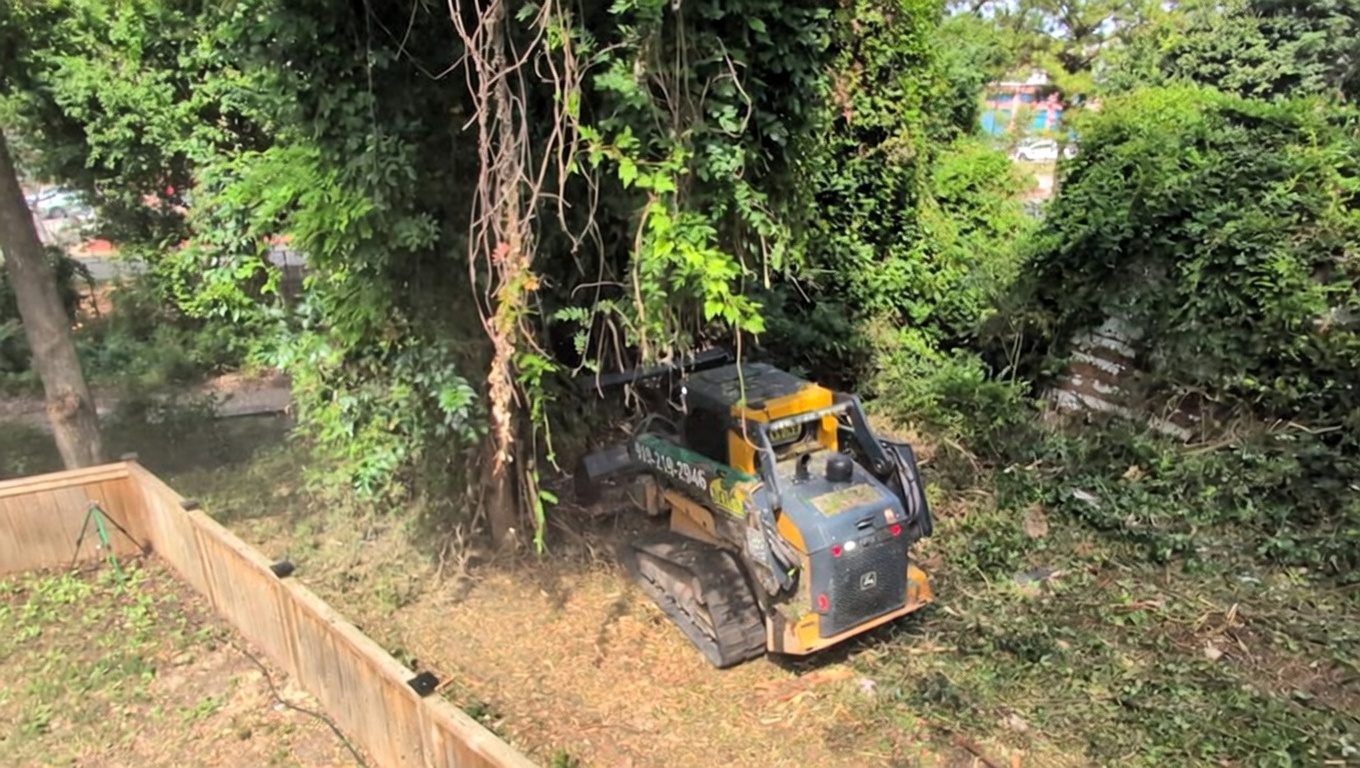
A forestry mulching machine is the tool of choice here. It grinds the trees and brush in place into a mulch layer, so you get an open, drivable corridor in a single pass with no burn pile and no hauling. For a longer scenic or utility path that stops short of a full driveway, our trail cutting service cuts the same kind of corridor at a lighter spec.
How Much Does It Cost to Clear a Driveway Corridor?
A cleared driveway corridor runs roughly $150 to $700 per 100 linear feet, depending on tree size, corridor width, and how wet the ground is. A driveway is a narrow strip, so it’s easier to budget by the 100 feet than by the acre. A 24-foot-wide corridor is only about a twentieth of an acre per 100 feet, but corridor work carries more edge trimming and tighter maneuvering than open-field clearing, so the per-foot cost sits higher than a wide-open land clearing cost per acre rate.
Here is what we see on driveway corridors across Central North Carolina:
| Corridor conditions | Cost per 100 ft | Notes |
|---|---|---|
| Light brush and saplings, dry ground | $150 – $300 | Fast mulching pass, minimal grading |
| Mixed woods, trees under 12” | $300 – $500 | Typical wooded lot in Willow Spring |
| Dense hardwoods or wet, low ground | $500 – $700+ | Slower going near creeks and Jordan Lake draws |
| Culvert at the road (installed) | $500 – $1,500+ | Pipe, stone, and headwalls; separate line item |
A 300-foot drive back to a homesite in Angier with average woods lands around $900 to $1,500 for the corridor, plus the culvert and gravel. A quarter-mile drive on a big rural tract in Zebulon can run several thousand. Want the numbers laid out by scope? Our land clearing pricing guide breaks down what drives the range.
Pro tip: Clear the whole corridor at once even if you gravel it in phases. Mobilizing the mulcher a second time to widen a too-narrow drive costs more than clearing it right the first day.
Straight Runs vs Curves: Which Costs More?
A straight run is cheaper to clear and gravel, but a gentle curve often drives and drains better on rural NC acreage. A straight shot means fewer feet of corridor, a shorter gravel bill, and simple grading. When your homesite lines up with the road and the ground is dry, straight wins on cost.
Curves earn their keep in specific situations:
- Grade. A curved drive can ease across a slope instead of running straight up it, which cuts erosion and keeps the drive drivable in winter. See our guide on clearing sloped land in NC for how grade changes the plan.
- Wet spots. A curve lets you route around a low, soggy draw instead of bridging it, common on lots near Jordan Lake in Pittsboro or along creeks in Johnston County.
- Trees and privacy. A bend around a stand of mature hardwoods saves the trees and hides the house from the road.
Every curve adds corridor length and needs a slightly wider clear at the bend so long trucks can track around it. Budget a little extra width and a few more feet on any curved layout.
What Permits Do You Need for a Driveway Connection?
Any new driveway that ties into a state-maintained road in NC needs a driveway permit from the local NCDOT district office before you connect. NCDOT reviews the connection point, sets the culvert pipe size for the road ditch, and confirms you have enough sight distance both directions. Residential driveway permits are typically low-cost or free, but the connection has to be built to their spec or they won’t accept it.
Which office you deal with depends on who owns the road:
- State-maintained road (most rural NC routes): apply through the NCDOT district engineer’s office for that county.
- Town or county road: the local public works or planning department handles the connection permit.
- Private or shared road: check the road-maintenance agreement or HOA, not the state.
On top of the connection, the corridor clearing itself falls under county land-disturbance rules. Wake, Harnett, Johnston, and Chatham counties each require a land-disturbance permit once you cross their disturbance threshold, and clearing near a stream or the Jordan Lake watershed around Pittsboro triggers riparian buffer rules. Our land clearing for new construction guide covers how the driveway fits into the full build permit stack, since the corridor is usually cleared as part of getting a homesite build-ready.
Culverts and Sight Lines at the Road
The two things that make or break your driveway entrance are the culvert pipe at the road ditch and clear sight lines in both directions. Get these right and NCDOT signs off; get them wrong and you’re re-doing the entrance.
The culvert. Where your drive crosses the road ditch, you set a pipe (commonly 15-inch or larger) so ditch water keeps flowing under the drive instead of ponding or washing it out. NCDOT specifies the size based on the drainage area. You backfill with stone, often with a stone or concrete headwall at each end, and this is a separate cost from the corridor clearing.
The sight lines. You have to clear brush, low limbs, and saplings back from the entrance corners so a driver pulling out can see oncoming traffic. The faster the road, the more sight distance you need. On a 45 mph rural road that can mean clearing several hundred feet of vegetation each direction along the road frontage. This entrance clearing is quick brush clearing work, but it’s the piece people forget until the inspector points at the honeysuckle wall on the corner.
Pro tip: Walk the entrance and crouch to a driver’s eye level before you clear. On rural roads around Willow Spring and Angier, a single overgrown fence line of privet can hide a car until it’s on top of you, so clear the corners generously.
When Do You Lay the Gravel Base?
Lay your gravel base after the corridor is cleared and rough-graded, the culvert is set, and the subgrade has had a chance to dry and settle. Rushing gravel onto soft, freshly cleared clay just pushes stone into the mud. The sequence that holds up on Central NC red clay looks like this:
| Step | What happens | Timing |
|---|---|---|
| 1. Clear corridor | Mulch trees and brush, open the width | Day 1 |
| 2. Rough grade + culvert | Shape crown and ditches, set the pipe | Days 1–2 |
| 3. Let subgrade settle | Firm up, especially after rain | 1–3 weeks |
| 4. Fabric + base stone | Geotextile fabric, then ABC crushed stone | After settling |
| 5. Final surface | Top stone or pave after heavy construction | After the build |
If you’re building, hold the final gravel or paving until the heavy construction traffic is done, since concrete trucks and framing loads chew up a finished surface. Many rural owners around Zebulon run on the base stone all through the build and top it off at the end. For realistic day counts on the clearing itself, see how long land clearing takes per acre in NC.
Frequently Asked Questions
How wide should I clear for a driveway through the woods?
Clear a corridor 20 to 30 feet wide for a finished drive of 12 to 16 feet. The extra width lets sun dry the surface, leaves room for shoulders and drainage ditches, and gives fire trucks and delivery vehicles the roughly 20-foot clear path most NC counties expect. On wet or shaded lots near Jordan Lake in Pittsboro, lean toward the wider end so the drive actually dries out.
How much does it cost to clear land for a driveway in NC?
A cleared driveway corridor runs about $150 to $700 per 100 linear feet depending on tree size, width, and how wet the ground is, plus $500 to $1,500 or more for the culvert at the road. A typical 300-foot wooded drive in Willow Spring or Angier lands around $900 to $1,500 for the corridor before gravel. See our land clearing pricing guide for how scope changes the number.
Do I need a permit to connect a driveway to the road?
Yes, if the road is state-maintained you need an NCDOT driveway permit from the local district office before you connect. They set the culvert size and confirm your sight distance. Town or county roads go through local public works instead, and the corridor clearing may also need a county land-disturbance permit depending on how much ground you disturb.
Should my driveway be straight or curved?
A straight run is cheaper to clear and gravel, but a gentle curve often drains and drives better on rural acreage. Curve the drive to ease across a slope, route around a wet draw, or save a stand of mature trees. Every curve adds a little corridor length and needs extra width at the bend for long trucks to track around.
Can a forestry mulcher cut a driveway through trees?
Yes, and it’s usually the best tool for the job. A forestry mulcher grinds standing trees and brush into mulch in a single pass, opening a drivable corridor with no burn pile and no hauling. It handles trees up to about 12 inches easily; larger hardwoods take extra passes or a separate cut, which our land clearing crew handles on the same visit.
How long after clearing can I gravel the driveway?
Wait until the subgrade has dried and settled, usually one to three weeks after clearing and grading, longer if it’s been wet. Setting gravel on soft, freshly cleared clay just buries stone in mud. Set the culvert first, let the base firm up, then lay geotextile fabric and ABC stone, and save the final top surface until after heavy construction traffic ends.
Get Your Driveway Corridor Cleared in Central NC
Clearing land for a driveway is the first cut you make on a back-lot homesite, and getting the width, the culvert, and the sight lines right the first time saves you from re-doing the entrance later. Cut Brush cuts driveway corridors across Willow Spring, Angier, Zebulon, Pittsboro, and the rest of Central North Carolina, using forestry mulching to open a clean, drivable path in a single pass. We’ll walk the route with you, flag the corridor width, and coordinate the entrance so it meets NCDOT and county requirements.
We provide free on-site estimates and respond to every request within 24 hours. Request a free quote for your driveway clearing and we’ll help you map the route from the road to your homesite.
Related Services
Learn more about the services mentioned in this article.


Serving These Areas
We provide land clearing services in these towns and surrounding areas.
More from the Cut Brush Blog
Keep reading for more tips and guides on land clearing.
 Guide
Guide Land Clearing Permits in NC: County Thresholds Explained
Do you need a land clearing permit in NC? See county-by-county disturbance thresholds, watershed buffer rules, and how to stay compliant. Get a free estimate.
Guide Clearing Land for a Pond in NC: What Must Come Out
Clearing land for a pond in NC: stumps, roots and organic soil come out under the dam and spillways, but basin stumps cut 24 in. below the waterline can stay.
 Guide
Guide Best Time of Year to Clear Land in NC
When is the best time of year to clear land in NC? Compare winter, spring, summer, and fall for cost, mud, ticks, and wildlife. Get a free estimate today.
Let's Get Started on Your Land
Request a free quote. We'll contact you to discuss your property, access, and the clearing you need.
Get a Free QuoteOr call us directly: (919) 525-3950