
Permit to Clear Land in Johnston County NC: Offices, Fees
Cut Brush Team · June 16, 2026 · 8 min read

Yes, if the work disturbs one acre or more, or any amount on a lot that is part of a subdivision or other common plan of development: you need an approved erosion and sediment control plan before land disturbing work starts. Outside town limits and ETJs, Johnston County Public Utilities reviews it, at $550 per disturbed acre. Inside Clayton, the town reviews it. Inside the other towns and their ETJs, NC DEQ does. Below an acre, no plan is needed, but erosion controls still are.
That plan is the owner’s or the builder’s to file. Cut Brush clears land; we do not prepare or file erosion plans or permits. What we do is ask the questions below before we quote, so a clearing date never lands ahead of an approval.
Which office reviews my address: the county, Clayton or the State?
Johnston County runs the state erosion program only in the unincorporated areas of the county, outside towns and their ETJs. Everywhere else, the town or the State has the file. Settle that first, because a plan sent to the wrong office is weeks lost.
| Where the land sits | Who reviews the erosion plan | Plan review fee |
|---|---|---|
| Unincorporated Johnston, outside every town and ETJ | Johnston County Public Utilities (Stormwater and Erosion Control) | $550 per disturbed acre up to 10 acres, then $275 per acre; $100 for a subdivision lot plan |
| Inside the Town of Clayton | Town of Clayton’s own erosion program | $300 per disturbed acre, billed in whole acres (1.15 acres bills as 2) |
| Inside Smithfield, Selma, Archer Lodge, Benson, Pine Level, Wilson’s Mills or another town, or their ETJs | NC DEQ | Set by the State |
Archer Lodge, Benson, Pine Level and Wilson’s Mills left the county’s program on April 1, 2024, and their plans now go to NC DEQ. Clayton and Johnston County are the two local programs for this county on NC DEQ’s list of local erosion programs; Smithfield and Selma are not on it.
Erosion plans go to Public Utilities, not the Planning Department; the engineering line is (919) 209-8333. Planning handles the land use permit and zoning verification that come before a building permit, which is a separate step.
If your parcel sits near a town line, straddles one, or may fall inside an ETJ (including Clayton’s), confirm with the county’s Stormwater and Erosion Control office before you file anything. One call settles whose program covers the address.
What does the permit cost, and how long does it take?
County fees in effect from July 1, 2026 sit on the Public Utilities fee page:
- Erosion plan review: $550 for each disturbed acre up to 10 acres, then $275 for each additional acre. A 3-acre homesite clearing is $1,650 in review fees; a 12-acre tract is $5,500 plus $550, or $6,050.
- Lot-level plan for a lot in a subdivision or common plan: $100.
- Neuse buffer determination: $550 for one or two calls, or $200 on an existing residential lot under 3 acres.
- Buffer impact authorization: $500.
- Re-inspection: $150.
Inside Clayton, plan review is $300 per disturbed acre. Clayton also issues a Tree Clearing Certificate ($500, plus a $100 inspection); ask the town whether your project needs one, because we could not confirm what triggers it.
On timing, a plan for more than one acre must be filed and approved 30 or more days before the work starts. County staff review applications within 30 days, and after approval you still need coverage under the NCG01 construction stormwater permit from NC DEQ. Plan on roughly a month between filing and the first day of clearing, longer if the plan comes back with comments.
The two-week figure you may have heard is Planning’s review of the land use permit, not the erosion plan.
These fees are separate from what clearing costs. Our pricing page has our current rates; most residential clearing falls between $1,500 and $4,500 per acre, and the Johnston County land clearing guide covers the county’s ground, what grows back and what drives the price.
Does cutting trees count, or only grading?
Cutting trees for a build counts. North Carolina defines land-disturbing activity as any use of the land in residential, commercial or other development, or in road building, that results in a change in the natural cover or topography and may cause sedimentation. Natural cover is the trees, brush and groundcover, not only the soil. Read plainly, clearing an acre of woods for a house changes the natural cover even if no dozer touches the dirt, so ask the county before assuming otherwise.
That includes forestry mulching. Mulching leaves the root mat in place and a layer of chips on the ground, which holds soil far better than pushing and grubbing. It does not move the acre line. If the clearing is for development and covers an acre or more, have the approved plan in hand before our crew mobilizes.
Two things sit outside the plan requirement:
- Agriculture. Clearing and field work for a working farm are exempt. The exemption covers real farming, not wooded land you intend to farm someday.
- Timber harvests that follow the North Carolina Forest Practice Guidelines Related to Water Quality. Once the purpose turns to a house or a subdivision, the work is development and the plan rules apply.
If you sold the timber before clearing, local governments can refuse a building permit or site plan for up to three years after a harvest that took all or substantially all the protected trees; our post on selling timber before land clearing covers that rule and how to avoid it.
What if my lot is under an acre?
Outside a subdivision or common plan, disturbing less than an acre needs no erosion plan from the county. Erosion controls are still required at any size, so silt leaving your lot is your problem whether or not a plan was filed.
Two edge cases catch people. The county’s line is one acre or more, so treat exactly 1.0 acre as covered. And the acre counts every piece of disturbance on the tract: house pad, driveway, septic area and any stockpile together. A 0.7-acre homesite plus a 0.4-acre driveway is 1.1 acres.
A stream, a culvert or a driveway crossing
Outside the towns, Johnston County also administers the Neuse River buffer: 30 feet of undisturbed Zone 1 and 20 feet of Zone 2, 50 feet in all, on each side of intermittent and perennial streams shown on the soil survey or USGS maps. The county decides whether a ditch or channel is a buffered stream, which is the $200 to $550 determination above. A driveway or culvert crossing through the buffer is a buffer impact, and impacts go to the county for authorization ($500) before work begins. Our Neuse River buffer guide covers what can and cannot happen in each zone.
What happens if you clear without the plan?
Civil penalties run up to $5,000 per violation, and each day of a continuing violation counts separately. A first-time violator who fixes the problem within 180 days is capped at $25,000. Knowing or willful violations can bring criminal charges of up to 90 days and $5,000, and a stop-work order can halt the job. Clayton sets its own penalties of up to $5,000 per day inside the town.
Set against $550 an acre and a month’s wait, none of that is a shortcut.
What we check before we quote
On every Johnston County job, we ask:
- Is the land inside a town or an ETJ? That decides whose plan applies.
- What is the clearing for? Pasture, a timber harvest and a new house fall under three different sets of rules.
- How much ground, counted all together? House, drive, septic area and storage, not just the first phase.
- Is there a stream, ditch or wet channel? If so, the buffer determination comes first.
- Is there an approved plan, and where are its limits? We clear inside the limits the plan draws and leave the grading to your grading contractor.
If the answers point to a plan, you or your builder files it, and we schedule around the approval. For land across the county line, see Wake County land clearing permits, or the county-by-county permit thresholds for the rest of Central North Carolina.
Frequently Asked Questions
Who issues land clearing permits in Johnston County NC?
Outside towns and ETJs, Johnston County Public Utilities issues the erosion and sediment control permit. Inside Clayton, the town does. Inside the other towns and their ETJs, NC DEQ does. The county Planning Department handles land use permits and zoning, not erosion plans.
Can I clear brush without a permit in North Carolina?
On a working farm, yes. For a lot you plan to build on, brush and tree removal is a change in natural cover, so once the work reaches an acre, or any amount on a subdivision lot, you need the approved plan first. Below that, no plan, but keep the soil on your property.
Does forestry mulching avoid the erosion permit?
No. Forestry mulching keeps roots and soil in place better than grubbing, but the acre line applies to the area cleared for development, whatever the method.
Will Cut Brush file the permit for me?
No. We do not prepare or file erosion plans or permits. We tell you what we see on the property that bears on the rules, and we clear to the approved plan once you or your builder has it.
Get a Free Quote for Clearing in Johnston County
Request a free quote and our crew will contact you to talk through the property, the access and the clearing you need, including where the permit question stands. You can also call (919) 525-3950.
Related Services
Learn more about the services mentioned in this article.


Serving These Areas
We provide land clearing services in these towns and surrounding areas.
More from the Cut Brush Blog
Keep reading for more tips and guides on land clearing.
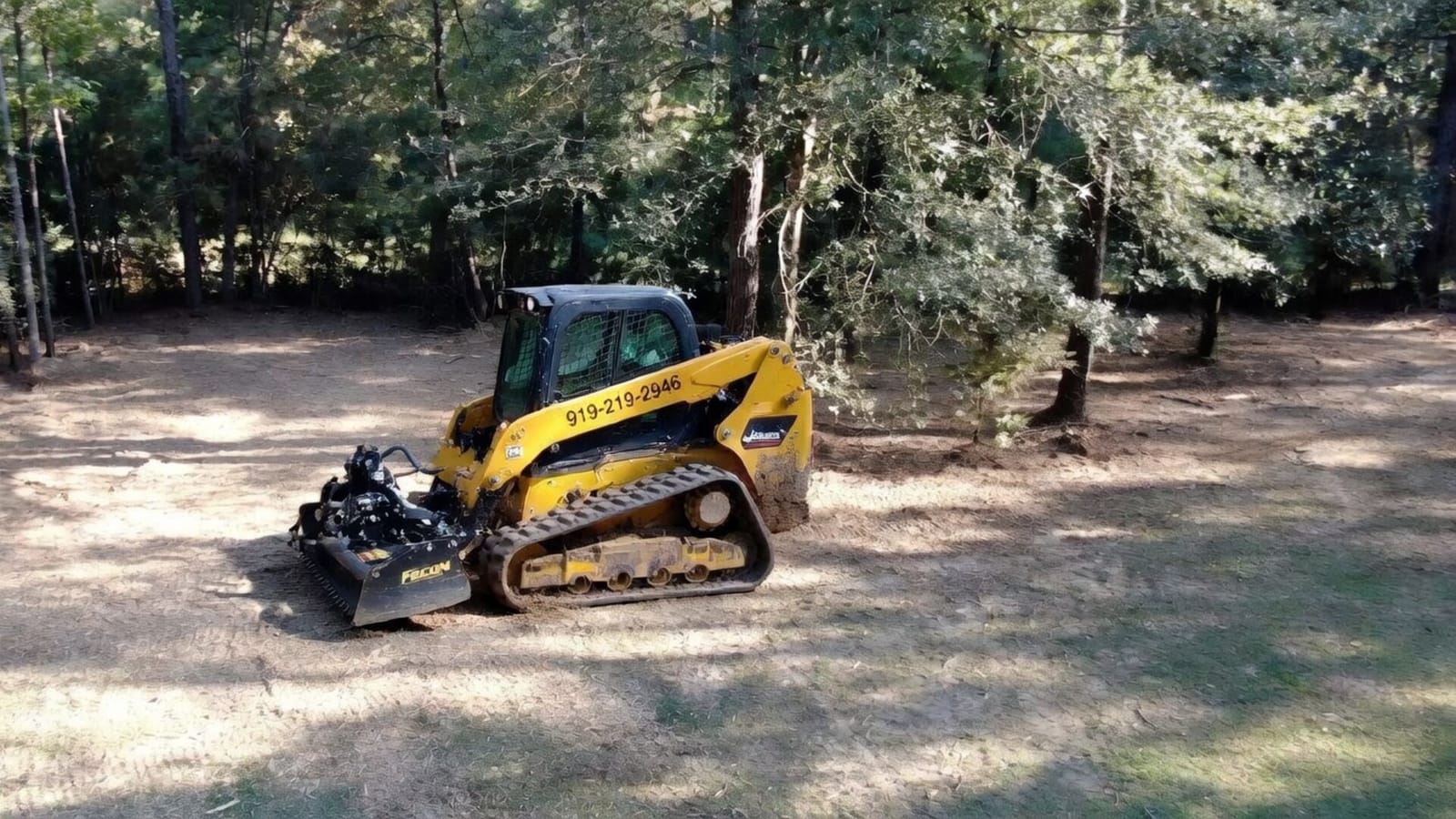 Guide
Guide Land Clearing Permits in NC: County Thresholds Explained
Do you need a land clearing permit in NC? See county-by-county disturbance thresholds, watershed buffer rules, and how to stay compliant. Get a free estimate.
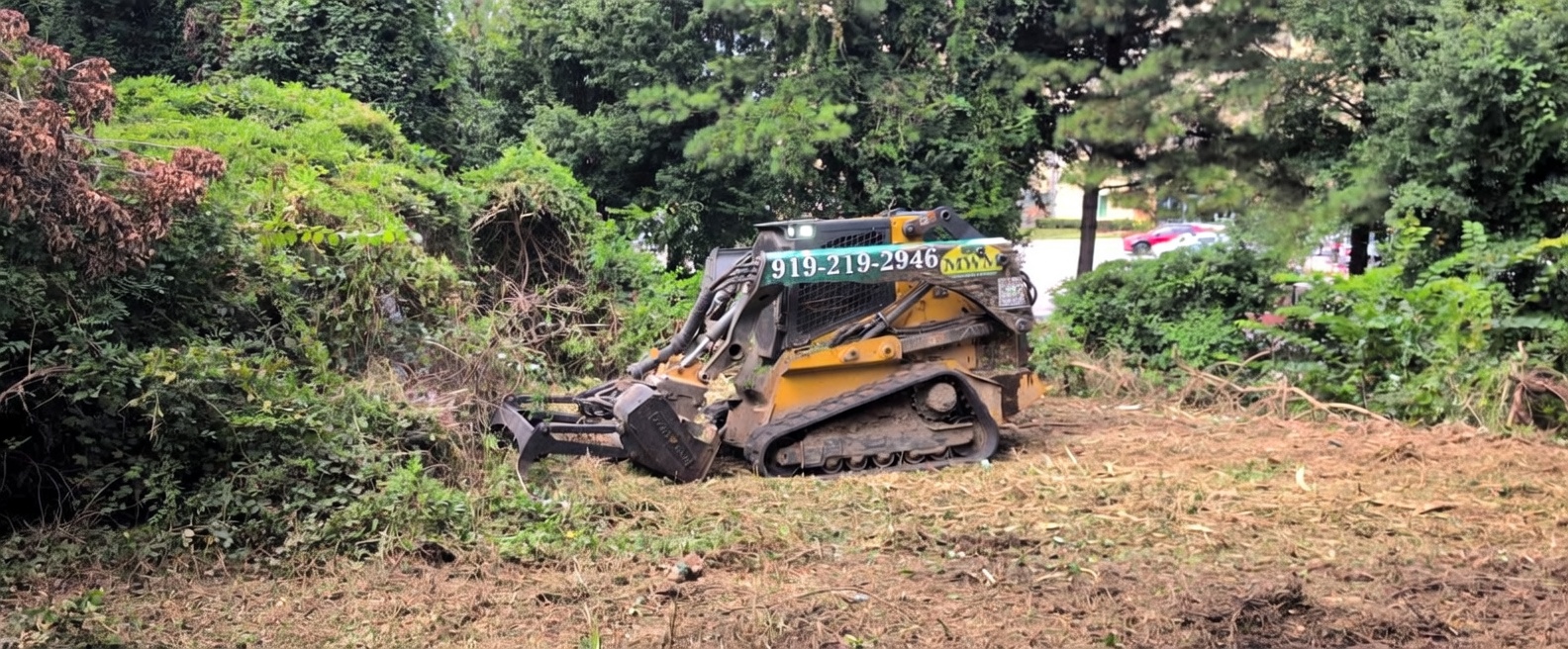 County Guide
 Land Clearing in Johnston County, NC: Rules and Costs
Land clearing in Johnston County, NC starts around $1,500 an acre. Which office regulates your parcel, how long review takes, and the present-use tax catch.
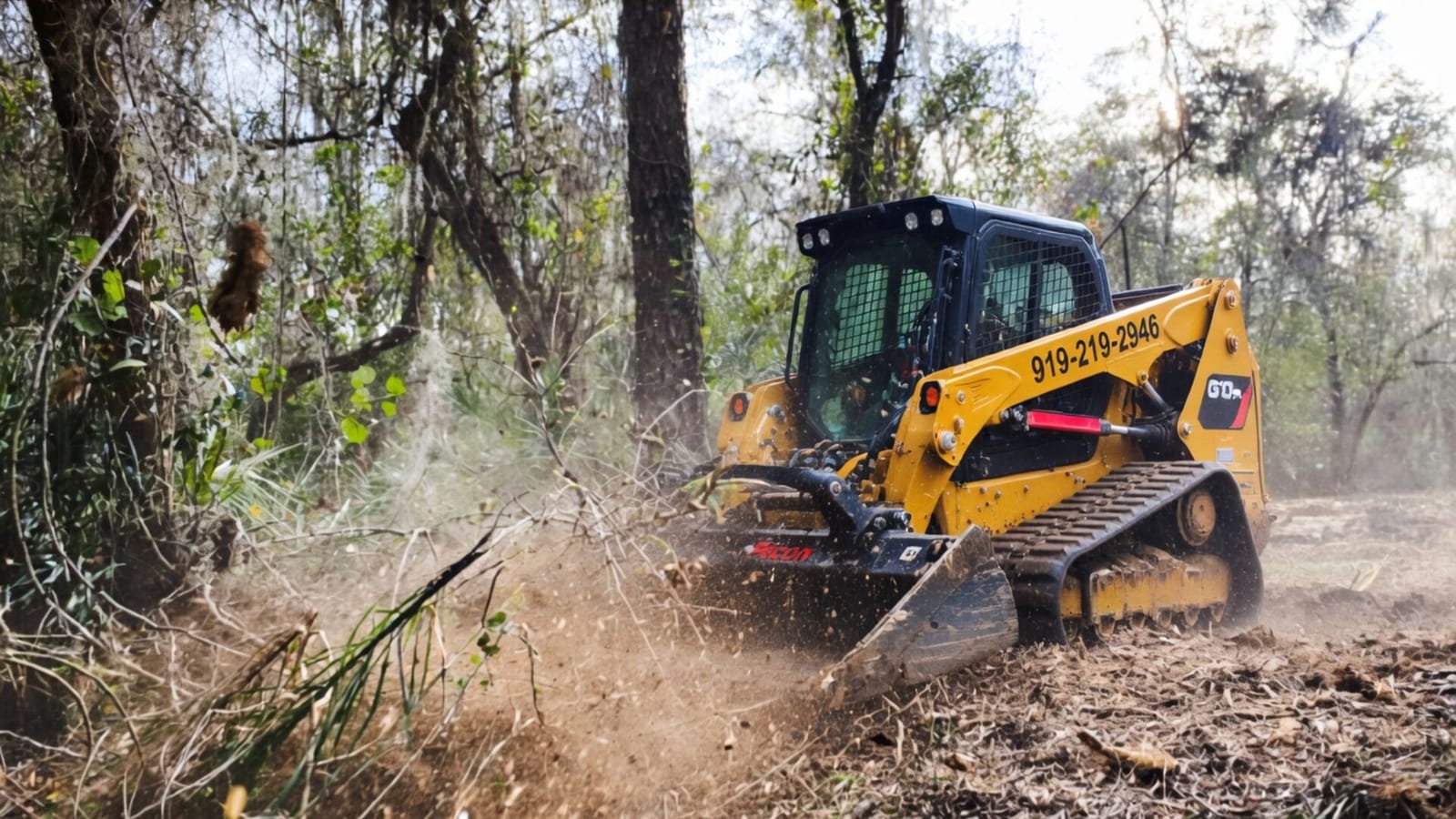 County Guide
 Land Clearing in Franklin County, NC: Permits and Cost
Clearing over one acre in Franklin County, NC needs a DEQ-approved erosion plan first; under an acre the county wants silt fence. We start near $1,500/acre.
Let's Get Started on Your Land
Request a free quote. We'll contact you to discuss your property, access, and the clearing you need.
Get a Free QuoteOr call us directly: (919) 525-3950