
Overgrown Pasture Clearing in NC: How to Reclaim a Field
Cut Brush Team · June 22, 2026 · 8 min read

The fence posts are still standing, but the field behind them is gone. What was grazing pasture eight or ten years ago is now waist-high broomsedge, blackberry canes that grab at your jeans, and sweetgum saplings pushing past head height. Maybe you just bought the place outside Zebulon or Franklinton. Maybe the horses left, the mowing stopped, and the field quietly started going back to woods.
Overgrown pasture clearing in NC is one of the most common jobs we run, and there is good news: a grown-up field is almost always cheaper to reclaim than raw woods is to clear. The roots of your old forage grasses are often still alive under the mess.
This guide covers how pasture reclamation actually works in Central North Carolina: which method fits which level of growth, what it costs per acre, which toxic plants must come out before horses graze again, and when to schedule the work.
How Do You Reclaim an Overgrown Pasture in NC?
You reclaim an overgrown pasture in three phases: forestry mulch the saplings and woody brush, brush hog the remaining rough growth, then lime and seed the field for forage. Each phase does a job the others cannot.
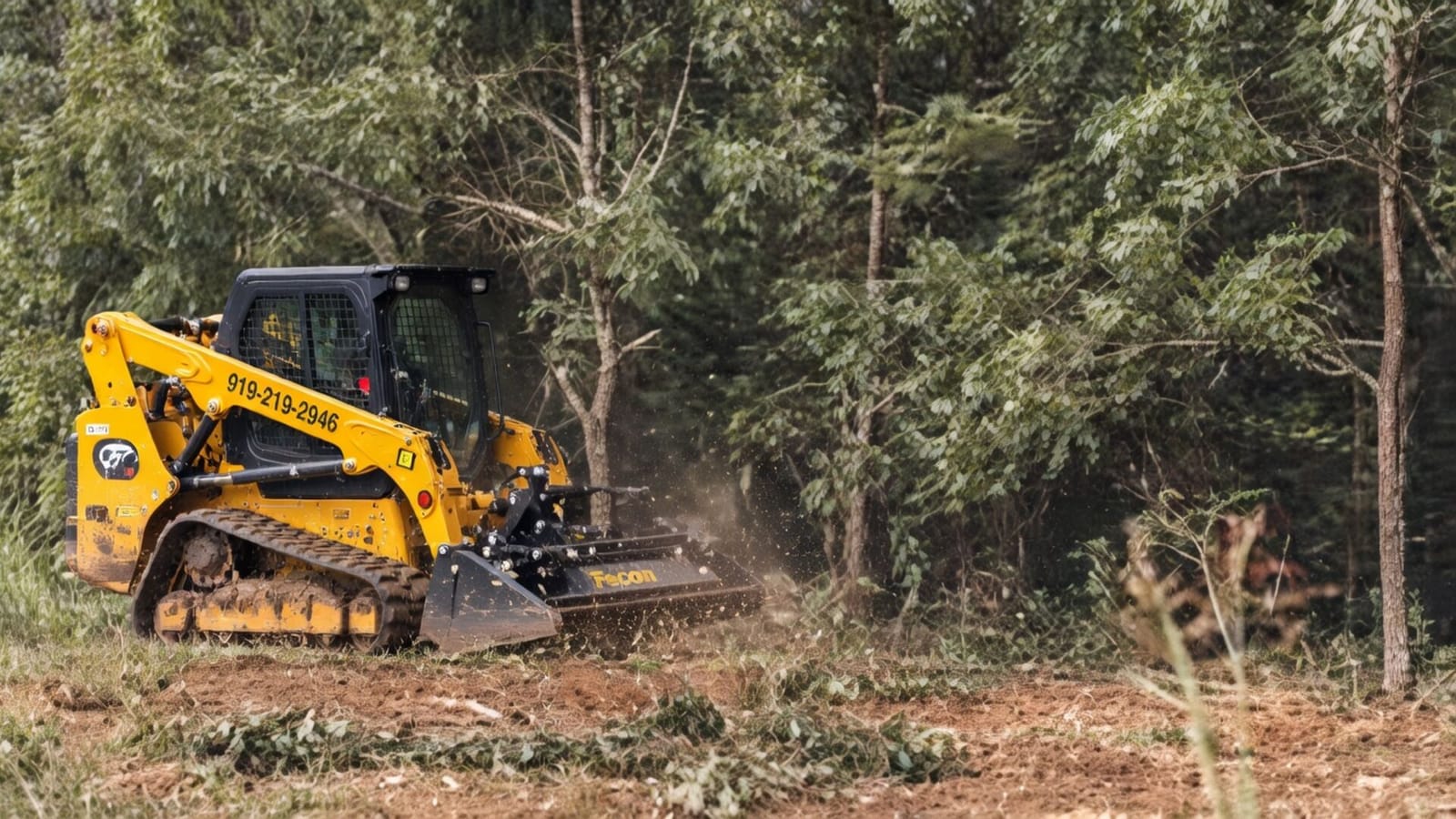
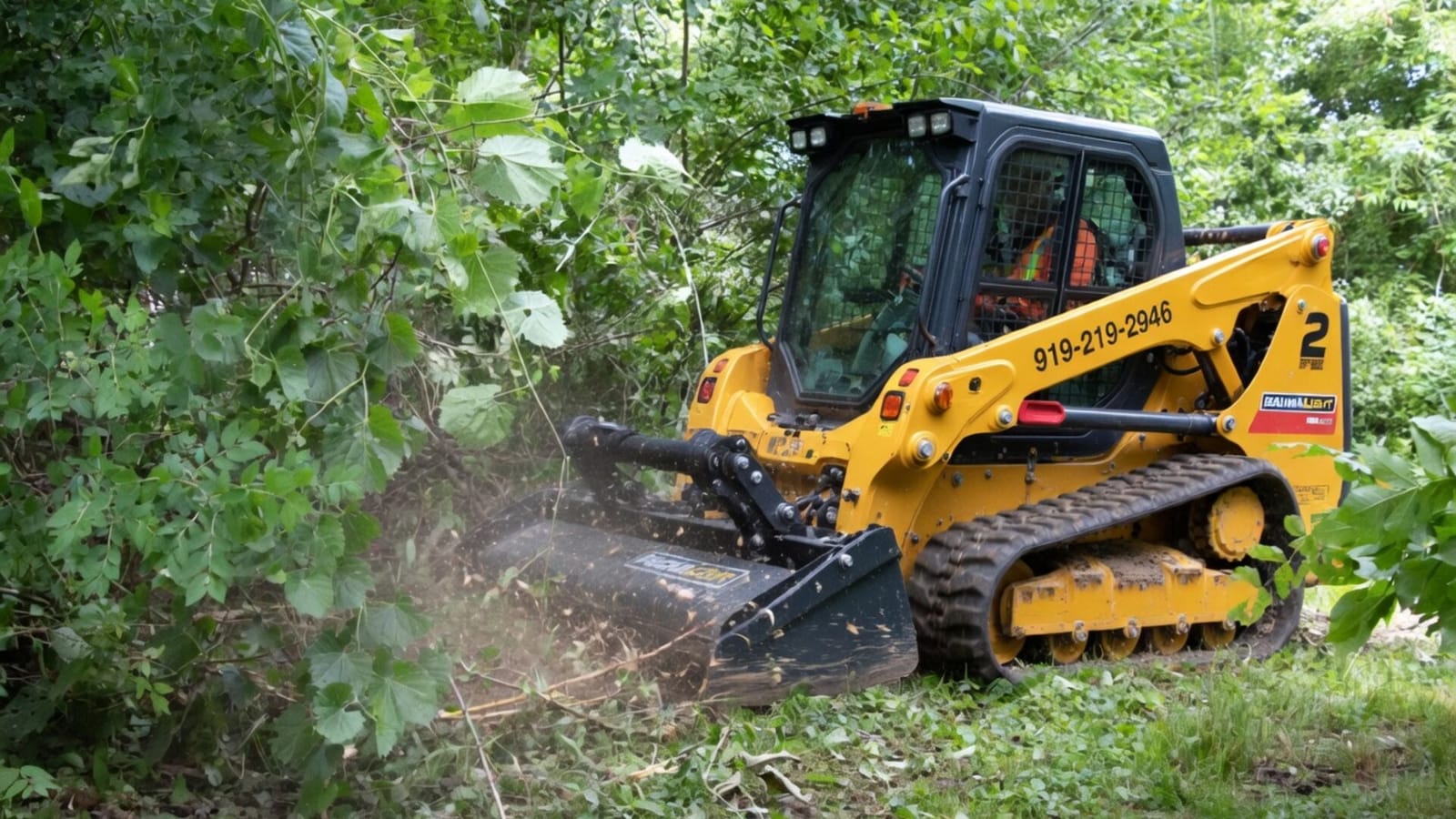
Phase 1: Mulch the woody growth. A forestry mulcher grinds the sweetgum, pine, cedar, and privet into a layer of mulch that stays on the field. No burn piles, no stump rows along the fence, no debris to haul away.
Phase 2: Hog the rough. With the woody material down, a brush hog mows the briars, broomsedge, and rank grass to a uniform height so sunlight reaches the soil again.
Phase 3: Rebuild the forage. Soil test, lime, and seed. Central NC red clay is almost always acidic after years of neglect, and fescue or bermuda will not establish until the pH comes up.
For horse owners, our horse pasture and paddock reclamation service runs this exact sequence with a hoof-safe finish: no stumps left at ankle height and no debris piles in the turnout. Turning woods rather than an old field into turnout is a bigger job, covered in our guide to clearing land for horses.
What Takes Over a Pasture When the Mowing Stops?
Broomsedge and briars move in first, followed by sweetgum, loblolly pine, and Chinese privet, and within a decade an idle Central North Carolina field is young woods. On old cattle ground, multiflora rose usually claims the fence lines and corners before the trees arrive. Ecologists call it old-field succession, and it runs fast in our climate.
On a neglected field in Franklin or Johnston County, the sequence usually looks like this. Years one and two: the fescue goes rank, broomsedge claims the thin spots, and blackberry spreads out from the fence lines. Years three to five: sweetgum and loblolly seedlings get past mowing height, privet fills the shaded edges, and eastern redcedar pokes up through the broomsedge.
Past year five, those saplings thicken from finger-size to wrist-size and beyond, and a rotary cutter can no longer touch them. That timeline is why the method question matters so much: the same field costs a few hundred dollars to knock back in year two and several thousand per acre to reclaim in year ten.
Brush Hogging vs Forestry Mulching for Pasture Reclamation
The split is simple: brush hogging maintains a field, while forestry mulching reclaims one.
A brush hog is a heavy rotary mower run off a tractor or skid steer. It shreds grass, briars, and green stems up to about 2 inches thick, fast and cheap. But it leaves cut stubs at shin height, and it bounces off anything truly woody.
A forestry mulcher is a different machine entirely: a drum of carbide teeth that grinds standing trees up to 6–8 inches in diameter down to ground level and turns the whole stem into mulch. It handles the sweetgum thickets, the cedar, the privet walls, and the old blackberry mounds a hog cannot.
Most reclamation jobs we run east of Raleigh use both: the mulcher first for the woody growth, then a hogging pass for cleanup. On lightly grown fields around Zebulon, a single heavy-duty brush hogging pass may be all it takes.
What Does Overgrown Pasture Clearing Cost in NC?
Expect $75–$250 per acre for brush hogging light growth and $800–$4,000 per acre for forestry mulching a heavily reverted field. The age of the overgrowth is the biggest price driver, and here is how field condition maps to method and cost across Central North Carolina:
| Years Idle | What’s Growing | Right Method | Typical Cost Per Acre |
|---|---|---|---|
| 1–2 | Rank fescue, broomsedge, scattered briars | Brush hogging | $75–$250 |
| 3–5 | Blackberry thickets, privet, saplings under 3” | Heavy hogging + spot mulching | $200–$1,500 |
| 5–10 | Sweetgum, pine, and cedar 3–6” thick | Forestry mulching | $1,500–$2,500 |
| 10+ | Young woods with trees 6” and up | Forestry mulching | $2,500–$4,000 |
Two things push pasture jobs toward the low end of those ranges. Open fields give the machine clean access with no winding between mature trees, and old pastures rarely hide the big hardwoods that slow a mulcher down. A 5-acre reverted pasture is usually a one-to-two-day job.
Budget extra for the forage side: lime and seed typically add $100–$300 per acre depending on what your soil test calls for. For the full breakdown of what drives clearing prices, see our guide to forestry mulching costs in NC.
Which Toxic Plants Have to Go Before Horses Graze Again?
Wild cherry, red maple, and black walnut are the big three to remove from any NC horse pasture, and pokeweed and horsenettle need to come out of the field itself. A reclaimed pasture is not horse-ready until someone has walked the fence lines looking for them.
Wild cherry is the classic danger. Wilted cherry leaves release cyanide compounds, and the storm-dropped limb in the paddock is how most poisonings happen. Cherry grows in nearly every untended fence line in Central North Carolina.
Red maple leaves are also toxic to horses once wilted, and black walnut causes laminitis, even from root contact and shavings. Down in the field, pokeweed and horsenettle colonize exactly the kind of disturbed, acidic ground a reverted pasture provides.
When we reclaim a field for horses, we flag and drop the hazard trees within reach of the fence, mulch them with everything else, and point out what to watch for as the pasture regrows.
When Is the Best Time to Reclaim a Pasture in NC?
Late winter through early spring, roughly February to April, is the ideal window for pasture reclamation in Central North Carolina. The woody growth is dormant and brittle so the mulcher works faster, the ticks and copperheads are still down, and you can see the old fence lines before green-up hides them.
Late-winter clearing also lines up with the planting calendar. Clear in February or March, lime immediately, then either plant bermudagrass in late spring or drill tall fescue in September, whichever forage program fits your operation. For the season-by-season detail on mud, pests, and crew availability, see our guide to the best time of year to clear land in NC.
Pro tip: Pull a soil test before you spend a dollar on seed. Sample boxes and forms are free at every N.C. Cooperative Extension county center, and the state lab runs the analysis free most of the year (a small fee applies in the winter peak season). Reverted pasture on red clay often needs 1–2 tons of lime per acre, and lime takes months to move the pH, so spread it the week the field is cleared, not the week you plant.
Frequently Asked Questions
How much does it cost to clear an overgrown pasture in NC?
Brush hogging light growth runs $75–$250 per acre, while forestry mulching a heavily reverted field runs $800–$4,000 per acre depending on sapling size and density. Most multi-acre pasture reclamations in Central North Carolina land in the $1,500–$2,500 per acre range, with lime and seed extra. Request a free estimate and we will price the field by what is actually growing on it.
Can I just brush hog an overgrown field?
Only if the woody stems are under about 2 inches thick. A brush hog shreds grass, briars, and young saplings, but it bounces off established sweetgum and pine, and wrist-thick trunks will tear up the deck and blades. If the field has sat idle for more than 3–4 years, plan on a mulching pass first.
How long before horses can graze a reclaimed pasture?
Plan on one full growing season after seeding before regular grazing. New fescue or bermuda needs time to root, and grazing too early pulls seedlings out of the ground. Many owners reclaim the field in sections so the horses keep a turnout area while the new stand establishes.
Will sweetgum and privet grow back after clearing?
Yes, both resprout from the roots, which is why a single clearing pass never ends the job. A once- or twice-a-year hogging pass mows resprouts before they turn woody, and a healthy, limed forage stand outcompetes most new seedlings. Fields that get year-one maintenance stay open; fields that skip it start reverting immediately.
Do you clear overgrown pastures near Zebulon, Franklinton, and Smithfield?
Yes, the horse and cattle country east of Raleigh is the core of our service area. We run pasture reclamation jobs around Smithfield and across Johnston, Franklin, Nash, and eastern Wake County, usually with a one-to-two-week lead time outside the winter rush.
Get Your Pasture Back This Season
Cut Brush handles overgrown pasture clearing across Central North Carolina, from horse farms outside Zebulon and Franklinton to cattle and hay operations around Smithfield and Wendell. One crew mulches the woody growth, hogs the rough, and leaves a field ready for lime and seed, with no burn piles and no stumps waiting to catch a hoof or a mower blade.
Request your free estimate and we will respond within 24 hours, or call (919) 525-3950 and tell us how long the field has been idle. That one number usually tells us the method and the ballpark before we ever walk it.
Related Services
Learn more about the services mentioned in this article.


Serving These Areas
We provide land clearing services in these towns and surrounding areas.
More from the Cut Brush Blog
Keep reading for more tips and guides on land clearing.
 Guide
Guide Clearing Land for Horses in NC: Turning Woods to Pasture
Plan about 2 acres of pasture per horse, remove wild cherry and red maple with horses kept away, lime early and rest new grass a year. Woods to grazing in NC.
Services Sweetgum Saplings Taking Over Your NC Field? Fix It
Sweetgum saplings taking over a field in NC: why idle land fills with sweetgum, when a bush hog stops working, and what removal costs. Get a free estimate.
 Services
 Multiflora Rose Removal in NC: Reclaim Thorny Pasture
Multiflora rose removal in NC: how to get rid of the invasive thorn thickets choking pastures and fence lines, and what clearing costs. Get a free estimate.
Let's Get Started on Your Land
Request a free quote. We'll contact you to discuss your property, access, and the clearing you need.
Get a Free QuoteOr call us directly: (919) 525-3950