
Sweetgum Saplings Taking Over Your NC Field? Fix It
Cut Brush Team · August 16, 2026 · 7 min read

Skip mowing a field for three years in Central North Carolina and the sweetgum will let you know. The star-leaved saplings come up through the broomsedge by the hundred, knee-high one summer, head-high the next, and by year five you don’t own a field anymore, you own a young sweetgum forest with spiky gumballs for a floor. Sweetgum saplings taking over idle ground is the single most predictable land problem in our region, because sweetgum is the fastest, most aggressive pioneer tree on old farmland east of Raleigh.
This guide covers why sweetgum claims idle fields so fast, the point where a bush hog stops being the answer, the two-machine strategy that reclaims a sweetgum field, and what the work costs per acre.
Why Does Every Idle NC Field Fill With Sweetgum?
Sweetgum is a pioneer species built to colonize open ground: each mature tree drops thousands of winged seeds from its gumballs, the seeds sprout in full sun where grass grows thin, and the saplings grow several feet a year. Old pasture and cropland east and south of Raleigh, with its sandy loam and full sun, is exactly the habitat the species evolved to grab.
The timeline is remarkably consistent on the farm country around Selma and Four Oaks:
| Years idle | What the field looks like | What handles it |
|---|---|---|
| 1–2 | Grass, broomsedge, scattered ankle-high sweetgum | Routine mowing |
| 3–5 | Waist-to-head-high saplings, still green-stemmed | Heavy bush hogging, mulching on thick stands |
| 5–10 | Thousands of 2–4 inch woody stems | Forestry mulching |
| 10+ | Young sweetgum-and-pine woods, 6 inch+ trunks | Mulching or full land clearing |
Two things accelerate the takeover. First, sweetgum root-sprouts: mow a sapling off and the root sends up several replacements, so casual once-in-a-while mowing actually thickens a stand. Second, nothing eats it; deer browse almost everything else on an old field first, which is why the sweetgum stands taller than everything around it.
Sweetgum is native, worth saying plainly. Like greenbrier and eastern red cedar, it earns removal by behavior, not by origin, and the mature tree is a legitimate timber and shade species in the right place. The problem is the ten thousand saplings in the wrong one.
When Does a Bush Hog Stop Being Enough?
A bush hog handles sweetgum up to about 2 inches of stem thickness; past that, hogging becomes slow, hard on the machine, and dangerous, and forestry mulching takes over. Knowing which side of that line your field is on is most of the decision.
Under the line, brush hogging is the cheap answer: a heavy rotary cutter shreds green-stemmed saplings by the acre, and a field hogged once or twice a year never develops a sweetgum problem at all. Our brush hogging cost guide covers those rates.
Past the line, the math flips. Wrist-thick sweetgum bends under a hog deck and springs back, blades take a beating, cut stubs stand at shin height like punji stakes, and the root systems, untouched, sprout right back. A field of 3-inch sweetgum “mowed” with a hog looks cleared for a month and comes back meaner.
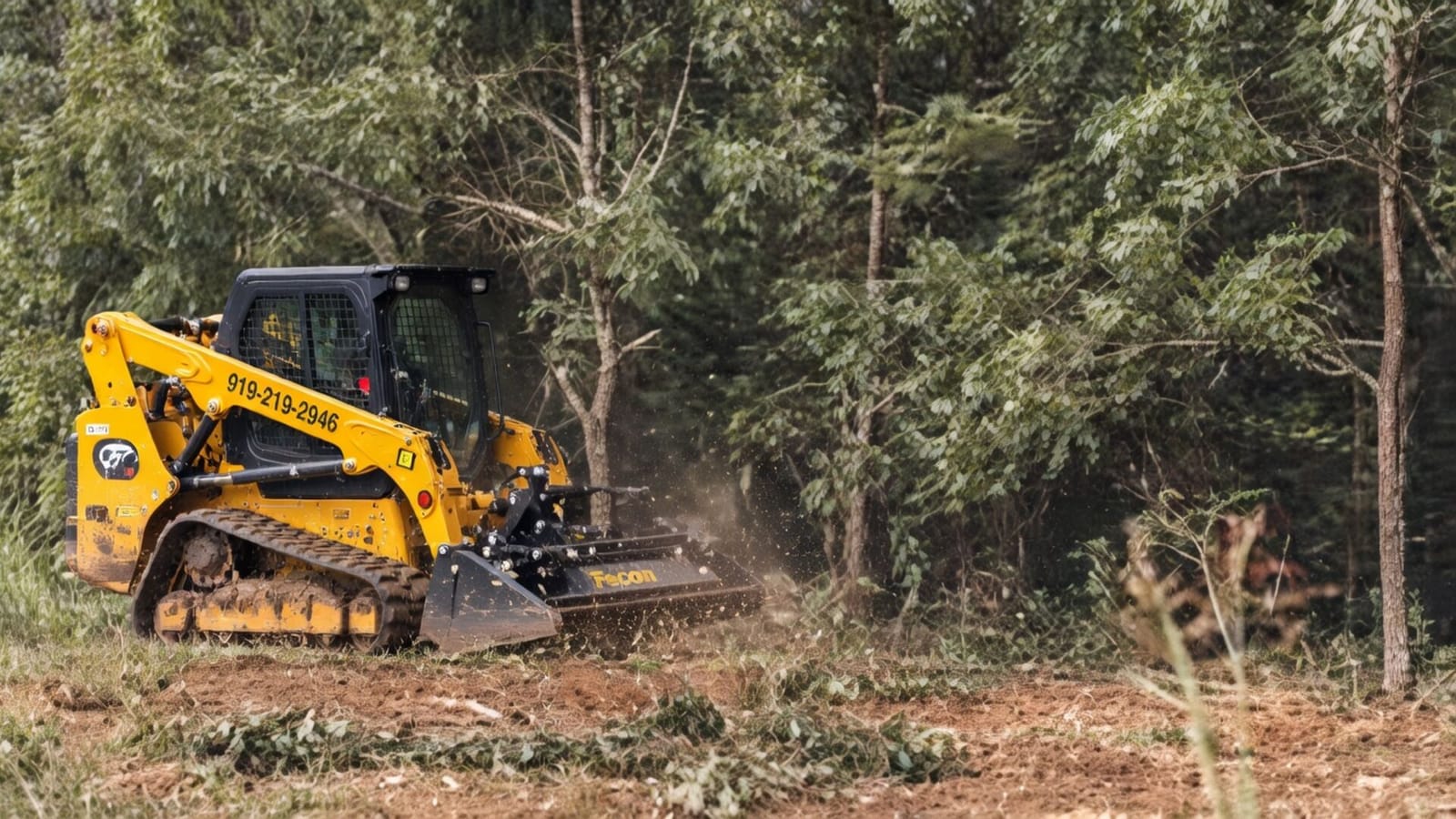
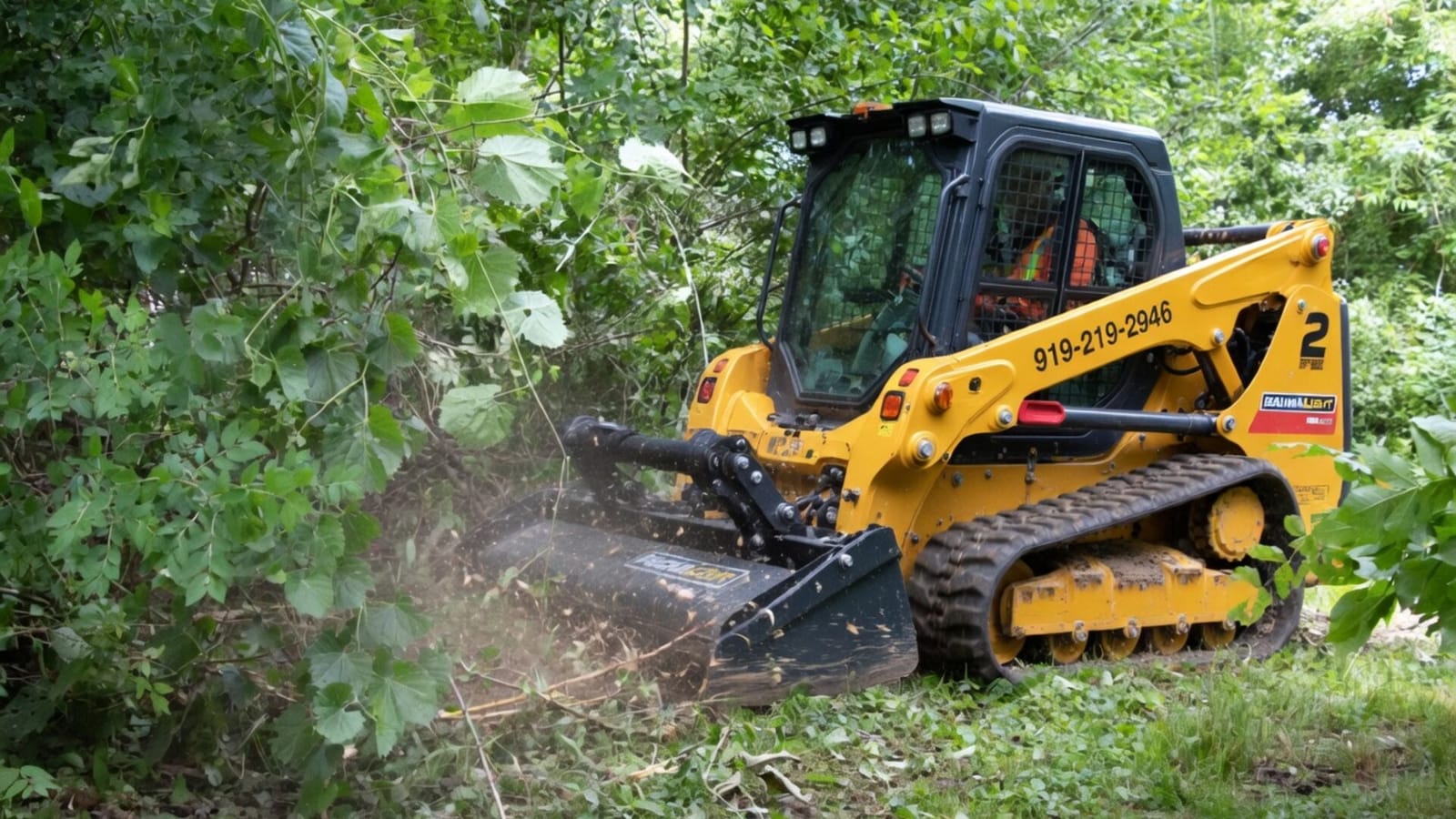
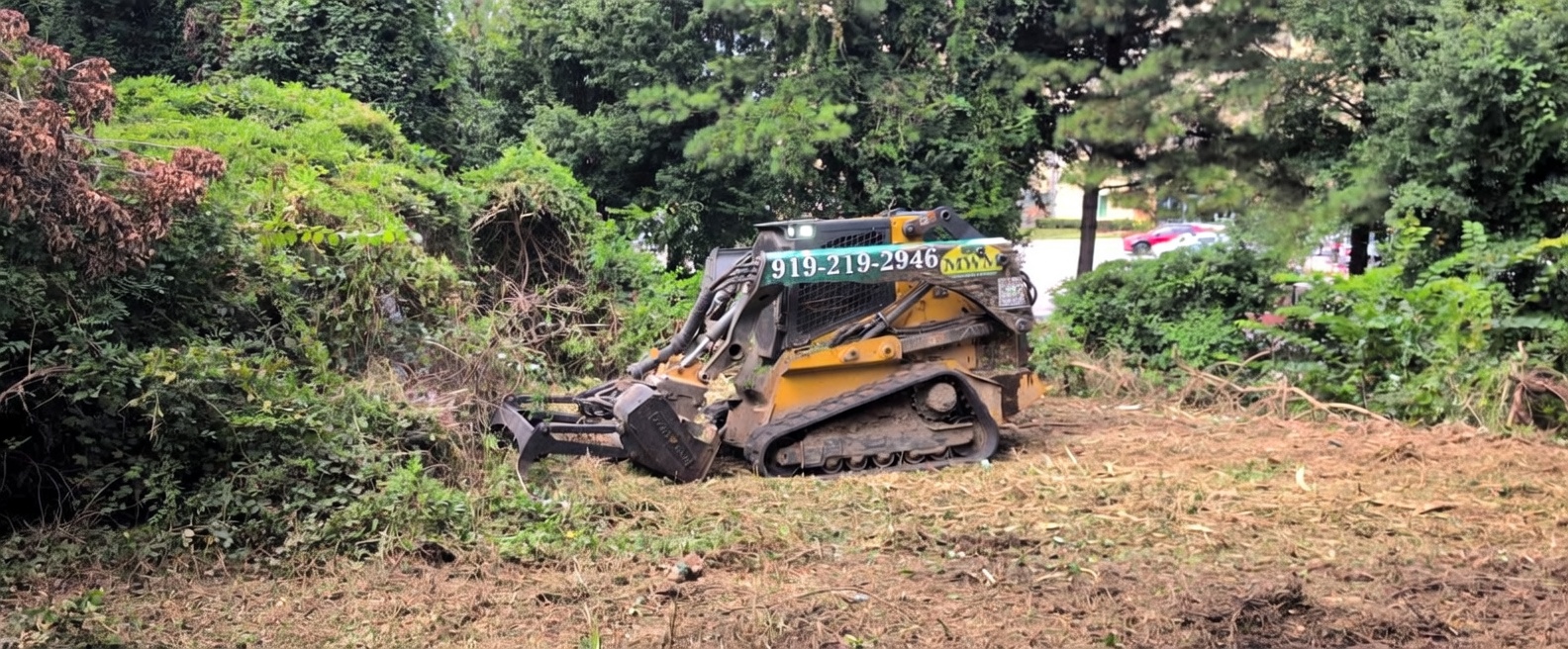
That’s the point for a forestry mulching pass, which grinds the stems to ground level, shreds the root collars low enough to weaken resprouting, and leaves mulch instead of stubs. One machine, one pass, and the field is walkable ground again.
Pro tip: The gumballs tell you the clock is running. Sweetgum starts producing seed young, and once the saplings in your field are dropping their own gumballs, the field is seeding itself faster than you can react. If you’re seeing spiky balls under head-high trees, book the reclamation this season, not next; the price only goes up with stem diameter.
The Two-Machine Strategy for a Sweetgum Field
Reclaiming a sweetgum-choked field takes a mulching knockdown followed by a mowing schedule, because the mulcher removes the stand you have and the mowing kills the resprouts and seedlings that follow. The sequence:
- Mulch the stand. The mulcher grinds saplings and young trees to ground level, gumballs and all. Most single fields take a day or less.
- Expect the resprout flush. Sweetgum roots push up new shoots the following spring. This is normal and it’s part of the plan.
- Mow on schedule. A brush hog pass once or twice a year cuts the resprouts and new seedlings while they’re soft. Two to three seasons of this exhausts the root systems, and after that the field holds with ordinary maintenance. Stubborn resprout patches can get a fall spot-treatment to speed the process.
The same sequence handles whatever else moved in alongside the sweetgum, usually broomsedge, briars, cedar, and pine. Our guides to reclaiming an overgrown pasture and clearing pine trees cover those companions, and one mobilization clears the whole mix.
What Does Sweetgum Field Reclamation Cost in NC?
Mulching a sweetgum-choked field runs $1,000–$2,500 per acre for typical 3-to-8-year regrowth in Central North Carolina, with older stands pushing toward $3,500 as stem diameter climbs. Fields still in the green-stem stage can be heavy-hogged for less.
| Field condition | Typical Cost | Method |
|---|---|---|
| Green saplings under 2 inches | $75–$400 per acre, heavier one-time hogging at the top end | Brush hog |
| 3–8 year stand, stems 2–4 inches | $1,000–$2,500 per acre | Forestry mulching |
| 10+ year stand, 6 inch+ trunks | $2,500–$3,500+ per acre | Mulching or land clearing |
| Maintenance mowing after reclamation | $75–$400 per acre | 1–2 passes per year |
A note on scope: this article is about fields of saplings, which is machine work. A single mature sweetgum shading your patio is arborist work, a climbing-and-rigging job priced per tree, and the right call there is an insured tree service. Our land clearing pricing guide covers how the acreage side is priced, and a free estimate gets you a firm number after our crew contacts you to discuss the field.
Frequently Asked Questions
How do I get rid of sweetgum saplings in my field?
Mulch the stand to ground level, then mow the resprouts once or twice a year for two to three seasons until the roots quit. If the stems are still under about 2 inches, aggressive hogging alone can do it, provided you keep the schedule. The one guaranteed failure is cutting once and walking away; sweetgum root-sprouts harder after a single cut.
Will sweetgum grow back after mulching?
The roots will push up a flush of sprouts the next spring, and the scheduled mowing is what kills them. Each flush that gets cut drains the roots further, and by the second or third season the field holds as pasture again. Around Zebulon and Wendell we build the follow-up mowing into the reclamation quote for exactly this reason.
How fast do sweetgum trees grow?
Two to three feet a year is routine for saplings on open ground, and more on good soil. That’s why the window between “scattered seedlings” and “young forest” on an idle field is only about five years, and why each year of waiting moves the job up a price tier.
Are sweetgum trees worth keeping?
In the right place, yes. Mature sweetgum is a legitimate native timber tree with brilliant fall color, and a woodlot specimen is worth leaving. A field of ten thousand saplings is a different thing entirely; selective clearing that takes the invasion and keeps a few well-placed trees is a normal request on our land clearing jobs.
What kills sweetgum stumps and sprouts?
Persistent cutting kills them slowly and reliably; a fall herbicide spot-treatment on cut regrowth kills them faster. Grinding stumps below grade stops the stump itself from sprouting, though root sprouts can still appear nearby until the roots exhaust. The mow-on-schedule approach handles all of it without much chemistry.
Do gumballs mean my field is getting worse?
Yes. Gumballs are seed capsules, and saplings mature enough to drop them are actively reseeding your field and your neighbors’. Fields near Kenly and Four Oaks with fruiting sweetgum typically show a new seedling carpet every spring until the stand comes out.
Sweetgum Field Reclamation Across Central North Carolina
The sweetgum took your field three feet a year, and the right two machines take it back in a day plus a mowing schedule. Cut Brush reclaims sweetgum-choked fields across Central North Carolina, from Johnston County farmland around Selma and Four Oaks to field edges near Zebulon and Wendell.
Get your free estimate or call (919) 525-3950. We respond within 24 hours, and we’ll tell you straight which price tier your field is in and how to keep it from climbing.
Related Services
Learn more about the services mentioned in this article.

Forestry Mulching
Single-step land clearing that mulches trees and brush in place.

Land Clearing
Full land clearing for residential and commercial development projects.

Brush Hogging
Heavy-duty mowing for overgrown fields, pastures, and large lots.
Property Maintenance
Ongoing brush management and property upkeep to keep your land clear.
Serving These Areas
We provide land clearing services in these towns and surrounding areas.
More from the Cut Brush Blog
Keep reading for more tips and guides on land clearing.
 Services
 Eastern Red Cedar Removal in NC: Reclaim Your Field
Eastern red cedar removal in NC: why cedars take over idle pasture, why they don't resprout from stumps, removal costs, and when to leave a few. Free estimate.
 Services
 Multiflora Rose Removal in NC: Reclaim Thorny Pasture
Multiflora rose removal in NC: how to get rid of the invasive thorn thickets choking pastures and fence lines, and what clearing costs. Get a free estimate.
 Comparison
 Bush Hogging vs Forestry Mulching: Which Do You Need?
Bush hogging vs forestry mulching: which handles your overgrown field? Compare costs, vegetation limits, and regrowth for Central NC land. Get a free quote.
Let's Get Started on Your Land
Request a free quote. We'll contact you to discuss your property, access, and the clearing you need.
Get a Free QuoteOr call us directly: (919) 525-3950